

How Role Changes Create Prop Opportunities: overview and why it matters
What we mean by role changes
By role changes we mean measurable shifts in a player's minutes, usage or snap share that alter how many opportunities they will have to produce counting stats on a given night. These shifts come from injury scratchings, enforced rest, lineup adjustments or tactical reassignments and they matter because box-score props are driven by opportunity rather than raw talent alone.
For readers focused on practical edges, the clearest value comes from pairing timely public disclosures with a simple conversion from expected opportunity to stat expectations. The most reliable early signals now come from league-issued reports and enforcement that increase transparency about rest and availability, and those disclosures let you form a numeric update instead of a guess.
Why role changes move prop prices
When a starter is ruled out or rested, a backup typically inherits a portion of minutes and usage, which directly raises the backup's chance to hit counting-stat thresholds. Translating that expected increase into a new prop target is the core skill: you need to estimate how many extra minutes or how much extra Usage% a player will receive and convert that into points, rebounds, assists or other counting stats.
Two structural developments make this work repeatable. First, leagues have increased reporting clarity, which reduces ambiguity about availability. Second, standardized metrics like Usage% and official snap counts give you consistent ways to map a change in role to a change in stat opportunity. For example, official league enforcement of player-availability rules has made rest patterns and late decisions easier to detect and quantify from public sources. NBA Communications fines notice See coverage in The New York Times here.
Day-of-Game Role-Change Checklist
Save this day-of-game checklist to run before tipoff or kickoff: a short, prioritized list you can use on your phone to turn official disclosures into updated prop targets.
The practical payoff is straightforward: if you can see the role change before some parts of the market and quantify the opportunity with consistent logic, you can place a prop with a defined expected value edge rather than a hunch. That repeatable workflow is what separates disciplined players from reactive bettors.
League disclosure rules that create early signals
NBA: Player Participation Policy and the daily Injury Report
The NBA's Player Participation Policy and the daily Injury Report are primary pregame sources for rest, injury and illness flags; enforcement in recent seasons has increased the policy's credibility and the reliability of disclosures. When teams face fines for noncompliance it nudges them toward clearer reporting, which helps anyone monitoring last-minute availability shifts. NBA Communications fines notice
The league-maintained daily Injury Report is the day-to-day feed that lists injuries and rest designations and is often the first official place a change in a player's expected role is recorded. Checking that report early on game day should be part of a routine to capture role-impacting updates. NBA Injury Report

The NFL's Injury Report Policy standardizes practice-participation and game-status disclosures across the week, which provides forward-looking signals of likely starter or backup activity. Practice participation tags across the Wednesday to Friday cycle often hint at whether a starter will be limited or replaced, giving time to estimate snap-share redistribution. NFL Injury Report Policy
While the NFL's structure is different from basketball, the same logic applies: earlier, consistent reporting allows you to spot potential role shifts and prepare a numeric update to your prop targets rather than reacting to last-minute noise.
Quantifying expected opportunity: minutes, Usage% and snap share
Understanding Usage% and why it matters
Usage Percentage, or Usage%, measures how often a player ends a team possession while on court and is a practical bridge from a lineup or responsibility change to expected counting-stat output. It captures a player's share of possession-ending opportunities, which are the raw material for points, assists, turnovers and related props. NBA Stats Glossary on Usage Percentage
Because Usage% tracks possession involvement rather than raw touches, it is a cleaner way to translate a change in role into expected production when used alongside minutes and pace. Recognized stat references define Usage% consistently, which justifies relying on the metric as part of a conversion step. Basketball-Reference glossary on Usage%
The simplest conversion treats expected stat output as proportional to minutes times Usage% adjusted for team pace. In plain terms: if a player's minutes rise by 25 percent and his Usage% holds roughly steady, you should expect his counting stats to rise roughly in proportion to the extra possessions available to him after a pace adjustment. Use minutes as the volume multiplier and Usage% as the intensity multiplier.
As a worked example, if a backup normally plays 20 minutes with a 15 Usage% and is projected to play 30 minutes, the 50 percent minutes increase suggests a roughly 50 percent boost in counting-stat opportunity, subject to matchup and substitution patterns. This is a light, defensible conversion that gives you a starting target for props without heavy modeling.
Convert expected minutes and Usage% changes into a simple box-score prop target
Use as a guideline, then adjust for matchup
For football, snap share is the primary measure of opportunity: a player's share of offensive or defensive snaps correlates closely with opportunities to generate counting stats. Official snap counts after game play confirm realized roles but during the week practice-participation tags offer the early signal for a probable change in snap share. NFL player snap counts
A practical rule is to estimate percent changes in snap share from practice designations: a full practice absence for a starter often translates into a large expected snap-share transfer to the backup, while limited practice tags suggest smaller redistributions. Use that percent change to scale your expected stat output for props tied to playing time and involvement.
A step-by-step workflow to update prop targets before game time
Monitor official disclosures in this order
Make a short checklist you run in sequence: official Injury Reports, team press notes and practice-participation updates, plus beat-reporter confirmations. Start with the league's official report because it is standardized and then layer in team-level announcements only if they add confirmed detail. For the NBA, the daily Injury Report is the canonical day-of reference and should be the central starting point. NBA Injury Report
For the NFL, prioritize the practice participation timeline and official game-status listings during the week, then use team notes and beat confirmations to refine the expected magnitude of a snap-share shift. NFL Injury Report Policy
Use a lightweight percent-change method: estimate expected minutes or snaps, calculate the ratio versus the baseline, and scale a player's baseline counting stats by that ratio. If you prefer intensity-based adjustments, alter Usage% instead of minutes and then multiply by minutes for final scaling. Keep the conversion simple so you can run it reliably on game day.
Adjust the raw conversion for pace, opponent strength and whether the player will be in heavy or limited minutes during specific rotations. A short habit of applying these small adjustments improves accuracy without adding excessive complexity.
Before acting, cross-check your estimate against how the market has moved so far and the available liquidity for the prop. If lines have already moved significantly, there may be less edge left; if the market remains slow to respond, you may have time to place a structured bet. Document your rationale and expected range before committing.
Remember that Usage% or snap-share conversions are inputs, not guarantees. Adjust targets conservatively when matchup or lineup context adds uncertainty. Time your entry to balance available liquidity against the risk of late news, and only act when your expected value remains positive after fees and limits.
Decision criteria: when a role change is worth acting on
Minimum magnitude of change to justify market action
Not every role shift is actionable. As a heuristic, look for changes that meaningfully alter minutes or usage: for basketball, a projected minutes increase of 20 percent paired with a stable or higher Usage% is generally interesting; for football, a projected snap-share increase that moves a player from low usage to a starter-level share is the threshold. Use official reports to form the estimate and then ask whether the adjusted expectation moves your predicted stat beyond the market line by a margin you consider worth the risk.
When you use official Injury Reports and practice-participation trends as cross-checks you increase confidence in the underlying signal. Official disclosures are not flawless but they are consistently formatted and therefore easier to incorporate into simple heuristics than scattered social chatter. NBA Injury Report
Timing matters. Early disclosures give the market time to digest and usually create wider movement across books. Late news may be sharply priced by liquid books but could still leave value in smaller markets or for niche props. Consider the liquidity for the prop type you target and expect variation across providers and sports. If the market is thin, a clear numerical edge can remain exploitable for longer.
Also remember that certain prop types respond faster to role news: counting-stat props tied to minutes and usage typically move faster in basketball, while snap-dependent receptions and touches shift quickly in football once the expected snap-share is clear.

Use historical snap-counts and recent Usage% trends as backstops: a player who historically absorbs starter minutes reliably after a starter absence is a stronger candidate than one with volatile backup usage. Check past replacement patterns and confirm your expectation with official practice reports and reputable beat coverage before placing a trade. NFL player snap counts
If multiple independent signals point the same way - official injury designation, team practice notes, and a consistent past replacement pattern - you can move with greater conviction, but still employ sensible sizing and risk limits.
Common mistakes and cognitive traps
Overreacting to speculative or unconfirmed reports
Avoid treating every mention of a potential absence as equal. Early speculation on social channels often lacks verification and can lead to mispriced actions. Waiting for confirmation on official reports or multiple independent confirmations reduces false positives.
Misreading availability as role change
Availability flags do not always equal redistributed opportunity. A player listed as out for rest might be replaced by committee minutes rather than a single backup taking all usage. Distinguish between an availability note and an actual, believable redistribution of minutes or usage.
Ignoring pace, matchup and lineup context
Counting stats are context dependent. A minutes increase on a slow-paced team or against an opponent that suppresses production may not produce the same lift as an identical minutes increase elsewhere. Always layer matchup and pace into your final adjustment and reduce size when context adds uncertainty.
Real-world examples and scenarios
NBA example: how enforced rest and a scratched starter create a backup usage spike
When league enforcement encourages clearer rest disclosures, teams are more likely to list a player as out rather than obscure a decision, which can make the resulting backup role change easier to spot and quantify. Use enforcement examples as reminders that clearer reports improve detectability of opportunity shifts. NBA Communications fines notice
Imagine a starter is officially ruled out on the NBA Injury Report; that report immediately signals a redistribution of minutes and likely Usage% to the primary backup. Running a quick minutes-times-Usage% conversion gives a defensible updated target for the backup's points or rebounds before books fully digest the change. NBA Injury Report
Use official league disclosures to estimate minutes or snap-share changes, convert that change with Usage% or a minutes multiplier into expected counting stats, cross-check history and matchup, then place a sized action when expected value remains positive.
For the NBA scenario, treat the backup's historical performance in starter-like minutes as a short validation before you act. If the backup has shown the ability to sustain higher Usage% in previous extended minutes, that strengthens the case to adjust a prop.
In football, practice-participation tags across midweek practice often predict how the snap distribution will shift. A starter who misses practice on Thursday and is downgraded on Friday often means an increased snap share for a backup, which can justify adjusting a target for touches or receptions when the expected snap-share crosses a practical threshold. NFL Injury Report Policy
As with basketball, checking the backup's historical snap-share absorption and recent game script trends helps you judge whether the raw percent-change estimate is realistic. If the backup has limited prior snaps in similar situations, size the action cautiously.
Late scratches close to game time often leave less market inefficiency but can create last-minute edges in less liquid books. For very late news, prioritize sources that are official or beat-confirmed and scale position sizes down to account for heightened uncertainty and rapid market moves.
Document each late trade and its outcome to refine your timing heuristics over time, since market response speed varies by book and prop type and is an empirical feature you can learn from.
How markets typically price late role news across books
Early news vs late news: general patterns
Generally, earlier and clearer disclosures allow lines to move gradually and create deeper liquidity, while late news tends to cause sharper moves and often wider variance between books. For players who jump into starter-level opportunity early in the day, multiple books will move and edges can shrink; for very late revelations, some smaller or slower-moving markets may lag. Use that variation strategically depending on your risk tolerance.
Keep in mind that how quickly a book prices news depends on its model, liquidity and the specific prop type. Practice observing book behavior across many instances so you can learn which providers are fast and which are slower for the props you trade.
Differences by sport and prop type
Basketball counting-stat props tied directly to minutes and Usage% often move faster in liquid markets, while certain football props respond sharply to snap-share updates, especially for skill-position touches. Recognize which prop types typically react fastest so you can prioritize monitoring those lines when role news appears.
Because this behavior varies, treat market reaction as an empirical input: track how quickly lines moved after your informational triggers and refine partner-book selection accordingly.
How to incorporate Usage% into box-score prop models
Mapping Usage% to points, assists and turnovers
Usage% measures a player's share of possession-ending events while on court, which is directly tied to scoring and assist opportunity. In practice, map Usage% to expected points by estimating team possessions per minute, multiplying by the player's Usage% share and adjusting for field-goal efficiency. This gives a baseline points expectation conditioned on minutes and pace. NBA Stats Glossary on Usage Percentage
For assists and turnovers, apply the same Usage% intuition but reduce sensitivity because those events depend more on play type and teammate involvement. Usage% is a starting intensity measure; additional modifiers like lineup shot distribution and opponent defensive tendencies improve accuracy.
Usage% is most informative when combined with minutes and an estimate of team pace. A rising Usage% with rising minutes compounds the expected effect on counting stats. Conversely, a minutes increase on a dramatically slower pace may yield smaller-than-expected stat changes. Include a simple pace multiplier in your conversion and adjust Usage% expectations when the player's role in new lineups changes the shot distribution.
Because recognized sources define Usage% consistently, you can rely on those definitions to keep your mapping stable across games and players. Use historical treatment of a player in starter minutes as an empirical check on how Usage% translates to counting stats in practice. Basketball-Reference glossary on Usage%
Practical checklist for the day of the game
Morning checks and baseline assumptions

Morning: read the official Injury Report, note any rest or out tags, and set baseline minutes and Usage% assumptions for key players. If a starter is flagged for rest, estimate the minutes redistribution and run a quick conversion to update your prop targets. NBA Injury Report or see a tracker such as CBS Sports' injury page
Document your baseline in a short log: player, baseline minutes, expected minutes, baseline Usage%, expected Usage%, and why you adjusted the numbers. Keep entries brief so the process stays repeatable. Read more in our short log.
Midday: check team notes and beat reports for confirmations or clarifying context, and adjust your minutes or Usage% assumptions accordingly. For the NFL, confirm practice-participation updates through the Thursday to Friday sequence and refine snap-share estimates. NFL Injury Report Policy
If multiple sources converge on the same expected redistribution, raise your confidence level; if they diverge, keep size smaller and note the uncertainty in your log.
Final: review the official game-day report and any last-minute team announcements, then decide whether to place, adjust or skip the prop. For very late news, prefer smaller sizes and choose books that historically react slower if you seek residual value.
After the game, record the realized snap counts or Usage% outcomes and compare them to your pregame estimates to measure accuracy and refine future heuristics. NFL player snap counts
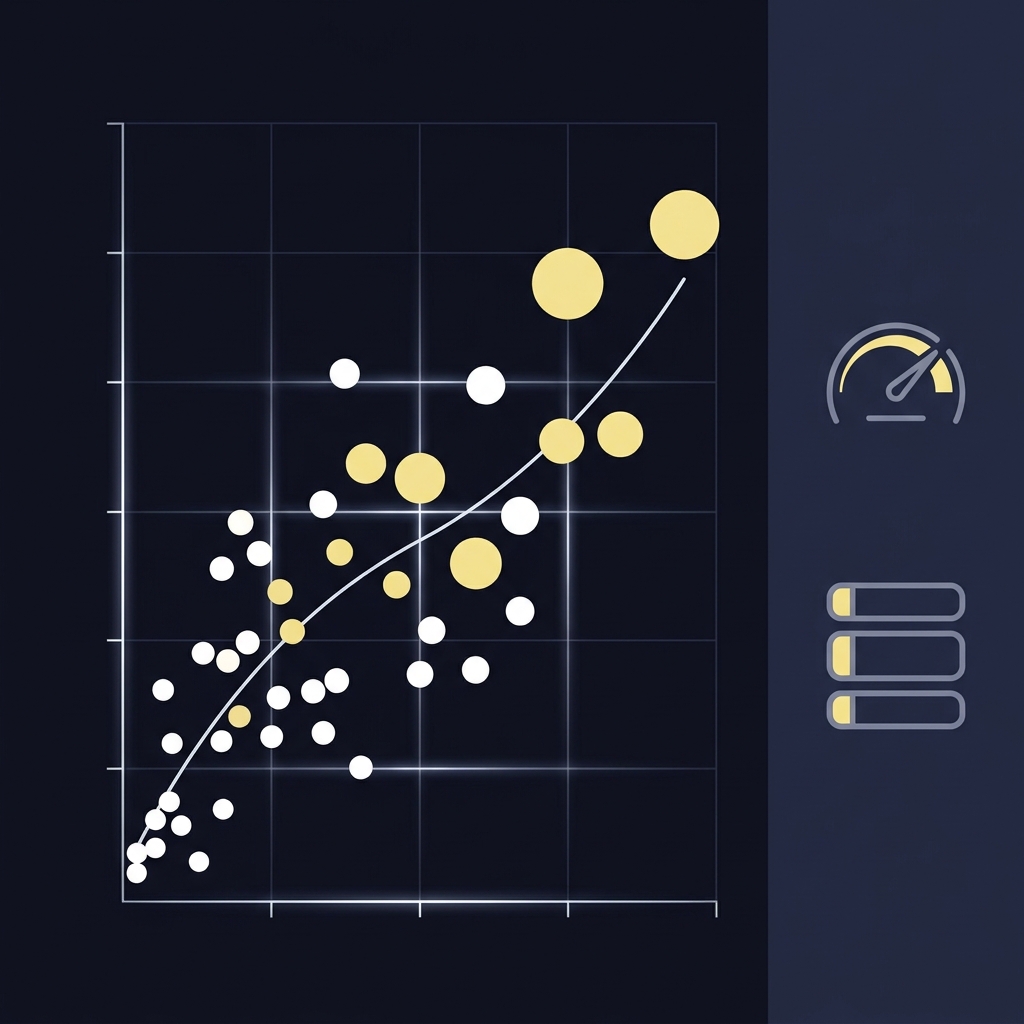
Measuring outcomes: snap counts and usage after the fact
Official sources publish snap counts and Usage% definitions that let you validate your assumptions postgame. Use those realized measures to compute prediction error and identify systematic biases in your conversion method. NFL player snap counts
Keeping a short log of expected versus realized minutes, Usage% and counting stats is the simplest way to build a learning dataset without overcomplicating analysis.
Over time, aggregate your prediction errors by scenario type: enforced rest, late scratch, practice absence, and matchup-driven shifts. Use averages and dispersion to set confidence bands for future trades and to size positions prudently when similar signals appear.
Simple tracking and periodic review will improve your instincts and help you identify which books offer the most exploitable delays in pricing role changes.
Ethics, compliance and responsible framing
Avoiding promises about earnings
No method guarantees earnings. Treat this workflow as a structured way to form better-informed estimates, not a promise of profit. Outcomes depend on execution, market behavior and adherence to platform rules.
Respecting platform and league rules
When practicing these techniques on skill-based challenge platforms, remember to follow the platform's terms and avoid misrepresentations. FundedPlays is one example of a skill-based sports prediction challenge platform where users can practice disciplined role-read workflows. It is not a sportsbook and does not guarantee rewards.
Advanced considerations: lineup interactions and small-sample noise
When matchup context overrides raw usage
Sometimes matchup context or lineup fit changes the expected mapping from Usage% to counting stats. A backup may inherit minutes but not usage if the coach asks them for a different role within the offense. Factor lineup fit into your final adjustment and reduce size when fit suggests lower expected intensity.
Dealing with variance in small samples
Short-run samples are noisy. When a player has limited history in a higher-usage role, widen your confidence bands and prefer smaller sizes until there is a larger sample of similar situations. Use simple risk limits to protect against unlucky variance.
Conclusion: disciplined role-monitoring as a repeatable edge
Key takeaways
Official league disclosures, like the NBA Injury Report and formal injury and practice policies, are the most dependable early signals of role-impacting changes, and Usage% plus snap counts form the quantitative bridge from role to expected stat output. NBA Injury Report
By using a short, repeatable checklist - monitor official reports, estimate minutes or snap-share change, convert to stat expectations and cross-check against history - you create a disciplined routine that can be refined through postgame validation and record keeping.
Next steps to build your routine
Start by building a short day-of-game checklist, logging each decision and outcome, and prioritizing official sources for early signals. Over time you will learn which situations and books provide the clearest, most actionable edges.
A role change means a measurable shift in minutes, Usage% or snap share that alters a player's opportunity to record counting stats, typically caused by rest, injury or lineup adjustments.
Prioritize league injury reports and practice-participation listings, then add team notes and reputable beat confirmations for context before adjusting prop targets.
No. While disciplined role monitoring helps form better estimates, it does not guarantee earnings; outcomes depend on market pricing, execution and variance.
References
- https://pr.nba.com/hawks-fined-player-participation-policy/
- https://www.nytimes.com/athletic/6905154/2025/12/19/nba-illegal-sports-betting-gambling-injury-reporting-memo/
- https://official.nba.com/nba-injury-report-2025-26-season/
- https://operations.nfl.com/updates/football-ops/injury-report-policy/
- https://www.nba.com/stats/help/glossary/#usage
- https://www.basketball-reference.com/about/glossary.html#usg_pct
- https://www.nfl.com/stats/player-snap-counts/
- https://www.fundedplays.com/challenges
- https://www.cbssports.com/nba/injuries/
- https://www.fundedplays.com
- https://www.fundedplays.com/blogs/how-fundedplays-evaluations-work
- https://www.fundedplays.com/blogs