
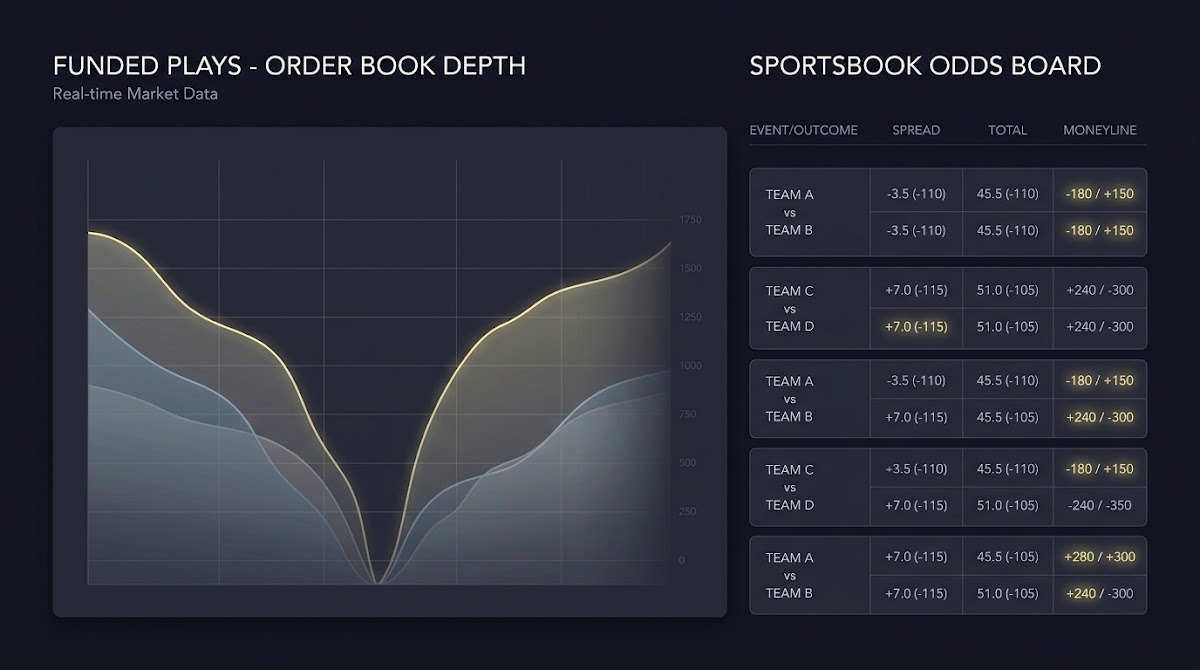
How Public Betting Can Influence a Market: definition and why it matters
When we talk about How Public Betting Can Influence a Market we mean the observable ways widespread retail wagers change quoted odds and prices across bookmakers and exchanges. Public betting here refers to visible retail handle, public percentages and the pattern of tickets placed by non-professional participants; it is distinct from private or sharp action that arrives from professional traders or syndicates. This distinction matters because identical price moves can have very different causes and implications for value and staking decisions, and understanding that difference helps a bettor or market practitioner interpret signals rather than react to headlines.
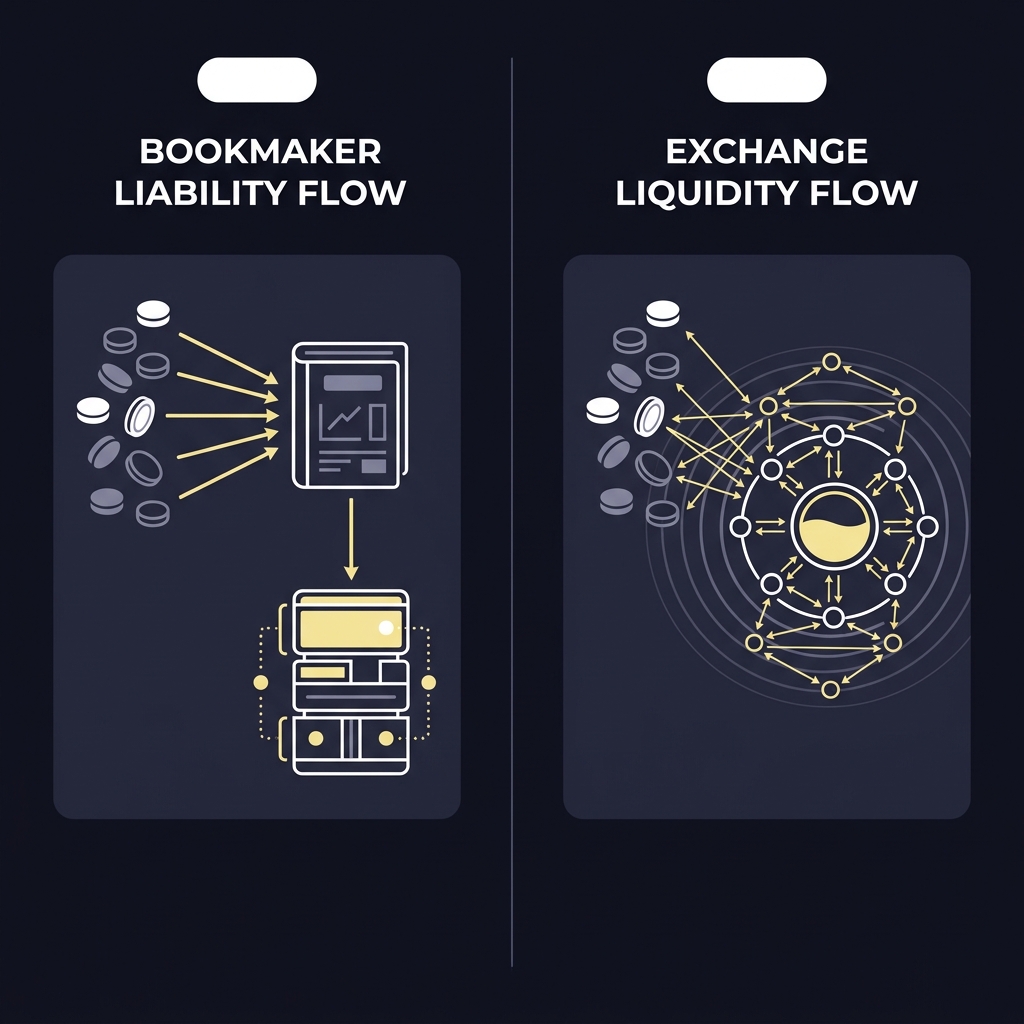
Two broad mechanisms explain most public-driven price moves. First, bookmakers adjust odds to manage liability when one-sided action concentrates on a single outcome. Second, exchange markets respond to actual matched volume and order-book depth, where thin liquidity means even modest retail bursts can materially shift price. Both channels remain relevant in 2026 and help explain why a visible spike in tickets or handle may or may not reflect informed money, depending on timing and venue; for more on how bookmakers move prices in response to bets see Pinnacle Betting Resources Pinnacle Betting Resources and public-percentage trackers such as Action Network.

One important caveat is that not every line move equals sharp money. Heavy percentages or headlines can create herding among retail players and nudge prices even when the underlying information advantage is absent. That is why a measured approach that separates liability-driven moves from liquidity-driven moves is essential before you change staking or assume an informational edge.
How bookmakers adjust odds in response to one-sided public action
Bookmakers focus on liability, the exposure they carry if one outcome wins, and they use odds adjustments and limits to rebalance that exposure. When a large share of money or many small tickets pile on the same side, the book faces asymmetric risk and will often move prices to attract counter-bets or reduce the size of potential payouts. Explaining this exposure and how odds shift helps clarify why some moves are practical risk management rather than an admission of error in the opening line; the Pinnacle resource on odds movement outlines the core mechanics of liability and risk balancing Pinnacle Betting Resources.
Books do more than follow perceived value; they enforce internal risk limits and may use maximum stake sizes, line shading or progressive price ladders to shape action without revealing private information. Early moves from a bookmaker can sometimes reflect sharper information or a change in the book's view, while late moves often respond to accumulated liability as the event approaches. Understanding where a move sits on that spectrum helps you interpret whether the change likely carries predictive information or is a short-term hedge by the book.
How Public Betting Can Influence a Market: exchanges, liquidity and order books
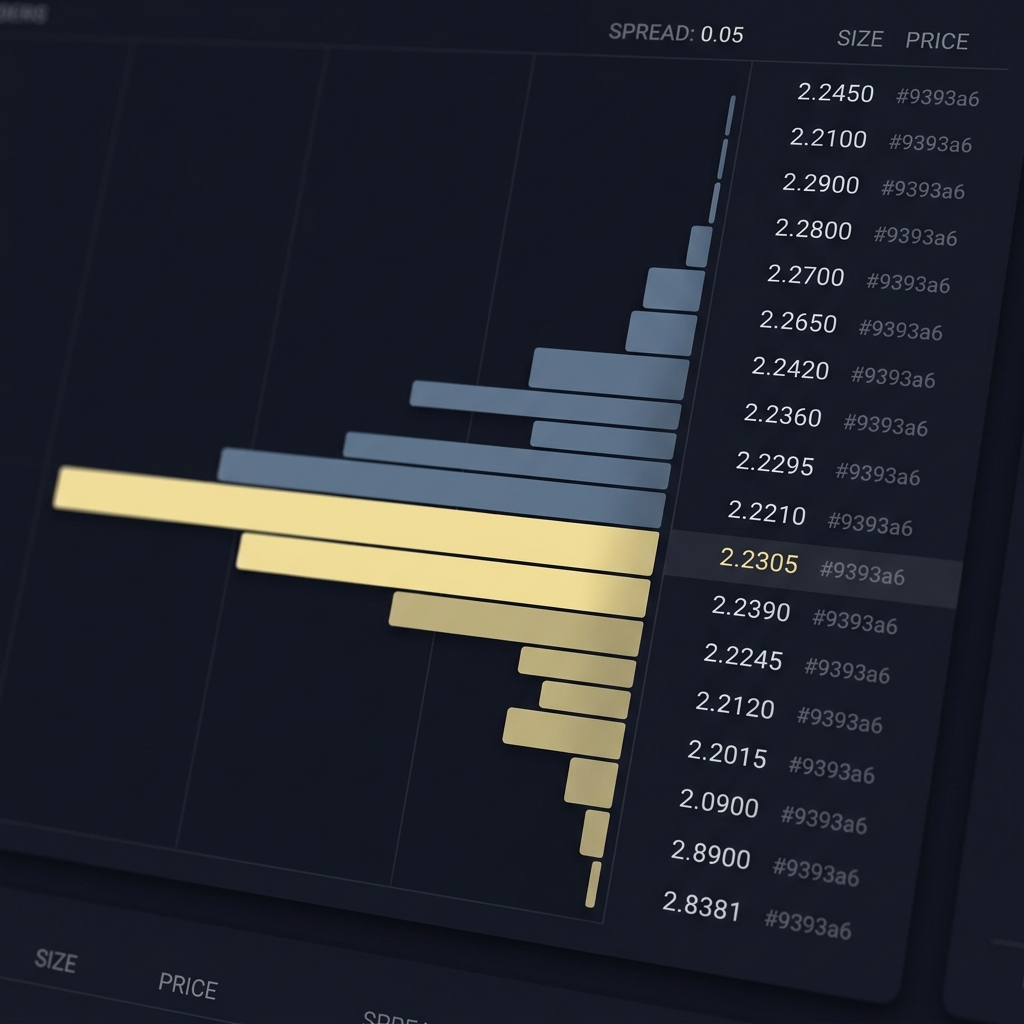
Exchanges operate like financial markets: prices result from matched orders in an order book, and the depth of that book determines how much volume can be absorbed without moving price. Market depth is the visible size available at each price level and the spread is the gap between the best available back and lay offers. Thin depth or wide spreads means that a relatively small burst of public volume can shift the matched price significantly, mechanically moving the market; educational material on exchange liquidity explains these mechanics in practical terms Smarkets Academy and practical notes on betting exchanges at Sports Insights.
Because exchange moves are realized by matching bets, they differ from bookmaker liability moves in predictability and transparency. A bookmaker can change its posted odds before much money has matched, while an exchange price only moves when liquidity is consumed. That means the same retail wave that causes a book to shade a price might produce a sharper, visible swing on an exchange if the order book is shallow, or a smaller impact if depth is ample. For background on order books and why liquidity matters see the Betfair explanation of market depth and spreads Betfair explanation of market depth and spreads.
Public bets move lines either through bookmaker liability adjustments or by consuming exchange liquidity. Record opening and closing prices, venue, stake, betting splits, observed market signals and notes linking stake changes to those signals so you can evaluate outcomes using CLV over a meaningful sample.
Practical signals of low liquidity include consistently wide spreads, small matched size at the best prices, and sudden jumps in matched price after compact bursts of volume. Recognizing these signals helps you judge whether a price move is a mechanical result of consumption of thin offers or a response to new information being acted on across multiple venues.
Timing matters: early information-driven moves versus late liquidity-driven moves
Timing is one of the best heuristics for interpreting a line move. Early moves, especially those that appear across multiple books or on both books and exchanges around the same moment, are more likely to reflect sharper information or professional activity. When several operators tighten a side prior to broad retail attention, that synchrony can be a signal that informed participants are acting and markets are incorporating new inputs; see how books and markets can react to early action in Pinnacle's explanation of odds movement Pinnacle Betting Resources.
By contrast, late moves near an event start often reflect concentrated retail attention and liquidity pressure as casual players place final tickets. High-profile events can funnel a lot of late handle into one side, producing visible shifts that are primarily liquidity-driven rather than information-driven. A recent example from a headline 2024 game shows how concentrated endgame handle can rearrange lines in the run-up to kickoff, illustrating the common late steam pattern reported in event coverage ESPN coverage of Super Bowl 58.
Reverse line movement: what it signals and how to interpret it
Reverse line movement is when the market shifts against the majority of tickets, meaning the price moves in the opposite direction to where most public money appears to be going. Traders often treat reverse movement as a potential sign of sharper opposition to public consensus, because it suggests someone with larger stakes or different information is pushing price away from the retail-favored side. VSiN's explanation of line movement highlights reverse movement as a useful, though not infallible, signal when combined with other evidence VSiN line movement analysis and detailed guides such as OddsIndex's reverse line movement guide.
Get the quick detection and CLV checklist for market moves
If you want a concise reminder of the signs to check when you see reverse movement, download a one-page checklist or sign up for short market-movement updates to receive practical, evidence-based prompts.
Reverse line movement can precede closing price adjustments because informed participants sometimes work to get favorable executions or to slow retail-driven steam. However, reverse movement is not proof on its own; it is a pointer that should prompt cross-checks with sharper books, exchange depth and your fair-price model before you change staking. When used responsibly, reverse movement adds weight to a case for fading or following the public depending on supporting evidence.
Closing Line Value: how to measure whether you beat the market
Closing line value, or CLV, is the difference between the price you obtained on a bet and the final market closing price. Over time, consistently beating the closing line indicates you are capturing value versus the market's consensus at the last tradable moment, and many practitioners use CLV as a retrospective benchmark for edge. For a practical primer on CLV and its use as a long-run measure see Pinnacle's guide to closing line value Pinnacle on closing line value.
Tracking CLV requires simple records: log your opening price, the closing line, and the venue. Aggregate these results over a sample of bets rather than drawing conclusions from a single game. CLV is a long-run consistency check: single-event outcomes will vary, but a persistent positive CLV across dozens or hundreds of stakes is a practical sign your model or selection process finds value relative to the market.
A practical 3-step detection approach for 2026
Use a short, repeatable checklist when you see a line move. Step 1, compare betting splits and price direction. Step 2, cross-check sharper books or exchanges to see if the move aligns across venues. Step 3, reconcile the movement with your fair-price model and only alter staking when evidence supports an informational move. This compact workflow helps separate noise from signal and keeps reactions disciplined; a quick checklist template can help embed the habit. See the Funded Plays blog for related templates and notes.
Quick three-step detection checklist for public-driven moves
Use alongside your CLV log
Step 1 is practical: if the betting split shows a large percentage on one side but the price moves the other way, that mismatch can indicate sharper opposition or price shading by a book. Conversely, if both split and price push the same way, it is more likely retail pressure is moving the market. Step 1 is about identifying mismatch or alignment as an initial filter; when making this comparison, consider whether the split data includes handle or only ticket percentages, since pure ticket shares can mislead where stakes are small.
Step 2 is about cross-checks: compare the move against at least one sharper book or an exchange with reasonable depth. If the same direction and magnitude appears on a sharp book or as matched volume on an exchange, the move has more credibility as information-driven. Exchanges add clarity because matched volume and order-book consumption are visible; if you see price tightening with significant matched size, that is a different signal than a book shading a price in response to liability Betfair explanation of market depth and spreads.
Step 3 uses your fair-price model as the tiebreaker. If your model still favors the side despite a public move, be cautious and consider reducing stake size or splitting exposure. Only increase exposure when model disagreement aligns with cross-operator evidence that supports an informational move. Document each decision so you can later evaluate it through CLV and determine whether the approach consistently improves long-run outcomes.
Decision criteria: when to follow the public and when to fade it
Use a checklist of evidence before choosing to follow or fade public action. Favor following the market when liquidity is deep, CLV patterns confirm market centering at similar prices, and event noise is low so that retail concentration is unlikely to be distorting the quote. Deep liquidity and confirmed CLV over samples reduce the risk that you are simply chasing short-lived retail steam.
Consider fading the public when you observe clear reverse line movement, thin market depth on exchanges, concentrated retail splits on a headline event, or when your fair-price model and cross-operator checks suggest the public side is overvalued. These conditions increase the probability that retail pressure is causing a mechanically driven move rather than reflecting new, informative inputs. Whatever you decide, log your reasoning so CLV can validate or challenge that decision later.
Staking and bankroll considerations when public volume shifts a market
When uncertainty rises because a public wave is moving markets, adopt conservative staking adjustments rather than aggressive increases. If evidence for informational value is weak but you still want exposure, reduce stake size, use proportionate weighting across correlated bets, or limit maximum exposure per event. The guiding principle is to protect long-term bankroll health while still allowing measured participation when evidence supports it.
Keep records that link stake decisions to the market signals you observed: note whether a move was liability-driven, liquidity-driven, or cross-operator confirmed, and record the reason for any stake change. This habit ties your behavior to CLV outcomes and prevents emotionally-driven chasing of late steam, a common pathway to negative expected value.
Common mistakes and pitfalls when interpreting public betting
One frequent error is confusing volume for information. Heavy handle or many tickets can simply reflect popular narratives rather than new facts; visible percentages may create herding, but that is not the same as professional or predictive activity. Recognize that media coverage and betting percentages can amplify retail sentiment without adding informational content to the market, a point explored in line movement discussions VSiN line movement analysis.
Another common pitfall is assuming late heavy handle equals sharp money. High-profile events attract lots of casual attention, and last-minute concentration of bets often represents convenience-driven wagers rather than informed positioning. Corrective practices include cross-checking exchange depth, verifying whether the move appears across sharper books, and postponing large stake changes until you can evaluate CLV over a reasonable sample.
Practical examples and scenarios: real-event snapshots
High-profile late moves can illustrate the mechanics. In a notable 2024 headline game, concentrated late handle produced visible line shifts just before kickoff, demonstrating how retail attention can create late steam that rearranges odds even when earlier books held different views. The event coverage of that game provides a clear example of concentration effects in action ESPN coverage of Super Bowl 58.
An exchange-style example shows how thin depth amplifies price impact. Suppose the best back has size equal to 100 units at 1.90 and the next level is significantly smaller; a sudden matched burst of 300 units will eat through the best price and lift the available matched price materially, producing a much larger percentage move than an equivalent wave in a deep market. Educational materials on exchange liquidity explain how depth and spreads govern these outcomes Smarkets Academy.
These snapshots are illustrative. They show the different mechanisms at work and how the three-step detection approach and CLV tracking can help you avoid mistaking mechanical liquidity moves for genuine informational shifts.

Checklist: data points to record and simple tools for tracking
Keep a minimal CLV and market-signal log with the following fields per bet: event, date, venue (book or exchange), opening price, closing line, stake, betting split or handle when available, observed market signals (reverse movement, thin depth, cross-operator confirmation) and short notes explaining any stake adjustments. Recording these items makes it practical to compute CLV and to categorize the market context for later analysis; see Pinnacle's guidance on CLV recording for a baseline approach Pinnacle on closing line value and the Funded Plays writeup on evaluations how Funded Plays evaluations work.
A simple workflow is a spreadsheet with one row per bet and columns for the fields above. Weekly or monthly reviews can surface patterns in CLV and reveal whether decisions to follow or fade public action are producing expected long-run outcomes. For exchange-related signals, add a column for observed spread and matched size at the time you placed the bet so you can later assess whether thin depth explained price movement.
Conclusion: separating signal from noise and next steps
The two core mechanisms by which public betting moves markets are bookmaker liability adjustments and exchange liquidity effects, and timing helps you separate early information-driven moves from late liquidity-driven steam. Using a disciplined three-step detection approach and tracking closing line value are practical ways to test whether you are capturing genuine edge or merely following public momentum. For 2026 the central habit is simple: cross-check splits and price direction, consult sharper books or exchange depth, and reconcile findings with your fair-price model before changing stakes Pinnacle Betting Resources. Visit Funded Plays for more on structured practice and challenge-based learning.
Keep decisions documented and evaluate them using CLV over meaningful samples. That disciplined, evidence-based practice helps you treat public betting as a signal to analyze rather than an instruction to act without verification.
When uncertainty rises because a public wave is moving markets, adopt conservative staking adjustments rather than aggressive increases. If evidence for informational value is weak but you still want exposure, reduce stake size, use proportionate weighting across correlated bets, or limit maximum exposure per event. The guiding principle is to protect long-term bankroll health while still allowing measured participation when evidence supports it.
Reverse line movement occurs when prices shift against the majority of tickets. It can indicate sharper opposition but should be cross-checked with exchange depth and fair-price models before acting.
Record opening and closing prices, venue, stake and market signals for each bet. Aggregate results over many bets to assess whether you consistently beat the market.
Trust late moves only when they are cross-checked across sharper books or supported by exchange matched volume and align with your fair-price model; otherwise treat them as likely liquidity-driven.
References
- https://www.pinnacle.com/en/betting-resources/educational/how-betting-odds-move-and-why
- https://www.actionnetwork.com/public-betting
- https://www.fundedplays.com/challenges
- https://smarkets.com/academy/understanding-liquidity-and-price-impact
- https://www.sportsinsights.com/betting-tools/betting-exchanges/
- https://betting.betfair.com/education/exchange-betting/what-is-liquidity-and-why-it-matters-200621-6.html
- https://www.espn.com/chalk/story/_/id/39503306/super-bowl-58-betting-line-movement-chiefs-49ers
- https://www.vsin.com/betting-101/line-movement-explained-public-vs-sharp-money/
- https://oddsindex.com/guides/reverse-line-movement-guide
- https://www.pinnacle.com/en/betting-resources/educational/closing-line-value/64fj8q6nj3xpb85g
- https://www.fundedplays.com/blogs
- https://www.fundedplays.com
- https://www.fundedplays.com/blogs/how-fundedplays-evaluations-work