
How Possession Changes Live Football Prices: overview and definitions
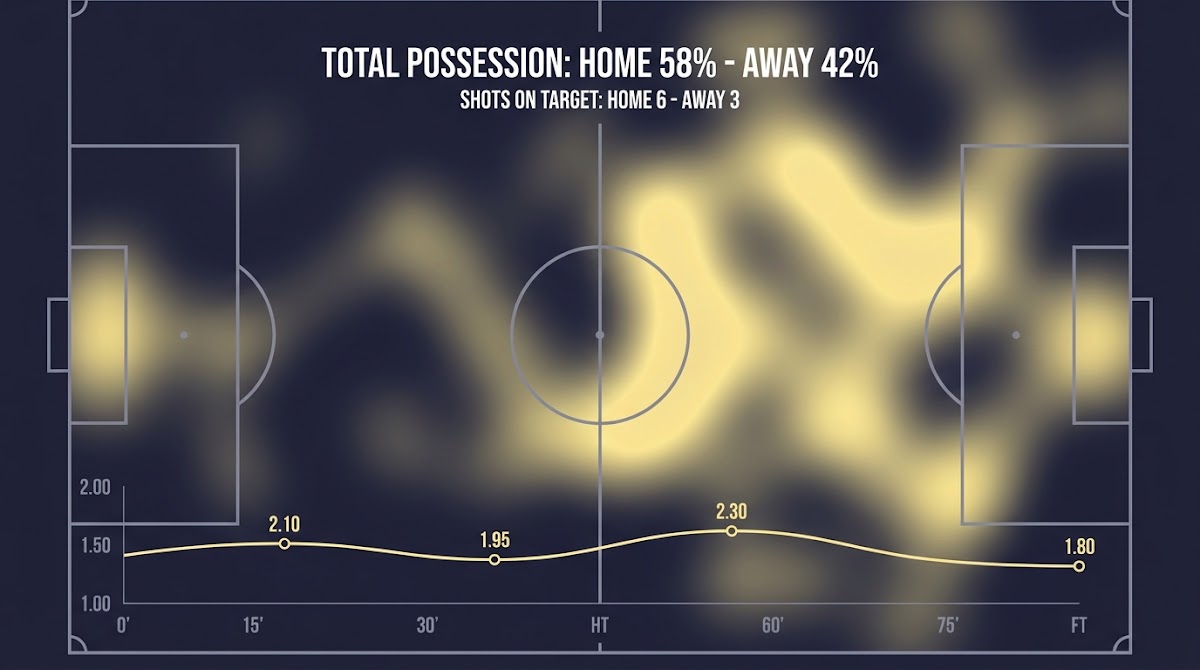
In live play, commentators, analysts and in-play markets all use similar vocabulary to describe what is happening on the field. To be clear from the start, possession percentage means the share of time a team controls the ball in open play, while field tilt or territorial control records where that possession occurs across the pitch and which team is sustaining pressure in attacking areas. These distinctions matter because possession by itself says little about scoring chances unless you also know where the ball is being kept and how it is being advanced. For background on governing timelines and match phases that affect live markets, see the IFAB Laws of the Game page IFAB Laws of the Game.
Expected goals, or xG, is a measure of shot quality that turns individual chances into a comparable scoring expectation; it is one of the primary chance-quality signals used to update live win probabilities and market prices in real time What Are Expected Goals, and there is continuing research on improving xG models improving xG models.
Expected goals, or xG, is a measure of shot quality that turns individual chances into a comparable scoring expectation; it is one of the primary chance-quality signals used to update live win probabilities and market prices in real time What Are Expected Goals. A related concept, on-ball value, attempts to measure the contribution of individual actions while a team has possession, showing which possessions are actually moving the team closer to a goal-scoring opportunity Introducing On-Ball Value (OBV).
Field tilt captures territorial dominance by measuring where possession is concentrated and how often a side forces play into the final third; it correlates more directly with chance creation than raw possession share, because it includes location information that raw percentiles ignore What Is Field Tilt.

How live prices are published depends on a mix of model outputs and operator rules. Broadcasters and data providers typically combine scoreline, time remaining, accumulated xG from recent sequences and territory signals to create live win-probability visuals that feed both viewer graphics and automated price suggestions. Those visuals are model-driven rather than purely editorial, and they rely on the same inputs used by many in-play pricing engines Live Win Probability Explained.
Finally, remember that the clock and stoppage rules govern the rhythm of in-play phases. Time remaining and how restarts are handled create predictable windows for odds drift and discrete repricing when material events occur, so traders and analysts should treat time structure as part of the signal set rather than a background detail IFAB Laws of the Game.
Possession percentage is an intuitive metric, but it hides where play happens. A team can hold a lot of the ball in its own half or play numerous lateral passes with little forward progress; this is often called sterile possession and it rarely implies an imminent score unless it changes the position of play. Field tilt, which integrates positional information, tends to align more closely with actual chance creation and therefore with price movement when attackers are consistently in profitable zones What Is Field Tilt.
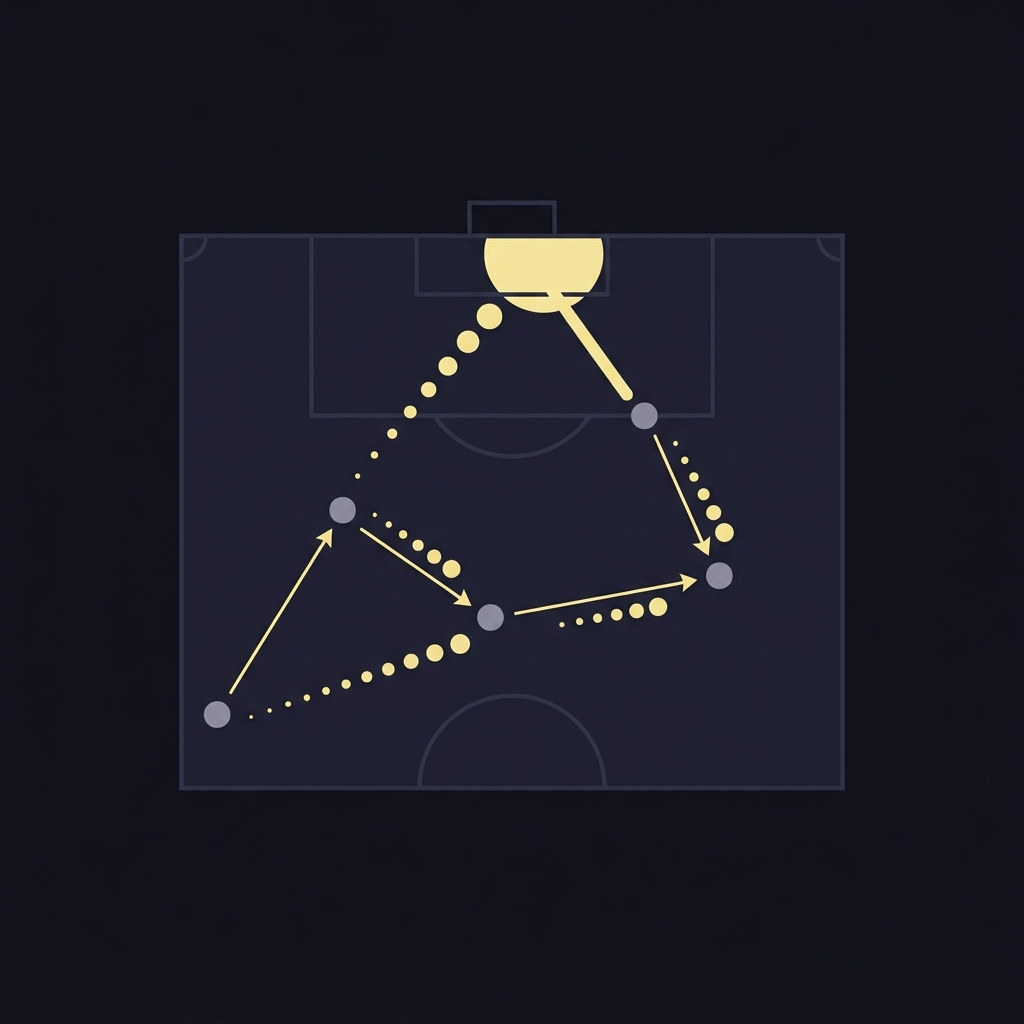
Sterile possession examples include long sequences of short, backward passes that protect a lead or drain the clock. These sequences can inflate possession percentage but do not necessarily increase expected goals or prompt bookmakers to shorten prices, because they do not raise the likelihood of a high-quality shot. Where possession includes progressive actions into the final third, the link to scoring probability becomes clearer and markets tend to react more strongly Introducing On-Ball Value (OBV).
Progressive actions and metrics that capture possession value help distinguish between possession that matters and possession that does not. On-ball value frameworks score passes, carries and other actions by how much they change a team s positional advantage or expected goal tally, so these metrics provide a more precise basis for interpreting whether possession will move live prices What Are Expected Goals.

How live probability models use possession signals to reprice odds
Live win-probability models typically use a compact set of core inputs: the current scoreline, time remaining, shot quality measures such as xG, and possession or territory context expressed through metrics like field tilt or progressive actions. Those inputs are combined to estimate the evolving likelihood of each outcome and inform in-play prices Live Win Probability Explained.
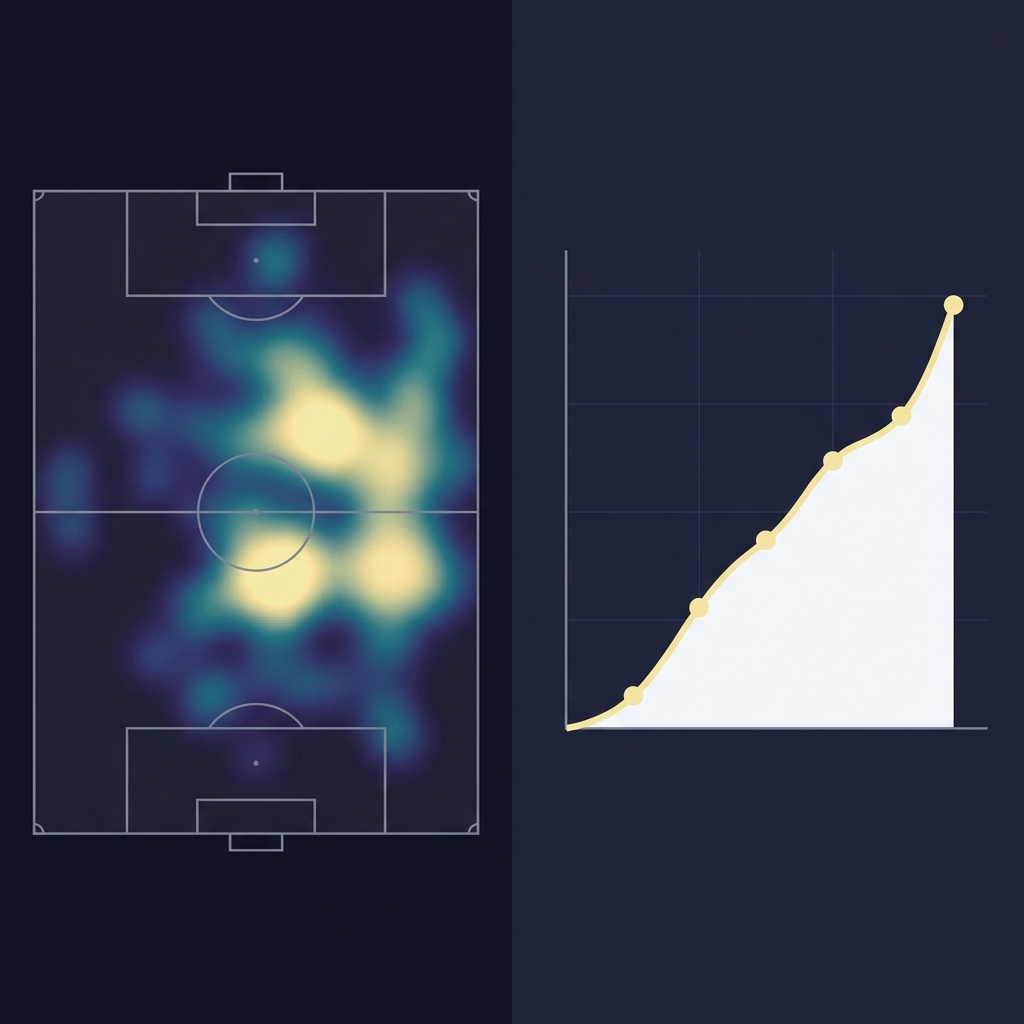
Models often update continuously, producing a gradual drift in probabilities as time passes and possessions accumulate. However, when a team generates high-quality chances or a sequence dramatically raises expected goals, the model will accelerate the update and shift probabilities more quickly to reflect the new information What Are Expected Goals.
It is useful to separate two modes of model behavior: slow continuous drift driven by time decay and low-impact possession changes, and discrete recalculation after high-impact events like shots on target, penalties or goals. Continuous drift captures the steady effect of possession quality over minutes, while discrete recalculation produces step changes when the probability mass must be redistributed based on a new event Live Win Probability Explained.
Combine possession location and progressive actions with accumulated xG and time remaining; require sustained field tilt and rising shot quality to treat possession as a reliable signal for in-play price movement.
When possession sequences raise expected shot volume and shot quality, the model s continuous updates will typically tighten the market in favor of the attacking side, but the pace of that tightening depends on time remaining and the existing scoreline. Short sequences in the opening minutes matter less to the final probability than similar sequences late in the game, because remaining time changes how much a new chance alters the overall expectation Live Win Probability Explained.
When markets pause and prices jump: how events reset the book
In-play markets frequently suspend around material events and then reopen with recalculated prices, producing step changes rather than continuous movement at those moments. Typical trigger events include goals, penalties, red cards and sometimes VAR interventions; these moments force operators and models to re-evaluate probabilities quickly before allowing new matched activity to continue In-Play Betting Rules and Information.
Operationally, a market suspension gives pricing engines a short window to freeze liquidity, incorporate the event into models and then reissue odds that reflect the updated scoring probabilities. Because the market cannot trade continuously through those discrete events, the observable price series shows jumps at event times rather than uninterrupted drift, and that behavior is important for traders to recognize In-Play Betting Rules and Information.
The role of the match clock is also relevant here. Stoppages, added time and the handling of restarts affect when markets reopen and how much weight the models give to possession sequences that happened immediately before a pause. The IFAB Laws of the Game shape those timing rules and therefore the practical windows in which odds drift occurs IFAB Laws of the Game.
Practical signals and a checklist for reading possession-driven price moves
Traders and analysts do better when they watch a set of situational signals rather than relying on possession share alone. Below are five signals to watch and a short do or don t note for each item.
- Sustained field tilt - Do: require several minutes of consistent territorial control before treating a move as meaningful. Don t: treat brief possession pulses as decisive. Field tilt is a stronger indicator of pressure than raw possession share What Is Field Tilt.
- Rising xG accumulation - Do: monitor how expected goals build over sequences. Don t: equate possession without shot creation to increased scoring likelihood. xG ties possession quality to shot probability What Are Expected Goals.
- Shot frequency and shot quality - Do: weigh the number and quality of recent shots more heavily than time of possession. Don t: ignore the context that makes shots threatening. High-quality chances accelerate model updates Live Win Probability Explained.
- Progressive actions and final third entries - Do: count carries and passes that move the ball into scoring zones. Don t: confuse circulation with progress. On-ball value frameworks help quantify these actions Introducing On-Ball Value (OBV).
- Set-piece pressure and turnover zones - Do: treat sustained corners, free-kicks and possession near the opponent s box as heightened risk for conceding. Don t: ignore how set-piece frequency changes expected shot composition. These patterns often change short-term market pricing What Are Expected Goals.
For practical use, combine these signals with the scoreline and time remaining: a modest field tilt at 75 minutes when the score is close often matters more than a larger tilt at 15 minutes. That interaction changes how models translate possession into probability shifts Live Win Probability Explained. See our blog for related perspectives.
compact checklist for monitoring possession, xG and territory signals
Use as a live reference, not a trading rule
Common mistakes and pitfalls when using possession signals
A frequent error is to treat possession percentage as a direct predictor without considering location or shot quality. That approach confuses control with threat and can produce false confidence when a team simply circulates the ball far from goal. Always ask whether possession actually increases the likelihood of a high-quality shot before acting on it What Is Field Tilt.
Another pitfall is overreacting to short surges of possession. Markets are efficient at pricing obvious short-term pressure, so a quick burst that lasts only one or two sequences is often already reflected in prices by the time a trader reacts. Requiring multi-minute confirmation reduces the chance of chasing noise Live Win Probability Explained.
Ignoring shot quality is also costly. A team that produces many low-probability shots will not see the same probability uplift as a team that creates fewer but higher-quality chances. Models favor increases in expected goals, not raw shot counts, when adjusting win probability and prices What Are Expected Goals.
Simple mitigations include demanding confirmation across multiple metrics, preferring penetrative sequences over possession in safe zones, and testing signals against historical outputs of live probability models rather than trusting intuition alone Live Win Probability Explained.
Example scenarios: reading price moves in real time
Scenario A, minute 24: Team A records 70 percent possession over the last ten minutes but most of that activity is in the middle third with several safe lateral passes and no shots inside the penalty area. Field tilt remains low for the attacking third and on-ball value shows few progressive actions. Market prices show little firming because expected goals have not meaningfully moved; possession in this case is largely maintenance rather than threat What Is Field Tilt (Funded Plays).
Practice reading in-play signals with structured challenges
Compare possession signals to chance-quality metrics for practice, and focus on sustained tilt and rising xG before making in-play decisions.
Scenario B, minute 62: Team B produces a short, sharp territorial surge with two high-xG chances inside five minutes, including a shot on target and a saved header from close range. The sequence increases recent xG rapidly and is coupled with several progressive passes into the box. Models respond by tightening the probabilities in favor of Team B, and prices tend to firm quickly because the event sequence alters expected scoring chances in a way possession percentage alone would not have signaled What Are Expected Goals.
Scenario C, minute 78: A red card is shown to Team C, the market suspends while operators and models recalibrate, and when the market reopens Team D s prices improve sharply. If Team D then sustains field tilt and accumulates high-quality chances, the initial step change from the red card is often amplified as models incorporate both the manpower shift and the subsequent territorial control In-Play Betting Rules and Information.
Each scenario points to the same practical lesson: possession matters most when it has location, progressive actions and measurable effect on expected goals. Short or deep possession without penetration rarely moves live probabilities significantly, while penetrative sequences with rising xG often do Introducing On-Ball Value (OBV).
Putting it together: rules for analysts and in-play traders
Here are five compact rules to follow in play.
- Prioritize penetrative possession over raw share - give weight to final-third entries and progressive actions when judging value Introducing On-Ball Value (OBV).
- Require sustained field tilt - look for several minutes of territorial control before interpreting a move as actionable What Is Field Tilt.
- Combine possession with xG and shot-quality signals - models respond to increases in expected goals more than to possession alone What Are Expected Goals.
- Respect scoreline and time - identical possession sequences have different implications depending on how much time is left and what the score is Live Win Probability Explained.
- Expect market suspension on material events - be ready for step changes after goals, penalties or red cards and avoid trading into unresolved events In-Play Betting Rules and Information.
These rules are practical rather than absolute. No signal guarantees an outcome, and markets reflect changes in scoring probabilities rather than raw possession metrics. Test any checklist or automated filter against historical model outputs before using it in live decisions Live Win Probability Explained (see how Funded Plays evaluations work) and consult recent research on probability models Estimating High-Probability Win Scenarios.
No. Possession percentage alone is an incomplete predictor; location, progressive actions and shot quality are needed to assess impact on live prices.
Track field tilt, xG accumulation, shot quality, progressive actions and set-piece pressure for a fuller view of possession value.
Markets often suspend on goals, penalties and red cards, then reopen with repriced odds that reflect updated scoring probabilities.
References
- https://www.theifab.com/laws/latest/
- https://theanalyst.com/eu/2020/07/what-are-expected-goals-xg/
- https://pmc.ncbi.nlm.nih.gov/articles/PMC11524524/
- https://statsbomb.com/articles/soccer/introducing-on-ball-value-obv/
- https://theanalyst.com/eu/2021/08/what-is-field-tilt/
- https://www.fundedplays.com/challenges
- https://theanalyst.com/na/2021/08/live-win-probability-explained/
- https://support.betfair.com/app/answers/detail/a_id/405
- https://www.fundedplays.com/blogs
- https://pmc.ncbi.nlm.nih.gov/articles/PMC11524524/
- https://www.fundedplays.com
- https://www.fundedplays.com/blogs/how-fundedplays-evaluations-work
- https://run.unl.pt/bitstreams/31263786-eb53-4a72-89e9-71a48251b15d/download
- https://www.frontiersin.org/journals/sports-and-active-living/articles/10.3389/fspor.2021.624475/full