
How Odds Reflect New Information: definition and core ideas
What odds represent today in regulated markets
Odds in regulated sports markets are best read as market prices that encode implied probability, not as plain statements about what will happen. Converting market quotes into implied probability is the first step if you want to interpret any move correctly, because the numbers shown on a display are prices influenced by the market and the operator's margin. Investopedia implied probability guide RG.org guide on changing odds
These prices update when new information becomes available, whether that information is public injury news, lineup confirmations, or shifts in order flow. The magnitude and speed of updates depend on how credible the information is and how much liquidity the market has; small, frequent adjustments are common in deep markets, while thin markets can show larger jumps when the same news arrives. AGA state of the states 2025 survey
Practice the routine on FundedPlays Challenges
Bookmark the checklist near the end of this article so you can run it whenever you see a notable line move.
Why interpreting moves needs probability conversion
Raw odds formats, whether decimal or American, are not directly comparable without conversion; a headline shift from 2.00 to 1.90 in decimal odds looks like a small change until you translate it into percentage terms. Performing that conversion reveals the actual probability delta and makes it possible to judge whether the move meaningfully changes the implied edge. Investopedia implied probability guide
Also remember bookmakers build a margin known as the overround into prices, so the sum of implied probabilities will usually exceed 100 percent. If you do not account for the overround you can misread the size of a move, especially when comparing prices across books with different margins. Smarkets overround article
How Odds Reflect New Information: converting odds to implied probability and adjusting for overround
Step-by-step conversion for decimal and American odds
To compare moves quickly you need a simple conversion method. For decimal odds, implied probability is 1 divided by the decimal price; for American odds, positive and negative formulas map to the same percentage scale. A compact worked example helps: decimal 2.50 implies a 0.40 probability before normalization, and American +150 corresponds to the same raw implied probability once converted. Investopedia implied probability guide
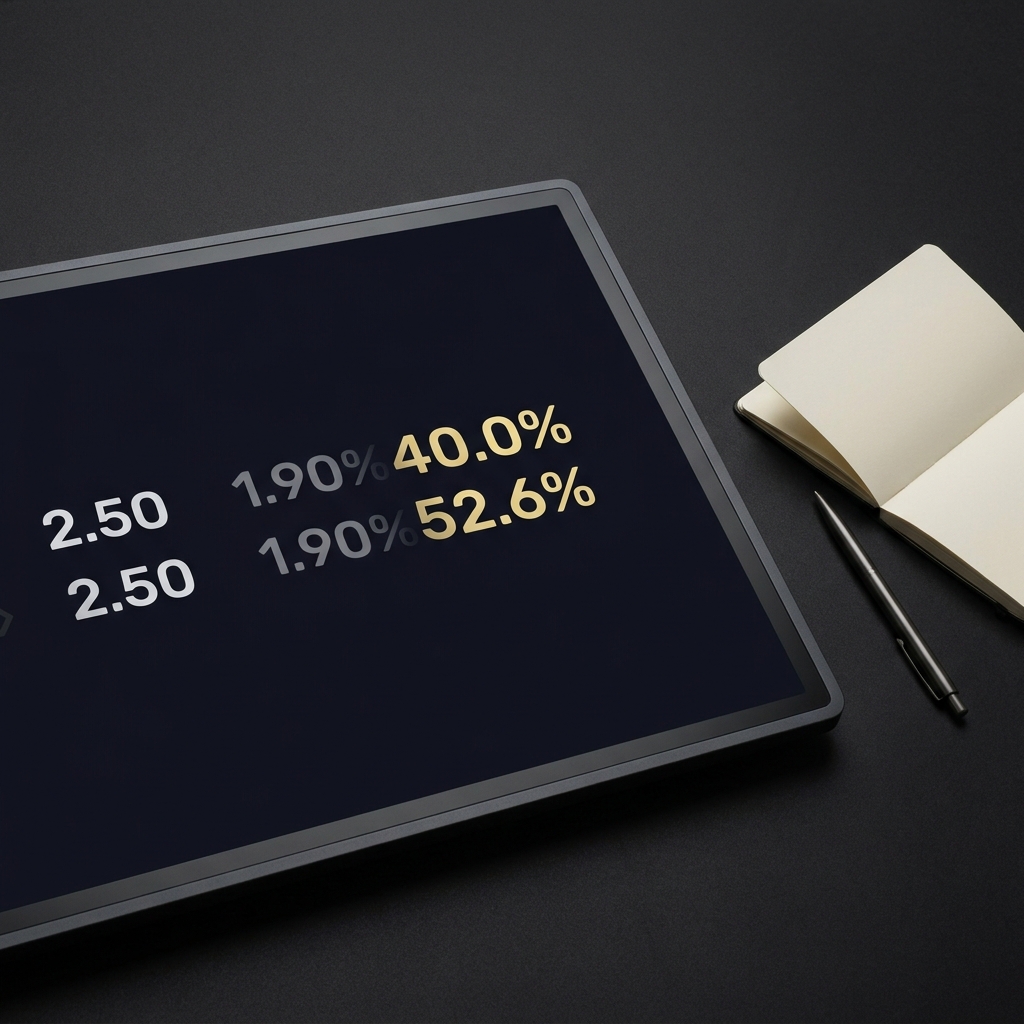
When you convert, round your result to a sensible number of decimals for speed; the goal is to see probability deltas, not to produce accounting-grade precision. Translating a shift into a probability delta lets you compare moves across markets and time. Investopedia implied probability guide
How to remove the overround to get a market-implied probability
After you compute raw implied probabilities for all outcomes, sum them and treat that sum as the market's overround-inflated total. Divide each raw probability by that sum to normalize the market-implied probability so the outcomes add to 100 percent; this step produces a cleaner picture of how the market actually views chances once margin is removed. Smarkets overround article
Compare raw changes and normalized changes: a headline move can look larger or smaller after normalization, and normalization is essential when you are benchmarking price movement across books or over time. Using a quick spreadsheet or a small mobile calculator can make the normalization step routine. Smarkets overround article
Bayesian intuition: how beliefs update when credible evidence appears
Bayes in plain language for bettors
The Bayesian lens says you start with prior beliefs and then update those beliefs when new evidence arrives; market odds are simply the market's aggregate posterior belief after information is folded in. This framing helps you expect the direction and rough size of adjustments when reliable news appears, because stronger evidence should pull a prior more than a weak rumor. Stanford Encyclopedia of Philosophy on Bayesian epistemology
For bettors that mental model has practical value: if a piece of news meaningfully changes the likelihood of an outcome, the market should move toward the probability implied by that evidence. If evidence is noisy or uncorroborated, the expected move is smaller. The market aggregates many individual priors, so the public consensus will often sit between extremes of belief. Stanford Encyclopedia of Philosophy on Bayesian epistemology
Short example: if your prior said a key player had a 90 percent chance to play and credible reporting reduces that to 50 percent, your posterior should shift accordingly and the market price should reflect a similar probability update once bettors and traders act on the news. Stanford Encyclopedia of Philosophy on Bayesian epistemology
Convert, check credibility, update your view
Use this quick loop before acting
Market mechanics: order flow, liquidity and margin that mediate information
How liquidity shapes the size and speed of price moves
Liquidity determines how much volume a market can absorb before the visible price changes; in deep markets a large bet will move the price less than in a thin market, so identical information can produce very different observed moves depending on market depth. AGA state of the states 2025 survey
That means you should treat the same probability-relevant news differently in small or large markets. A late lineup update in a major league often produces small, rapid adjustments across many books, while the same update in a niche market can create a seemingly large jump that mainly reflects scarce liquidity. AGA state of the states 2025 survey
When margin adjustments cause apparent moves without new public information
Bookmakers and exchanges periodically adjust margins for risk management or competitive reasons, and those adjustments can show as price movement even without fresh news about the event itself; separating margin-driven shifts from true information updates is a necessary skill. Smarkets overround article
Order flow from sharp accounts or large limits can also move lines before public news appears because those players act on private assessments; sometimes the market moves first and reporting follows. Observing simultaneous moves across multiple books or exchanges increases confidence that a move reflects information rather than a single operator's margin tweak. AGA state of the states 2025 survey
Closing prices and closing line value: why the market’s end-of-day snapshot matters
What closing line value (CLV) is and how practitioners use it
Closing line value, or CLV, is the difference between the price you took and the market price at the market's close; many practitioners treat the closing price as a dense snapshot of consensus after news has been incorporated, and they use CLV to judge whether earlier prices offered value. Unabated explanation of closing line value

In practice, comparing your entry price to the closing price is a simple, repeatable way to test whether you regularly bet ahead of information-based moves; consistent positive CLV is often seen by traders as a sign they found value before the market settled. Unabated explanation of closing line value
Limitations of CLV and league-specific timing issues
CLV is useful, but it has limits: local, late-breaking information can arrive after what you thought was the close and still change the final consensus, and different leagues have different rhythms that affect when most informative updates hit the market. Unabated explanation of closing line value
Because of that, treat CLV as a diagnostic rather than a guarantee; use it together with a record of the news events you saw and the liquidity context so you can learn whether your edge stems from information or from structural quirks in certain markets. Unabated explanation of closing line value
Integrity monitoring and abnormal moves: how operators check for suspicious activity
What integrity reports say about unusual price behaviour
Regulated markets include integrity monitoring that records and reviews abnormal price movements and information-driven activity, which helps maintain confidence that markets react to real signals and that suspicious or isolated anomalies are investigated. IBIA integrity report 2024
That oversight means rapid reactions to credible reports are normal, while extremely fast or isolated jumps without corroborating evidence can trigger alerts and reviews. For a bettor, this improves trust in the responsiveness of major markets but also means some moves can be paused or reversed during investigations. IBIA integrity report 2024
How investigations and alerts affect public lines
When operators detect anomalous patterns they may limit bets, adjust margins, or temporarily suspend markets pending review; those actions can make observed public lines more conservative and slow the market's reaction while integrity checks run. IBIA integrity report 2024
Overall, integrity monitoring supports faster incorporation of credible public information into regulated markets while providing safeguards that can moderate or flag unusually fast movements for later scrutiny. IBIA integrity report 2024
Separating information-driven moves from liquidity or margin effects
Signals that suggest real information versus microstructure noise
Look for coordinated moves across multiple books, sudden spikes in volume, and corroborating coverage from reliable news sources to identify moves likely driven by real information rather than market microstructure. Investopedia implied probability guide
Odds move when new evidence changes the market's implied probability; convert odds to normalized probabilities, check corroborating sources and liquidity, and compare to the closing price before acting.
Quick checks to run before assuming a move signals new facts
Run a few quick checks: convert the headline change to an overround-adjusted probability, check whether the move appears across other markets, and scan trusted news feeds for confirmation; if these checks align you have stronger reason to treat the move as information-driven. Investopedia implied probability guide
If instead you see a single-book drift, simultaneous margin changes, or a lack of corroborating volume, the move is more likely a liquidity or margin effect and should be treated with caution. Smarkets overround article
Practical workflow: how to monitor and interpret odds in real time
Tools and sources to watch
Combine a reliable news feed, a market price tracker that shows liquidity or matched volumes, and a personal notebook or spreadsheet for quick implied probability calculations. Watching the closing price later helps you learn whether early moves were durable. Unabated explanation of closing line value

A simple three-step routine to evaluate every notable move
Follow a repeatable routine: convert the odds to normalized implied probability, check for credible corroboration from multiple sources, and benchmark the move to expected ranges or the eventual close. Doing these steps consistently reduces reactive decisions and helps you build evidence for whether you truly found value. Investopedia implied probability guide SigmaPlay line movement guide
Keep records of your conversions and outcomes; over time you can use closing line comparisons to test whether documented moves that appeared information-driven actually produced durable edges. This disciplined process is useful whether you are evaluating short-term news or building longer-term models. Unabated explanation of closing line value
Decision criteria: when to act on an odds move and when to wait
Risk management and bankroll considerations
Use probability delta thresholds after overround adjustment to decide whether a move merits action; tie those thresholds to your bankroll rules so that you only act when the expected edge justifies the risk according to your stake plan. Investopedia implied probability guide
Do not treat headline odds alone as a call to act; fold in the corroboration checks and liquidity context so your decisions remain disciplined and aligned with your overall risk limits. Favor smaller, consistent edges over occasional large bets that ignore structure. Unabated explanation of closing line value
Thresholds for reacting based on probability deltas
Set a clear threshold that matches your strategy and bankroll: for example, require a minimum normalized probability delta that produces a reasonable expected value before changing your position, and increase the threshold when liquidity is low or news is uncertain. Investopedia implied probability guide
When moves are corroborated across markets or supported by high-quality reporting, you can consider acting with a lower threshold because the evidence reduces uncertainty. Always prefer verified information and cross-book confirmation before altering stakes meaningfully. Unabated explanation of closing line value
Common mistakes and cognitive traps when reading odds movement
Overreacting to small moves
One frequent error is overreacting to small headline odds shifts without converting them into probability changes; what looks like a large monetary change can be a tiny probability delta and should not trigger an outsized response. Investopedia implied probability guide
Confirmation bias and hindsight bias also warp how we remember moves: a line that moves after the fact will often seem obvious in hindsight, but disciplined bettors document their pre-move beliefs to avoid this trap. Investopedia implied probability guide
Ignoring overround and normalization
Failing to normalize for overround can create a false sense of edge; normalization lets you compare apples to apples across books and reduces the chance of being misled by margin shifts that look like probability changes. Smarkets overround article
Finally, avoid equating liquidity-driven drift with new information; when a market drifts without corroborating signals, the apparent opportunity may be structural and short lived. AGA state of the states 2025 survey
Worked examples and scenarios: injuries, late lineups and sharp order flow
Example 1: confirmed injury 48 hours before kickoff
Walkthrough: suppose the market initially prices Team A at decimal 1.80 and your prior assessment put the starter at 90 percent to play. If reporting from a trusted source lowers that to 50 percent, convert the odds before and after into normalized probabilities and apply a Bayesian-style update to see what the market should do; this shows whether the visible move matches the information. Stanford Encyclopedia of Philosophy on Bayesian epistemology OddsIndex injury impact guide
Then check other books and liquidity indicators; if the move is echoed broadly and the closing price settles in the same vicinity, the update probably reflected genuine information and your normalized probability delta gives a clearer picture of the edge. Unabated explanation of closing line value
Example 2: late lineup scratch one hour before game
Late scratches compress the time for markets to absorb news, so bets that act quickly may gain CLV if the market moves against them before the close. In thin markets, a single large limit bet can push the public line sharply, so corroboration is important to distinguish a true information move from order-flow noise. AGA state of the states 2025 survey

After the event, compare your entry to the closing price and record whether the move held; consistent patterns across many such cases indicate a repeatable information advantage, while inconsistent outcomes suggest liquidity or margin effects dominated. Unabated explanation of closing line value
Quick reference checklist and short takeaways
Five-step checklist to run when you see a move
Convert the odds to implied probability and normalize for overround, confirm the news with multiple sources, check liquidity and volume, compare to the closing price, and then apply your bankroll rule before acting. Investopedia implied probability guide
In short, treat markets as aggregators of belief: update your priors when credible evidence arrives, but always account for margin and liquidity before assuming a move implies lasting value. Stanford Encyclopedia of Philosophy on Bayesian epistemology
Conclusion: a disciplined, Bayesian-informed approach to reading odds
What to remember
Odds are market probabilities that change when new evidence arrives, and a Bayesian-informed routine plus careful conversion and normalization gives you a practical framework to read those moves. Investopedia implied probability guide
Practice by tracking a few markets, computing implied probability deltas, and comparing your entries to closing prices to learn whether your interpretation of moves consistently aligns with market outcomes. Unabated explanation of closing line value
Use 1 divided by decimal odds for decimal formats or the standard American formulas, then normalize outcomes by dividing by the sum of raw implied probabilities to remove overround.
Closing line value is the difference between your entry price and the market close; it helps indicate whether you took a price before the market incorporated information, but it is diagnostic rather than definitive.
Check for coordinated moves across books, volume spikes, and corroborating reports; single-book drifts and simultaneous margin changes point to liquidity or margin effects.
References
- https://www.investopedia.com/terms/i/implied-probability.asp
- https://www.americangaming.org/resources/state-of-the-states-2025/
- https://help.smarkets.com/hc/en-gb/articles/360000109678-Overround-and-its-effect-on-odds
- https://plato.stanford.edu/entries/bayesian-epistemology/
- https://unabated.com/learn/closing-line-value/
- https://www.fundedplays.com/challenges
- https://ibia.bet/wp-content/uploads/2025/01/IBIA-Integrity-Report-2024.pdf
- https://rg.org/guides/sportsbetting-guides/changing-odds
- https://www.fundedplays.com
- https://www.fundedplays.com/blogs
- https://www.fundedplays.com/blogs/how-fundedplays-evaluations-work
- https://oddsindex.com/guides/injury-impact-betting-guide
- https://sigma.world/us/play/blog/line-movement-in-sports-betting/