
What a point spread is and why sportsbooks use it
How NFL Point Spreads Work
Definition and simple example
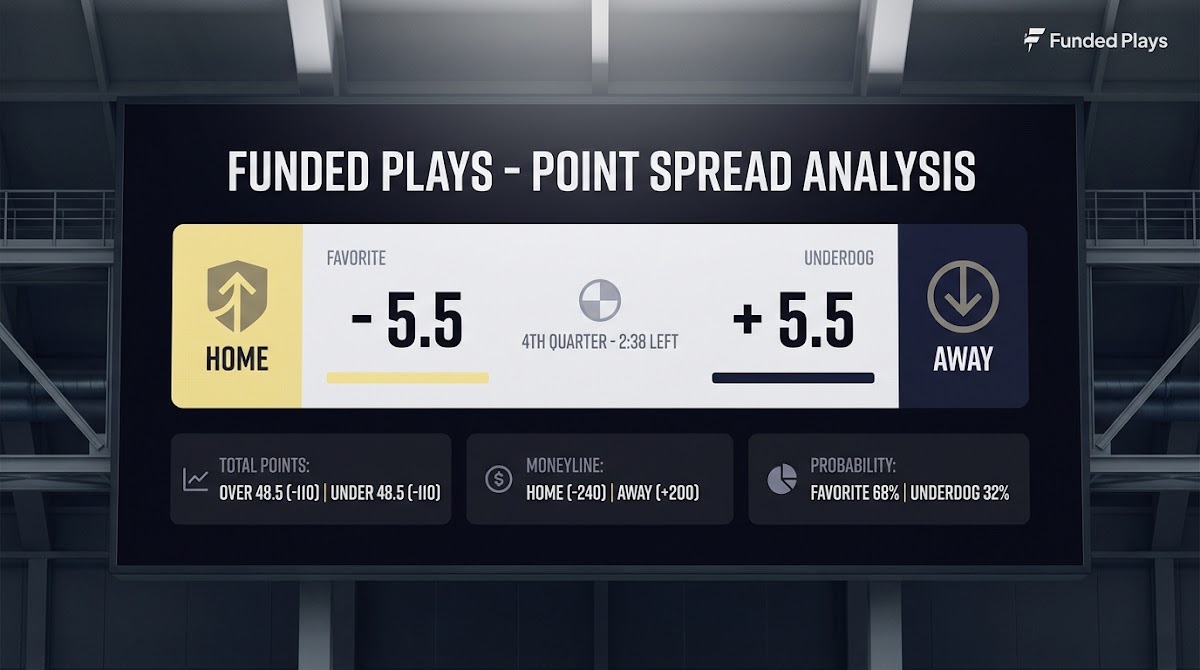
A point spread is a handicap applied to the final score so bets settle on an adjusted margin. The favorite is shown with a negative number and the underdog with a positive number; this notation tells you how many points the favorite must win by for a bet on that side to cover. For a clear example, if Team A is listed at -6 and Team B at +6, Team A must win by more than 6 points for a Team A spread wager to cover, while Team B covers if it loses by fewer than 6 points or wins outright. This explanation follows common industry definitions used in U.S. regulated markets, which explain how handicaps and pushes are handled in settlement Investopedia point spread article.
In practical terms, a push occurs when the final margin exactly equals a whole-number spread. When that happens, most operators return stakes under their published house rules rather than grading a win or loss for either side. That standard treatment of pushes is a core part of spread mechanics in U.S. regulated markets and is described in plain-language guidance from industry organizations American Gaming Association sports betting guide.
Why spreads create balanced betting markets
Bookmakers set spreads so the adjusted outcomes look roughly 50/50 to bettors, which helps balance wagering on both sides and limits the operator's exposure. By shifting the required margin of victory, a spread aims to split betting interest rather than simply reflect the most likely winner. This balancing approach is a defining feature of how point spreads function in regulated U.S. markets and is part of standard oddsmaking practice Investopedia point spread article.
For bettors this means the spread is less a prediction of the exact final score and more a tool designed to create a contest between bettors on each side of the line. Understanding that distinction helps when deciding whether to back a favorite or an underdog and is useful when comparing lines across operators.
How spread odds and payouts work (American odds example)
Reading American odds for spreads
Spread prices are commonly shown with American odds alongside the handicap, for example Team A -3 (-110). The -110 indicates the price on that side and expresses the stake to profit relation used in U.S. odds formats. A price near -110 on each side is a common way for operators to embed a commission or margin into the market so the book can balance risk across many events Investopedia American odds definition.
Remember that actual prices vary by operator and can move with betting action and market conditions. The price you lock in is the one your wager will be settled at, subject to the operator's published house rules, so confirm the accepted odds when you place a bet.

Worked payout example at -110
Worked payout example at -110
Step 1, read the price. A -110 price means you must risk 110 to win 100 in profit.
Step 2, place a stake and note the potential payout. If you stake 110 at -110 and the selection covers, you receive 210 in total: your 110 stake returned plus 100 profit. This follows standard American odds payout conventions and is the basis for how spread bets pay out in U.S. markets Investopedia American odds definition.
Step 3, understand pushes. If the final margin equals a whole-number spread and the result is graded a push by the operator, your original stake is returned rather than being a win or a loss. That settlement approach is specified in sportsbook house rules and is the typical outcome for pushes in regulated jurisdictions New Jersey Division of Gaming Enforcement overview.
See FundedPlays Challenges and their evaluation examples
Before placing a spread wager, double-check the displayed odds and the operator's settlement terms for pushes and cancellations.
How oddsmakers set opening NFL spreads and why lines move
Power ratings and statistical models
Oddsmakers start with power ratings and predictive models that quantify team strength across many factors, then translate those ratings into an opening spread. These models consider things like recent performance, matchup statistics, and historical tendencies to produce a baseline line. The use of ratings and models to set opening spreads is a standard practice described in industry overviews and regulatory guidance American Gaming Association sports betting guide.
Because models are only an initial step, bookmakers often adjust their lines manually to reflect market knowledge and expert judgment. The opening line is not fixed; it is a starting point intended to be refined as more information becomes available.
News, injuries and betting action that shift lines
Lines move after the opening number when new information arrives. Common drivers include injury reports, lineup changes, weather forecasts, and how much money is being staked on each side. These forces influence both the price and the handicap because operators update lines to manage liability and keep the market balanced. Sports wagering regulations and operator procedures emphasize that bets are honored at the odds accepted when placed, so a later movement does not change previously accepted wagers New Jersey Division of Gaming Enforcement overview.
For bettors this means timing and monitoring news matter. If a key player is listed as questionable and then ruled out, the spread can shift quickly, and the available prices can change before you place a wager. Always record the exact odds you accept if you want to reference settlement terms later.
Pushes, half-point hooks, and settlement rules
What is a push and how most books handle it
A push happens when the final margin equals a whole-number spread. In that case most U.S. operators grade the wager a push and return stakes, subject to the operator's published house rules. This is the routine settlement approach in regulated markets and is documented in regulatory and operational guides Investopedia point spread article.
Because pushes return stakes rather than resolve as wins or losses, bettors sometimes prefer lines with half-points to avoid them. A returned stake means no win or loss was recorded for that wager in most book systems.
Sportsbooks combine power ratings and predictive models to set an opening spread, then adjust that line for injuries, news, weather, and betting action to manage liability; placed wagers are honored at the accepted odds under the operator's published house rules.
How half-points avoid pushes and why hooks matter
Bookmakers often post half-point spreads, like -3.5, to eliminate the possibility of a push. That extra half-point is commonly called a hook and makes the outcome binary: a team either covers or fails to cover, with no exact-tie outcome. The use of hooks to prevent pushes is standard practice and is part of how operators manage settlement outcomes New Jersey Division of Gaming Enforcement overview.
When you shop lines, notice whether a market uses whole-number spreads or half-point hooks. The hook itself has no predictive power; it simply changes how often pushes occur. Confirm the operator's house rules for handling pushes, cancellations, and official results so you know how any given wager will be settled.
Also note that in most NFL markets overtime scoring is included in spread settlement unless an operator's rules specify otherwise, so check the posted settlement policies before wagering Investopedia point spread article.
Why sportsbooks charge a vig and why many spreads show -110
What the vig is and how it appears in spread pricing
The vig is the bookmaker's margin, the built-in commission that allows an operator to profit when betting is balanced. Pricing both sides near -110 is a common convention that embeds a small margin in each side of the market so the operator can collect revenue while accepting wagers. Explainers on American odds and market pricing describe how that convention functions in practice Investopedia American odds definition.
That embedded cost matters for bettors because it reduces expected returns over many wagers. Understanding the vig is essential when assessing whether a long-term approach to spreads can overcome the market cost, and it should factor into bankroll sizing and strategy decisions.
How prices can differ by operator and market
Not every operator uses exactly -110 or the same price on both sides. Prices can vary by operator, market conditions, and how quickly a book wants to move a line to balance liability. Those differences influence the expected payout and are important to compare when you shop for lines. Regulatory guidance encourages transparency about pricing and settlement so bettors can verify the terms that apply to their wagers New Jersey Division of Gaming Enforcement overview.
Because prices vary, the same spread at two operators can produce different expected returns. That is why line shopping and noting prevailing market prices is a common discipline among serious sports forecasters.
How to read common line notations and what they mean
Negative and positive signs, half points, and decimals
Negative numbers indicate the favorite and positive numbers indicate the underdog. For example, Team A -4 means Team A is the favorite by four points, while Team B +4 is the underdog by four points. If a line shows a half-point like -4.5, the favorite must win by five or more to cover; there is no push with a half-point. This notation guidance mirrors how point spreads are displayed in most U.S. wagering interfaces and educational resources Investopedia point spread article.
Decimal displays sometimes appear in international or aggregated odds boards, but the underlying meaning is the same: the sign and magnitude describe the handicap. Always confirm whether a platform uses half-points to avoid pushes or presents whole-number lines that can result in returned stakes.
Line boards, books and online notation differences
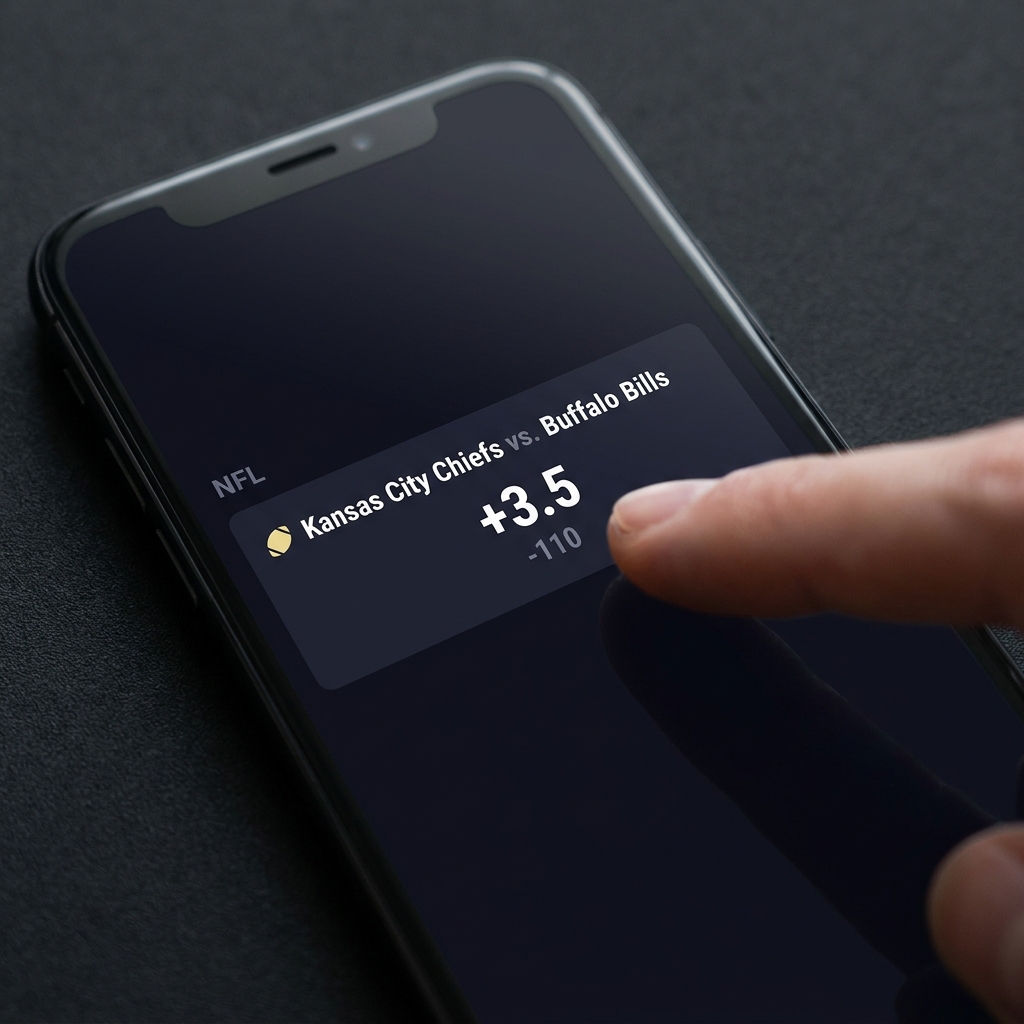
Books and boards often combine spread and price into a single display like Team A -3 (-110), which reads as the handicap followed by the American odds in parentheses (see NFL odds). Mobile apps and online boards may abbreviate or use icons, so learn the operator's display conventions before placing a wager. Knowing how to read a combined listing helps you confirm both the handicap and the stake to profit relationship at a glance Investopedia point spread article.

If you see a listing that includes both spread and price, read it left to right: the spread first, then the price in parentheses. That convention is common across U.S. operators and helps avoid misreading the stake and the potential payout. When in doubt, expand the event display or check the operator's help pages for notation examples.
What 'covering the spread' means and how bettors use that concept
Covering vs winning: why a winning team may not cover
Covering the spread means the team met the handicap requirement after adjusting the final score by the spread, not simply that it won the game. A favorite can win the game but fail to cover if it wins by fewer points than the spread indicates. Conversely, an underdog can lose but still cover if it loses by fewer points than the spread. This distinction is fundamental to spread betting and is outlined in introductory resources for bettors Investopedia point spread article.
As an example, if Team A is -7 and wins by 6, Team A wins the game but does not cover. Bettors on Team B who backed the +7 would win their spread bets in that scenario.
How cover rates and variance affect short-term results
Short-term cover rates are subject to variance and the cost of the vig, so a sequence of wins on the moneyline does not guarantee profit when betting spreads. Over time, cover rate and payout expectations must overcome the bookmaker's margin for a bettor to be profitable. That combination of variance and vig is why many informed participants focus on discipline, staking plans, and record-keeping rather than chasing immediate results Nevada Gaming Commission operations guidance.
Remember that operator settlement rules and how pushes are handled will also affect realized results. Confirm those rules before evaluating your historical performance so you compare outcomes using the same settlement definitions.
Common mistakes bettors make with NFL spreads
Ignoring published house rules and settlement details
A frequent error is not checking a sportsbook's published house rules for how pushes, cancellations, and official results are handled. These rules determine whether overtime is included, how ties are graded, and what happens if a game is postponed or cancelled. Regulatory summaries and operator disclosures explain that these policies govern settlement and should be reviewed before wagering New Jersey Division of Gaming Enforcement overview.
Another common mistake is assuming a -110 price is identical across books. Differences in pricing and market timing mean the same nominal price may come with different practical consequences, so compare both the handicap and the odds before staking money.
Quick pre-bet spread verification checklist
Use before placing any spread wager
Misreading pushes, hooks, and line notation
Misinterpreting the sign or failing to notice a half-point is a simple mistake that can flip a winning bet into a loss or a push. Carefully read the display and, when possible, expand the event details to confirm whether the market includes halftime results, overtime, or other special settlement rules. Clear reading prevents avoidable errors and aligns your expectation with the operator's settlement rules Nevada Gaming Commission operations guidance.
Quick steps to avoid these errors include taking a screenshot of the accepted odds, saving the event ID or ticket number, and keeping a short pre-bet checklist. These steps make it easier to resolve disputes and to review your record accurately.
Practical examples and scenario walkthroughs
Single-game cover examples with different spreads
Scenario 1, whole-number spread and a push. Line: Team A -3 at -110. Final score: Team A 23, Team B 20. Result: Team A wins by 3, the margin equals the spread, and most operators grade this as a push and return stakes per house rules. That outcome demonstrates the push mechanic and why some bettors avoid whole-number lines when possible.
Scenario 2, half-point hook. Line: Team A -3.5 at -110. Final score: Team A 23, Team B 20. Result: Team A wins by 3, which is less than 3.5, so Team A does not cover and wagers on Team B +3.5 win. The half-point prevented a push and produced a decisive cover outcome.
How teasers and parlays change spread outcomes
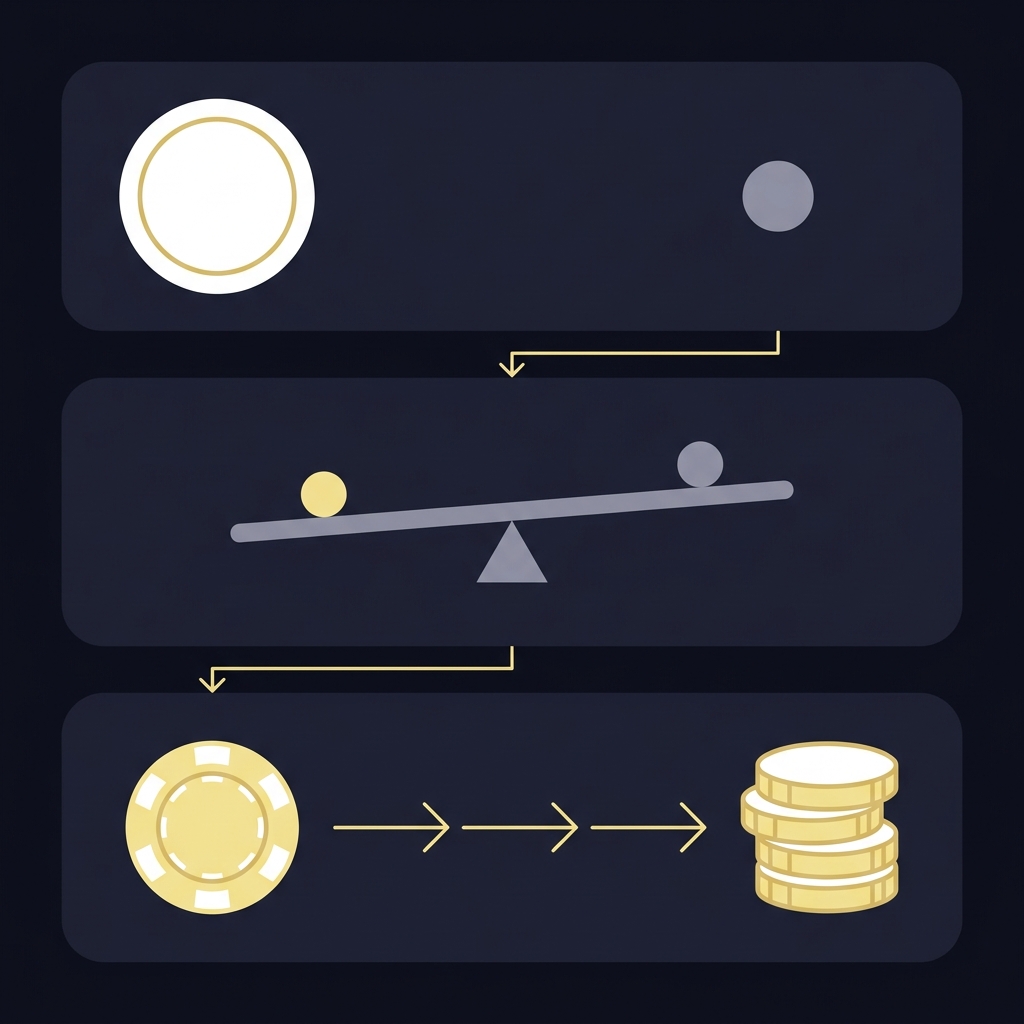
When you combine multiple spread bets into a parlay or a teaser, individual pushes can affect the whole bet differently depending on the product rules. A parlay that requires every leg to win will typically lose if any leg loses, but some operators treat pushed legs differently, reducing the parlay by one leg. Teasers adjust each leg by a negotiated number of points, changing the conditions needed to cover. Product terms and settlement details vary, so check the specific product rules for multi-leg bets before placing them.
Always state assumptions for these scenarios when you test strategies: indicate whether overtime is included and whether pushes are treated as reduced legs, returns, or losses. Clarifying assumptions helps when you replay scenarios against published house rules.
Checklist: what to confirm before placing a spread bet
Checklist: what to confirm before placing a spread bet
Quick pre-bet checklist
1) Confirm the displayed spread and the attached price at the moment you place the wager. 2) Check the operator's house rules for how pushes, cancellations, and official results are handled, including whether overtime counts. 3) Note the accepted odds and time stamp or ticket ID. 4) Compare prices across operators to reduce vig where possible. 5) Use responsible staking sizes and never assume any platform guarantees profit. These steps reflect standard best practices and settlement expectations in regulated U.S. markets New Jersey Division of Gaming Enforcement overview.
Where to find official house rules: look for a sportsbook's help or rules page, an official results or settlement page, and regulatory filings posted by state gaming authorities. These documents state how pushes, cancellations, and overtime are included in settlement and are the authoritative source for any dispute.
Final practical reminder: fund management and disciplined record-keeping matter more than chasing marginal edges. Verify terms before each wager and track your results against the operator's settlement definitions.
In most U.S. regulated markets a push occurs when the final margin equals a whole-number spread and operators typically return stakes according to their published house rules.
Generally yes, most NFL spread markets include overtime in settlement unless an operator's house rules specifically say otherwise, so always check the posted rules.
A -110 price is a common convention that embeds the bookmaker's margin, or vig, into both sides of the market, though exact prices can vary by operator and market conditions.
References
- https://www.investopedia.com/terms/p/pointspread.asp
- https://www.americangaming.org/resource/sports-betting-101/
- https://www.investopedia.com/terms/a/americanodds.asp
- https://www.nj.gov/oag/ge/sports.html
- https://www.nv.gov/index.aspx?page=51
- https://www.fundedplays.com/challenges
- https://www.fundedplays.com
- https://www.fundedplays.com/blogs
- https://www.fundedplays.com/blogs/how-fundedplays-evaluations-work
- https://www.thescore.com/nfl/news/2680767/nfl-betting-how-to-using-team-ratings-to-calculate-point
- https://www.foxsports.com/stories/betting/what-is-point-spread
- https://www.cbssports.com/nfl/odds/