
What late-season motivation means for NFL prices
Definition of motivation in pricing context
Motivation, in betting and pricing terms, refers to how lineup choices, coaching signals, and explicit playoff incentives change a team’s expected in-game performance. In late-season NFL markets these non-performance signals can alter expected points and win probability enough that handicappers and models take notice. To be useful, motivation must be framed as a conditional input tied to personnel and strategic choices rather than as a permanent quality of a roster.
For practitioners focused on late-season NFL betting, motivation most commonly shows up as three measurable channels: whether a team needs a win for playoff seeding, whether a starter is likely to be rested, and whether coaches use the game to evaluate depth players. Those channels interact and can either raise or lower a team’s priced expectation depending on confirmation from official notices and practice activity.
Week 18 in particular concentrates these signals because the league intentionally clusters games with shared playoff implications in the same broadcast windows. This scheduling reduces strategic manipulation opportunities and increases the density of consequential information in a short period, which makes timing and verification critical to how prices move NFL Communications.
quick watchlist to track incentive states and confirmation timing
Use as a pre-bet gating checklist
Why Week 18 and late-season windows matter
Week 18 compresses decision points because many teams move from theoretical to definitive outcomes at the same calendar time. That compression means a single late disclosure about a starter or an inactive can create correlated price reactions across multiple games in the same broadcast window. The scheduling intent is to preserve competitive integrity while forcing clarity on important decisions, which changes how markets react as kickoff approaches NFL Football Operations (see ESPN's Week 18 guide: ESPN).
That concentration matters for prices because markets react most strongly to changes that come with confirmed personnel decisions, and clustered windows mean several markets may require rapid repricing almost simultaneously. For traders and modelers this creates scenarios where liquidity is tested on multiple fronts in a short span.
How NFL scheduling and integrity rules compress late information flow
Scheduling clusters and broadcast windows
The NFL groups games with interconnected playoff implications into shared broadcast windows to prevent manipulation and to make late outcomes meaningful. When games that determine seeds or wild card spots are played at the same times, teams have less opportunity to change their approach based on an earlier result, which reduces one form of strategic advantage and concentrates market-relevant information.

That concentration matters for prices because markets react most strongly to changes that come with confirmed personnel decisions, and clustered windows mean several markets may require rapid repricing almost simultaneously. For traders and modelers this creates scenarios where liquidity is tested on multiple fronts in a short span.
Flexible scheduling and its effect on markets
Flexible scheduling can shift kickoff windows late in the season, placing more consequential games into the prime late slots and increasing the probability that several decisions hit market feeds at or near the same time. In practice that raises the chance of cascading moves as sportsbooks and trading desks absorb multiple correlated signals in a compressed period NFL Football Operations.
For anyone following late-season odds, the practical implication is clear: expect higher information density and be prepared for multi-game repricing around key disclosure times. That makes timing rules and source hierarchy part of a robust trading playbook.
Gameday procedures that trigger late line shocks
Inactives deadline and timing
One of the most direct causes of sharp late moves is the league requirement that teams submit their inactives list 90 minutes before kickoff. Many starter absences or confirmed rests arrive at that deadline, and those announcements can force immediate line gaps when they contradict early expectations or public narratives Inactives list procedures.
If a front-line starter, especially at quarterback, is ruled inactive close to that window, sportsbooks and modelers must quickly update probabilities and spreads to reflect depth-chart drop-offs and potential game-plan changes. The timing of that confirmation is as relevant as the content of the announcement. (See recent injury report coverage: CBS Sports.)
Motivation should be a conditional input validated by official inactives and practice participation; use probability-weighted adjustments rather than flat premiums.
Injury reporting cadence
Injury reports and practice participation updates are published through the week and provide a cadence of signals: early-week absences, mid-week practice trends, and the final inactive confirmations. Because the 90-minute deadline is concrete, the market often shows more muted or speculative movement earlier in the week and sharper, executed adjustments as the deadline approaches and inactives are posted.
For traders this means building watches for the sequence of disclosures and weighting late official confirmations more heavily than early narrative-driven changes. The sequencing of events often determines whether an early steam move holds or retraces once formal notices arrive.
How markets typically price 'must-win' incentives and where bias appears
Public demand, narrative framing, and short-term steam
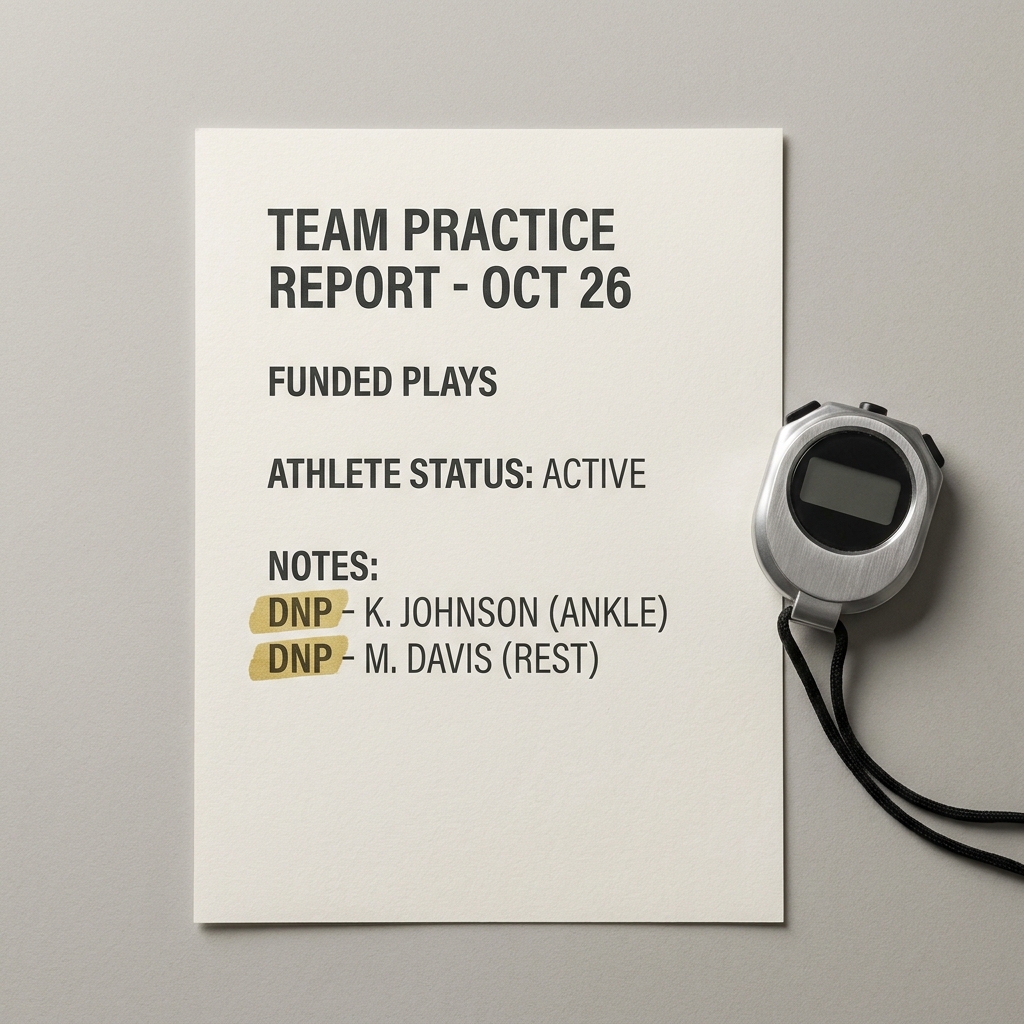
Must-win narratives attract public attention and money. Early-week sentiment often drives lines shorter for teams perceived to have a strong incentive, producing what traders call steam movement. That early pressure can embed a narrative premium into prices before confirmation of personnel or strategy changes is available.
Several analytic reviews have found that must-win teams are commonly priced too short against the spread late in the season, indicating that public demand and narrative framing can exceed actual performance value when not validated by personnel signals Unabated analysis.
Evidence that must-win teams are often overpriced
Follow-up studies show a pattern: early-week steam pushes must-win teams toward shorter lines, but as practice reports and coach comments clarify availability and intent, prices frequently retrace closer to fair value by close. This pattern suggests early narrative pressure is a real source of bias that modelers can exploit only if they verify signals rather than assuming the premium persists Pinnacle.
The practical takeaway is to treat early-week motivation signals as hypotheses to be confirmed, not as immediate, permanent pricing edges. Overreliance on these narratives without corroboration increases susceptibility to retracements and short-term noise.
A practical framework to model motivation without blanket premiums
Core components to include
Modelers should encode motivation as conditional features, not as flat multipliers. Key inputs include explicit playoff incentive state, QB rest probability, depth-chart drop-off metrics, and practice participation indicators. Combining these signals and validating against official disclosures produces a more robust motivation adjustment than applying a uniform premium to every must-win team Inactives list procedures.

For example, a conditional adjustment might increase a team's expected points only when the incentive state indicates a must-win and the QB rest probability is below a specified threshold, and then scale that increase by measured depth-chart drop-off if backups have significantly different expected outcomes. This approach separates motivation signal from unverified narrative pressure and reduces false positive adjustments.
How to validate motivation signals
Validation should be operationalized through backtesting and live signal reconciliation. Use timed official disclosures such as inactives and practice participation to confirm when motivation features should have been active. If a feature shows value only in early-week windows and not after official confirmations, it likely reflects narrative-driven bias rather than an exploitable signal Unabated analysis.
Another validation step is to compute QB rest probability from practice participation trends and historical coach behavior, then compare predicted inactive occurrences to actual inactives. This reduces reliance on ad-hoc boosts and makes adjustments conditional on observable confirmation.
Decision checklist for traders and modelers
Fast checklist for pre-bet confirmation
Use a short pre-bet sequence: confirm playoff implication state, verify starter availability via the inactives list, assess QB depth drop-off, and read coach language in practice reports. Prefer late confirmations before applying sizable adjustments to positions Inactives list procedures. (More detail available on our blog: Funded Plays blog.)
When the sequence yields mixed signals, reduce adjustment size or wait for inactives. Time-sensitive sizing reduces the chance of being caught by late retracements when early-week steam fades.
When to discount motivation as a factor
Discount motivation when there is no official personnel signal, when a team is already clinched without an incentive to rest starters, or when rumors are the only source of movement. These scenarios commonly produce false positives for motivation-based adjustments and undermine systematic performance.
Sizing guidance: use small conditional increments tied to confirmation levels, and always cap the maximum adjustment you will apply before inactives are posted. Conservative sizing preserves capital while still allowing you to respond when high-confidence evidence arrives Pinnacle.
Common mistakes and pitfalls when trading late-season motivation
Over-reliance on narrative and early steam
A frequent error is tailing early-week steam on must-win teams without enforcing a confirmation hierarchy. Many traders have seen early pressure evaporate once the inactives list or practice confirmations are published, leaving positions mispriced when the retracement happens Pinnacle.
To avoid this trap, require at least one high-confidence confirmation before applying large adjustments: official inactives, consistent practice absences across multiple days, or clear coach statements that match prior behavior.
Misreading rest signals and depth drop-offs
Assuming that a clinched opponent will rest starters without personnel confirmation is another common mistake. League scheduling and integrity policies reduce the incentive for overt manipulation, and coaching decisions vary widely. Without corroborating inactive confirmations or practice trends, blanket tanking assumptions are unreliable NFL Communications.
Better practice is to quantify depth-chart drop-offs and apply those numbers only when rest or inactive confirmations exist. That reduces false signals from narrative-driven expectations and keeps adjustments tied to observed changes in team capability.
Three practical scenarios: how motivation moves lines in real games
Scenario A: must-win team gets early-week support then retraces
Early in the week public money can push a must-win side shorter as bettors react to the simple narrative that one team must win. If practice reports later show full participation and no resting starters, the market often retraces as modelers and bookmakers remove the assumed premium. This pattern reflects the distinction between narrative-driven steam and confirmed motivation signals Unabated analysis.
In that case a prudent trader either ignores the early move or uses a small sizing rule with a plan to scale out if late confirmations do not materialize. The key decision point is whether practice participation and coach comments support the initial narrative.
Scenario B: eliminated team rests starters confirmed at inactives
When a team is eliminated and a starter is officially listed inactive at the 90-minute deadline, markets often gap immediately to reflect depth-chart drop-offs. A sudden QB absence or a confirmed rest for a top playmaker compresses the time available to adjust and can widen spreads or change totals quickly Inactives list procedures. See the NFL's inactives tracking for Week 18: NFL.com.
Traders who monitor the inactives feed and have conditional rules for confirmed rest events can react cleanly to these gaps. The objective is not to predict who will rest but to assign probability and size rules to the confirmed event when it occurs.
Scenario C: unclear incentive where depth chart analysis matters
Some games present ambiguous incentives: a team may technically be alive for seeding, but the expected lineup is uncertain. In those situations depth-chart analysis and QB rest probability models produce higher-value signals than raw narratives. If neither clear inactives nor consistent practice indicators emerge, treat motivation as low-confidence and avoid aggressive sizing Pinnacle.
In practice, conditional low-confidence rules that require additional confirmation before increasing exposure protect against narrative-driven losses while still allowing upside when multiple signals cohere.
Signals and data feeds to monitor in real time
Official feeds and inactives
Primary signals are official: the inactives list and gameday disclosures. Because teams must declare inactives 90 minutes before kickoff, these feeds are definitive for last-minute staffing changes and are the most reliable source for confirming rest or absence Inactives list procedures. (See aggregated reports like CBS Sports' injury updates: CBS Sports.)
For live traders and automated modelers, ensure your data pipeline tags the timestamp of each official disclosure and triggers conditional adjustments tied to that timestamp rather than to earlier, noisier signals.
Because many late-season disclosures happen simultaneously across clustered windows, watch time stamps and the order of announcements. The first official confirmation in a window can set the tone for subsequent adjustments across other games in that same slot.

How to encode motivation into models without overfitting
Conditional rules and validation
Rather than adding a static motivation prior, build conditional features that combine incentive state with confirmation probabilities. For example, one can compute an incentive_state flag multiplied by the probability that a starter will be inactive, producing a scaled adjustment that activates only when corroborated by real signals Inactives list procedures.
Conditional features reduce false positives and keep model complexity manageable because they only fire when supported by observable evidence. This practice aligns model behavior with the timing rules that define late-season disclosures.
Backtesting guidance
Backtest motivation features on prior Week 18 and late-season samples to ensure out-of-sample improvement. Compare models that use early-week narrative signals only to models that require official confirmation and weight late disclosures more heavily. The latter approach tends to be more stable because it aligns with how official rules concentrate information near kickoff Unabated analysis.
Log the timing of each signal during backtests so you can measure how much value came from early narratives versus late confirmations. That diagnostic will help you set timing weights and sizing caps for live deployment. (See how our evaluations work: Funded Plays evaluation post.)
Post-game review: refining priors and improving next-season models
What to log after a late-season trade
After each trade, log the incentive_state, the timestamps of practice participation notes, the inactives posting time, the line movement sequence, and the final outcome. Recording those elements systematically makes it easier to recalibrate motivation priors and to identify whether gains or losses were driven by timing mismatches or by incorrect depth assumptions NFL Communications.
This post-game logging habit turns anecdote into data and progressively reduces false positives that stem from narrative pressure rather than confirmed personnel changes.
How to update motivation priors
Recalibrate priors by comparing predicted inactive probabilities against actual inactives and by measuring how often early-week signals persist after confirmation. If a feature consistently triggers but only rarely aligns with official confirmations, lower its prior or require additional confirmation layers going forward.
Because league scheduling and disclosure behaviors are stable, periodic review of Week 18 cases produces repeatable improvements to conditional weighting and timing rules.
Integrity, ethics, and responsible participation
Avoiding irresponsible framing
Motivation-based adjustments are analytical tools and do not guarantee outcomes. Frame them as conditional probability adjustments and avoid implying that application of these rules ensures profits. Responsible participation and risk management remain essential when applying any model-based change to position sizing.
When sharing models or trade ideas, be explicit about confidence levels and the role of confirmation signals so others do not mistake narrative-based suggestions for certainties.
Respecting league rules and limits
League scheduling and disclosure rules exist to protect competitive integrity, and those same rules drive the timing patterns that make motivation adjustments possible. Interpret late-season signals within that regulatory context and avoid strategies that assume systematic manipulation or blanket tanking without personnel confirmation NFL Football Operations.
Apply responsible bankroll limits and maintain a clear audit trail for motivation-driven trades to ensure accountability and continuous learning.
Conclusions and next steps for modelers and traders
Practical takeaways
Motivation matters, but only as a conditional input verified by official inactives and practice participation. Do not apply blanket premiums to must-win teams; instead, encode incentive states, QB rest probability, and depth-chart drop-offs into conditional model features that activate after confirmation Inactives list procedures.
Immediate next steps include adding incentive_state to your feature set, logging the timing of disclosures, and backtesting conditional adjustments against prior Week 18 cases to ensure out-of-sample stability NFL Communications. Learn more at Funded Plays.
Try the checklist and timing rules
Try the checklist and timing rules on a small set of live scenarios, and sign up to receive updates and shared examples for future seasons.
Markets can gap immediately after the inactives list is posted, because the 90-minute deadline provides definitive confirmation of starter availability and forces rapid repricing.
No. Early-week narratives often create steam that retraces once practice reports and inactives confirm personnel, so treat early signals as hypotheses to be validated.
The inactives list is the highest-confidence signal because teams must file it 90 minutes before kickoff and it directly confirms starter absences or rests.
References
- https://nflcommunications.com/Pages/NFL-Announces-Week-18-Schedule-2025.aspx
- https://operations.nfl.com/the-rules/nfl-scheduling/flexible-scheduling/
- https://operations.nfl.com/gameday/operations-manual/inactives-list-procedures/
- https://www.unabated.com/articles/the-trouble-with-must-win/
- https://www.pinnacle.com/en/betting-articles/football/nfl-must-win-bias-week-18/
- https://www.fundedplays.com/challenges
- https://www.fundedplays.com
- https://www.fundedplays.com/blogs
- https://www.fundedplays.com/blogs/how-fundedplays-evaluations-work
- https://www.espn.com/nfl/story/_/page/viewersguide47473045/nfl-week-18-picks-predictions-schedule-fantasy-football-odds-injuries-stats-2025
- https://www.cbssports.com/nfl/news/week-18-nfl-injury-report-updates-josh-allen-devon-achane-t-j-watt/
- https://www.nfl.com/news/nfl-week-18-inactives-players-ruled-out-for-sunday-s-14-games