
What we mean by injury-driven prop market changes
Player prop bets focus on individual player outcomes, such as receptions, rushing yards, points, or assists, and they differ from futures or spread markets because they hinge on a single player's participation and usage rather than team-level results. These markets are populated by market makers, retail bettors, and liquidity providers who quote prices and sizes that reflect both probability and available inventory. When injury news arrives, especially material late news, it becomes a primary driver of short-term price and liquidity shifts in player prop markets, because the market must quickly reassign expected usage and outcomes among remaining players Pinnacle betting guide on odds movement.
Simple watchlist and alerts for injury reporting windows
Use official league feeds first
In practical terms, injury-driven prop market changes describe a mechanical chain: official availability updates alter the probability of an outcome, market makers adjust prices to manage risk, displayed liquidity can shrink while spreads widen, and correlated markets reprice in sequence. This chain explains why brief mispricings appear immediately after announcements and why execution risk rises around official reporting windows.
League reporting rules and defined announcement windows
League-level reporting creates predictable information moments that concentrate trading activity. For example, the NFL requires public injury reporting and publishes a gameday inactives list about 90 minutes before kickoff, producing a well-defined pregame window when many player props are re-evaluated and liquidity often thins NFL injury report policy.
Those 90 minutes are a high-volatility period because teams and media confirm who will play and who will not, and market participants have only a short time to reprice exposures and hedge correlated books. The predictability of the window helps traders plan, yet it also concentrates risk and can briefly push spreads wider as market makers manage inventory.
The NBA has formalized player availability disclosure through a Player Participation Policy that clarifies when and how teams report status for individual players. That policy increased transparency and helped standardize timing for status updates, which in turn shortens the period of uncertainty but still creates quick repricing when a star is listed questionable or out NBA Player Participation Policy announcement.
Across leagues, the trend since 2024 toward standardized and clearer availability disclosures has reduced the duration of uncertainty, but it has not removed the immediate mispricing window that follows official announcements. This trend is also discussed in a guide by Action Network. Markets still need a short time to align across correlated props and to restore displayed liquidity after shocks.

How market makers and liquidity providers respond to injury news
When material injury news appears, market makers typically protect themselves by widening bid-ask spreads and reducing displayed sizes. This behavior limits exposure while quotes are adjusted to new information and is a common microstructure response to sudden news shocks Pinnacle betting guide on odds movement.
Those protective moves create short-lived volatility: prices move, available liquidity drops, and slippage rises for market orders. Traders who submit large orders during this phase often experience execution at worse prices or partial fills because the market is rebalancing.
Official injury reports provide credible, time-bound information that forces market makers to reprice expected player usage, which widens spreads and reduces displayed liquidity temporarily. That repricing triggers sequential adjustments across correlated props and team totals, creating brief volatility windows concentrated around league announcement checkpoints.
After the immediate spread widening, repricing across correlated props typically happens sequentially rather than simultaneously. For example, a player's rushing yards prop may be adjusted first, then teammate receiving props and finally team totals, as market makers update correlated models and hedge positions. Some platforms or exchanges will also suspend markets or apply special rules when material information appears, delaying execution or modifying settlement conditions to reflect new information Betfair rules on market suspension and material information.
This sequential response means that temporary mispricings can exist for a short window after the news - an opportunity for those who can execute quickly and safely, and a risk for those who cannot.
Sportsbook house rules and settlement behavior after injury news
Sportsbook house rules commonly state that player prop wagers require the named player to participate and that wagers may be voided or markets suspended when material injury news breaks. Knowing these clauses matters because a perceived edge from a quick repricing can disappear if a bet is later voided under settlement terms DraftKings settlement and rules.
These participation clauses concentrate liquidity near announcement times: bettors often wait for official confirmation to avoid voids, and sportsbooks may pause markets as they confirm details. The combined effect is a brief window of concentrated activity and elevated execution risk for those trading large sizes.
Different operators phrase participation and settlement rules in their own language, and some include explicit voiding conditions that apply to player props if a player does not participate. Familiarizing yourself with the exact wording that applies to your platform reduces surprises during settlement and helps set realistic expectations about trade outcomes FanDuel player prop participation rules.
Core framework: how injury news cascades across related prop markets
Use a simple, repeatable checklist to trace how injury news moves prices: identify the affected player, estimate usage share, list directly correlated props, then map second-order effects on teammates and team totals. This mental model helps predict which markets will move first and by how much, based on role and usage.
Set alerts and save this checklist
Save this checklist and set alerts for official reporting windows to reduce last-minute surprises.
Step 1, identify the player and context. Is the player a primary usage driver or a role player? Step 2, quantify usage share in the relevant stat (for example, target share for receivers or usage rate for scorers). Step 3, list directly correlated props that will reprice, such as receiving yards, receptions, or assists. Step 4, map teammate redistribution and team totals to capture second-order moves.
The magnitude of line movement scales with a player's on-field or on-court impact and usage. High-usage players produce the largest cascading adjustments because their absence forces pronounced redistribution of opportunities to teammates, and that redistribution ripples through related props and team totals Pinnacle betting guide on odds movement.
Practical step-by-step workflow for trading or avoiding risk during injury windows
Before game day, compile a watchlist of players you follow and set alerts for official league reports and team confirmations. Prioritize official league feeds for status updates because they create the credible signals that trigger most repricings, especially the NFL gameday inactives list about 90 minutes before kickoff NFL injury report policy.
Also include lineups and coach comments in your sources, but treat coach quotes conservatively until the official participation lists or league disclosures confirm status. For NBA games, monitor Player Participation Policy disclosures closely because the policy standardizes timing and wording for availability updates NBA Player Participation Policy announcement.
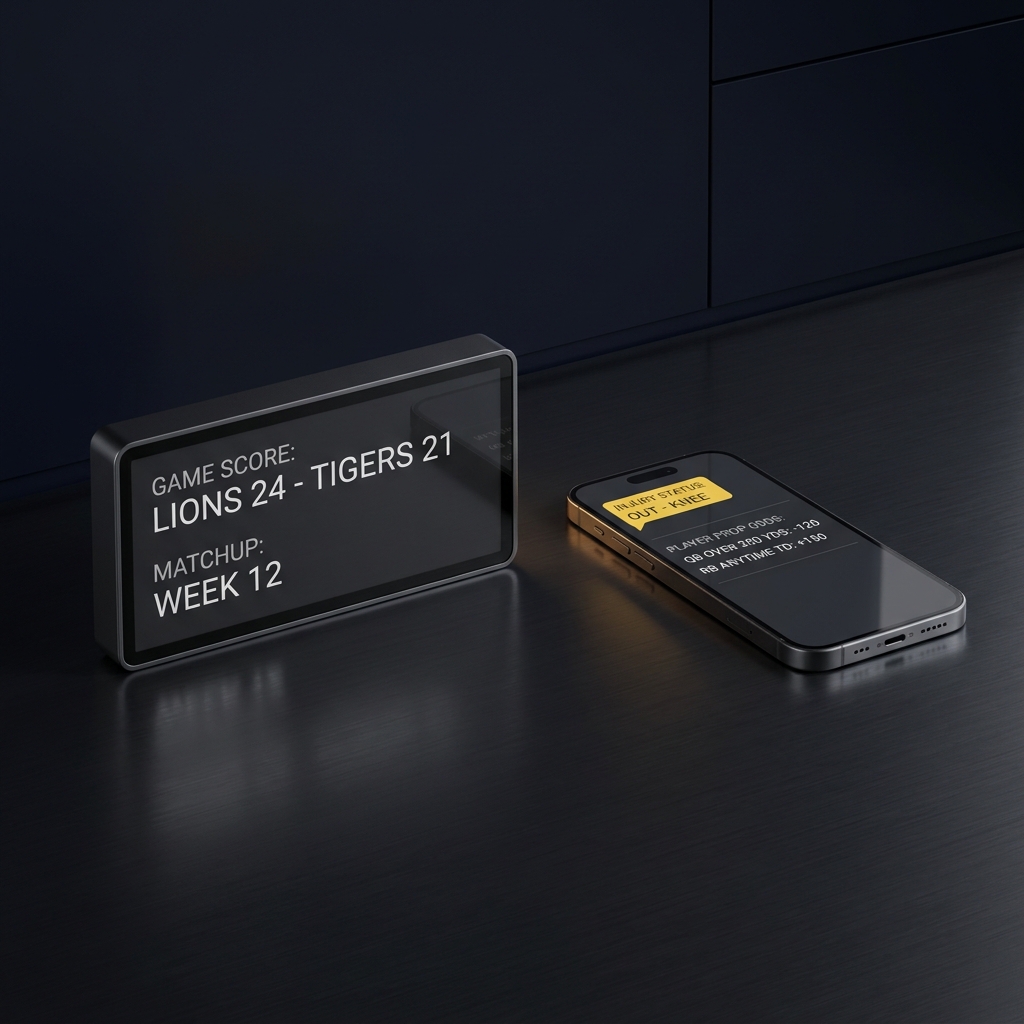
Execution rules during the high-volatility window should favor limit orders and conservative sizing. Avoid large market orders immediately after official announcements because spreads widen and displayed size falls, increasing slippage and the chance of partial fills. Use limit orders sized to fit current displayed liquidity and leave room for the spread to normalize.
If markets are suspended because an operator is verifying a player's status, do not assume you can force execution elsewhere; settlement rules or cross-operator variance can still create voids. Plan for reconciliation after the game: check settlement notes, confirm whether voids apply, and log any discrepancies to refine your workflow.
Decision criteria: when to trade, hedge, or stand aside
Make decisions based on measurable criteria: market depth and displayed size, the implied magnitude of the move for the prop, and your confidence in the official status. If depth is shallow and the implied move is small relative to slippage, standing aside is often the prudent choice.

When you have exposure across correlated props, hedging can reduce risk but it may be inefficient if markets are suspended or if the hedge itself carries similar execution risk. Evaluate whether the hedge reduces net exposure after accounting for spreads and potential voids Pinnacle betting guide on odds movement.
Remember that sportsbook participation rules can remove expected profits if a planned hedge is voided by a later determination that the named player did not participate. Always factor settlement language into your edge calculation before executing complex multi-market hedges DraftKings settlement and rules.
Common mistakes and execution pitfalls to avoid
Chasing large immediate moves without checking official sources is a frequent error. Wide spreads often normalize quickly as liquidity returns, so executing on a perceived edge without confirming settlement terms or official status can produce losses rather than gains Pinnacle betting guide on odds movement. See also a discussion on ProCappers about injury-driven line shifts.
Another common pitfall is ignoring correlated props and teammate redistribution. When a high-usage player is ruled out, teammates’ props and team totals can move materially; failing to model those second-order effects leads to mis-sized positions and unexpected exposure.
A related mistake is not checking operator-specific settlement clauses. Different platforms apply different void and participation rules, so what counts as a settled win on one site might be voided on another. Verify your platform's rules ahead of time to avoid surprises during settlement FanDuel player prop participation rules.
Concrete scenarios and illustrative examples
Consider a generic NFL case where a starting wide receiver is listed inactive in the gameday inactives release about 90 minutes before kickoff. Market makers will often widen spreads and reduce displayed size on that receiver's receiving yards and receptions props, while simultaneously raising teammate receiving props and adjusting the team total to reflect the redistributed targets NFL injury report policy. For live injury lists and trackers see the CBS Sports NFL injury tracker.
In that same scenario, some platforms may temporarily suspend related markets while they confirm the inactive designation. If a bettor placed a late market order on a teammate prop without confirming settlement policy, the original bet might be subject to voiding rules depending on operator language. That is why consulting house rules before executing late trades is essential DraftKings settlement and rules.
For the NBA, imagine a star listed as questionable under the Player Participation Policy a few hours before tipoff. Because the policy standardizes availability language, market makers and bettors have a shorter window to react, and prices for the star's scoring prop and teammates' usage-linked markets can move quickly. Liquidity providers may withdraw while they adjust correlated books, creating brief slippage risks for aggressive market orders NBA Player Participation Policy announcement.
Across both sports, the common pattern is timing: the largest moves cluster around confirmation moments such as the NFL gameday inactives list or the NBA participation disclosures. Traders who align workflows with those checkpoints reduce surprise and execution risk.
Practical wrap-up and best-practice checklist
Quick checklist: monitor official league reports, set alerts for gameday inactives and participation disclosures, prefer limit orders during volatile windows, size conservatively relative to displayed liquidity, and verify sportsbook settlement terms before trading late news.
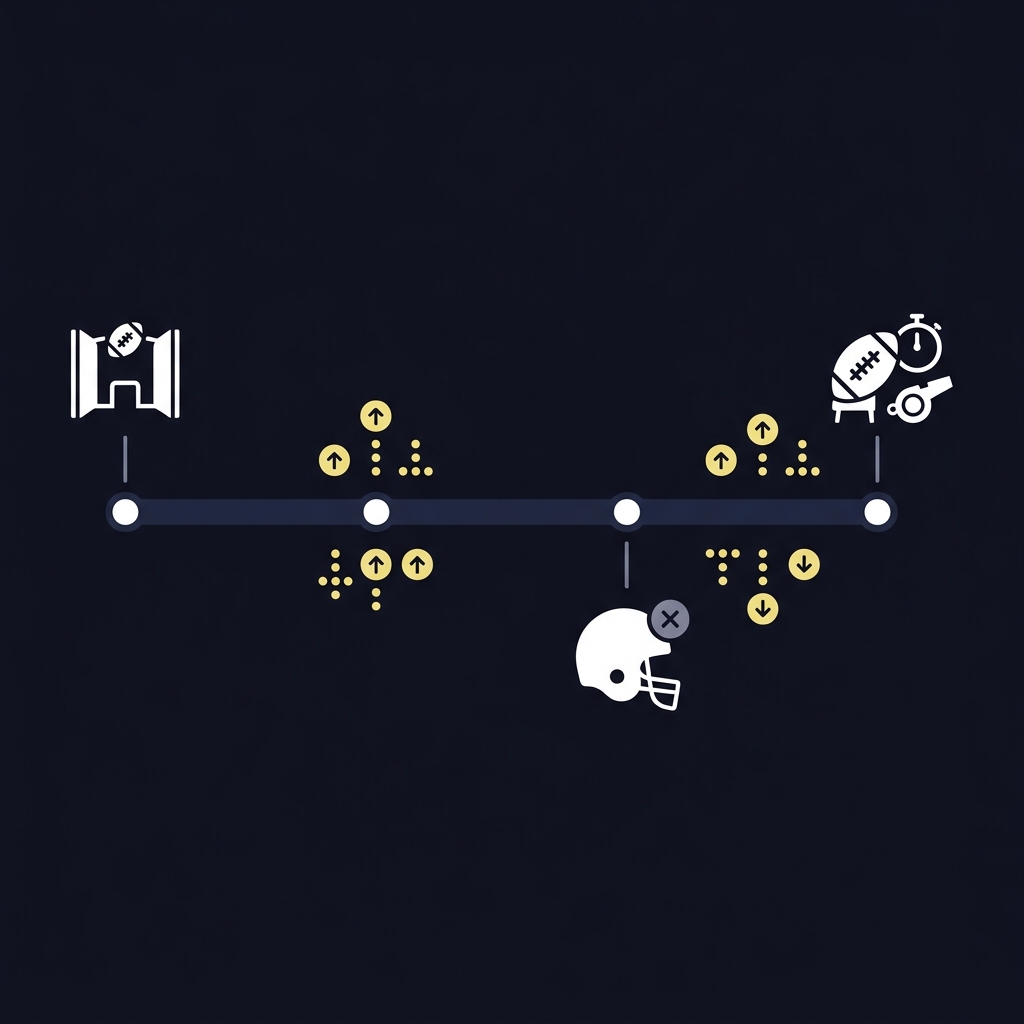
Maintain conservative position sizing when you trade near official reporting windows because spreads widen and liquidity thins. Use watchlists and automated alerts to avoid chasing moves without confirmation, and keep a post-game reconciliation process to learn from any settlement discrepancies.
Finally, remember that disciplined workflows and knowledge of league reporting rules are risk management tools. They reduce execution and settlement uncertainty but do not guarantee profits. Persistent learning and careful testing in low-risk environments are the best way to refine your response to injury-driven prop market changes Pinnacle betting guide on odds movement.
Lines often move within minutes of official announcements, with the largest reprices clustered around league-defined checkpoints such as gameday inactives and participation disclosures.
Yes, many sportsbook house rules state that player props require participation and may be voided if the player does not participate; always check the operator's settlement terms.
Use limit orders, size conservatively, monitor official league feeds, and avoid large market orders during the immediate post-announcement window to reduce slippage and settlement surprises.
References
- https://www.pinnacle.com/en/betting-articles/betting-strategy/what-causes-odds-to-move/EBQ2WPHQD2T9YCGC
- https://operations.nfl.com/updates/football-operations/nfl-injury-report-policy/
- https://www.nba.com/news/nba-board-approves-new-player-participation-policy
- https://www.betfair.com/exchange/plus/rules-and-regulations
- https://sportsbook.draftkings.com/help/rules
- https://legal.fanduel.com/us/sportsbook-house-rules/
- https://www.fundedplays.com/challenges
- https://www.fundedplays.com
- https://www.fundedplays.com/blogs
- https://www.fundedplays.com/blogs/how-fundedplays-evaluations-work
- https://www.actionnetwork.com/education/how-injuries-affect-betting-lines-a-guide-to-market-movement
- https://www.cbssports.com/nfl/injuries/
- https://procappers.com/article/the-impact-of-injuries-and-line-movements-on-betting-decisions