

How player injuries change match probability
Immediate vs latent injury effects
How Injuries Affect Tennis Odds starts with a simple idea: an injury changes the underlying chance a player wins by altering what they can do on court. Mobility, serve reliability, endurance and tactical limits are the main causal pathways. If a player cannot move cleanly they lose court coverage, if serve speed or placement drops they lose free points, and if endurance is impaired they struggle in long rallies or deciding sets.
convert two sets of decimal odds into an implied probability delta
Use decimal odds for the formula
Short-term vs long-term performance impact
An acute in-match injury often has an obvious, short-term effect. A twisted ankle or a strained muscle can reduce step length, slow reaction, and make the player reluctant to run for low-percentage shots. A chronic or lingering fitness concern can change how a player approaches a match from the first point, for example by shortening rallies or avoiding aggressive movement. Both categories reduce match probability, but they do so through different timelines and tactical adaptations.
Severity and timing matter. A minor tweak reported before a match might shave a few probability points if the player warms up well. A mid-match limp that affects a key leg or shoulder can swing probability sharply within minutes. When assessing reports, place each case on a simple axis: how much does the issue cut mobility, how much does it affect serving, and how likely is the player to retire. That mental map helps translate reports into expected probability changes without needing medical detail.

Where reliable injury information comes from
Official sources: tournament communications and medical timeouts
Start with official channels. Tournament medical announcements, official press conferences and statements from tournament organizers are primary sources because they come from team or event staff who usually have timely access to player status. Official medical timeouts called during a match are also a clear indicator that something is being evaluated by on-site staff.
Official channels are not perfect. Organizers may withhold clinical detail for privacy, or teams may downplay issues until a decision is final. Treat official updates as higher-quality signals than rumors, but still consider timing and the level of specificity provided.
Unofficial sources: social media, reporters, and live observation
Unofficial signals are common and sometimes valuable. Accredited reporters, beat journalists and player social accounts often publish quick updates. Live viewers can also spot visible limp, altered service motion, or a reduced court presence before official confirmation.
To verify unofficial signals use a simple checklist: cross-check an observed limp or altered serve with at least two independent sources, look for corroboration from a recognized reporter or official video clip, and consider whether the observation matches the match context. A single social post without supporting evidence is noise; multiple corroborating observations raise the signal quality.
Timing matters when deciding if a report is actionable. Pre-match alerts that arrive close to the match start give little time to verify and are often only useful for late pre-match decisions. Live observations that are visible on stream and match the player’s motion are usually actionable for in-play reaction, though bookies and markets may still lag slightly in pricing those changes.
How bookmakers and markets adjust pre-match odds
Market makers, liquidity and early movers
Market makers, matched-betting platforms and early liquidity providers interpret the news, update models and adjust prices to reflect the new expected outcomes. An early, sharp adjustment typically indicates that a well-sourced report reached a market maker who executed on it, while slow gradual movement can reflect diffuse public reaction or limited liquidity.
Consider two types of moves. A sudden large shift shortly after an official or strongly corroborated report suggests that informed actors acted quickly and that the market incorporated substantive new information. A slow move over hours is more likely driven by public sentiment, smaller liquidity, or reassessment as more reporters weigh in.
Explore FundedPlays challenge rules and verification guidance
Download a short, printable pre-match injury checklist to use when you need to verify reports and make calm, disciplined decisions.
Watch for overreaction. A sharp early move can sometimes overshoot if the immediate report exaggerates the functional impact. That overshoot creates potential value for disciplined players who verify the condition and estimate the true implied probability change themselves rather than following the first move blindly.
In-play odds: how injuries affect live markets
Immediate market reaction to visible injuries
Live markets are sensitive and fast, but they still have latency. When a player visibly limps, drops serve speed, or requests medical attention, live odds often shift quickly because traders and automated models pick up the change in expected outcomes. The size of the move depends on how clearly the injury affects mobility or serve reliability, and on the stage of the match.
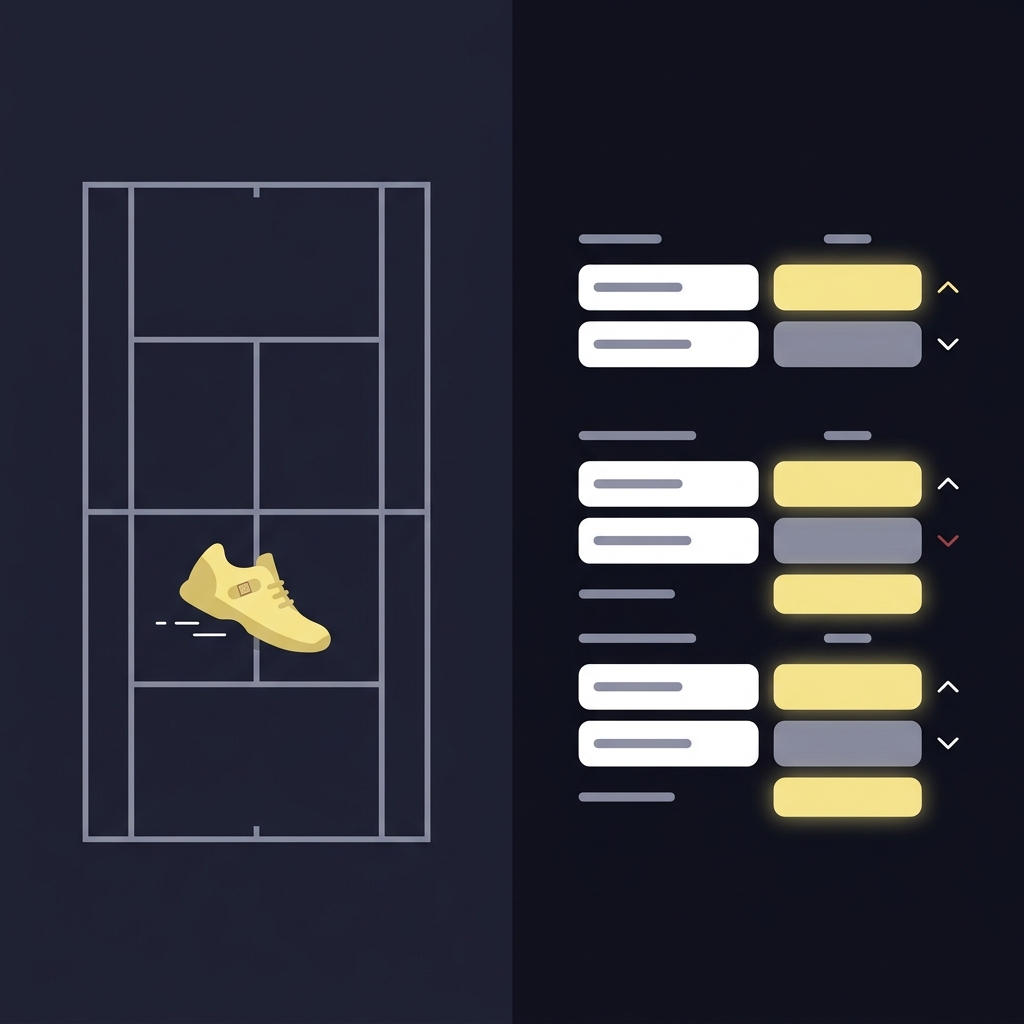
Medical timeouts are salient events. An official timeout that visibly disrupts a player will usually be priced into the line within moments, but the exact magnitude of that adjustment depends on the bookmaker’s risk tolerance and the market’s liquidity. Smaller platforms or markets with low liquidity can show larger swings and erratic price behavior during these moments.
How live odds incorporate momentum and physical state
Live pricing mixes discrete injury signals with momentum. If the injured player continues to lose games or shows clear physical decline after the interruption, markets will compound the move. That means you are often observing a combined effect of the initial injury signal and subsequent match events, rather than a pure injury-only reprice.
Because of that mix, be cautious about betting solely on early post-injury moves. If you prefer to act, wait a short window to see how the player responds physically and tactically. That reduces the chance of paying for transient noise and increases the chance of finding a true misprice.
Evaluating the size of the odds move and spotting value
Estimating true probability change
To judge whether an odds change is fair, convert decimal odds into implied probability and compare before and after. The basic conversion is straightforward and helps estimate the implied probability delta that the market is pricing. Combine that number with your own estimate of how the injury affects mobility, serve and endurance to decide whether the moved price offers value.

Practical heuristics help. For example, a small pre-match downgrade that cuts a player’s win probability by a few points may not justify a big stake unless the reported issue hits the areas most important for that matchup, such as movement on a slower surface where rallies decide outcomes. A sharp mid-match drift of several percentage points after a visible limp is more often justified, but you must still convert that movement to expected value against your own estimate of win probability.
When an odds shift represents value
Value exists when your internal probability estimate is meaningfully higher than the market’s implied probability. In injury scenarios you should widen your uncertainty range to account for ambiguous reports. If your best estimate still exceeds the market’s implied probability by a margin greater than your stake-sizing rules, the move likely represents positive expected value.
Context is crucial. Surface matters because mobility-limiting injuries hurt more on grass and hard courts where quick changes are decisive. Player style matters because a serve-and-volley player with a shoulder concern is affected differently than a baseliner with a hamstring issue. Tournament stage matters because a retirement probability may increase when fatigue is a factor late in an event.
Decision criteria: when to act on injury-related odds changes
Checklist for pre-match decisions
Use a short checklist each time: confirm the report with at least one official or credible reporter, check timing relative to start, evaluate how the injury maps to mobility and serve, estimate the implied probability delta, and compare that delta with your staking rules. If confirmation is weak, abstain.
Include a clear confirmation threshold. For pre-match alerts that arrive inside the warm-up window, require corroboration from an official source or a consistent report from two independent, reliable accounts before acting. If you cannot verify, accept the increased uncertainty by reducing stake size or skipping the match entirely.
Checklist for live-match decisions
For live decisions use these rules in order: observe physical effect on the first one or two games after the incident, watch whether serve effectiveness changes, compare the live implied probability delta with your in-play model, and restrict size when uncertainty remains. If the injured player continues to serve and move effectively for a short period, the initial market reaction may be premature.
Have an abstain rule and a maximum exposure limit for any single match. If you are participating in a structured prediction challenge, remember that consistent, disciplined choices that preserve your bankroll usually matter more than aggressive one-off wins.
Common mistakes bettors make with injury information
Confirmation bias and rumor chasing
Many bettors act on the first report that confirms their existing view about a player. That is confirmation bias and it leads to chasing weak rumors. The remedy is to require corroboration and to have a standard verification routine you always follow regardless of your prior belief about the player.
Verify reports with official or credible sources, map the injury to mobility and serve effects, convert the odds change into an implied probability delta, and act only when your adjusted estimate shows positive edge while using conservative sizing and clear exit rules.
Another common error is overreacting to single data points. A single trainer pull or brief limp may not change a player’s winning chances across the match. Waiting for further observation or for the opponent to adjust often reveals whether an early signal was meaningful.
Overestimating short-term effects
Short-term visible decline can recover quickly, especially after a medical timeout. Betting heavily on an immediate post-timeout line without observing performance in the following games can amplify risk. Simple avoidance or reduced size during these volatile moments is a conservative, repeatable approach.
Finally, avoid small-sample thinking. A memorable match where an injured favorite rolled to defeat does not change the underlying probabilities for future cases. Treat each incident individually and rely on your checklist and rules rather than anecdotes.
Practical scenarios: worked examples and a mental checklist
Pre-match late-notice injury example
Scenario: a top player reports a minor shoulder issue two hours before a match. An initial market reaction moves the underdog from moderate odds to a much shorter price. Step 1, verify: look for official confirmation or a credible reporter. Step 2, map impact: shoulder pain primarily affects serve and high-velocity shots. If the matchup favors returners and rallies, the issue is material. Step 3, convert: estimate implied probability before and after and see if the move represents value relative to your adjusted estimate. Step 4, size: if verification is partial reduce stake; if confirmed reduce more or abstain.
Mental checklist for this scenario includes confirmation, timing, impact on serve, surface relevance and stake adjustment. If the match is best-of-five in late tournament rounds, the retirement or endurance risk rises and you may decide to avoid the ticket entirely.
Mid-match visible injury example
Scenario: the same player develops a limp in the second set and takes a medical timeout. Markets swing immediately. Step 1, observe the first two games after the timeout to see whether mobility and serve speed remain impaired. Step 2, estimate the live implied probability delta. Step 3, compare your estimate with the market. Step 4, act with reduced sizing if you take a position, or wait for clearer confirmation.
In mid-match cases the option to wait often improves decision quality. If you choose to act early, set tight exposure limits and plan a clear exit point if the player reverts to near-normal movement or if the opponent breaks quickly.
Bankroll management and risk controls around injury bets
Sizing positions for unpredictable events

When injury uncertainty is high, adopt conservative sizing. A common practical rule is to cut your normal unit by half or more for bets triggered by injury reports unless you have strong confirmation and a clear reason to expect a large misprice. That preserves capital while allowing occasional exposure to genuine value.
Another useful approach is to define a maximum percentage of bankroll that can be exposed to matches with material injury uncertainty on any given day. That limit prevents a cluster of ill-advised injury bets from causing disproportionate damage to your progress in a challenge or your overall portfolio.
Setting stop-loss and exposure limits
Predefine stop-loss thresholds for live matches where you act on injury news. For example, set a rule to exit or hedge if the match state moves unfavorably by a fixed number of games or if the injured player shows clear recovery signs. Keep stop rules straightforward so you can follow them under pressure.
If you participate in structured challenges, treat injury-driven bets as part of variance and document each decision. Over time that log helps you refine confirmation thresholds and sizing rules based on observed outcomes rather than recall bias.
Using analytics to quantify injury impact
Simple metrics to track: serve hold rate, movement metrics
Simple on-court metrics can indicate whether an injury has a measurable effect. Track serve hold rate, first-serve percentage, break-conversion rate and observable movement metrics if available, such as court coverage on forced wide shots. Compare these current-match numbers with the player’s season or career baseline to detect drops that align with injury reports.
Because samples are small during a match, be careful to adjust for variance. A single poor service game does not necessarily confirm a shoulder issue. Combine quantitative signals with qualitative observation to form a balanced view.
Data sources and how to incorporate them
Use live statistics from official match feeds and recognized data providers where possible, and treat social reports as complementary. When analytics show meaningful deviation from baseline together with visible physical signs, your confidence that the injury is affecting match probability should increase. Document your estimates and update them as new data arrives.
Start with simple comparisons and avoid overfitting. Track a few key metrics across matches and review outcomes periodically to refine how much you adjust implied probabilities when a specific metric deviates from baseline.
How this applies to skill-based prediction platforms
Aligning injury-based decisions with challenge rules
In structured prediction challenges you are judged on consistency and discipline as much as on single wins. Use injury-driven decisions to demonstrate thoughtful risk control rather than impulsive reaction. That means applying your confirmation checklist, limiting sizes and documenting rationale so your performance is reproducible and defensible under review.
FundedPlays is an example of a skill-focused platform where transparent rules and performance consistency matter. When using injury information inside a challenge, align actions with the platform’s evaluation objectives and avoid overtrading on headline news.
Why disciplined reaction matters for long-term performance
Discipline reduces variance and preserves the ability to act on high-quality edges. In a challenge environment, a sequence of small, well-justified decisions generally outperforms a few large, emotionally driven moves based on weak injury rumors. Keep a conservative approach to injury-driven positions until you build a reliable verification routine.
Documenting decisions in a short log also helps with learning. Note the source, your adjusted probability, stake size and outcome. Over time that record supports better calibration and clearer evidence about which signals truly matter.
Regulatory, ethical and responsible-play considerations
Respecting player privacy and avoiding speculation
Do not spread unverified medical details or speculate about diagnosis. Share only the existence or confirmation of a fitness concern and avoid publishing health conjectures that could invade player privacy. Respect for players keeps the focus on observable performance impact rather than personal medical narratives.
Follow platform rules and local regulations. Responsible participation means accepting uncertainty and avoiding behaviors that could violate terms of service or fair-play rules.
Platform rules and fair play
Platforms and organizers have policies about information sharing and trading on insider content. Familiarize yourself with those rules and do not act on privileged information that you cannot publicly verify. Responsible behavior preserves integrity for all participants and reduces reputational risk.
When in doubt, err on the side of restraint. Consistency and long-term performance depend on maintaining clear ethical boundaries and a disciplined approach to uncertain information.
Summary: practical takeaways and next steps
Injuries affect match probability mainly by reducing mobility, serve reliability and endurance. Treat official tournament announcements and medical timeouts as higher-quality signals and verify unofficial reports before acting. Convert odds moves into implied probability deltas and compare them with your adjusted estimate to find value.
Practice a short checklist for pre-match and live decisions, adopt conservative sizing for injury-driven bets, log every injury decision and respect platform rules and player privacy. Start small, refine your verification routine and prioritize consistent, disciplined choices that preserve your ability to act when genuine value appears.
Reaction time varies; official medical timeouts and visible limps often prompt rapid adjustments, while unverified reports may lead to slower, fragmented moves.
No, but you should require verification and reduce stake size unless you have strong confirmation and a clear edge after converting the odds to implied probability.
Adopt conservative sizing such as halving your usual unit and set strict exposure limits until the situation clarifies.
References
- https://www.actionnetwork.com/education/how-injuries-affect-betting-lines-a-guide-to-market-movement
- https://www.espn.com/tennis/story/_/id/41210444/report-shows-tennis-night-matches-lead-increased-injury-risk
- https://www.sciencedirect.com/science/article/pii/S0970389624000089
- https://www.fundedplays.com/
- https://www.fundedplays.com/blogs
- https://www.fundedplays.com/blogs/how-fundedplays-evaluations-work
- https://www.fundedplays.com/challenges