

What home-field advantage means and why stadiums matter
Defining home-field advantage across sports
Home-field advantage describes the measurable uplift in a home team's performance relative to an away team under comparable conditions. It is an empirical pattern, not a single mechanism, and can include better scoring rates, fewer conceded points, or improved conversion of key opportunities depending on the sport.
Different sports display home uplift for different reasons, so modelers should treat home-field advantage as a composite of team quality, scheduling, and venue-specific effects rather than a monolithic constant. In practice, analysts separate persistent team-level home form from venue-specific signals when building forecasts.
Download venue-adjustment templates on the FundedPlays Challenges page
Subscribe for an evidence-based venue-adjustment checklist and model templates to apply stadium-level corrections responsibly.
Why venue-level analysis matters for predictive models
Including venue-level variables improves out-of-sample forecasts when stadiums systematically change the playing environment, the crowd context, or the travel burden for visitors. Venue adjustments are especially valuable in sports where stadiums differ legally or materially in geometry, playing surface, or atmospheric conditions.
In many applied settings a venue-aware model treats stadium effects as one component in a layered forecast: team quality, recent form, situational context, and venue modifiers combined to produce a final expectation.
How Home-Field Advantage Varies by Stadium
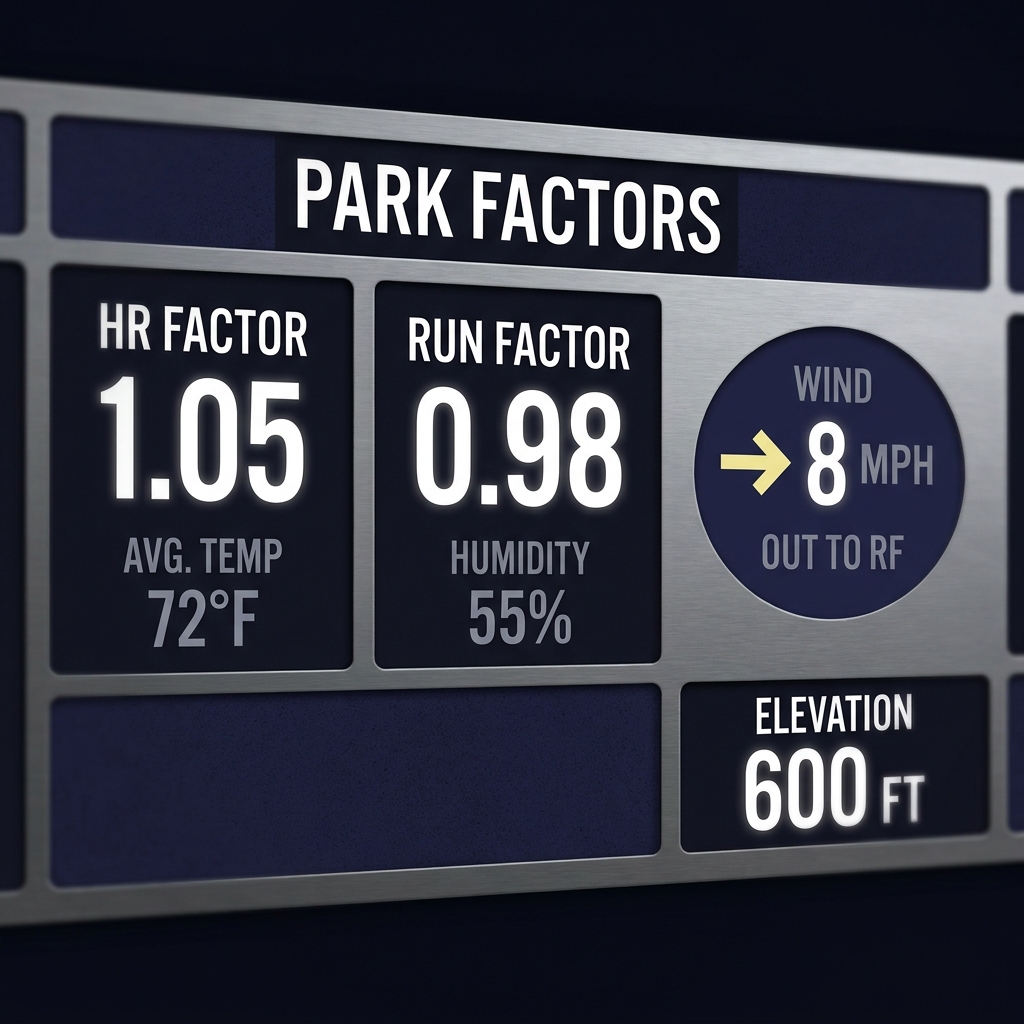
The key modeling takeaway is that "How Home-Field Advantage Varies by Stadium" depends on sport-specific rules, observable venue factors, and season-level calibration, so the same modeling approach will not fit every league.
Core mechanisms that create venue-specific home advantage
Crowd influence and social pressure
One primary channel is the crowd: supporters can influence referee decisions, increase home players' motivation, and create a perceptible pressure on visiting teams. Evidence from natural experiments shows crowd presence is causally important in many leagues.
Modelers typically treat crowd effects as a scale parameter that multiplies other venue impacts rather than a standalone binary, since crowd size and intensity vary by match and season.
Environment: altitude, surface, weather
Environmental factors include altitude, playing surface type, and local weather patterns, each of which can alter physiology, ball behavior, and injury risk.

These drivers are measurable and often persistent, so they are straightforward to include as fixed or seasonal covariates in a venue-aware model.
When rules allow variability in field or pitch geometry, teams can gain tactical advantages by playing on dimensions that suit their style; where geometry is fixed, other channels dominate.
Practical modeling therefore begins by checking the governing rulebook, then layering geometry only where variability exists and is measurable.
Travel, time zones, and circadian effects
Travel burden is a clear venue-related channel: long trips, many time-zone changes, and compressed schedules worsen away-team performance by disrupting sleep and recovery.
Models that incorporate travel treat it as a schedule-level modifier rather than a stadium property per se, but because stadiums are geographically fixed they are natural anchors for travel penalties.
How league rules shape whether stadium geometry matters
When pitch or field size is fixed
Some leagues standardize field geometry tightly, which limits the explanatory power of geometry for home advantage. In those settings, modelers should direct attention to surface, crowd, and travel instead.
For example, the NFL maintains a fixed field layout in its rulebook, so differences from stadium to stadium are more likely due to environmental or crowd factors than geometry. 2024 NFL rulebook
Stadium features that are measurable, season-stable, and supported by plausible mechanisms - such as park factors in baseball, crowd intensity, altitude, and travel-related time-zone changes - are the ones modelers should prioritize; include geometry only when league rules permit meaningful variation.
When rules allow variability and what that implies
Other codes permit pitch or field size ranges, creating a genuine channel for geometry-driven home advantage when teams design or select dimensions that fit their tactical profile. Modelers should capture these legal ranges and test whether a team's style interacts with local dimensions to shift expected outcomes.
Before attributing any persistent stadium effect to geometry, check the league rules and measure the actual dimensions where possible, since apparent stadium effects can otherwise reflect unobserved team quality or scheduling quirks.
What the natural experiment of closed-door matches tells us about crowds
Summary of COVID-19 closed-door findings
A key natural experiment occurred during COVID-19 when matches were played without spectators. Systematic analyses found that removing crowds reduced or even eliminated home advantage in professional soccer, strongly implicating spectator presence as a major driver of the typical home uplift. PLOS ONE study on spectator absence
The closed-door evidence is widely used as a causal lever because the sudden removal of crowds created conditions that are otherwise rare in observational sports data.
How to interpret crowd effects for current models
Treat crowd influence as a contextual multiplier: when crowd size or intensity is low, down-weight crowd-dependent venue effects; when crowds are large and vocally supportive, increase the crowd component. Use match-level attendance and decibel proxies where available.
Remember that the closed-door results were strongest in leagues where fans routinely influence match events; leagues differ, and crowd effects may interact with referee styles and local enforcement.
Surface, weather, altitude and acoustics: environmental drivers
Hard and soft surfaces and injury or performance channels
Surface type affects ball behavior, traction, and fatigue. Hard fields can favor speed and low-bounce play, while softer surfaces can slow transitions and increase slip risk. These mechanisms can tilt short-term outcomes and season-level aggregates.
Including surface as a fixed venue attribute or a seasonal covariate helps isolate geometry and crowd influences from playing-surface effects.
Altitude effects on player physiology
High-altitude stadiums create physiological stressors that affect endurance and ball aerodynamics. Modelers often represent altitude as a continuous modifier applied to endurance-sensitive metrics or to ball-flight parameters where relevant.
Because altitude is stable across seasons for a stadium, it is amenable to straightforward fixed-effects estimation with moderate sample sizes.
Stadium acoustics and communication interference
Very high crowd noise levels have been documented in some stadiums, and such extremes can plausibly disrupt on-field communication and apply pressure to officials, though direct causal attribution to outcomes requires care. Guinness World Records on stadium roar
When including acoustics, use decibel proxies only as contributing variables and be cautious about over-interpreting correlations as causal effects.
Travel, scheduling and circadian misalignment
Measurable effects from crossing time zones
Peer-reviewed work shows that crossing time zones and jet lag measurably impair performance in major-league settings, implying travel penalties matter for venue-adjusted forecasts. PNAS study on jet lag in MLB
These penalties manifest as lower batting averages, reduced pitching effectiveness, and wider variance in late-inning performance when teams cross multiple time zones with limited recovery time.
Practical schedule adjustments and model penalties
Translate travel into model penalties using a few simple inputs: the number of time zones crossed, days of rest since travel, and whether the travel direction is eastward or westward. Weight penalties by empirical estimates from recent seasons where possible.
In systems with sparse travel data, apply conservative travel penalties and validate with cross-season holdouts to avoid overstating travel effects.
Interpreting baseball park factors and offensive environments
What park factors measure and how they are calculated
Baseball park factors quantify how a stadium modifies run scoring relative to a baseline, typically a league average. They capture persistent stadium features such as outfield dimensions, altitude, and wall heights that affect the number of runs and home runs scored.
Park factors are season-varying and should be calculated or sourced on a rolling basis rather than assumed constant across years. (See Statcast park factors: Statcast park factors)
Using Baseball Savant and park-factor leaderboards
The Baseball Savant park-factors leaderboard provides a practical, season-ready source of stadium run environments and is commonly used to normalize offensive expectations for linesets and player projections. Baseball Savant park factors leaderboard (see related ESPN analysis: ESPN park-factor discussion)
Use the leaderboard to separate batter-park and pitcher-park signals and to adjust expected runs at the lineup or team level for a given matchup.

Soccer pitch-size variability and tactical implications
How different pitch sizes change play patterns
The IFAB allows pitch dimensions within a legal range, so teams playing on a smaller or larger field can create tactical advantages based on pressing, width usage, and transition space. IFAB Laws of the Game 2024/25
Practical impacts include altered passing lanes, different distances for switches of play, and modified set-piece geometries that favor either compact defending or expansive attacking schemes.
When to include pitch-size in models
Include pitch-size where the team style is plausibly sensitive to space and where dimensions vary enough to change key metrics. Treat pitch-size as a venue-level covariate that can interact with a team's preferred tactical profile.
When dimensions are stable and teams show no tactical sensitivity, deprioritize pitch-size to reduce model complexity and overfitting risk.
Why stadium geometry matters less in the NFL and what does matter
Fixed field geometry and its implications
The NFL rulebook fixes field markings and dimensions, which reduces the role of geometry in explaining stadium-level home advantage; other venue drivers deserve priority in NFL models. 2024 NFL rulebook
Modelers should focus on surface, indoor versus outdoor environments, and crowd effects rather than searching for geometry-driven channels in NFL data.
Key NFL venue modifiers include playing surface (turf versus grass), weather exposure for outdoor stadiums, and loudness of home crowds in close games. These factors are measurable and can be incorporated as covariates or interaction terms.
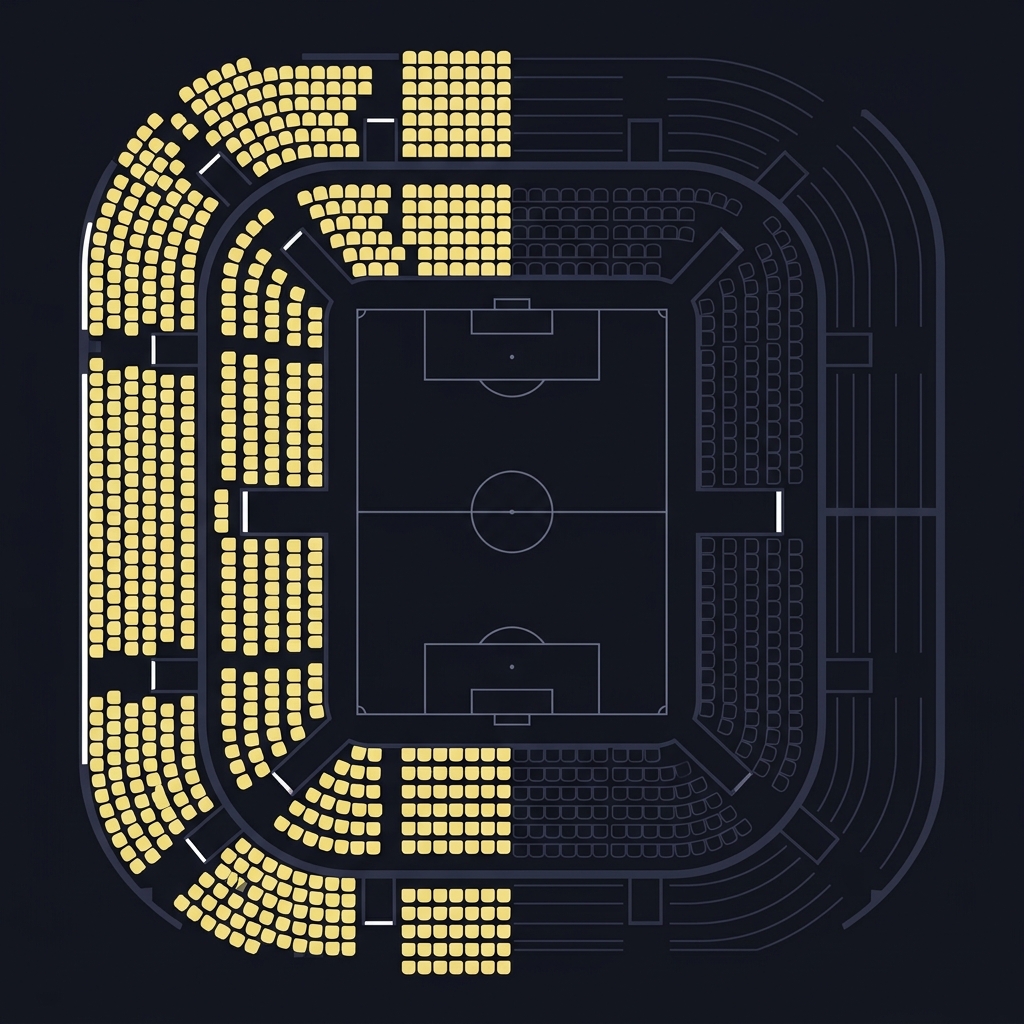
Begin with simple binary indicators (indoor/outdoor, turf/grass) then add continuous or season-level modifiers if data suggest stable associations.
A practical modeling framework for venue-adjusted forecasts
Combining league rules, park factors, crowd effects, and travel penalties
A pragmatic framework layers several components: filter features by league rules, import season-ready park or pitch data, estimate crowd multipliers using attendance or decibel proxies, add altitude and surface adjustments, and apply travel/time-zone penalties where travel is nontrivial. Calibrate coefficients with recent season data and validate with holdout sets (see our blog: Funded Plays blog).
When integrating these components, prefer parsimony: include factors with theoretical plausibility and measurable season signals, and use regularization to shrink noisy venue estimates toward the league mean.
Estimate park-adjusted runs per game using observed runs and park factor
Simple season-level adjustment
Calibrating season- and team-specific adjustments
Calibrate park factors on rolling windows and reestimate crowd effects each season to capture changes in stadium usage or roster shifts. Include team-season interactions where a team's tactical profile amplifies or mutes venue signals.
Protect against overfitting by using hierarchical models, cross-validation, and conservative priors for small-sample stadiums.
Decision criteria for when and how to weight stadium factors
Evaluating effect size and stability
Include a stadium factor when it is statistically significant, directionally consistent across seasons, and backed by a plausible mechanism such as geometry, altitude, or crowd intensity. Prioritize variables with clear, repeatable effects.
If a factor shows large shiftability from season to season, treat it as season-specific rather than a fixed stadium constant, and down-weight it in long-term projections.
Practical thresholds for inclusion
For many practitioners, prefer including park factors and travel zone penalties when they explain measurable variance in out-of-sample tests; use shrinkage for stadiums with fewer than a threshold number of events to avoid overfitting.
When data are sparse, apply hierarchical priors or Bayesian shrinkage to pull extreme stadium estimates toward the league average.
Common mistakes and pitfalls to avoid
Confusing team home form with venue effects
One frequent error is attributing a team's consistent home success to the stadium when it mostly reflects roster quality or coaching. Control for team strength before assigning residuals to venue factors.
Use within-team, across-stadium contrasts where possible to isolate venue-specific signals from team-driven ones.
Overfitting small-sample venues
Small-sample estimates can generate extreme park factors that do not replicate. Regularize estimates and prefer multi-season or pooled approaches for low-usage venues.
When a venue has limited historical data, treat its effect as uncertain and employ conservative weights in production systems.
Ignoring schedule and travel context
Failing to account for travel direction, rest days, and compressed schedules can misattribute performance swings to the stadium rather than to tired players or logistical fatigue.
Always combine stadium adjustments with schedule-aware modifiers to avoid mistaken causal claims.
Practical examples and scenarios to apply venue-aware adjustments
Case example: adjusting an MLB lineset using park factors
Start with league-average expected runs for a matchup, then apply team offensive and pitching adjustments. Multiply the net expected runs by the park factor to normalize to the home environment, and calibrate with recent season data to account for shifting stadium behavior.
Validate the adjusted lineset on holdout series by tracking calibration statistics such as mean error in runs and win probability over samples that include the target stadium.
Case example: accounting for time-zone travel in a multi-city baseball trip
When a road team has a multi-city swing, sum the time-zone changes and weight by days between games to estimate circadian penalty. Apply larger penalties for eastward travel with limited recovery and for series that include overnight flights.
Use peer-reviewed parameter estimates as starting points and recalibrate with recent season data from the same league to reflect changes in travel routines and charter usage.
Checklist for matchday adjustments in soccer
Before a match, check: official pitch dimensions, recent attendance trends, weather forecast, and travel rest days for the away team. Apply a small geometry modifier if pitch size departs meaningfully from the league median and if either team uses a style that exploits that geometry.
Document each adjustment and track post-match residuals to refine future weightings.
Conclusion: integrating venue effects responsibly
Key takeaways for modelers
Stadium effects are multi-factorial: crowd, environment, geometry where allowed, and travel all contribute in varying degrees depending on the sport and league rules. Treat venue adjustments as one component among team, schedule, and random variation and use season-ready data to calibrate estimates.
When relying on specific evidence, use authoritative sources for rules and contemporary leaderboards for park factors, and treat older but well-established studies as foundational until newer analyses are available. Baseball Savant park factors leaderboard (see MLB discussion: MLB park-factor article)
Next steps and data sources to monitor
Monitor league rule pages for changes, keep an updated feed of park-factor leaderboards, use travel and schedule repositories to calculate circadian penalties, and track attendance or decibel proxies to estimate crowd multipliers. For a description of our evaluation approach, see how Funded Plays evaluations work. Also monitor the Funded Plays homepage for updates: Funded Plays
Responsible modelers should avoid guaranteed claims about predictive gains, quantify uncertainty for all stadium adjustments, and use cross-validation to confirm that venue weighting improves real forecasting outcomes.
Park factors adjust expected run scoring for stadium-specific environments; use season-level park factors to normalize offensive expectations and separate batter-park and pitcher-park contributions.
Closed-door natural experiments show crowd absence reduced home advantage in many leagues, so crowd presence is a major contributor but often interacts with other venue and team factors.
Only include geometry when the league allows variable dimensions and where team style or evidence shows a consistent effect; otherwise prioritize crowd, surface, and travel variables.
References
- https://operations.nfl.com/the-rules/2024-nfl-rulebook/
- https://journals.plos.org/plosone/article?id=10.1371/journal.pone.0268118
- https://www.guinnessworldrecords.com/world-records/loudest-crowd-roar-at-a-sports-stadium/
- https://www.pnas.org/doi/10.1073/pnas.1707336114
- https://baseballsavant.mlb.com/leaderboard/statcast-park-factors
- https://baseballsavant.mlb.com/leaderboard/park-factors?type=year&year=2024
- https://www.espn.com/fantasy/baseball/story/_/id/47896015/fantasy-baseball-new-2026-home-stadiums-royals-rays-stats-projections-stats
- https://www.fundedplays.com/challenges
- https://www.theifab.com/laws/latest/
- https://www.mlb.com/news/park-factors-measured-by-statcast
- https://www.fundedplays.com/blogs
- https://www.fundedplays.com/blogs/how-fundedplays-evaluations-work
- https://www.fundedplays.com