
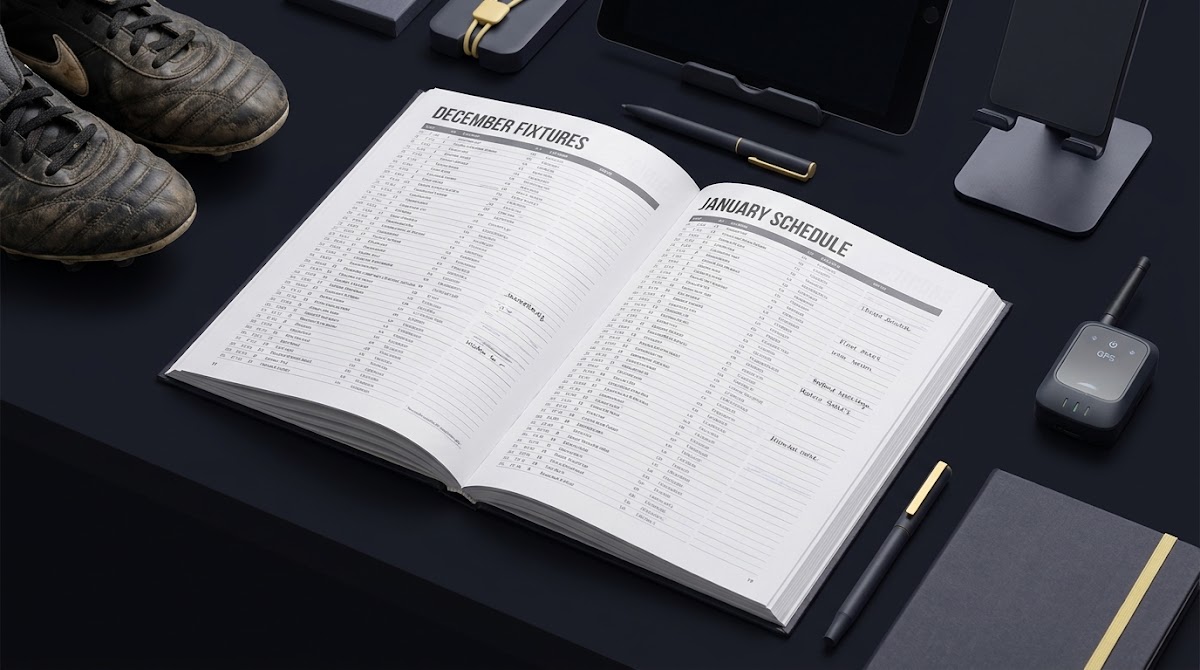
What fixture congestion is and why it matters for clubs and players
Definition and common calendar triggers
Fixture congestion describes periods when clubs play several competitive matches with short recovery windows, often caused by expanded club competitions, condensed domestic calendars and clustered international windows. The pressure on scheduling has grown as governing bodies and tournaments add fixtures to annual calendars, creating clusters where recovery time between matches shortens and player load rises.
Recent union-level workload reporting highlights that persistent congestion is now a routine part of elite calendars and is associated with elevated welfare concerns for players. The FIFPRO workload report outlines these pressures and connects short turnarounds to increased health and performance risks, underscoring why clubs must adapt planning during congested blocks FIFPRO workload report

Who is affected: clubs, starters, squad depth and competition organizers
All stakeholders feel the effect: clubs must manage competitive priorities, starters face elevated physical and mental load, and squads with limited depth have fewer options to rotate without losing tactical consistency. Competition organizers influence the issue directly because calendar structure determines how often teams must travel and how little time they have to recover between matches.
The FIFA international match calendar remains the baseline framework that shapes how club and international commitments collide, and its scheduling choices affect congestion patterns across seasons FIFA international match calendar
How researchers measure the performance effects of congested schedules
Performance metrics used in studies
Researchers commonly use objective movement metrics to quantify match output, including high-intensity runs and sprints, total running distance, accelerations and GPS-derived load measures. Studies also combine physiological markers, such as perceived exertion and blood-based fatigue indicators, with match GPS outputs to assess how players respond across short turnaround periods.

A 2024 systematic review pooled available studies and reported that congested weeks tend to produce small declines in high-intensity outputs while effects on total running distance are inconsistent across studies. This mixed pattern partly reflects differences in measurement methods and competition contexts systematic review in Sports Medicine Open
Limitations and mixed findings across study designs
Heterogeneity in study design is common: some analyses compare back-to-back matches at club level, while others contrast international windows or use training load proxies. Differences in GPS sampling rates, thresholds for what counts as high-intensity runs and whether substitution patterns are controlled make direct comparisons difficult. That makes cautious interpretation essential when applying findings to specific club situations.
Because total distance can remain stable while the number and quality of high-intensity efforts decline, clubs that monitor only gross workload metrics risk missing the subtler decrements most linked to performance and neuromuscular fatigue.

Observed game-level effects: what changes on the pitch during congested periods
Typical declines in explosive output and tactical adjustments
Across match-level observations, teams often show reductions in explosive, high-intensity actions during congested blocks, even when overall running totals are unchanged. Players may perform fewer sprints, achieve lower peak speeds and show signs of delayed recovery in the days after tightly spaced matches. The systematic review characterizes these declines as small but practically meaningful for high-level competition systematic review in Sports Medicine Open evolving running load demands
Clubs adapt tactically to compensate: managers may reduce aggressive pressing schemes, prioritize defensive compactness to conserve energy and simplify attacking patterns to limit repeated high-intensity transitions.
track core high-intensity and recovery markers across congested weeks
Use weekly review meetings to act on the checklist
Observational studies of team-level tactics report that rotation, moderated pressing and microcycle adjustments are common responses during dense schedules, helping clubs retain acceptable performance levels while lowering peak load on key players observational study in Frontiers in Sports and Active Living
Tracking high-intensity outputs alongside tactical intent gives a clearer picture than total distance alone. When teams reduce pressing intensity, high-intensity metrics fall even if total running remains similar, creating a pattern where match control shifts but gross numbers do not signal the underlying fatigue.
Physiological mechanisms: fatigue, recovery windows and muscle injury risk
Why short turnarounds affect muscle injury risk
Compressed recovery limits the time available for neuromuscular and metabolic systems to restore, raising the likelihood that fatigued tissues will be exposed to high mechanical loads. Surveillance data show muscle injuries are the most common time-loss problem in elite clubs, and risk patterns worsen when turnaround times are shortened. The UEFA Elite Club Injury Study reports that muscle injuries predominate and that compressed schedules amplify these risk patterns UEFA Elite Club Injury Study muscle injury rates study

Neuromuscular fatigue affects rate of force development and coordination, which increases susceptibility to strains during high-speed actions. Shorter rest windows can also impair sleep and metabolic recovery, compounding mechanical stress with less physiological resilience.
Role of sleep, nutrition and individualized recovery
Evidence supports targeted recovery strategies to reduce fatigue and help preserve performance across congested weeks. Interventions that prioritize sleep, tailored nutrition and individualized load adjustments can lower fatigue markers and support readiness, even though they cannot fully remove the elevated risk associated with dense schedules study on perceived load and recovery
Practical measures focus on optimizing sleep opportunity, timely carbohydrate and protein intake for recovery, and short, low-volume maintenance sessions that encourage blood flow and technical rehearsal without imposing high mechanical load.
What injury surveillance and workload reports reveal about elite risk patterns
Key surveillance findings from federations and unions
Federation and union surveillance consistently link heavier workload clusters to greater player welfare concerns. The FIFPRO report synthesizes workload evidence and indicates that persistent fixture congestion at elite levels is associated with heightened welfare risk and time-loss injury patterns among players FIFPRO workload report
The UEFA injury study complements these findings by documenting the predominance of muscle injuries and the relationship between compressed turnarounds and increased muscle injury incidence UEFA Elite Club Injury Study
Concern should be proportional to exposure: clubs with thin squads, heavy travel or many starters with accumulated minutes should treat short turnarounds as a material risk and prioritize rotation and recovery. Surveillance links compressed schedules to higher muscle injury rates, so combine monitoring with transparent decision rules and escalate persistent calendar harms to governing bodies.
How worried should clubs be about short turnarounds? Concern is proportional to exposure and context: clubs with thin squads, heavy travel demands or many starters with high accumulated minutes should treat short turnarounds as a significant risk factor and plan accordingly. See related analyses on fixture-congestion effects
Surveillance data suggest that calendar-level problems drive many of these risks, and while club-level mitigation helps, systemic scheduling solutions are a complementary necessity to reduce population-level harms.
Tactical and squad responses clubs use during congested blocks
Rotation policies: partial, full and targeted swaps
Clubs use several rotation strategies depending on squad depth and match priority. Partial rotation swaps a few starters to preserve core cohesion while resting those with heavy minutes. Full rotation replaces most of the first team in lower-priority matches to distribute workload. Targeted swaps focus on positions or players showing the highest physiological load or injury markers.
Observational work shows clubs frequently mix these approaches across a congested window, balancing the need to protect key players with the desire to maintain competitive performance. Rotation can reduce peak load on individuals but may introduce tactical discontinuities that require rehearsal and communication study on perceived load and recovery
Tactical changes: moderated pressing and game-plan adjustments
Managers commonly alter match plans to conserve energy, such as lowering overall pressing intensity, narrowing tactical roles to reduce high-intensity transitions and simplifying in-possession patterns. These adjustments aim to limit repeat maximal efforts without fundamentally abandoning the team identity.
While tactical moderation can reduce acute mechanical stress, it also shifts performance expectations and can change how opponents respond. Observational studies report that moderated pressing combined with selective rotation is a frequent strategy to maintain results while managing player load observational study in Frontiers in Sports and Active Living
Download the Congested-Week Checklist
Save or download the concluding checklist to share with your performance team and make rotation planning reproducible across congested weeks.
A practical load-management framework coaches can implement
Prioritization, monitoring and individualized thresholds
An effective framework starts with match prioritization, objective monitoring and clearly defined individualized thresholds for minutes and high-intensity exposure. Prioritize matches where points or progression matter most, and plan rotation around those priorities while documenting the rationale for each decision. See how Funded Plays evaluations work here.
Use objective data to set limits, such as accumulated minutes over seven days, high-intensity sprint counts and validated player-reported measures. Regular review meetings help reconcile monitoring data with medical and tactical judgment, creating a shared decision framework that is transparent to staff and players systematic review in Sports Medicine Open
Weekly microcycle template for congested weeks
Adopt a microcycle that reduces physical volume but preserves tactical rehearsal. Typical elements include one match day, an active recovery day, a short technical-tactical session focused on set play and shape, and individualized maintenance sessions for players needing extra recovery or stimulus.
Keep sessions short, emphasize high quality over volume and use low-impact modalities for recovery work. Clear communication about roles and expectations helps maintain cohesion even when the lineup changes between matches.
Decision criteria: when to rest, rotate or play your best XI
Key indicators to prefer rotation
Clubs should consider rotation when measurable triggers appear: high accumulated minutes across recent matches, elevated counts of high-intensity efforts, player-reported fatigue exceeding baseline and minor soft-tissue complaints that may worsen under load. These indicators provide objective reasons to favor rest or targeted swapping over insisting on the nominal best XI study on perceived load and recovery
Competition priority matters: rotation is more defensible in lower-priority fixtures, while key contests against strong opponents may justify accepting higher short-term load if the club judges the match crucial.
Contextual factors: competition importance, opponent, squad depth
Context shapes the final decision: a deep squad offers more rotation flexibility, travel distance increases recovery cost and opponent style influences whether a simplified plan is feasible. Staff should combine monitoring with scenario planning so decisions align with broader seasonal objectives observational study in Frontiers in Sports and Active Living
Use pre-defined escalation triggers and ensure players understand the criteria. Transparent communication reduces perceived unfairness and helps maintain team morale when rotation is necessary.
Common mistakes and pitfalls during congested periods
Overreliance on a small core and poor communication
One frequent error is overusing a small core group of starters, which concentrates risk and can create burnout. Workload reports show that sustained reliance on a few players increases welfare concerns and time-loss injuries across seasons, so spreading minutes strategically reduces systemic risk FIFPRO workload report
Another avoidable pitfall is failing to communicate rotation logic clearly with players and staff, which can harm morale and tactical clarity during matches where the lineup changes.
Misapplied monitoring and underestimating neuromuscular fatigue
Monitoring that focuses only on total distance or gross session load may miss the neuromuscular fatigue that predicts muscle strains and performance drops. Studies caution that high-intensity outputs and neuromuscular markers deserve attention because they correlate more closely with time-loss muscle injuries than aggregate distance alone systematic review in Sports Medicine Open
Clubs should ensure their monitoring includes sprint counts, accelerations and subjective readiness scores to capture the dimensions of load most relevant to injury risk and match performance.
Short-term practical protocols: recovery sessions, sleep and nutrition in congested weeks
Low-volume technical sessions and active recovery
Design low-volume sessions that emphasize technical quality and positional shape without producing high mechanical load. Typical sessions use short, controlled drills, walking or jogging-based recovery protocols and brief tactical walkthroughs focused on set pieces and transitions.
Active recovery modalities such as contrast water therapy, light cycling or guided mobility sessions support circulation without adding substantial eccentric load. These practices help players maintain neuromuscular readiness while minimizing additive fatigue systematic review in Sports Medicine Open
Sleep and nutrition priorities between matches
Sleep opportunity and timing are high priorities: extend sleep windows when travel and schedule permit and implement pre-match nap strategies for players who need intra-day recovery. Small, consistent sleep interventions can meaningfully influence perceived readiness during congested windows.
Nutrition focuses on timely carbohydrate and protein to support glycogen replenishment and muscle repair, with attention to fluid balance and individualized tolerance. These measures help mitigate, but do not eliminate, the elevated risk that comes with dense scheduling study on perceived load and recovery
Practical examples and scenarios: applying the framework across different club contexts
Scenario A: deep squad balancing domestic cup and league
Imagine a club with a deep roster facing a midweek domestic cup and a league match on the weekend. The club prioritizes the league and opts for partial rotation in the cup: rest two busy starters, keep structural leaders to preserve shape and use the cup to give younger players competitive minutes. Monitoring guides who rests, with minutes and sprint counts as key triggers observational study in Frontiers in Sports and Active Living and more examples on our blog.
Trade-offs include slightly lower expected cohesion in the cup match and the need for clear pre-match instructions to ensure tactical clarity. The approach preserves starter availability for priority league fixtures while giving squad members exposure and load distribution.
Scenario B: smaller squad facing international cluster
A smaller squad with multiple starters called into international duty or facing travel-heavy fixtures must be selective. Here the club may accept lower table position goals for a stretch, prioritize recovery for the most exposed players and simplify game plans to reduce high-intensity transitions. External loans and short-term signings are longer-term mitigations but not immediate fixes for a single congested window.
In this scenario, monitoring data can force hard choices: resting a key starter may reduce win probability in a single match but lowers cumulative injury risk and preserves availability for later priority contests study on perceived load and recovery
Policy and scheduling: how competitions could reduce congestion
Structural fixes: protected rest windows and caps
Calendar-level solutions include protected rest windows, caps on club competition matches within short windows and coordination between governing bodies to avoid unnecessary fixture stacking. Union reporting suggests that without these structural steps, congestion pressures are likely to continue as competitions expand FIFPRO workload report
Protected rest windows would create predictable periods where clubs can guarantee recovery time, reducing population-level exposure to short-turnaround risks and complementing club-level load management.
The role of governing bodies and data-driven calendar design
Governing bodies can use surveillance data to model injury risk and performance effects under different scheduling scenarios, informing calendar choices that balance commercial and welfare interests. The international match calendar acts as a common reference point for these discussions and sets expectations for how national and club schedules interact FIFA international match calendar
Structural reform is complex, but evidence suggests that calendar design matters for player welfare and that data-driven planning can reduce the frequency of harmful congested clusters.
Conclusion: a practical checklist for congested weeks
Top 8 actions for coaches and performance staff
1. Prioritize matches and document rationale. 2. Use objective thresholds for accumulated minutes and sprint counts. 3. Rotate proactively when triggers are met. 4. Employ low-volume tactical sessions and active recovery. 5. Monitor high-intensity outputs and subjective readiness. 6. Optimize sleep opportunity and targeted nutrition. 7. Communicate rotation plans clearly to players. 8. Escalate recurring welfare concerns to medical leads and federations systematic review in Sports Medicine Open
Remember that mitigation reduces but does not eliminate elevated injury and fatigue risk during congested periods. Use data plus staff judgment, and where calendar design consistently creates harmful exposure, seek structural solutions at the governing body level FIFPRO workload report - and find more resources at Funded Plays.
Risk increases when recovery windows shorten repeatedly; surveillance shows muscle injuries rise with compressed turnarounds, though exact timing depends on exposure and individual factors.
No. Sleep, nutrition and individualized load management reduce fatigue and lower risk but cannot eliminate the elevated injury probability associated with dense schedules.
Key triggers include high accumulated minutes, elevated sprint counts, sustained player-reported fatigue and minor soft-tissue complaints that could worsen under continued load.
References
- https://www.fifpro.org/en/research/player-workload/overworked-and-underprotected-the-player-health-and-performance-impact-2024-25
- https://www.fundedplays.com/challenges
- https://www.fifa.com/media-releases/international-match-calendar-2025-2030-approved-by-fifa-council
- https://sportsmedicine-open.springeropen.com/articles/10.1186/s40798-024-00650-1
- https://www.frontiersin.org/articles/10.3389/fspor.2025.012345/full
- https://www.uefa.com/insideuefa/news/0287-19c6c35fa7d7-1e3a2ef0f21d-1000--uefa-elite-club-injury-study-2022-23-annual-report/
- https://bmjopensem.bmj.com/content/10/3/e001999
- https://www.fundedplays.com
- https://www.fundedplays.com/blogs
- https://www.fundedplays.com/blogs/how-fundedplays-evaluations-work
- https://pubmed.ncbi.nlm.nih.gov/23851296/
- https://bjsm.bmj.com/content/59/23/1643
- https://research.edgehill.ac.uk/en/publications/the-effects-of-fixture-congestion-on-injury-in-professional-male-/