
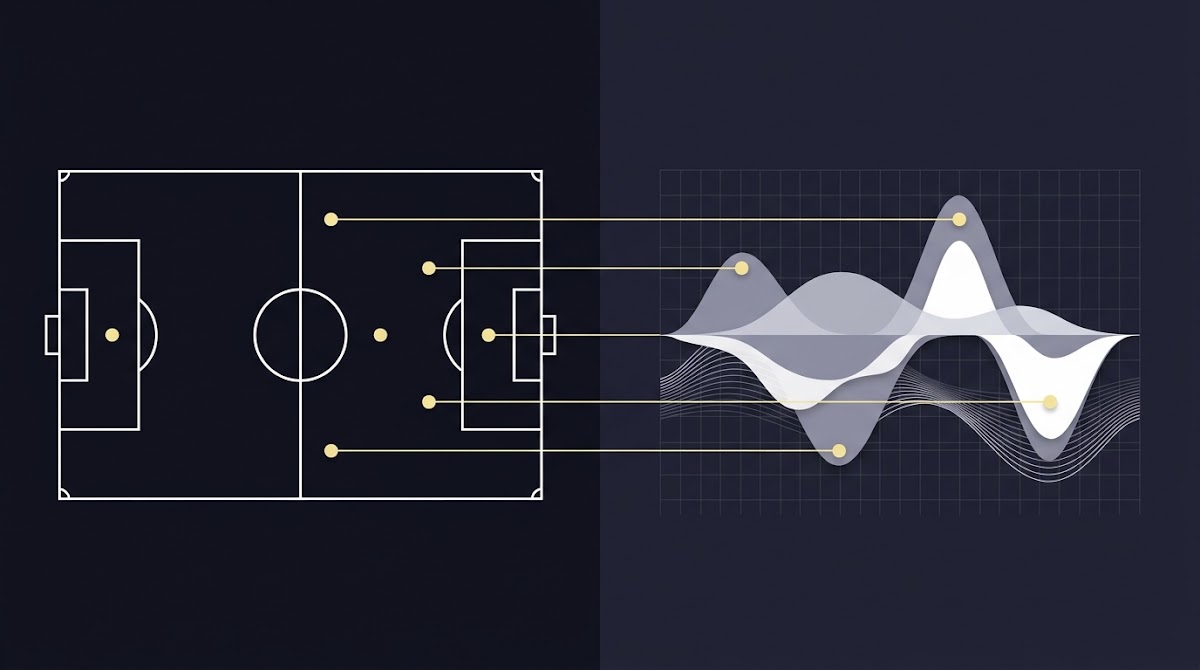
What correlation in same-game props actually means
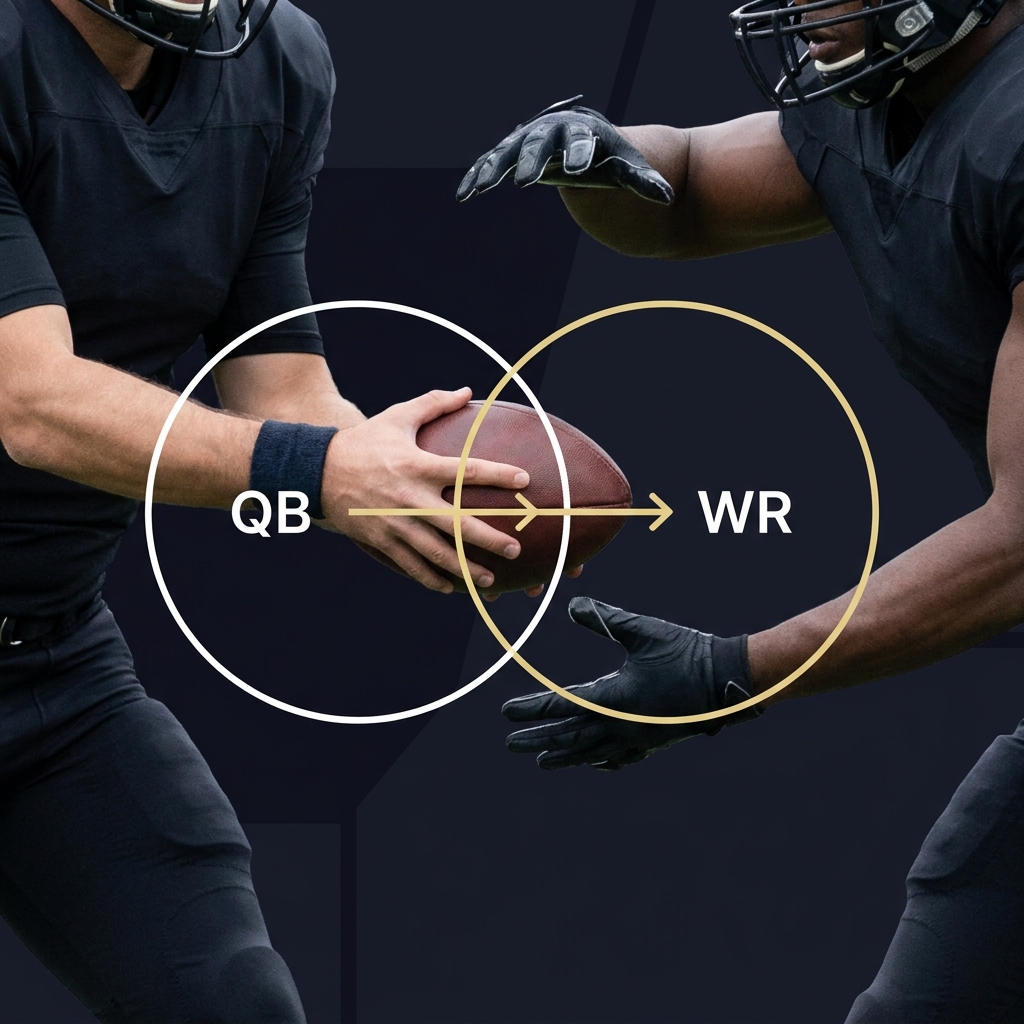
In sports props, correlation means that two outcomes inside the same game can move together because they share causes. For example, a quarterback logging many pass attempts makes both his passing yards and a primary receiver's yards more likely, so the chance of both outcomes happening is not simply the product of their separate chances; this difference between dependence and independence is what bettors call correlation.
That practical distinction matters because many operator rulebooks and bet-builder systems treat linked legs differently rather than assuming naive independence, and it is worth checking provider rules before placing a combination to avoid surprises in settlement or pricing Sportsbook House Rules.
Practice correlation adjustments in a controlled environment
Consider testing correlation adjustments in a practice environment before staking meaningful funds; treat early rounds as model development rather than a final test.
To make the idea concrete, imagine two yes/no prop outcomes with single-leg probabilities of 60 percent and 50 percent. If they were independent, the joint chance of both occurring would be 30 percent, but positive covariance between the legs raises that joint chance and negative covariance lowers it. This arithmetic underlies why simple parlay multiplication can misstate value.
In operational terms, the phrase same-game parlay refers to structured multi-leg combinations inside one event, and house rules often include provisions about which combinations are allowed, how combined prices are calculated, and how invalid legs are settled. Those settlement and combinability rules are as material to value as the probability math itself.
Why sportsbooks and bet builders treat correlated props differently
Operators alter availability and pricing for correlated combinations for a few simple reasons: they need clear settlement rules, they want to control exposure to overlapping outcomes, and they must price products so that the aggregate book remains balanced. These practical drivers show up in operator documentation that explains when correlated picks may be restricted or repriced DraftKings help.
From a user perspective, that means two things. First, some same-game combinations can be disallowed at the point of sale or automatically repriced by the platform. Second, if you ignore those operational rules you can end up with voided legs or settlements that differ from expectations, so reviewing the help and house rules before building combos is good practice.
A bet builder is a customer-facing product that assembles many markets into one ticket. Because legs within a single game often share drivers, providers adopt restrictions and dynamic pricing to reflect dependence and to keep settlement clear and consistent. That pattern is both a risk control for the operator and a signal that bettors must think beyond simple multiplication.
How modern bet-builder pricing models capture correlation
Some providers describe pricing systems that explicitly model inter-market dependence rather than multiplying independent margins; these frameworks adjust joint odds to reflect observed or modeled links across markets Kambi insights.
At a high level, models can follow one of several approaches: adjust joint probabilities using empirical co-occurrence rates, apply copula-like dependence structures to link marginal distributions, or perform scenario sampling that captures conditional outcomes. The point is to produce combined prices that better match the true joint probability than naive parlay math.
Estimate single-leg probabilities, assess directional correlation and magnitude from usage and context, adjust the joint probability conservatively, and compare the adjusted chance to the sportsbook's combined price while checking house rules.
These systems also often update dynamically as new information arrives in-play. For example, a midgame injury, a change in play calling, or evolving weather conditions can shift marginal and joint probabilities, and a correlation-aware engine will move the combined price to reflect the updated state.
Probability basics: joint probability and covariance for Bernoulli outcomes
The compact mathematical fact to keep in mind is this: for two Bernoulli outcomes the joint probability equals the product of their marginal probabilities plus a covariance term, so positive covariance increases the chance of both happening compared to naive independence and negative covariance reduces it; this relationship is a standard result in probability theory NIST e-Handbook.
Put another way, covariance measures how much two binary outcomes co-move relative to their individual chances. If covariance is zero, the product of marginal probabilities gives the joint probability. If covariance is positive, the joint probability is larger than the product, which is exactly why many same-game combinations require an adjustment when estimating value.
There are practical limits on how large or small a joint probability can be, expressed by Fréchet bounds. Those bounds constrain feasible joint probabilities given the two marginals, so whatever adjustment you make must remain within those mathematical limits. Using feasible bounds is a useful sanity check when you estimate covariance from sparse data.
Common positive and negative correlations in football props
In football, bettors commonly encounter strong positive links such as a quarterback's passing yards with his primary receiver's receiving yards and with team pass attempts. These logical relationships arise because the same playbook and game flow that increase one player’s volume tend to increase related players' opportunities as well Unabated guide.

Negative correlations are also common. A run-heavy game script that consumes clock and moves the ball on the ground typically reduces team pass attempts and thus depresses passing yards totals, creating an inverse relationship between rushing and passing outcomes. Weather, early leads, and injury news are contextual modifiers that can flip correlation direction or change its magnitude.
When assessing these links, usage metrics such as target share, snap share, and route participation provide direct clues about whether a player's prop will co-move with a teammate's result. Watching situational tendencies also helps: red zone usage, obvious passing situations, and third-down play-calling influence the likely direction and strength of correlation.
A step-by-step workflow to evaluate a correlated same-game combo
Start by estimating credible single-leg probabilities for each selection using your model or prior research. These marginal probabilities are the foundation: accurate marginals make joint adjustments meaningful. When practical, record an error band or confidence interval around each marginal to account for uncertainty.
Next, assess directional correlation and an approximate magnitude using usage and matchup context. Look for shared drivers like play volume, route participation, and coaching tendencies. Where possible, back this assessment with empirical co-occurrence rates from historical data or model-based conditional estimates Unabated guide.
Then adjust the joint probability conceptually by adding a covariance term or using an empirical joint-rate lookup. If you prefer a quick manual rule, treat moderate positive correlation as a proportional uplift to the naive product and negative correlation as a proportional discount, but keep adjustments conservative when historical co-occurrence is limited.
Finally, compare your adjusted joint probability to the sportsbook's combined price to evaluate expected value. If the adjusted probability implies a higher true chance than the implied chance from the offered price after accounting for vig, you may have an edge. Always check the operator's allowed combinations and settlement rules before submitting the ticket.
Tools and models that make correlation adjustments easier
Provider-side indicators and some commercial bet-builder systems surface correlation risk and implied joint pricing so users can see when dependence is shaping combined odds. Those risk indicators are often the quickest way to check whether a platform already accounts for the link you are worried about Kambi insights.
For lightweight, do-it-yourself approaches, simple conditional probability tables, basic Monte Carlo simulation, or empirical joint-rate lookups work well. Running a small simulation that samples play counts and routes while conditioning on game script can reveal how often both legs occur together.
quick correlation adjustment checklist
Use conservative adjustments when data is thin
Rely on modeling tools when the combinations are high-stakes or when you have sufficient historical data to estimate joint distributions. For casual or experimental usage, modest spreadsheet models and scenario checks usually suffice and keep assumptions transparent.
Decision criteria: when to build a correlated combo and when to avoid it
Use objective thresholds to decide. Build a correlated combo when your adjusted joint probability suggests positive expected value after vig and when the edge is larger than your minimum threshold for action. If the expected edge is marginal or the margin depends on uncertain correlation estimates, avoid the combo or reduce stake size.
Operational constraints matter. Verify that the selections are allowed together, confirm settlement definitions for each market, and ensure there is no unusual fine print that could void or change a leg's settlement. Operator rulebooks and help articles document these constraints and should be part of your checklist Sportsbook House Rules.

Practical risk controls include limiting the number of correlated combos you hold per event, sizing stakes relative to estimated edge and the increased variance of correlated exposure, and keeping a running log of outcomes to recalibrate your assumptions after a reasonable sample of attempts.
Before placing correlated combos, check the help center for the platform's technical definitions of events and markets. Those fine-print rules determine whether a game delay, alternate official statistics, or related market cancellation affects your combined ticket and your realized expected value DraftKings help.
Typical mistakes and how to avoid them
Typical mistakes and how to avoid them
A common error is naive multiplication of marginal probabilities or odds to value a same-game combo. That approach ignores covariance and can substantially misstate joint probability; the correct formula includes the product plus a covariance term, so treating outcomes as independent is a mathematical shortcut that can mislead NIST e-Handbook.
Another frequent mistake is neglecting operator rules. If you build a ticket that contains disallowed or restricted pairings, platforms may prevent acceptance or later void legs, which changes realized outcomes and expected value. Checking the help-center wording for settlement and combinability can prevent these surprises DraftKings help.
Finally, many bettors overfit correlation magnitude from small samples. When historical co-occurrence counts are low, prefer conservative adjustments and increase your uncertainty band. Track outcomes and update estimates as you collect more data rather than treating early observations as definitive.
How operators settle or void correlated combinations in practice
House rules often include explicit examples and conditions under which legs are voided or settled differently, which is why operators advise users to review settlement sections before using a bet builder. Those provisions are not just legal boilerplate; they directly affect how a correlated ticket resolves and whether you receive a payout or a refund on specific legs Sportsbook House Rules.
Common settlement outcomes include full acceptance, partial voiding when a leg is invalid, or special definitions when a market depends on another outcome that is itself contested. Reading the market definitions and the related settlement examples reduces the chance of post-game disputes.
Before placing correlated combos, check the help center for the platform's technical definitions of events and markets. Those fine-print rules determine whether a game delay, alternate official statistics, or related market cancellation affects your combined ticket and your realized expected value DraftKings help.
Worked examples: adjusting a two-leg prop with positive and negative correlation
Positive correlation example, step 1: consider QB passing yards over and primary WR receiving yards over. Suppose your marginal estimates are 55 percent for the QB and 52 percent for the WR. Naive multiplication gives 28.6 percent joint chance. A conservative positive covariance uplift might add 5 percentage points to the joint estimate, producing a 33.6 percent adjusted joint probability; this reflects the tendency of higher pass volume to raise both outcomes together, an effect documented in applied guides Unabated guide and BetCalc365.
Positive correlation example, step 2: compare the adjusted joint probability to the implied chance from the combined price after accounting for vig. If the offered combined price implies a lower probability than your 33.6 percent adjusted estimate and your stake sizing meets risk rules, the ticket may present value. If not, pass or reduce size.
Negative correlation example, step 1: try rushing yards over versus QB passing yards over in a matchup likely to favor ground control. If your marginals are 48 percent for rushing and 50 percent for passing, naive multiplication yields 24 percent. Anticipating a run-heavy script, you might apply a negative covariance that lowers joint chance to 18 percent, reflecting the practical trade-off between rushing volume and passing attempts Harvard Sports Analysis Collective.
Negative correlation example, step 2: after adjusting, re-evaluate versus the combined price. In many cases a negative-correlation combination loses value relative to naive parlay math, which is why many operators and modelers advise caution or avoid such pairings unless the market price is especially generous.
Managing bankroll and testing when you target correlated props
Because correlated exposures can increase variance, apply conservative stake sizing proportional to estimated edge and account for higher drawdown risk. A simple rule is to shrink nominal stakes on correlated combos relative to uncorrelated plays with similar edges.
Test strategies on paper or in low-stakes environments before scaling. Running simulations or practicing in a funded challenge format lets you observe realized joint rates, track model calibration, and refine covariance estimates without large real-world losses Kambi insights.

Record outcomes and recalibrate models regularly. Correlation structures can shift across seasons, personnel changes, and rule adjustments, so maintain a ledger of assumptions, realized frequencies, and postgame notes to improve estimates over time.
Pre-bet checklist: what to verify before submitting a same-game prop combo
Operational checks: confirm that the specific markets can be combined, read settlement definitions for each leg, and verify market timeframes to avoid mismatched resolution periods. These steps reduce the chance of voided legs or unexpected settlements Sportsbook House Rules.
Probability and value checks: compare your adjusted joint probability to the implied combined price, include a margin for estimation error, and confirm that your stake size matches your risk control limits. If the edge disappears under conservative adjustments, do not place the ticket.
Recording the bet: write down your assumptions, the adjusted joint probability, the offered combined price, and the reason for the play. Postgame, reconcile outcomes with your model and update joint-rate estimates to reduce future error.
Conclusion: balancing model rigor, operator rules, and disciplined execution
Correlation changes joint probabilities in a way that naive parlay multiplication does not capture, and both operator rules and bet-builder pricing systems commonly reflect that dependence in availability and combined odds. Conservative adjustments and routine checks against house rules help reconcile your model with practical settlement and pricing realities Kambi insights.
When correlation estimates are uncertain, default to modest adjustments and smaller stakes, and treat early experiments as calibration rather than proof. Use scenario checks, simple simulations, and provider risk indicators to validate that your adjusted joint probabilities are consistent with observed outcomes.
Next steps: practice the step-by-step workflow on low-stakes or challenge-style platforms, keep careful records of joint outcomes, and update your covariance estimates as data accumulates. Combining model rigor with operational awareness will make correlated same-game props a manageable part of a disciplined prediction program.
Correlation means outcomes within one game can be statistically dependent, so their joint probability may differ from the product of individual probabilities and should be adjusted accordingly.
Many bet-builder systems incorporate dependence, but pricing approaches vary; use provider risk indicators and compare adjusted joint probabilities to offered prices.
Use conservative stake sizing, reduce nominal size for correlated exposures, and prefer low-stakes testing until you have calibrated joint estimates.
References
- https://www.fanduel.com/legal/sportsbook-house-rules
- https://help.draftkings.com/hc/en-us/articles/1260801963429-Same-Game-Parlay
- https://www.kambi.com/insights/how-bet-builder-pricing-captures-correlation/
- https://www.itl.nist.gov/div898/handbook/eda/section3/eda3673.htm
- https://unabated.com/learn/same-game-parlay-correlation/
- https://www.fundedplays.com/challenges
- https://harvardsportsanalysis.org/2024/03/untangling-same-game-parlays-and-correlation/
- https://www.predictology.co/blog/bet-builders-vs-single-bets-the-truth-about-correlation-pricing-and-hidden-ev/
- https://buildbetguide.com/articles/calculating-bet-builder-odds/
- https://betcalc365.com/blog/bet-builder-pricing-maths
- https://www.fundedplays.com
- https://www.fundedplays.com/blogs
- https://www.fundedplays.com/blogs/how-fundedplays-evaluations-work