
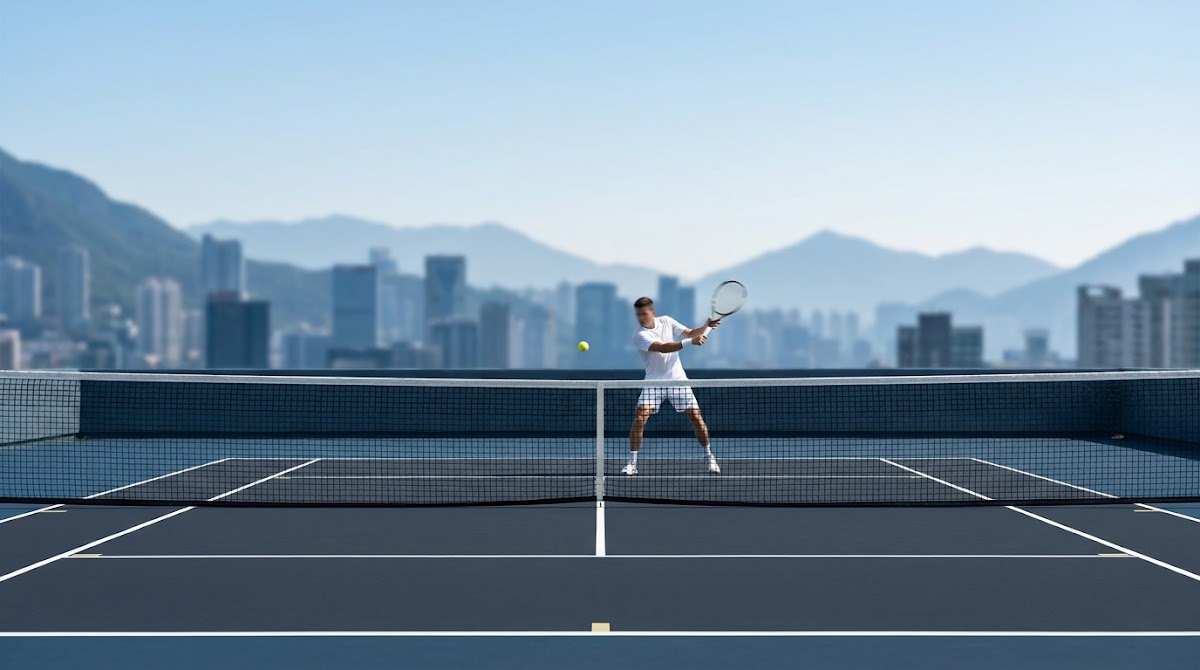
How Altitude Changes Tennis Conditions: definition and context
The phrase How Altitude Changes Tennis Conditions names a set of predictable effects that athletes and organisers face when a venue sits well above sea level. The International Tennis Federation sets a clear elevation threshold for using approved high altitude balls, and that administrative boundary matters for how tournaments plan equipment and for how players prepare.
Specifically, ITF rules allow approved high altitude balls for play above 1,219 m (4,000 ft), a measure organisers use to decide whether to switch ball type to reduce excessive liveliness and bounce variability, and to provide more consistent playing conditions for competitors ITF Rules of Tennis and the technical booklet 2025 technical booklet.
In plain terms, air density falls as elevation increases, and that reduced density is the physical root of most observed changes in flight, spin and bounce. This article focuses on practical adjustments that fit within current rules rather than promising specific outcomes for any player or team.
The physics behind it: air density, drag and the Magnus effect
Lower air pressure and thinner air at elevation reduce aerodynamic drag on a moving ball. Reduced drag means the ball loses less speed in flight, so serves and groundstrokes tend to carry farther and feel quicker off the strings. A concise explanation of pressure and density fundamentals helps connect this behaviour to what players see in practice NOAA JetStream on pressure and density.

Spin depends on the Magnus effect, which relies on pressure differences around a spinning ball. At altitude the same spin rate produces less lift because the surrounding air is less dense. The practical result is that topspin shots dip less and slice stays flatter, so the usual shape-based margin around the net narrows.
Put together, reduced drag and reduced Magnus lift create faster, flatter trajectories with timing shifts at bounce. Players notice that balls arrive earlier, land slightly deeper for the same applied force, and that topspin gives less safety margin than at sea level.
estimate relative air density change with elevation
Use as a planning aid
Rules and equipment: high altitude balls, pressureless options and court pace
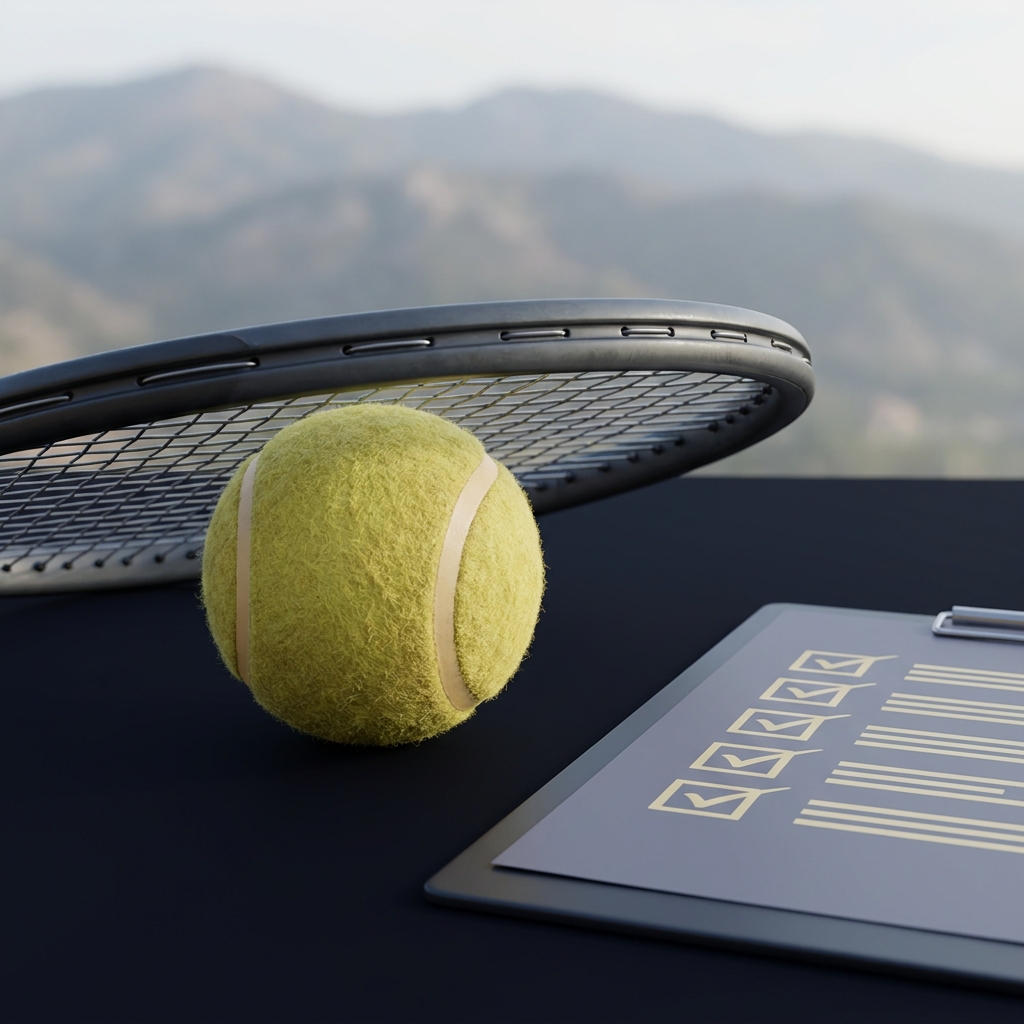
Governing texts explicitly address ball choice at elevation. The ITF Rules of Tennis and its appendices make allowance for approved high altitude balls above 1,219 m, and organisers commonly use those provisions when a site crosses the threshold to control liveliness and bounce ITF Rules of Tennis.
National guidance also directs tournament organisers toward pressureless or approved high altitude balls to limit variability. The USTA handbook and event guidance discuss pressureless and specially approved balls as tools to stabilise play in thinner air USTA Friend at Court.
Surface pace remains relevant because the measured court speed interacts with air effects. A slow court at elevation can still play quicker than expected because the air makes balls travel farther; conversely a fast court amplifies the quicker flight. Tournament planners should treat surface classification and air density as combined inputs when anticipating match pace ITF court surface guidance.
How altitude changes match play and strategy
At many moderate to high elevation events players report quicker playing conditions and a higher serve effectiveness, which leads to shorter rallies and different point construction. Empirical match analysis of elevated tournaments highlights this tendency and helps set realistic tactical expectations for competitors ATP Tour analysis of Madrid conditions.
Practically, the quicker conditions reward tighter targets and higher net clearance. Aggressive serves and first strike patterns gain relative value because the margin for defensive recovery narrows when the ball moves faster through the air.
Practice the warm up drill that improves net clearance and timing
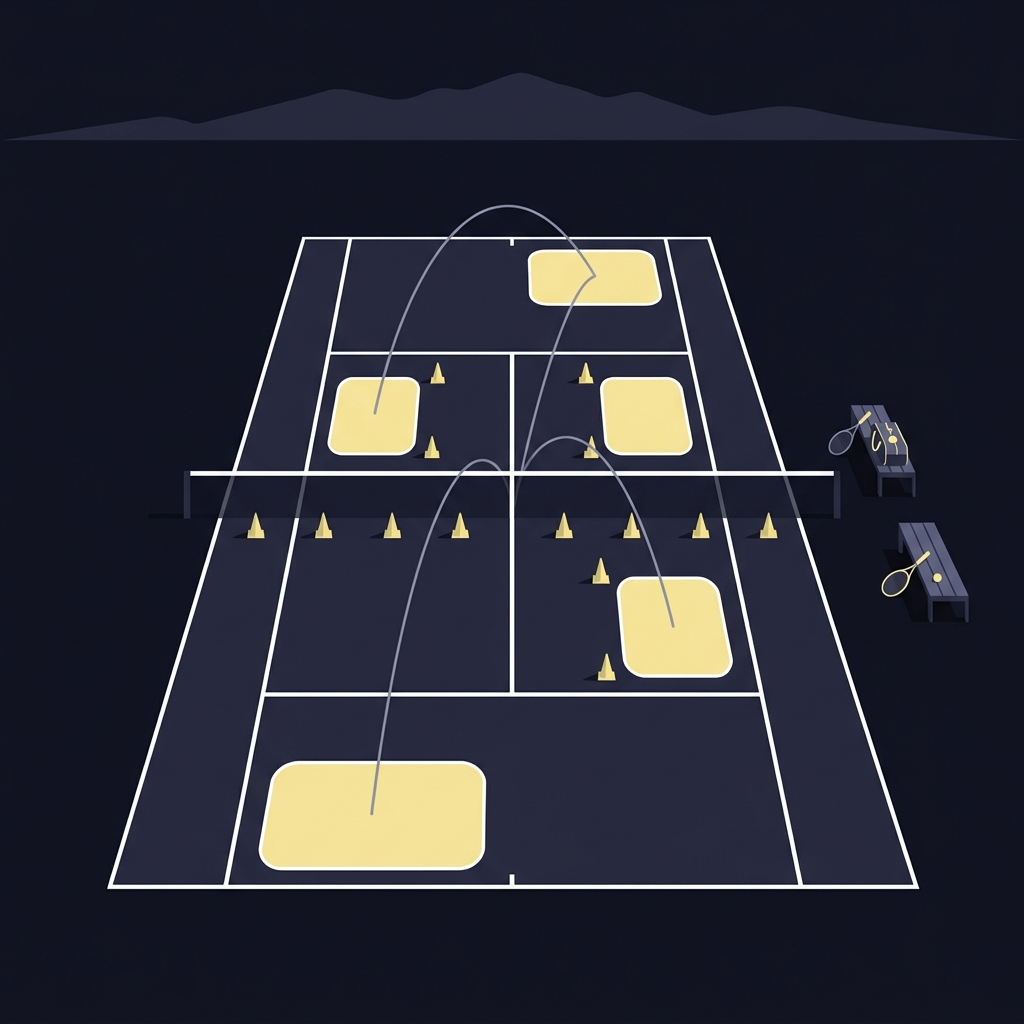
Try the warm up pattern described below, focusing on one target zone at a time and two-minute live rally segments to rehearse earlier ball arrival and deeper bounces.
Coaches should train players to value shape over raw pace: more apex over the net and controlled depth rather than flat power. Returning teams can emphasise returning to wider, higher targets to blunt the added serve zip, while servers can shift percentage serve placement toward corners and body patterns that reward the quicker ball flight.
Practical adjustments: strings, strokes and on court patterns
One common equipment adjustment is modestly lowering string tension to increase dwell time and forgiveness, helping players regain some control under quicker conditions; federation coaching guides often recommend stringing and tension choices be tuned rather than radically changed USTA Friend at Court. Additional USTA guidance is available here.
Technique-wise, emphasise shot shape rather than flat pace. A slightly higher trajectory and deliberate topspin produce extra net clearance and a more predictable landing, compensating for the reduction in spin induced dip.
Practical drills are straightforward and repeatable. Use blocked feeds where a player hits a consistent target zone with an emphasis on net clearance, and then progress to short live points that prioritize first strike sequences. Include a serve-return rotation that rehearses serving to a corner then immediately hitting a first strike volley or baseline winner to simulate faster point construction.
How to prepare and acclimatize for elevated venues
Short acclimatisation windows before competition support timing and perception adjustments. Sports performance guidance for intermittent sports recommends arriving early enough to run focused on-court sessions that tune sighting and stroke timing without overloading physical work USOPC guidance on competing at altitude.
Gradual workload progression is sensible: start with light hitting and technical reps, then add situational drills and finish with short match-play segments. This approach limits acute error spikes that can occur when a player over-commits physically while still recalibrating to quicker ball behaviour.

During acclimatisation, always check the tournament ball type and, if possible, practise with the same balls. That small step helps align perceived pace and bounce with match conditions and reduces surprise on match day.
Common mistakes and how to avoid them
A frequent equipment mistake is leaving string tension unchanged without testing how the racket responds at elevation. Neglecting ball type is another avoidable error; pressureless or approved high altitude balls are prescribed for a reason and should be confirmed before match play ITF Rules of Tennis. See the ITF ball approval procedures 2025 ITF approval procedures.
Tactical and mental errors tend to follow from misreading conditions. Players sometimes overhit to compensate for the perceived lack of bite on topspin, which increases unforced errors. Others chase speed rather than shape and end up short or wide.
A short pre match checklist in warm up can cut through these traps: verify ball type and count, rehearse a net clearance drill, test one serve placement pattern, and run two short live-point sequences that mirror your planned first-strike approach.
Practical scenarios and quick case studies
Example: preparing for a tournament in a city at 1,500 m. Treat the event as likely to play quicker than sea level, confirm whether the organisers will use high altitude balls, lower string tension modestly if testing goes well, and rehearse higher apex targets in the first practice day. Match analysis from elevated tournaments offers context for expected changes in serve and rally dynamics ATP Tour analysis of Madrid conditions.
Scenario: day match in cool versus warm conditions at the same elevation. Temperature and humidity alter air density, so a cool day increases air density relative to a warm day and can slightly reduce the liveliness compared to a hot afternoon; consider this when finalising practice intensity and stringing checks NOAA JetStream on pressure and density.
They should verify ball type, use short acclimatisation sessions focused on timing, consider modest stringing adjustments, rehearse higher net clearance and first-strike patterns, and treat court pace and local weather as part of the decision process.
How to calibrate practice and stringing across venues: make decisions by checking elevation, asking organisers about ball type, testing a modest change in tension, and then running short live situations to confirm perception before committing to match play. Court pace ratings and prior event notes can further refine those choices ITF court surface guidance.
Putting it together: a compact pre match checklist and closing summary
Five minute pre match checklist: confirm elevation and ball type, note whether approved high altitude balls are in use, check and record string tension, rehearse a two minute net clearance drill, and run two short live-point sequences that prioritise first-strike patterns. These steps focus attention on controllable details that reduce match-day surprises ITF Rules of Tennis.
Key takeaways for longer term training include practising shape and net clearance, testing modest tension adjustments during lead-up sessions, and using short acclimatisation windows to tune timing and perception rather than to overhaul fitness. Official rules allow use of high altitude balls above 1,219 m, and equipment and tactics should be tuned case by case within those frameworks.
Finally, outcomes depend on individual adaptation and preparation. Use the checklist and drills above to reduce variability, and treat venue specific factors such as temperature, humidity and surface speed as part of the decision process rather than as surprises.
Yes. The ITF permits approved high altitude balls for play above 1,219 m, and national guidance often recommends pressureless or high altitude balls to stabilise bounce and liveliness.
Many coaches recommend modestly lowering tension to increase dwell time and forgiveness, but final tuning should be confirmed in practice with the tournament balls.
Short acclimatisation periods focused on timing and perception adjustments are typically recommended; structure sessions to progress from technical reps to short live points rather than heavy workloads.
References
- https://www.fundedplays.com/blogs
- https://www.itftennis.com/en/about-us/governance/rules-and-regulations/rules-of-tennis/
- https://www.itftennis.com/media/14104/2025-technical-booklet.pdf
- https://www.weather.gov/jetstream/pressure
- https://www.itftennis.com/en/about-us/tennis-tech/court-surfaces/
- https://www.atptour.com/en/news/madrid-altitude-conditions-2024
- https://www.usta.com/en/home/about-usta/who-we-are/national/friend-at-court.html
- https://www.usta.com/content/dam/usta/sections/pacific-northwest/pdfs/play/leaguenew/ITFRuleswheader.pdf
- https://www.teamusa.org/science/athlete-and-coaching-resources/
- https://www.fundedplays.com/challenges
- https://www.itftennis.com/media/12819/2025-itf-ball-approval-procedures.pdf
- https://www.fundedplays.com
- https://www.fundedplays.com/blogs/how-fundedplays-evaluations-work