

Why age curves matter in combat sports
An age-performance curve describes how key physical and cognitive capacities change across an athlete's life and why those changes matter for fight outcomes. For combat sports, an age curve is not just about longevity; it helps set expectations for shifts in striking speed, recovery, and tactical reliability as careers progress, with implications for matchmaking and training choices. Broad cross-sport analyses show a relatively early peak for speed-power followed by decline, which frames much of the expectation for striking-focused athletes, while endurance traits evolve on a different timeline PLOS ONE analysis of age and performance.
The rest of this article translates those physiological trends into practical actions. Readers will find concise definitions, the main mechanisms behind declines, weight-class and style differences, injury and exposure considerations, and simple scouting and training heuristics. Expect technical clarity without hype and a few short checklists and scenarios you can apply to real matchups.
Learn the skills to evaluate fighters with funded challenges
Sign up for occasional deeper guides that walk through scouting examples and training adjustments, without promising outcomes or guarantees.
Key terms and how researchers measure age effects
Researchers use a small set of repeatable metrics to quantify aging effects that matter to fighters. VO2max measures maximal aerobic capacity and is central to endurance assessment, rate of force development captures how quickly muscles generate power, motor unit counts reflect neuromuscular integrity, and simple reaction time gauges rapid perception-action loops. Describing these helps translate lab measures into gym and ring meaning, especially for coaches deciding which tests to prioritize Journal of Applied Physiology on aerobic decline.
It is also important to distinguish study designs. Cross-sectional studies compare athletes of different ages at one time point and are common because they are easier to run, but they can conflate cohort and training differences. Longitudinal studies that follow the same athletes over years are rarer in combat sports, which is why general physiological findings from other sports often inform coaching decisions. Weight class and fighting style add ecological complexity, so metrics must be interpreted in context rather than in isolation.
How speed and power peak early and then decline
Evidence for an early peak in speed-power
Across athletic disciplines, speed-power measures tend to peak earlier in adulthood and then decline in a fairly predictable shape, a pattern that helps explain why striking effectiveness can change noticeably with age. These cross-sport patterns provide a practical baseline for anticipating ring outcomes even when sport-specific longitudinal datasets are limited PLOS ONE analysis of age and performance.
Use age as one of several evidence-based signals, weighting it by fighting style and injury history, and favor targeted training and recovery strategies rather than fixed age cutoffs.
How Age Curves Affect Combat Sports
For striking sports, an early peak in explosive strength and hand speed translates into clearer windows of maximal knockout probability and quick combination output; as those attributes decline, fighters often shift toward timing, positioning and shot selection rather than relying on raw speed. While individual trajectories vary, the general tendency for speed-power to decline earlier than endurance is one reason scouting often views speed-dependent fighters as having earlier performance ceilings Review on boxing performance.
Training can blunt some decline through targeted power work and technique refinement, but those interventions usually reduce rather than eliminate the underlying shift in peak capacity. When evaluating matchups, consider whether a fighter's style is speed-dependent or timing-based; that distinction often predicts how much age will alter the matchup balance.
Neuromuscular remodeling: the mechanics behind slower punches
Neuromuscular remodeling with age - loss and restructuring of motor units and slower firing rates - reduces the rate at which force can be developed. That mechanism helps explain observed declines in hand speed and reduced ability to generate rapid, high-power strikes in older fighters Journal of Physiology on motor unit remodelling. (see additional review)
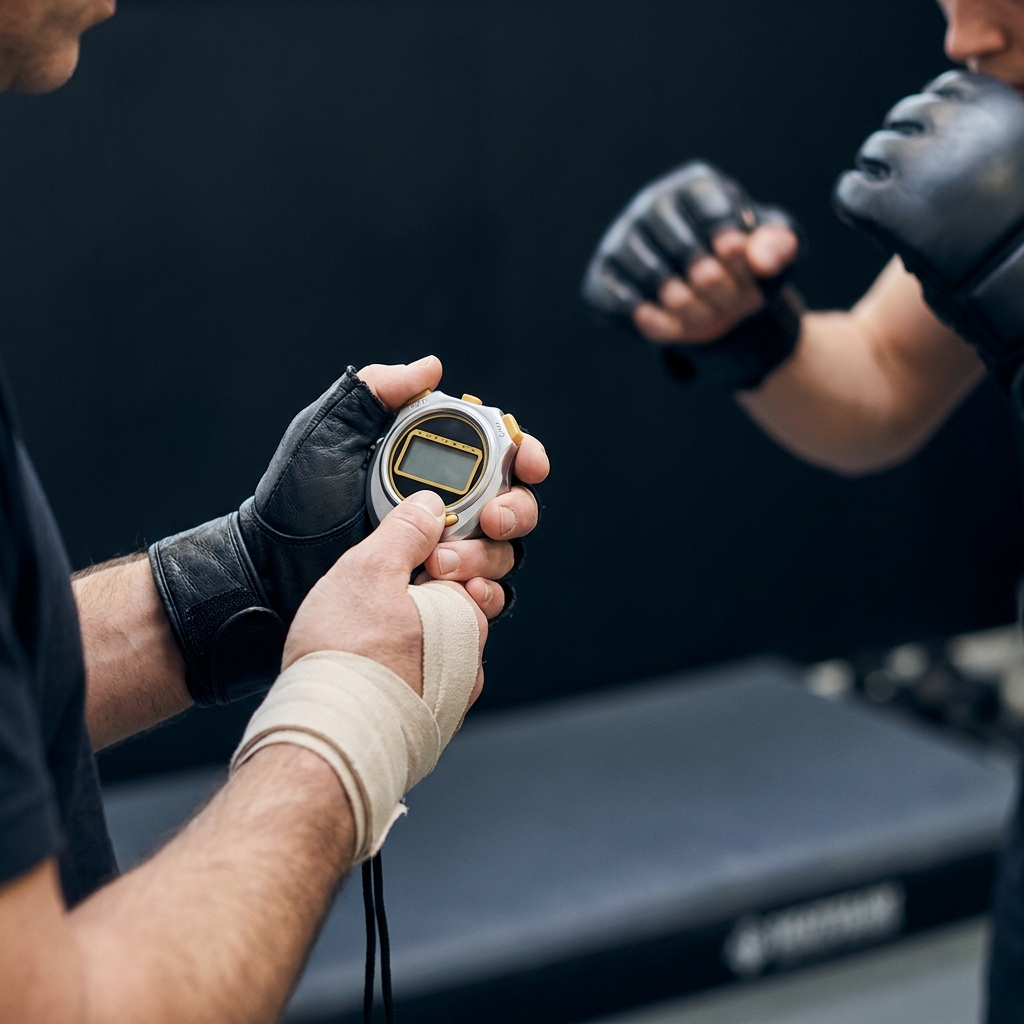
In practice, this means that even when maximal strength is maintained, the rapidity of force application often declines. Coaches should focus on exercises that emphasize rate of force development and fast-twitch recruitment while accepting that neuromuscular aging is only partially reversible through training. Framing this as neuromuscular aging rather than a simple strength loss helps set realistic training goals.
Endurance changes: VO2max and the shifting stamina profile
Aerobic capacity declines with age even in trained adults and the decline tends to accelerate later in life; this alters how fighters recover between high-intensity bursts and how they sustain output across rounds Journal of Applied Physiology on aerobic decline.
Those changes are generally slower than speed-power declines but still meaningful. Fighters may notice longer recovery times between exchanges, reduced ability to maintain peak output late in fights, and a need to adjust pacing strategies. Periodized aerobic work and focused recovery become relatively more important as athletes age.

Cognitive aging: reaction time, processing and decision-action coupling
Reaction time and processing speed decline with age, which affects rapid perception-action coupling that underpins defense, counters and split-second tactical reads. These cognitive shifts can change a fighter's effective window for reading opponents and initiating responses Review on cognitive aging.
Practically, slower processing often shows up as delayed counters, slightly lengthened defensive responses, and the need to rely more heavily on anticipation and pattern recognition. Training drills that emphasize cue recognition, situational sparring and decision-speed under fatigue can help preserve tactical responsiveness, though they do not fully negate age-linked changes.
Injury, cumulative exposure and late-career volatility
Combat sports, and MMA in particular, have high injury and concussion burdens; cumulative exposure over long careers can compound physiological aging and lead to greater late-career performance volatility. While age is not the only factor, cumulative damage and recurring injuries can amplify the effects of normal aging on performance Systematic review of MMA injuries.
When evaluating older fighters, it is essential to review bout history, reported concussions and chronic injury patterns because these elements can change expected decline trajectories. A fighter with extensive exposure may show earlier or more variable decline than chronological age alone would predict.
Quick injury and exposure assessment for late-career fighters
Use as a screening prompt not a medical diagnosis
Style and weight-class differences in age effects
Style and weight class modulate how age curves play out. Speed-dominant strikers who rely on hand speed and explosive movement tend to reach peak effectiveness earlier and show clearer declines in their 30s, whereas heavier fighters who rely more on absolute strength and power often have later plateaus and more gradual changes PLOS ONE analysis of age and performance.
Grappling-heavy styles emphasize timing, positioning and repeated high-effort exchanges; that profile shifts the relative importance toward endurance and technique, which can preserve competitiveness longer if training and recovery are optimized. Weight-class physiology and power-to-weight interactions also change how aging affects actual in-cage performance.
Training, recovery and mitigation strategies by age
Targeted strength and power work can preserve rate of force development and blunt some neuromuscular losses, but it rarely fully reverses age-related remodeling. Programs should prioritize explosive lifts, plyometrics, and high-intensity interval elements while monitoring fatigue and recovery Journal of Physiology on motor unit remodelling. (see related review)
Recovery, periodization and aerobic conditioning are equally important. As VO2max trends change with age, planned aerobic sessions, active recovery and load management help sustain round-to-round output. These measures are part of combat longevity strategies that aim to extend effective competitive windows without making unrealistic guarantees.
How scouts and analysts should weigh age in models
Analysts should weight age differently by fighter archetype. For speed-dominant fighters, apply stronger age penalties to metrics tied to explosive outputs, while for strength-reliant heavyweights a milder age adjustment is often appropriate. Use recent performance trends and style context to set the size of the adjustment rather than relying solely on chronological age PLOS ONE analysis of age and performance.
Prioritize injury history and recent bout frequency as model flags: an older fighter with heavy cumulative concussive exposure or a string of injuries deserves a larger volatility adjustment than an age-matched peer with cleaner history. Simple heuristics and flags often outperform rigid coefficient rules when data are sparse.
Practical decision rules for fighters and coaches
Prioritize recovery and selective matchmaking for aging fighters, favoring opponents and timelines that allow for controlled output rather than forcing speed-centric exchanges. Emphasize technical timing and selective power shots over sustained high-tempo pressure as athletes move through their 30s Review on boxing performance.
When to change style: if rate of force development and hand-speed tests decline despite training, shift focus toward counterpunching, positional control or conditioning-led strategies that exploit endurance and timing. Treat each athlete's trajectory as individual and reassess regularly.
Common mistakes and myths about age in combat sports
One common error is overgeneralizing from single famous examples; high-profile outliers create survivorship bias and can mislead scouts who ignore broader trends. Using representative data and multiple metrics reduces this sampling bias and yields more reliable expectations PLOS ONE analysis of age and performance.
Another mistake is ignoring style-specific differences and treating chronological age as a uniform decline factor. Chronological age is a useful marker but not a full substitute for individual injury history, training status and technical evolution.

Practical scenarios: applying age curves to real matchups
Scenario A: A younger speed striker versus a veteran counterpuncher. If the younger athlete's value is largely hand speed and explosive entry, expect age-related speed losses in the veteran to narrow the window for counters; however, if the veteran has superior pattern recognition and lower recent exposure to concussive events, the matchup may still favor the veteran at longer ranges Review on boxing performance.
Scenario B: An aging heavyweight with residual knockout power versus a younger pressure grappler. Heavyweights often retain absolute power longer, so matchups hinge on whether the grappler can close distance without absorbing decisive shots. Injury history and recovery ability can swing expectations more than a single year of age in these cases Systematic review of MMA injuries.

Ask which data points matter most: recent fight output, rate of force development tests, documented concussions, and the fighter's style reliance on pure speed versus timing. One bout with a notable concussion history can change model expectations more than a one-year chronological difference.
Conclusion: practical takeaways and next steps
Actionable takeaways: first, speed-power often peaks earlier than endurance and is a key driver of striking effectiveness; second, neuromuscular remodeling and slower reaction times explain many late-career changes; third, injury and cumulative exposure can amplify age-related volatility PLOS ONE analysis of age and performance.
Use these mechanisms responsibly: combine physiological insight with individual data, recent performance and injury history before making scouting or training decisions. For analysts and coaches, small, style-specific adjustments and regular reassessment will yield better results than rigid age cutoffs.
Peak timing varies by discipline and style; speed-power traits often peak earlier in adulthood, while endurance and technical skills can plateau later. Individual variation is large.
Training can mitigate declines, especially with targeted strength, power and decision-speed drills, but it generally cannot fully reverse biological aging processes.
Weight age adjustments by style and weight class, prioritize recent performance and injury history, and use flags for heavy cumulative exposure rather than fixed coefficients.