
What a sports trading challenge is and why it exists
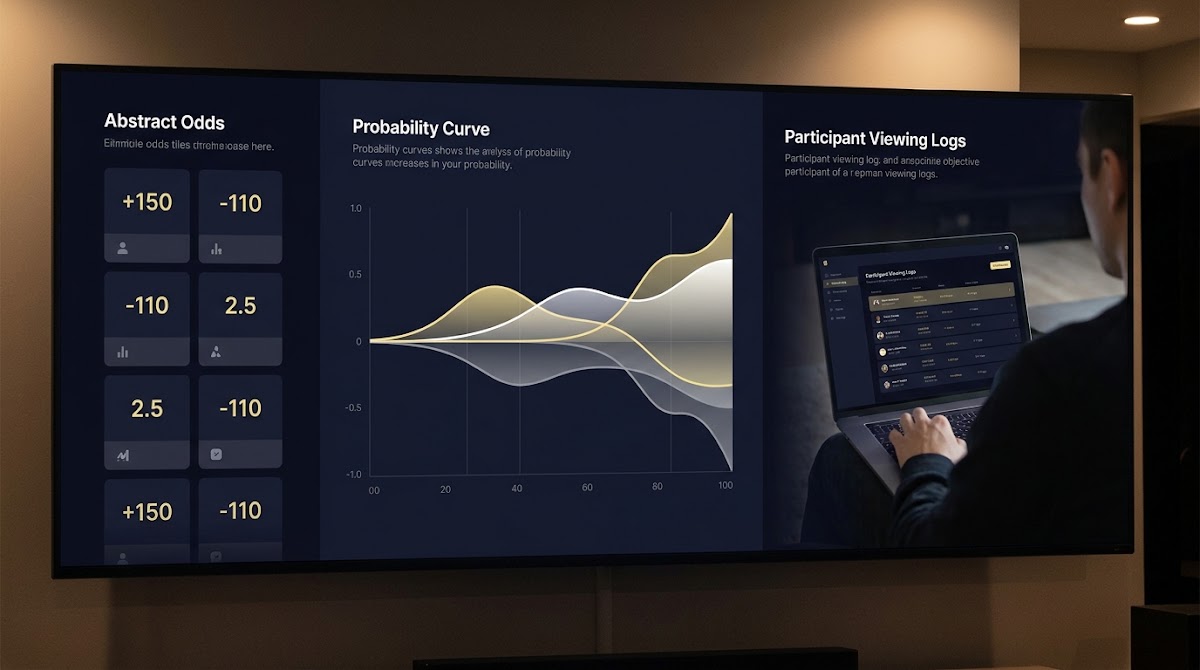
At its core, a sports trading challenge is a structured, skill-focused evaluation where participants make probabilistic sports predictions or virtual trades against a simulated bankroll. The model uses virtual bankrolls and defined objectives to assess consistency and forecasting skill rather than real-money wagering, and this distinction matters for how the process is regulated and presented.
These challenges are designed to test repeatable decision-making over time, with clear rules for progression and limits that protect both participants and the operator. Clear, enforceable rules and monitoring are central to this format because they align user protections and fairness expectations similar to remote technical standards for related industries UK Gambling Commission remote technical standards.
Ready to try a structured sports prediction challenge?
Learn the challenge rules carefully, rehearse with practice runs, and use clear limits to keep your play disciplined; read the full challenge terms before you start.
Skill-based challenges differ from traditional sportsbooks in three key ways: they evaluate forecast accuracy over many events, use virtual funded accounts for the evaluation phase, and prioritize transparent progression criteria rather than immediate payout promises. That distinction helps participants treat the exercise as a test of skill and process rather than an attempt to chase quick profits.
Skill-based format versus traditional wagering
Traditional wagering typically involves real-money bets with immediate settlement and odds set by a bookmaker, while sports trading challenges emulate the decision-making process with simulated capital and structured objectives. The evaluation phase focuses on repeatable skill signals and disciplined risk controls, not a single high-risk opportunity.

Funded-account challenges provide a staged way for participants to demonstrate consistent forecasting using a virtual bankroll and defined performance targets before moving to larger funded accounts or reward stages. This setup appeals to sports analysts and modelers who want a controlled environment to show long-term skill without direct exposure to real-money loss.
How a typical challenge is structured step by step
Most challenges begin with a selection step where participants choose an account tier and review the challenge terms, including the virtual bankroll, evaluation objectives, allowed markets, and drawdown limits. The choice of account size sets the virtual capital for the evaluation and frames the scale of positions and allowable per-event risk.
Challenge rules typically include profit targets, maximum drawdown thresholds, and time windows to reach objectives; these rules are explicit in the terms so participants can plan position sizing and pacing. Platforms often publish these rules and monitor compliance in real time to maintain fairness and transparency Internet Responsible Gambling Standards.
When selecting a challenge, look for the following structural elements in the terms: start and end conditions, how virtual stakes are defined, what counts as an entry, and how rule breaches are handled. Understanding these details up front helps you build a practical plan and reduces surprises during the evaluation window.
Typical objective types you will encounter include reaching a set percentage return on the virtual bankroll, maintaining performance above a scoring threshold, and avoiding a prescribed maximum drawdown for a defined period. Timeframes vary by challenge and by account tier, and they shape how aggressive or conservative your position-sizing must be.
Choosing an account size and challenge rules
Account tiers differ by starting virtual bankroll, allowed markets, and the difficulty of qualification metrics. Smaller accounts may require fewer cumulative wins but tighter position sizing, while larger tiers often demand longer-term consistency to demonstrate skill at scale.
Common objective types: profit targets, score thresholds, time windows
Profit targets set a clear milestone to reach within the evaluation period, while score thresholds use forecast-accuracy metrics to judge predictive quality. Time windows limit how long you have to achieve these goals, which makes pacing and sensible risk controls essential.
Onboarding, identity checks and setting responsible-play limits
Onboarding for a skill-based challenge usually includes account registration, identity verification to confirm age and eligibility, and acceptance of the challenge terms and code of conduct. Age verification and basic identity checks are standard practice to ensure participants meet platform requirements and to support responsible participation.
It uses virtual bankrolls, defined evaluation objectives, and proper scoring rules to assess probabilistic forecasts over time, with monitoring and controls to ensure fairness and compliance.
Participants should be offered tools to set personal limits, including deposit-style limits for practice modes, session timers, cooling-off options, and clear self-exclusion pathways that mirror internet responsible-play principles. These user-facing safeguards help participants set boundaries and reduce the risk of impulsive decisions and must be visible in the account controls Internet Responsible Gambling Standards.
Clear terms and visible controls also reduce compliance risk for the operator and make dispute resolution and audit trails more straightforward if questions arise about eligibility or rule breaches.
Account setup and age verification
Expect a registration flow that requests basic personal details, confirmation of age, and a recorded acceptance of the challenge rules. Platforms commonly retain audit logs showing when an entrant accepted the terms, which helps maintain transparency in case of later disputes.
Setting personal limits and self-exclusion options
Personal limit settings and a clearly described self-exclusion process let participants pause or stop participation if needed. These controls are practical risk-management tools for individual players and reflect broader responsible-play standards that platforms align to for user protection.
How performance is measured: scoring rules and validation
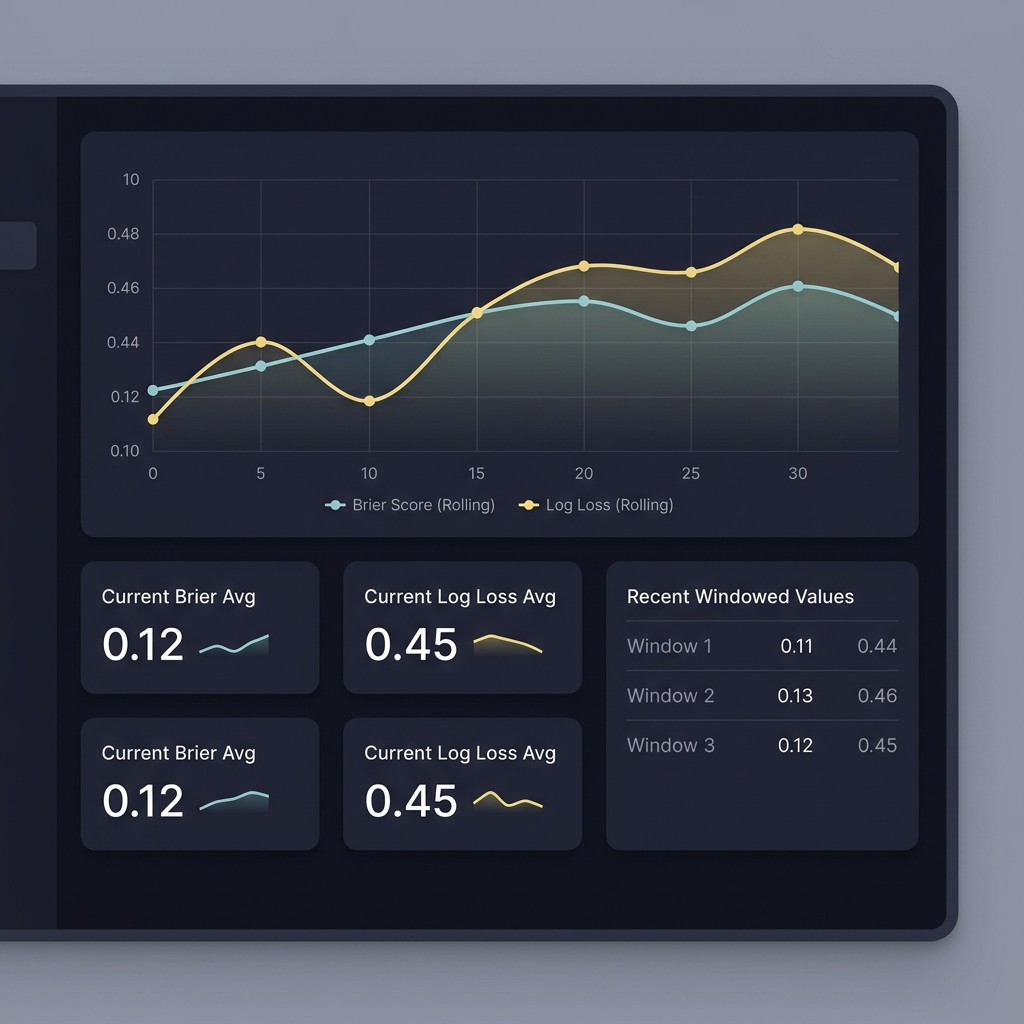
Predictions in these challenges are often probabilistic. Proper scoring rules, such as the Brier score and log loss, are used to evaluate forecast quality because they reward well-calibrated probability estimates and penalize overconfident, incorrect predictions Journal of the American Statistical Association article on strictly proper scoring rules.
Using a proper scoring rule helps separate lucky outcomes from genuine forecasting skill by focusing on probabilistic accuracy rather than just hit rate. This is particularly important when participants take part over many events and need a stable way to compare performance.
Validation protocols complement scoring rules by ensuring that apparent wins in backtests are not the result of overfitting. Out-of-sample testing and time-series cross-validation remain central methods to estimate how a predictive approach will perform on future events, and they are standard practice in modern forecast evaluation forecast accuracy and model evaluation guidance. Further practical guidance on backtesting time-series models is available from resources such as Machine Learning Mastery.
Proper scoring rules: Brier score, log loss and why they matter
Brier score measures the mean squared difference between predicted probabilities and outcomes, making it intuitive and easy to interpret, while log loss penalizes confident, incorrect probability statements more strongly. Both approaches encourage honest probability estimates rather than binary guesswork.
Out-of-sample testing and time-series cross-validation to avoid overfitting
Rolling cross-validation or time-based splits emulate the forward-looking environment of sports events, helping reveal whether a model truly generalizes. This kind of validation reduces the risk of selecting strategies that only performed well on historical quirks. See practical guides on time-series cross-validation techniques at Towards Data Science.
Bankroll and risk management inside a challenge
Bankroll rules define the size of the virtual account and the guardrails participants must respect while seeking the evaluation objective. Using a disciplined sizing framework helps participants reach objectives while avoiding the drawdown rules that can disqualify them.
Kelly-style bankroll sizing, often used in fractional form, provides a theoretical framework to balance growth and drawdown risk; fractional Kelly is a conservative application that reduces volatility while preserving long-term growth orientation discussion of the Kelly growth framework.

Position-sizing rules and per-event risk caps are typical operational constraints. Platforms enforce drawdown limits to keep the evaluation fair for everyone; participants who breach those limits may be paused or removed according to the challenge terms. Planning position sizes to respect those caps is central to successfully navigating a challenge.
Bankroll sizing concepts and fractional Kelly
Fractional Kelly recommends staking a fraction of the full Kelly bet to reduce volatility and the chance of catastrophic drawdowns, which makes it a common pragmatic choice for participants aiming to meet steady qualification criteria. It is an approach that emphasises disciplined growth rather than aggressive expansion.
Drawdown control and position-sizing best practices
Set per-prediction risk limits and a maximum exposure policy so that a sequence of losses cannot immediately eliminate the virtual bankroll. Conservative position-sizing, especially in volatile markets or when model confidence is only modest, helps preserve the chance to reach the stated objectives.
Strategy design: modeling, features and avoiding overfitting
Building a prediction strategy starts with selecting features that capture meaningful signals about events and then testing those features in a sequence of experiments. Use simple, interpretable features to begin and add complexity only when out-of-sample tests confirm a real improvement.
As you develop models, prefer validation approaches that reflect the time-ordered nature of sports outcomes. Rolling or sliding-window validation helps you see how a model performs when the future truly differs from the past, and it reduces hindsight bias that can give a misleading view of expected performance forecast accuracy and model evaluation guidance.
Feature choice matters: include variables that are likely to persist as predictive signals, avoid spurious correlations tied to a specific season or dataset, and document why each feature is used. A clear feature log helps later when you need to explain performance or debug a model's drift.
Choosing features and building predictive models
Start with domain-informed features such as recent team performance, matchup context, and contextual indicators, then test their marginal contribution to forecast skill. Maintain a straightforward modeling pipeline so you can reproduce results and trace inputs to outputs.
Validation protocols and avoiding hindsight bias
Hindsight bias appears when you select models after seeing their historical success without proper holdouts. Time-aware validation stops that error by always testing on data that would have been unavailable at the time of model training.
Common mistakes participants make and how to avoid them
One frequent mistake is chasing short-term wins and ignoring drawdown rules. Aggressive bets that chase immediate profitability often trigger limit breaches and disqualification; slow, consistent progress is usually the more reliable route to qualification.
Another common problem is overfitting strategies to historical results. Overfit models show attractive backtest numbers but collapse under fresh data; this is why sound validation and rolling tests are essential to avoid false confidence forecast accuracy and model evaluation guidance.
Practical habit changes that help include keeping a clear trade and prediction log, enforcing position-size discipline, and iterating slowly with small out-of-sample tests rather than wholesale strategy changes after a losing streak.
Chasing short-term wins and ignoring drawdown rules
When losses mount, the instinct to increase stakes to recover quickly is common but dangerous in a challenge setting because it can create sudden rule breaches. Respect the drawdown constraints and plan recovery paths that rely on measured risk-taking.
Overfitting strategies to historical results
Avoid adding features or rules that only improve historical scores without improving out-of-sample performance. Keep complexity proportional to the amount of genuinely new signal you can justify with proper tests.
A realistic walkthrough: from entering a challenge to qualifying
Imagine a participant who signs up for a mid-tier account, reads the challenge terms, and chooses a conservative position-sizing plan. They rehearse with practice runs on the virtual bankroll and set personal session limits to avoid impulsive choices.
During the live evaluation, they place probability-based predictions across a range of events, logging each entry with timestamp, stake size, probability estimate, and outcome. They check rolling scoring metrics so they can see if model performance drifts and pause to review if the aggregate scores fall persistently.
Keep a concise session log to monitor predictions and outcomes
Update after each session to detect drift
When streaks or unusual results appear, the participant uses their pre-set checkpoints to decide whether to continue, reduce exposure, or pause the challenge to review models and logs. These decision points are critical because they prevent emotionally driven changes that often cause disqualification from the challenge.
Step-by-step scenario: choosing entries, managing streaks, and meeting objectives
Start by selecting which markets you will enter for the session, set per-entry risk limits, and track outcomes in a running log. If your rolling Brier or log-loss aggregates deteriorate beyond a prespecified threshold, switch to a review mode rather than increasing stakes to chase recovery.
When to pause, review, or withdraw
Pause and review if the out-of-sample metrics show persistent decline, if key features lose predictive power, or if operational issues affect data quality. Withdrawing or taking a cooling-off step is a legitimate, responsible action when the evidence indicates your process is compromised.
What happens after qualification: funded accounts and performance monitoring
After a successful evaluation, a platform may grant access to a funded account or other reward stages, but these transitions typically come with continued performance expectations and monitoring to ensure consistent behavior and compliance with platform rules.
Ongoing monitoring can include limits on withdrawal eligibility tied to sustained performance, and activity checks to ensure the account behavior matches the model and rule set used during qualification. These practices help maintain fairness and protect both participants and the platform UK Gambling Commission remote technical standards.
Platforms usually clarify that funded account access or performance-based rewards do not guarantee future earnings and remain conditional on ongoing compliance with the published terms and monitoring rules.
Maintaining performance and withdrawal eligibility
Expect rules that require maintaining a minimum performance level or following drawdown protections even after a funded account is granted. These restrictions are designed to preserve the integrity of the funded program and to ensure participants remain within acceptable risk parameters.
Ongoing monitoring and re-evaluation
Re-evaluation windows or periodic checks can occur if performance patterns change significantly. Operators may use automated monitoring and manual review to detect anomalies, and clear dispute processes are important in case of contested account actions.
Metrics to track personally: logs, scoring and progress dashboards
Create a minimum per-prediction log that records timestamp, event, stake size, probability estimate, outcome and running score so you have the data you need for honest post-session analysis and any platform disputes.

Aggregate metrics such as cumulative Brier score or rolling log loss over fixed windows are practical ways to see trend changes and detect drift before it becomes critical. Using rolling windows to smooth short-term noise helps you identify real deterioration in model skill Journal of the American Statistical Association article on strictly proper scoring rules.
A consistent logging habit also supports transparent post-mortems and helps you reproduce decisions that led to wins or losses, which is valuable both for learning and for any compliance conversations with the platform.
Minimum set of metrics to record each session
Record the essentials: time, event, stake, probability, outcome, and a running scoring metric. Keep these logs in a simple spreadsheet or lightweight database so they are easy to query and summarize.
Using dashboards and reports to detect drift
Set up simple dashboards that show rolling scoring aggregates, cumulative return relative to virtual bankroll, and an exposure heat map. These views make it easier to spot structural changes in performance before they trigger drawdown or compliance issues.
Common operational and compliance checks platforms run
Platforms typically run real-time monitoring to detect rule breaches, abnormal behavior, or patterns consistent with abuse. This monitoring is an enforcement mechanism that supports fairness and protects the integrity of the challenge environment UK Gambling Commission remote technical standards.
Audit trails and dispute processes help participants and operators resolve questions about entries and outcomes. Keep your own logs so you can present evidence if you need to contest an operational decision; that makes resolution faster and clearer for both sides.
Compliance checks also include standard user protections like identity verification and visible limits, which align with internet responsible-play expectations to protect users and maintain transparent operations Internet Responsible Gambling Standards.
Real-time monitoring for rule compliance
Automated systems flag unusual sequences of entries, outlier exposure, or rapid escalation in stakes so that operators can review potential rule breaches before they affect many participants.
Audit trails, dispute resolution and transparency
Well-documented audit logs of acceptance times, entry details and any communications make dispute resolution straightforward, and platforms that maintain clear processes reduce friction for users who need to contest decisions.
How to prepare practically in the weeks before a challenge
Plan a short rehearsal schedule in the two to four weeks before your challenge start. Run system checks, test your logging workflow, and perform model-stability checks with recent data to ensure nothing breaks once the evaluation begins.
Practice runs on a virtual bankroll are one of the best ways to rehearse position sizing and to make sure your decision-making workflow fits within the challenge rules. Use these runs to time your sessions and to confirm your tools record the required fields.
Rehearse your position-sizing rules and cooling-off procedures so that when unexpected streaks occur you have a pre-defined action plan. Setting measurable checkpoints for pause and review reduces the risk of emotional reactions that can cause rule breaches forecast accuracy and model evaluation guidance.
Testing systems and rehearsing bet sizing
Validate that your data feeds, probability calculators, and logging tools work together under time pressure. A dry run under simulated conditions will reveal friction points and let you streamline the process before the clock starts.
Setting mental and process checkpoints
Define explicit thresholds for switching to review mode, reducing stakes, or taking a break. These checkpoints should be part of your pre-challenge plan to avoid ad-hoc decisions when stress levels rise.
Final checklist and next steps after finishing a challenge
After completing a challenge, perform a post-mortem that compares in-challenge aggregates to your out-of-sample expectations, using your logs and scoring metrics. This helps you separate skill-based wins from noise and informs whether scaling or iteration is appropriate. See a concise overview on the Funded Plays site.
Decide whether to scale up, pause, or iterate based on objective criteria such as out-of-sample performance stability and whether your feature set and validation tests still support your conclusions. Scaling without robust out-of-sample evidence risks amplifying unseen fragilities.
Remember to review compliance and any ongoing limits or monitoring that apply after the challenge; staying within those rules preserves your eligibility for further funded opportunities and helps you maintain a sustainable approach to sports forecasting.
Reviewing logs and lessons learned
Use your logs to compute rolling Brier scores, log loss, and exposure summaries. Document key lessons learned and list actionable experiments for your next iteration, prioritising those with the clearest potential impact on out-of-sample performance.
Deciding whether to scale, pause or iterate
Scale only when you have consistent out-of-sample evidence and a clear plan to manage increased exposure. Otherwise, treat the result as a learning opportunity and iterate on model and process improvements.
Proper scoring rules such as the Brier score and log loss are commonly used because they reward calibrated probabilistic forecasts and penalize overconfident, incorrect predictions.
Use conservative position sizing, follow fractional Kelly principles, set per-entry caps and respect maximum drawdown limits to protect your virtual bankroll.
Yes. Practice runs help you validate systems, rehearse position sizing and confirm your logging and checkpoint procedures before the evaluation starts.
References
- https://www.gamblingcommission.gov.uk/standards/remote-technical-standards
- https://www.ncpgambling.org/programs-resources/internet-responsible-gambling-standards/
- https://doi.org/10.1198/016214506000001437
- https://otexts.com/fpp3/accuracy.html
- https://www.machinelearningmastery.com/backtest-machine-learning-models-time-series-forecasting/
- https://towardsdatascience.com/how-to-cross-validation-with-time-series-data-9802a06272c6/
- https://link.springer.com/book/10.1007/978-3-642-27446-4
- https://www.fundedplays.com/challenges
- https://www.fundedplays.com/blogs
- https://www.fundedplays.com/blogs/how-fundedplays-evaluations-work
- https://www.fundedplays.com
- https://www.sciencedirect.com/science/article/pii/S266682702400015X