
What is horse racing wagering? A clear definition and context
In simplest terms, a wager in horse racing is a stake placed on the outcome of a race, using the operator's accepted bet types and ticket formats. In most U.S. racing, those stakes are handled through pari-mutuel pools where bettors' money is commingled and winners are paid from the net pool after regulatory deductions; this model is the standard framing for understanding how a wager resolves in many jurisdictions, and it is described in the regulatory model rules used across the industry ARCI Model Rules (PDF).
Wagering terminology distinguishes between straightforward single-outcome bets and multi-finish combinations, and track operators and online platforms publish rules, minimums, and takeout rates that directly affect what a winning ticket pays. These operator resources are the practical place to confirm how a wager will be accepted and settled at a given meet or site The Jockey Club Fact Book 2025.
Explore structured challenges and educational resources
For clear, operator-level explanations, review help pages and rulebooks before you place a bet so you understand available pools and any posted minimums.
How pari-mutuel horse racing wagering works
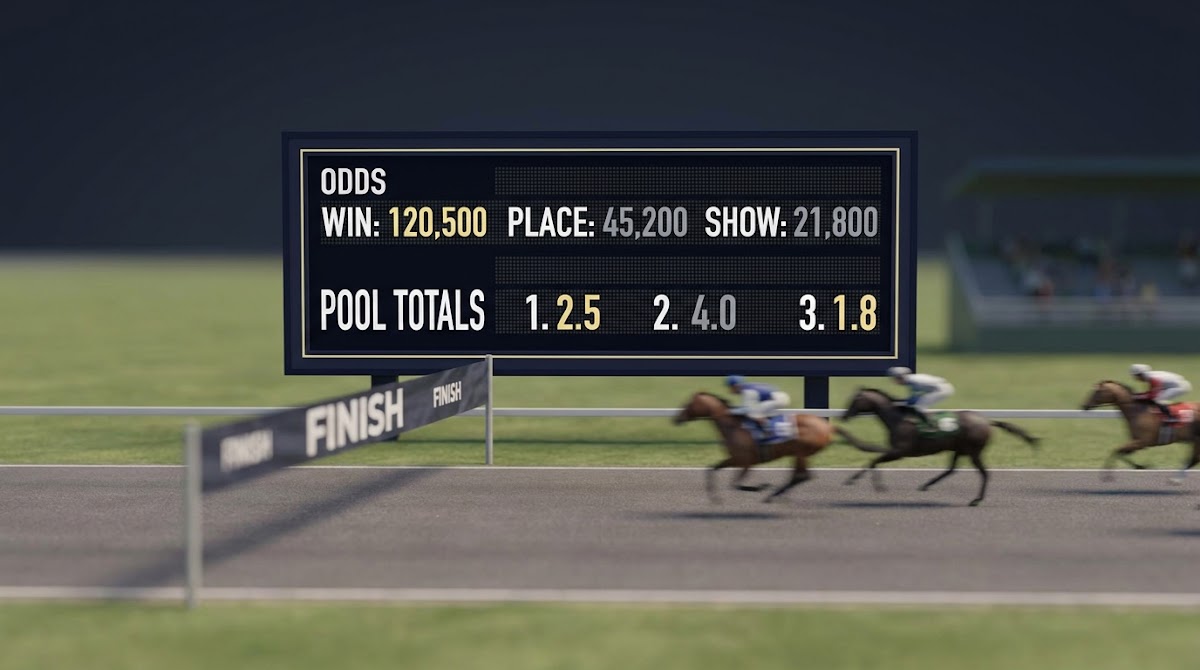
Pari-mutuel wagering pools bettors' stakes into a single pot for each bet type and race; regulators and operators then remove a predefined takeout percentage and apply breakage rules before dividing the remaining net pool among winners. This pooled approach means the amount each winning unit receives depends on the post-time pool size and the number of winning tickets, not a fixed price set at bet placement How Tote betting works (state pari-mutuel rules).
Pool formation is continuous while betting is open, so posted prices shift as new money enters a given pool; final prices are only determined when pools close at post time. Because takeout schedules and breakage methods vary by jurisdiction and operator, two identical winning tickets at different tracks or meets can produce different payoffs, and readers should view posted early odds as provisional until the pools close ARCI Model Rules.
Core straight bets: win, place, and show
Win, place, and show are the foundational straight wagers in North American racing. A win bet pays if your horse finishes first, a place bet pays if the horse finishes first or second, and a show bet pays if the horse finishes first, second, or third; these simple definitions form the baseline vocabulary most beginners learn on-track and online NYRA Betting 101.
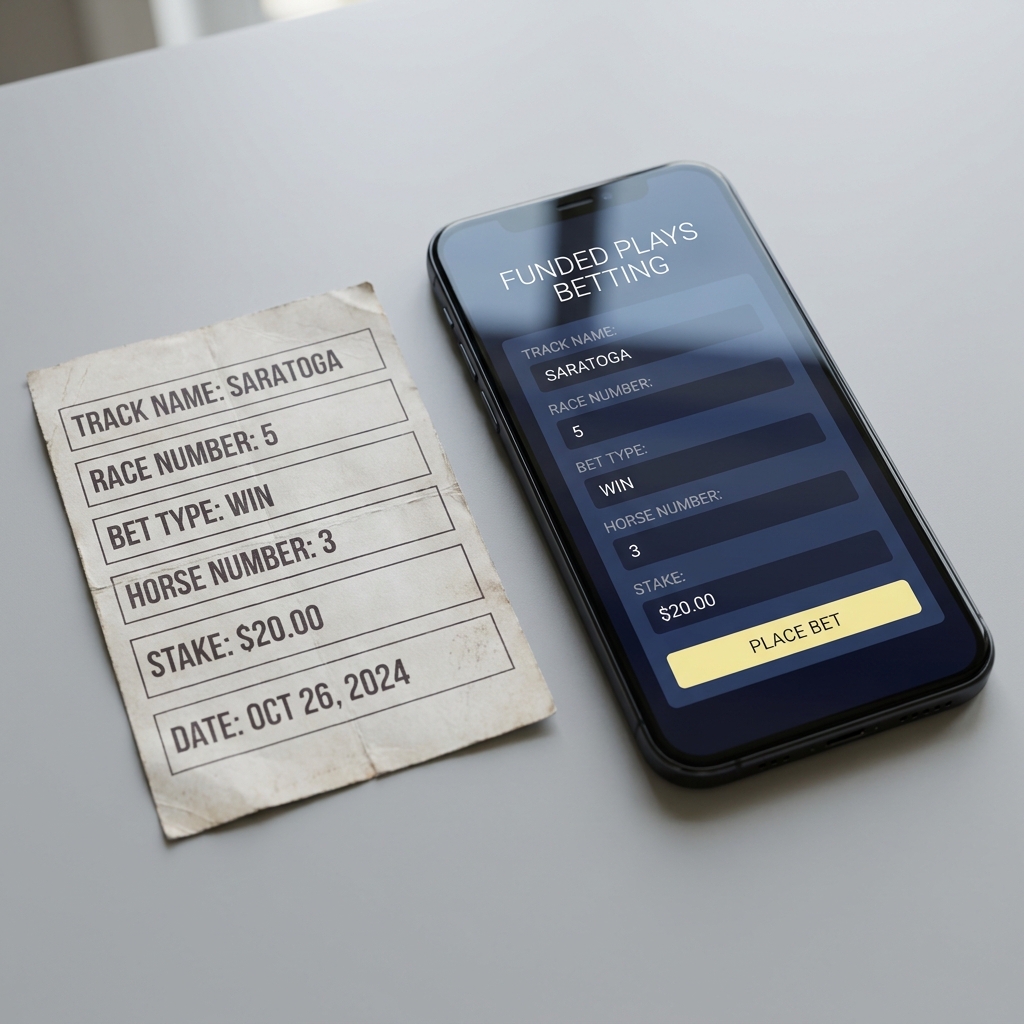
On a betting slip or an online screen, straight bets are typically shown with the race, bet type code, dollar amount, and the horse number, so a short ticket example will record the basic elements you must specify to place a straight wager America's Best Racing guide.
A wager is a bet on a race outcome; in pari-mutuel systems bettors' stakes form a pool from which takeout and breakage are removed and the net amount is divided among winning units, so payouts depend on pool size and the number of winners.
Players often choose a place or show wager when they want partial insurance against a favorite missing by a narrow margin, while a win bet is the straightforward staking of confidence in a single selection's first-place prospects.
Exotic wagers: exacta, trifecta, superfecta and variations
Exotic wagers require selecting multiple finishers in a specific order, increasing both payout potential and difficulty. An Exacta asks for the first two finishers in order, a Trifecta the first three, and a Superfecta the first four; many operators also offer variations that allow boxed or keyed arrangements so bettors can cover more combinations without naming a single exact order ARCI Model Rules.
Boxing an exotic means you cover every order of the chosen horses for that pool, which increases ticket cost in proportion to the number of permutations. Operators usually display how many combinations a boxed or keyed entry creates and how minimum wager sizes apply, so using the operator's examples helps estimate ticket cost before you commit funds NYRA Betting 101.
How payoffs are calculated: pool minus takeout and breakage
The core pari-mutuel payoff concept is straightforward: the gross pool for a bet type is reduced by the jurisdiction's takeout and any breakage rules, producing the net pool, which is then divided by the number of winning units to determine the per-unit payout. This formula explains why payouts are a function of both money wagered and the number of winning tickets, not a pre-set multiplier How Tote betting works.
Because takeout rates are set by jurisdictions and meet operators, the proportion of the gross pool removed before payouts can materially affect expected returns. Always check the operator's posted takeout schedule for the meet you are playing so you understand how much of the pool will be available for distribution to winners ARCI Model Rules (see example regulation Title 810 Chapter 6).

Fixed-odds wagers versus pari-mutuel: key differences
Fixed-odds betting locks the price or payout when the ticket is struck, which contrasts with pari-mutuel where prices can move up to post time because the payout comes from the closing net pool. This fundamental timing difference affects strategy and risk assessment for bettors choosing between the two models Fixed-odds FAQ.
Some jurisdictions and operators offer both models side by side, so it is common to see fixed-odds options available for selected races while pari-mutuel pools remain the default in many North American contexts. Check local operator rules to confirm whether fixed-odds products are offered alongside pari-mutuel pools at a given track or online operator ARCI Model Rules.
How to place a horse racing wager: ticket format and online steps
When placing a bet at a ticket window or online, you will specify five core elements: the track, the race number, the bet type, the amount you wish to wager, and the horse number or numbers. This standard convention is the practical language operators expect and mirrors examples found on many help pages America's Best Racing guide.
At a window you can say the elements succinctly in the order operators list them, and online interfaces typically present corresponding fields to fill in or select. Make sure you verify any minimum bet sizes and the pool availability before you submit, because these operator-specific items can affect whether your ticket is accepted as entered NYRA Betting 101.
Quick pre-ticket checklist for on-track and online bets
Save or screenshot the rules that apply to the pool
Choosing which wager to place: decision criteria
Selecting between straight and exotic wagers involves weighing expected value, ticket cost, and bankroll impact. Exotics can offer larger returns for accurate forecasts but increase variance and the cost of coverage when you add boxed or keyed combinations, so match the type of wager to your objectives and budget ARCI Model Rules.
Pool size and takeout materially influence the attractiveness of a wager: large pools can support bigger payouts for winners, but higher takeout reduces the share available to pay winners. Factor both when deciding whether a given ticket represents a reasonable risk-reward profile for your bankroll NYRA Betting 101.
Bankroll and risk management for horse racing wagering
Basic bankroll rules for wagering emphasize unit sizing and limiting exposure, especially on expensive exotic tickets that require many combinations. A disciplined approach treats each wager as a percentage of your available bankroll and avoids outsized allocation to a single high-cost ticket, which helps manage variance over a series of races The Jockey Club Fact Book 2025.

Structured challenge approaches used by funded simulation platforms focus on rules, drawdown limits, and measured progress rather than chasing single events; applying a similar mindset to casual wagering concentrates on consistency and risk limits rather than trying to recover with increasingly large tickets ARCI Model Rules.
Common mistakes and pitfalls bettors make
One frequent error is treating early posted odds as final; in pari-mutuel pools prices can shift until post time, so assuming a locked price may lead to surprises on settlement. Check pool status and remember that posted early prices are indicative, not guaranteed How Tote betting works.
Another common pitfall is overbetting exotics or entering too many combinations without adjusting unit size. Expensive combination coverage can rapidly deplete a bankroll if win probability and expected value are not considered, so use clear ticket formatting and cost checks before submitting any complex entry America's Best Racing guide.
Practical examples and common ticket scenarios
Operator help pages often include sample ticket formats showing how a straight bet and an exotic bet are recorded. Those samples show the required fields and the concise phrasing that works at a window or in a fillable online form, which is useful to review before you place your first live ticket NYRA Betting 101.
When you box or key horses in an exotic, the operator will typically show the resulting number of combinations and the minimum wager per combination so you can see the total ticket cost before confirming. Use those operator-provided examples to avoid surprises and to plan how many units you are willing to risk for a targeted payoff structure America's Best Racing guide.
Regulatory and regional considerations bettors should check
The ARCI Model Rules provide a common set of terms and settlement approaches used across member jurisdictions, but local regulators and track operators set specific takeout schedules, breakage conventions, and available pools for their meets, so the model rules are a shared language rather than a substitute for operator rulebooks ARCI Model Rules.
Industry references such as The Jockey Club's Fact Book track broader participation and handle trends and can give context about the scale of wagering activity, but they do not replace the need to verify the specific rules and takeout rates that apply where you plan to wager The Jockey Club Fact Book 2025.
How to verify operator-specific details before you wager
Before submitting a ticket, check the operator's help pages for posted takeout rates, minimum wagers, and pool listings. These pages are the authoritative source for the practical rules that will govern settlement if your ticket wins NYRA Betting 101.
A short pre-wager checklist is useful: confirm the pool is open for the bet type you want, review the takeout for that pool, verify any minimums, and screenshot or save the rule page in case you need to reference it later. Contact operator support or the track if any ticket field or pool status is unclear before you finalize a wager America's Best Racing guide.
Conclusion: key takeaways on horse racing wagering
Most U.S. horse racing wagering operates through pari-mutuel pools, where the gross pool is reduced by takeout and breakage and the net pool is divided among winning units; that structure means payoffs are driven by pool size and the number of winning tickets rather than fixed multipliers How Tote betting works.
Before you place real money or participate in a simulation, check operator rules, posted takeout schedules, and minimum wager sizes, and apply disciplined bankroll practices so your wagering aligns with your goals and risk tolerance ARCI Model Rules.
Takeout is the percentage removed from a pari-mutuel pool by the operator and regulators before winners share the net pool.
A ticket typically lists the track, race number, bet type, wager amount, and horse number; online forms mirror those fields.
In pari-mutuel pools odds can change until pools close at post time; fixed-odds bets lock the price when placed.
References
- https://www.arci.com/model-rules-standards/
- https://arci.com/docs/MODEL-RULES-MASTER-VERSION-11.1-07-28-22.pdf
- https://www.jockeyclub.com/factbook.asp
- https://tote.co.uk/guide/how-tote-betting-works
- http://massgaming.com/wp-content/uploads/205CMR61.pdf
- https://www.nyra.com/betting/
- https://www.americasbestracing.net/gambling/2024-how-bet-horse-racing
- https://www.fundedplays.com/challenges
- https://www.monmouthpark.com/fixed-odds-faq/
- https://apps.legislature.ky.gov/law/kar/titles/810/006/020/
- https://www.fundedplays.com/blogs/how-fundedplays-evaluations-work
- https://www.fundedplays.com/blogs
- https://www.fundedplays.com/