

What exchange wagering means in horse racing
Exchange wagering in horse racing is a peer to peer system where customers place opposing bets and a licensed intermediary matches those orders rather than taking the other side as a bookmaker would. In plain terms, the platform arranges matches between users so the operator does not carry matched bet liability, a structure set out in dedicated regulatory frameworks for betting intermediaries.
This model can feel different from traditional fixed odds markets because prices reflect sided interest and available liquidity instead of an embedded house margin. Availability depends on local rules and licensing that define how an exchange may operate and which bets are permitted.
Explore skill based prediction challenges
Continue to the practical examples to see step by step how back and lay actions can be combined without using specific numbers.
In jurisdictions that have formal exchange rules, the intermediary role and operator obligations are codified so users and regulators share a clear expectation about matching, reporting, and fees. The licensing approach recognises a distinct operator role from that of a bookmaker and prioritises transparency of matching and settlement UK Gambling Commission guidance.
How back and lay bets work on an exchange
A back bet is a standard wager where you predict a selection will win. A lay bet is the opposite: you offer odds that a selection will not win and accept the liability for the opposing stake if the selection does win. On an exchange both order types coexist and can be matched against each other.
Matching happens when opposing orders align in price and stake. The platform pairs a back order with a lay order at agreed odds and stakes, creating a matched bet where one customer stands to win and the other accepts liability if the outcome occurs. The matching mechanism is central to exchange trading and to how liability is allocated on any single matched position New Jersey exchange wagering code.
Because the operator does not normally take the other side of matched bets, customers face each other directly for risk and reward within the matched market. That distinction is what separates exchange mechanics from bookmaker pricing and is crucial when planning hedges or trading strategies.

How exchanges make money: commissions and fees
Exchanges typically charge a commission on net winnings rather than building a margin into the quoted odds. That means prices can appear closer to true market value, and the operator recovers revenue as a percentage of winners after losses are netted off.
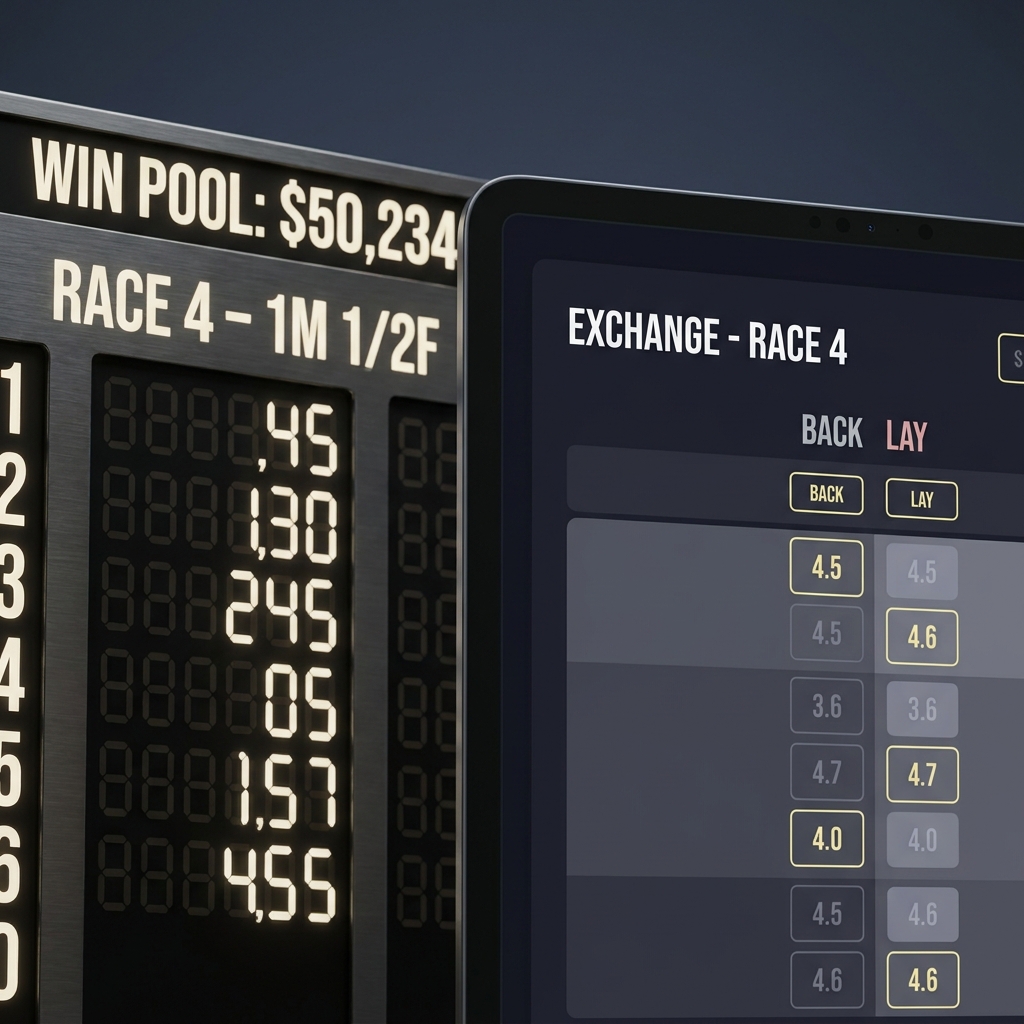
Exchange wagering has formal regulatory precedents in the United Kingdom and in New Jersey in the United States. The UK recognises the betting intermediary model under a specific operating licence that sets out the responsibilities of an intermediary and the expectations for consumer protection and reporting UK Gambling Commission guidance.
Commission models vary by operator, and fee schedules are usually disclosed in the operator rules. The practical effect for users is that a win will be reduced by commission while losses are not subject to the same charge structure. How commission affects trading versus single bets is an important consideration when choosing between venues.
Exchange wagering is a peer to peer model where a licensed intermediary matches opposing customer bets and the operator does not take matched bet liability. It differs from bookmaker betting where the bookmaker sets prices and accepts unmatched liability.
When trading actively, commission applies to net realised profit and can change the break even point compared with backing a single bet at a bookmaker. Assessing commission in the context of expected trade frequency and average margins helps determine whether an exchange provides a net advantage.
Operators also use additional fees or incentives in some markets, for example rebates for market makers or tiered commissions based on volume. Those features alter the cost calculus and are part of what you should review before committing to regular exchange activity Exchange help and lay betting guide.
Where exchange wagering is regulated and what that means
In the United States, New Jersey has a defined exchange wagering framework in statute and administrative code that describes permissible exchange operations and operator duties. Those provisions offer a clear example of how exchange wagering can be implemented under state law rather than under a traditional sportsbook licence New Jersey exchange wagering code.
Outside these precedents, availability depends on local law and on how regulators choose to classify an exchange operator. For users this means practical access is fragmented by jurisdiction and operators must comply with local licensing and consumer protection rules.
Racing integrity: who should not be laying bets
Racing authorities and international guidance make clear that connected persons should not use lay markets where that creates a conflict of interest. Connected persons include owners, trainers, riders, and others with close operational ties to a horse, and rules typically limit their ability to place certain types of bets to protect integrity.
These limits are reflected in national rules and international agreements that aim to reduce the risk of insider activity and preserve public confidence in racing outcomes. Where restrictions apply, operators and regulators expect reporting, monitoring, and sanctions for breaches BHA rules of racing and integrity provisions.

Industry guidance at the international level likewise emphasises avoiding conflicts of interest and outlines governance steps that racing bodies and operators can adopt. Those steps include notification duties, limits on market participation, and coordinated oversight to deter misuse IFHA guidance on racing and wagering.
Common use cases: hedging and trading on a race exchange
Exchanges are useful when you want to change exposure during the market lifecycle. A common practical use is a hedge where an initial back position is partially or fully reversed with a lay order to lock in profit or limit loss as prices move.
Trading pre-race is another use case. Traders watch price movement, liquidity, and new information, then buy or sell exposure by backing or laying. The possibility to act on both sides gives more tactical options than a one sided fixed odds market, provided there is sufficient market depth to match desired stakes Exchange help and lay betting guide.
In markets where in-running trading is permitted, the same principles apply but execution speed and latency become more important. That is why market depth and platform execution characteristics are part of the decision when using an exchange for active trading.
Deciding when to use an exchange versus a bookmaker
Choosing between an exchange and a bookmaker rests on a few practical criteria. Compare quoted prices, factor commission versus the bookmaker margin, check available liquidity for the stake you want to place, and consider execution speed especially for in-running action.
Market depth matters. If a market cannot match your desired stake at realistic prices, the theoretical advantage of better odds may be lost to partial fills or price slippage.
Quick decision checklist to weigh price, liquidity and fees
Use when choosing venue for a race
Use the checklist as a short routine before you trade: check price, confirm liquidity, estimate commission effect, judge execution risk, and decide whether the potential gain justifies the operational complexity of trading on an exchange.
For bettors who rarely trade, the simplicity of fixed odds with known margins may still be preferable. For those who plan repeated trades or hedges, an exchange can offer better price discovery and flexibility when the market has depth.
Common mistakes and regulatory pitfalls to avoid
A frequent mistake is underestimating lay liability. A lay bet requires you to accept a defined liability if the selection wins, and that exposure can be much larger than the stake of a back bet if you are not careful.

Integrity restrictions are not optional. Connected persons must observe reporting rules and avoid markets where their participation is restricted. Breaches can lead to sanctions, disqualification, or other regulatory consequences depending on the jurisdiction and the severity of the breach BHA rules of racing and integrity provisions.
Another operational issue is liquidity and execution risk. Even where an exchange offers attractive prices, poor market depth or slow matching can turn a planned hedge into an incomplete trade, leaving unintended exposure. Check the market before relying on any complex sequence of orders.
Practical examples: simple back-lay hedge and a trading scenario
Conceptual back-lay hedge. Imagine you back a horse when you think odds were generous. As the event approaches and prices move in the horse's favour, you place a lay order to reduce or close your net exposure. The sequence is conceptual: the initial back gives a winning claim, and the lay transfers liability to another customer, locking the net result when matched.
Step by step, the hedge follows these actions: enter a back order, monitor price movement, add a lay order at odds that create the desired net position, and confirm matching. If the lay matches, your combined position reduces variance compared with holding only the back bet.
Pre-race trading narrative. A trader sees early support for a runner and backs it. Later public information or market flow shifts prices lower and other customers lay the runner. The trader can then lay part of the position to protect gains or to rebalance exposure. Practical execution depends on matching liquidity and the speed at which the market moves Exchange help and lay betting guide.
Both scenarios highlight process not profit. Matching, commission, and the availability of counterparties determine whether a conceptual sequence is practical on a given race.
How to get started safely with horse racing exchanges
Before opening an exchange account check the operator licence and confirm local regulatory status. Licensed operators and clear local rules reduce uncertainty about permitted bet types and consumer protections.
Start small. Use modest stakes while you test market depth and execution for the race types you plan to trade. Confirm that the markets you use have consistent liquidity and that you can place and match the orders you expect to use.
Be mindful of integrity restrictions. If you are a connected person to a race participant, verify whether rules limit or prohibit your use of lay markets, and consult operator terms and racing authority guidance before placing restricted bets New Jersey exchange wagering code.
Monitoring and managing exchange positions responsibly
Track net exposure across your matched and unmatched bets so you always know the liability you carry. Platforms often show a running net position but personal logs help when you run multiple trades across events.
Decide triggers in advance for closing positions or hedging. A simple rule might be to close a new trade when your defined profit or loss threshold is reached, provided liquidity allows an exit at acceptable cost.
Use available platform tools for alerts and execution, and keep a brief trade journal to review why you entered and why you exited. That practice supports consistency and discipline without promising results.
Key differences are clear. Exchanges match customers peer to peer while fixed odds bookmakers set prices and take liability on unmatched bets. Exchanges charge commission on net winnings while bookmakers embed a margin in quoted odds.
Matched betting strategies sometimes use exchanges as a component because exchanges enable both backing and laying. By contrast, skill based sweepstakes platforms operate under a different model focused on performance tasks rather than taking market positions, and availability depends on each platform's rules.
Which approach to use depends on your goals. If you want flexibility and price discovery, an exchange can help. If you want simple single bets with predictable execution, a bookmaker may still be the easier option.
Summary: when exchange wagering makes sense and key takeaways
Use an exchange when it offers a clear price advantage after factoring in commission, when market depth supports your stake size, and when you are prepared to manage lay liabilities.
Always respect integrity rules that restrict connected persons and check operator licences and fee schedules before trading. Responsible participation means small initial stakes, planning exit rules, and keeping records of trades and rationale.
In short, exchanges add flexibility and price discovery to horse racing markets, but they also require attention to commission, liquidity, and integrity constraints to be used effectively.
Where to read the official rules and further resources
For primary regulatory guidance consult the UK Gambling Commission's materials on betting intermediary licences and the New Jersey exchange wagering administrative code for state level implementation. Those documents define operator duties and the basic model for matching and settlement UK Gambling Commission guidance.
Racing authority rules and international guidance from bodies such as the IFHA explain connected person restrictions and broader integrity expectations. Operator help files and exchange support pages provide practical detail on matching, commission, and how to place back and lay bets IFHA guidance on racing and wagering.
Rules vary by jurisdiction, but racing authorities commonly restrict connected persons such as owners, trainers, or riders from placing lay bets to avoid conflicts of interest.
Not always. Exchanges can offer nearer market prices, but commission, market depth, and execution risk determine whether you get a net advantage.
Most exchanges apply a commission on net winnings; exact rates and any tiering or rebates depend on the operator's published fee schedule.