
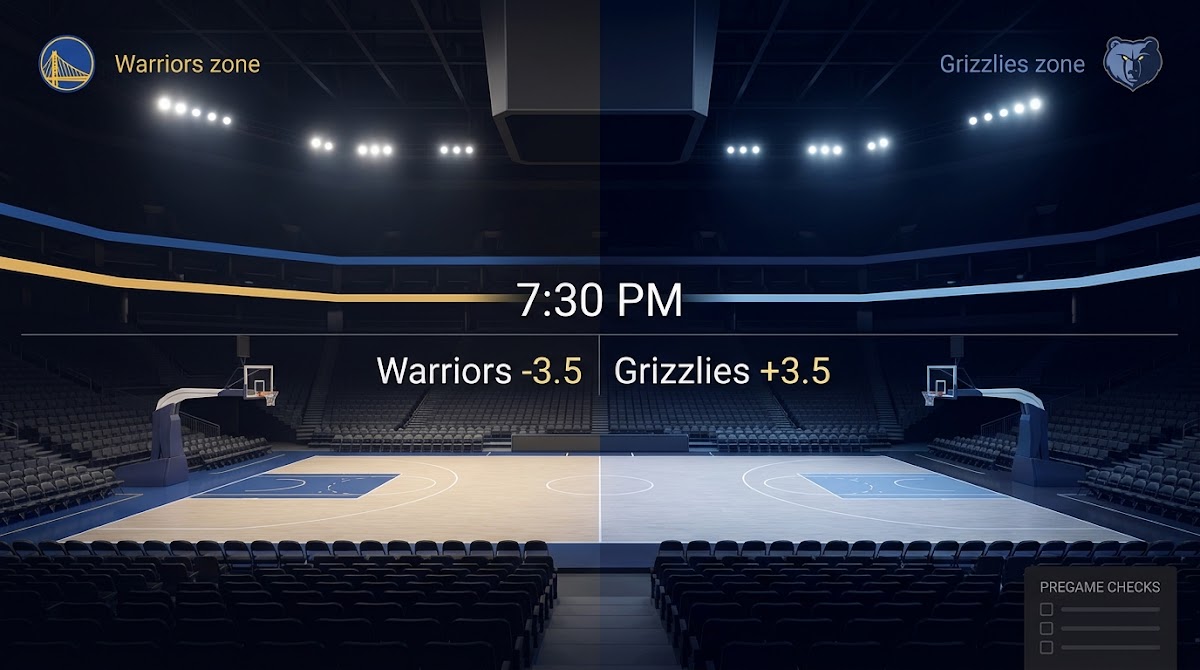
Quick answer: who is likely favored and what that term means
Short summary pick process, grizzlies warriors prediction
In market terms, the team that is "favored" is simply the side priced shorter by bookmakers and aggregators, and that is the first signal to check when deciding whether the Warriors or Grizzlies are expected to win. For a practical pregame call, start with live odds near tipoff, confirm any official injury updates, compare season efficiency metrics, and review recent game logs to resolve close calls, keeping in mind that market favorites are probabilistic signals, not guarantees Covers matchups and line movement.
Use this one paragraph as your quick takeaway: the market favorite is the side with the shorter price on reputable odds aggregators, and you should treat that as an input, not an outcome. A short checklist of the four inputs to run before you state who is favored is shown below in the stepwise workflow section, and each step is easy to verify quickly with timestamped sources.
What 'favored' means in market terms
Being "favored" means the betting market assigns a higher probability to that team winning based on the price, which often appears as a point spread or moneyline. The shorter price can move as new information arrives, so the label of favorite can change up to tipoff. Readers should remember that markets reflect pooled expectations and reaction to news more than a certainty of outcome.
How the market sets a favorite and where to check live lines
Reputable odds aggregators to consult
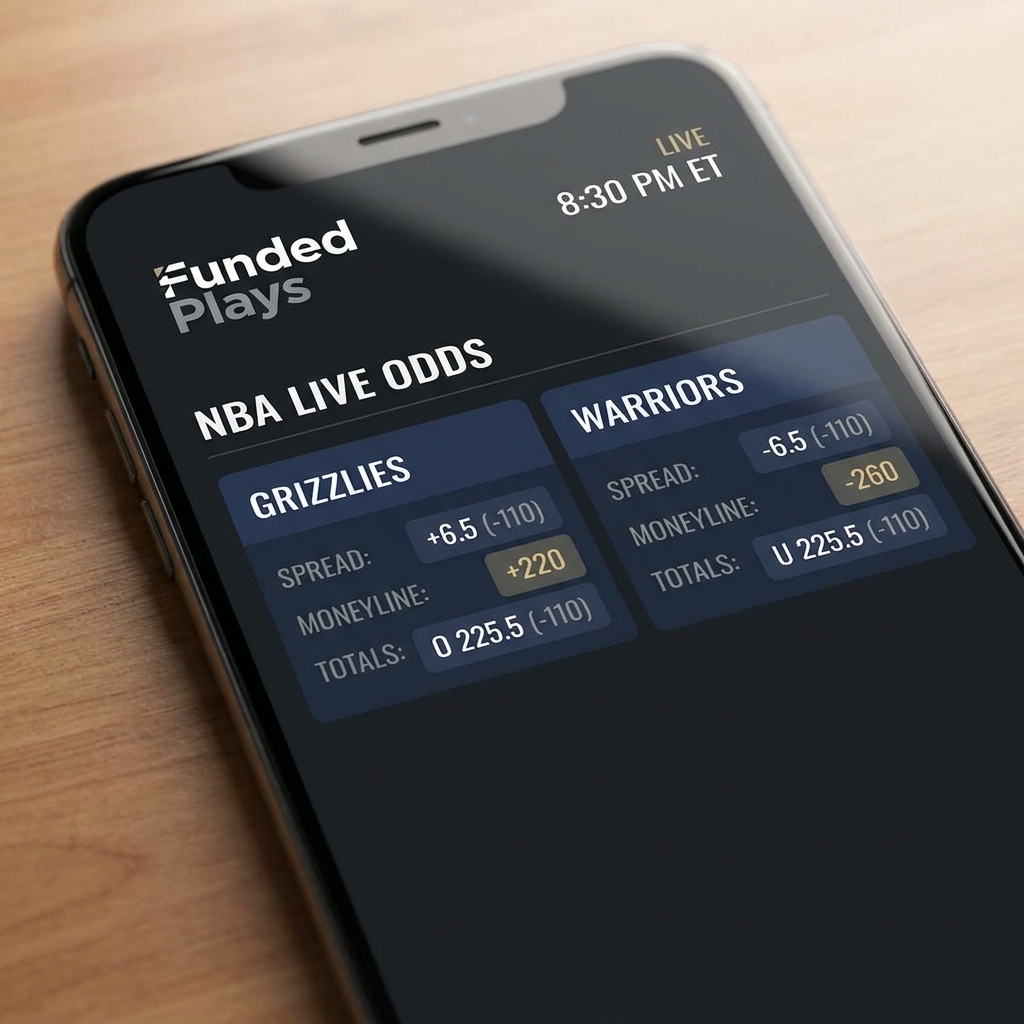
To see who the market favors in a Warriors Grizzlies matchup, consult reputable odds aggregators that show current lines and line movement, because those tools surface the consensus market view and the timing of changes Covers matchups and line movement.
When scanning aggregators, look for consistency across books, recent quotes with timestamps, and notes about where the best prices are posted. Aggregators that display timestamped odds let you track whether a short price is stable or the result of a late surge, which matters when declaring a favorite near tipoff.

Check timestamped live lines and follow the workflow
Check timestamped live lines near tipoff and then follow the stepwise workflow below to combine odds, injury status, efficiency metrics, and recent form.
Line movement and timestamps explained
Line movement shows how the market reacted to information, and timestamps tell you when that reaction happened. Rapid shifts late in the pregame window often indicate new information such as official injury confirmations or coordinated action by bettors. Watching timestamps helps you determine if a short price is an enduring market view or a short lived reaction.
Practical aggregator behavior to watch includes rapid line shifts when many books move simultaneously, steady movement toward one side across hours, and late steam where a price shortens quickly in the final minutes. Each pattern has different implications for how confident you should be in naming a favorite.
Check the official NBA injury report and confirmed lineup changes
Why the NBA injury report is authoritative
The NBA official injury report is the authoritative, time-stamped source for game day player availability, so always check it near tipoff before committing to who is favored NBA Official Injury Report. You can also review ESPN's team injury status for roster context ESPN injury page.
Because the injury report is time-stamped, it provides a reliable sequence for when a player's status was confirmed. Use those timestamps to match any line movement you see in aggregators. If an injury is announced after a line shift, the report helps you determine whether the market had inside knowledge or whether the books reacted to the same public confirmation.
Check NBA Official Injury Report entries and timestamps for player availability
Verify entries near tipoff
How injuries shift lines in practice
When a key player is listed out, doubtful, or questionable on the official report, sportsbooks typically adjust lines to reflect the altered roster strength and expected matchup changes. Early confirmed outs often create larger, longer lasting moves, while questionable tags can lead to late action and last minute shifts.
Translate a key player's absence into likely lineup and matchup changes by considering who replaces them, how that affects offensive and defensive matchups, and whether the opponent has a matchup advantage because of the change. Those practical lineup implications should inform whether the market move toward one team is justified.
Interpreting live odds and line movement near tipoff
What to do when lines move late
When lines move late, compare timestamped odds across several aggregators and look for a pattern rather than reacting to a single quote. If multiple books move in the same direction within the same time window, the market tilt is more convincing than a single outlier.
Practical steps include recording the time of the move, noting which books or aggregators adjusted, and cross checking the NBA official injury report for any corresponding confirmation. If the timestamped odds show a clear tilt and the injury report supports it, you can treat the favored side as the market choice for that matchup.
How to read consensus across books
Consensus across multiple books reduces the chance that a single oddsmaker or a few bettors skewed the price. If the away team shortens across many books and the aggregate shows the same tilt, that is a stronger market signal than a lone sharp line.
Look for stability in the short price for several minutes or longer before declaring a favorite on that basis. When the market consensus appears only briefly and reverses, that is a sign to wait for further confirmation rather than making a firm pregame statement.
Team efficiency metrics to weigh for Warriors and Grizzlies
Key advanced metrics to consult
Offensive Rating, Defensive Rating, and Net Rating are the core season-long metrics to benchmark team strength and matchup quality for the 2025 26 season; these metrics help you understand whether a market favorite is supported by underlying performance NBA.com team advanced stats for 2025 26.
Use Net Rating to compare how the Warriors and Grizzlies perform per 100 possessions on average. A clear Net Rating advantage can justify a favorite label when odds and injuries are otherwise neutral, but treat metrics as context rather than a single predictive rule.

Where to find season-long efficiency data
NBA.com/Stats provides the official season-long advanced metrics for 2025 26 and Basketball-Reference offers corroborating team ratings that include SRS and per game offensive and defensive numbers, so use both sources to cross-check the same signal Basketball-Reference 2026 team ratings.
When you consult efficiency metrics, translate the difference into a practical expectation for the matchup. For example, a moderate Net Rating gap suggests a small expected advantage that markets will reflect as a modest price difference, while a large gap can explain a substantial favorite designation.
Recent form and head to head: what the game logs show
Using game logs to check short-term form
Recent form and head-to-head outcomes for 2025 26 are verifiable through each team s game logs on Basketball-Reference, which let you see streaks, home and road splits, and short-term defensive or offensive swings that matter for close market calls Warriors game logs. You can also review SI s game previews and injury context for additional perspective SI preview.
Short term form can act as a tiebreaker when efficiency metrics and injury news are close. A team on a multi game winning streak, or a team whose recent defensive numbers have improved, can attract market confidence that is reflected in shorter prices.
Head-to-head trends to watch
Head-to-head trends matter more when teams have similar season metrics and no major injuries. Use the Grizzlies game logs to check matchups where Memphis exploited lineup advantages, and compare those appearances to the current expected rotations Grizzlies game logs.
When head-to-head results show repeated matchup advantages for one team, that can justify a market favorite even when season-long metrics are closer. Always document the dates and contexts of those games to ensure you are not overfitting to irrelevant past circumstances.
A step-by-step workflow to decide who is favored
Order of checks from earliest to pre-tip
Use this ordered checklist before stating a market favorite: first check the NBA official injury report for time stamped confirmations, second review timestamped live odds and line movement across aggregators, third consult season efficiency metrics such as Net Rating, and fourth confirm recent form via game logs to resolve ties. Following that order ensures you prioritize hard, time-stamped facts before market interpretation NBA Official Injury Report.

Record timestamps and sources as you go. That habit prevents confusion when lines move and lets you explain why you called a favorite at a given moment, based on verifiable inputs rather than impressions. See our blog for related documentation practices Funded Plays blog.
How to weigh conflicting signals
When inputs conflict, weight them like this: prioritize official injury confirmations, then market consensus among timestamped odds, then season efficiency metrics, and finally recent form as a tie breaker. Injuries and late confirmed absences often outweigh season metrics for a single game, while Net Rating matters more over many games.
Do not infer guarantees from a combined signal. If an injury and market tilt point to one side, state it as the market favorite with the supporting inputs, and include timestamps for the injury and the odds you used to make the call. This preserves transparency and avoids overconfidence.
Common mistakes and pitfalls when naming a favorite
Overreacting to small sample trends
One common error is treating a short recent stretch as decisive for a matchup when season metrics and injuries say otherwise. Short samples can mislead; cross check a streak with efficiency numbers before using it as the primary reason for a favorite label NBA team advanced stats.
Another pitfall is misreading timestamped odds by assuming a single book s move defines the market. Instead, look for consensus and confirm with the NBA official injury report to avoid following noise NBA Official Injury Report.
Ignoring official reports
Ignoring the official injury report in favor of rumors or social media chatter greatly increases the risk of an incorrect favorite call. Always treat the NBA s time stamped report as the primary source for player availability and pair it with timestamped odds to form a clear picture.
Corrective actions include pausing to verify a reported status on the official injury report, checking multiple aggregators for timestamped line changes, and avoiding definitive language when the inputs are still unsettled.
Two practical pregame scenarios and how to apply the workflow
Scenario A: late confirmed injury to a star
Imagine a late game day entry lists a Warriors star as out on the official injury report. In that case, check the report s timestamp, then look for synchronized line movement across aggregators that matches the time of the entry. If the market shortens toward the Grizzlies after the timestamped out, it is reasonable to declare the Grizzlies the market favorite based on that confirmed information NBA Official Injury Report.
Document the timestamps you used and the odds that moved. That documentation shows the basis for the pregame favorite call and helps you avoid post game debates about why you named one side instead of the other.
The market favored team is whichever side shows the shorter price on reputable timestamped odds aggregators after confirming any official injury updates; use Net Rating and recent form as supporting context.
Scenario B: steady line movement favoring the away team
If you see steady, sustained line movement toward the Grizzlies over several hours without a coincident injury confirmation, treat that as a growing market consensus and then cross check season Net Rating and recent form to see if the tilt is supported by fundamentals. If efficiency metrics and recent results align with the market movement, calling the Grizzlies the favorite can be justified by both market and data signals Covers matchups and line movement. See Yahoo s predictions and odds coverage for additional market context Yahoo predictions.
When movement is steady but without a clear injury, keep recording timestamps and continue to watch for any late official confirmations that could further shift the market. Remember to avoid definitive language until you have a time stamped injury or broad market consensus.
Concise wrap and recommended routine before tipoff
Three quick checks to run before declaring a favorite
Run three checks in this order: official injury report, latest timestamped odds across aggregators, and a quick Net Rating comparison to see if the market tilt aligns with season long performance NBA.com team advanced stats.
Phrase any pregame pick cautiously, for example: "Market favorite near tipoff is the Grizzlies based on timestamped odds and an out listed on the official injury report; this is a probabilistic view, not a guarantee." That language states the market stance while avoiding certainty. Learn more about Funded Plays evaluations here.
How to phrase a cautious pick
All pregame favorite statements should include the evidentiary basis and timestamps when possible. Keep a short note of the injury report time and the aggregator quotes you used. This routine makes your calls reproducible and defensible without overstating confidence.
Finally, remember that the market favorite is a signal to inform your view. Use the ordered workflow in this guide to combine live odds, the NBA official injury report, season efficiency metrics, and recent form to make transparent pregame statements about whether the Warriors or Grizzlies seem favored. Visit Funded Plays for more resources Funded Plays.
Check the timestamped odds on reputable aggregators to see which side is priced shorter, then confirm any injuries on the NBA official injury report and cross check efficiency metrics and recent form.
No, a market favorite reflects probability based on available information; it is not a guarantee and should be framed as a probabilistic view.
If odds move steadily without an injury confirmation, look for consensus across books and compare Net Rating and recent form before declaring a favorite.
References
- https://www.covers.com/sport/basketball/nba/matchups
- https://official.nba.com/injury-report/
- https://www.covers.com/sport/basketball/nba/matchups
- https://www.nba.com/stats/teams/advanced?Season=2025-26&SeasonType=Regular%20Season
- https://www.fundedplays.com/challenges
- https://www.basketball-reference.com/leagues/NBA_2026_ratings.html
- https://www.basketball-reference.com/teams/GSW/2026_games.html
- https://www.basketball-reference.com/teams/MEM/2026_games.html
- https://www.espn.com/nba/team/injuries/_/name/gs/golden-state-warriors
- https://www.si.com/nba/grizzlies/onsi/news/memphis-grizzlies-golden-state-warriors-injury-report-betting-lines-how-to-watch-lineups-more-01kh0n3vh0rk
- https://sports.yahoo.com/articles/warriors-vs-grizzlies-predictions-odds-175000324.html
- https://www.fundedplays.com/blogs
- https://www.fundedplays.com/blogs/how-fundedplays-evaluations-work
- https://www.fundedplays.com