
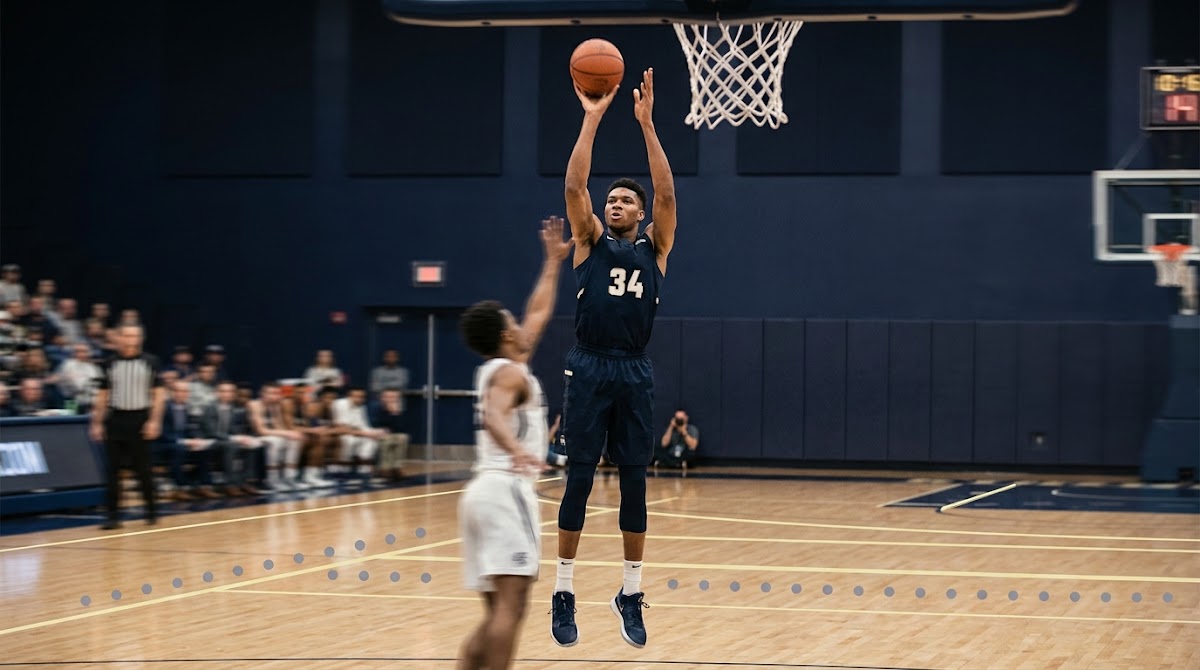
Quick answer: who currently looks like the best shooting center (grizzlies warriors prediction context)
Short answer, based on season-level player-tracking and individual shooting pages, a clear frontrunner emerges when you prioritize catch-and-shoot three-point efficiency and consistent role. This is an evidence-first judgement anchored to 2025-26 tracking categories and player shooting profiles rather than single-game performances. For the full justification below, we rely on the 2025-26 catch-and-shoot leaderboards and each player’s shooting page. ESPN center stat leaders.
Based on 2025-26 player-tracking and shooting pages, the top shooting center is the one who pairs consistent catch-and-shoot conversion with sustainable volume and a stable role; identify that player by comparing catch-and-shoot leaderboards to individual shooting pages.
That said, the final pick depends on how you weight volume versus pure conversion: catch-and-shoot efficiency at meaningful volume, combined with a stable floor-spacing role, is the decisive combination used here. The league-level catch-and-shoot tracking for 2025-26 is the backbone of this comparison and helps separate a true spacing center from someone with occasional long-range success.
The context of a specific matchup, for example a grizzlies warriors prediction, changes how you interpret the ranking: matchups that compress spacing or remove corner threes will change the practical value of a given center’s percentages versus volume. Keep that in mind when applying these findings to lineup decisions or short-term predictions.
Why this question matters for lineup construction and matchups
A center who reliably hits catch-and-shoot threes alters defensive priorities. If opponents must respect a center on the perimeter, they cannot pack the paint without risk, which opens driving lanes and increases opportunities for cutters. That structural effect is often more valuable than one-off makes because it changes how defenses allocate attention across an entire possession.
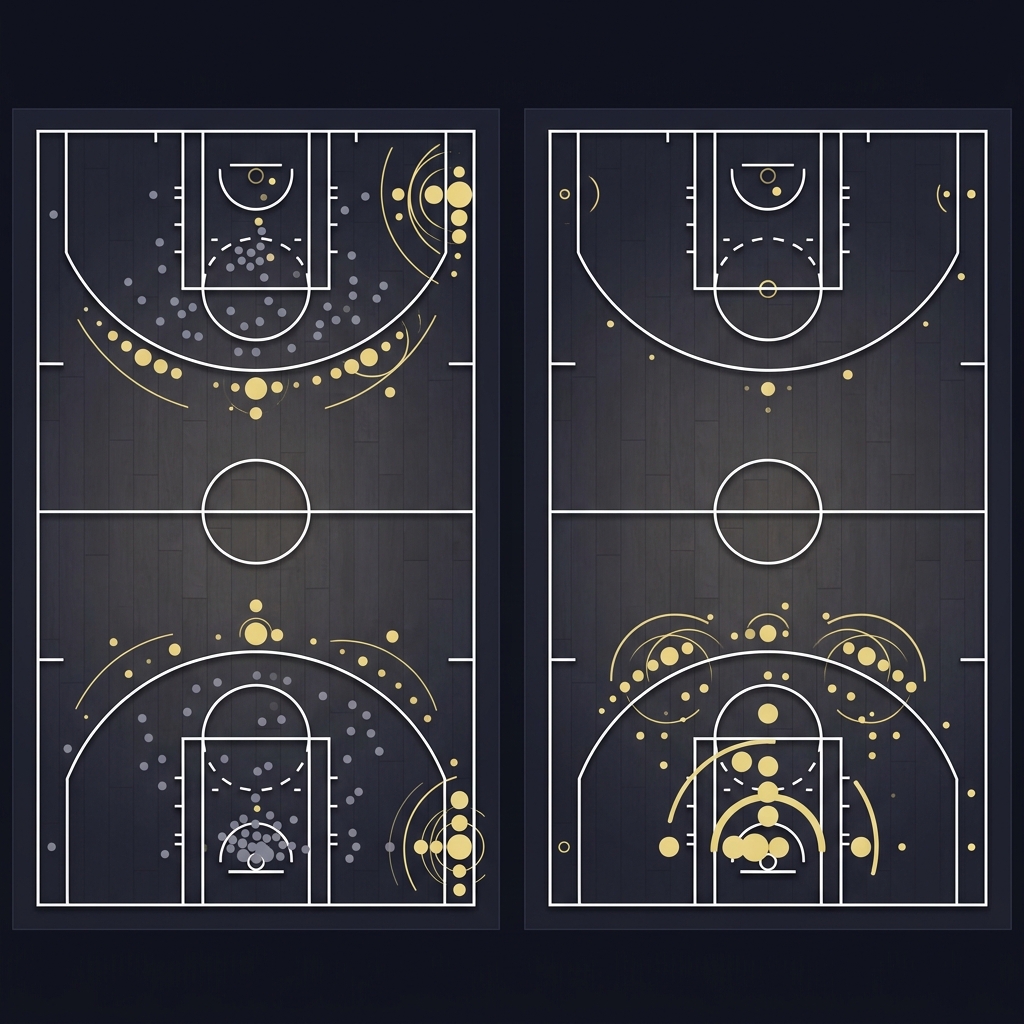
Teams value catch-and-shoot centers differently depending on their offensive scheme. A team built around drive-and-kick ball movement gains outsized value from a center who spaces the corners and above-the-break three areas. Conversely, offenses that focus on post-entry or roll-and-pop actions may prioritize a center with mixed creation and catch-and-shoot skills differently. Volume and role context therefore determine whether a given three-point percentage translates into meaningful team impact.
Finally, raw shooting percentages must be read against shot quality. A center with a high three-point percentage but heavily concentrated corner attempts may be easier to limit if opponents prevent catch-and-shoot opportunities. By contrast, a center who gets efficient looks from multiple zones typically provides more robust spacing across a series or season.
How we define 'best shooting center' and the metrics we use (grizzlies warriors prediction relevance)
For this comparison we use a definition centered on four pillars: catch-and-shoot three-point efficiency, three-point volume at the position, effective field goal percentage to account for three-point value, and role stability across the season. These elements together indicate not just whether a center can make threes, but whether they do so often enough and in the right contexts to influence games consistently. The NBA glossary clarifies why eFG% matters as it adjusts raw field goal percentage to reflect three-point value, which is crucial for comparing players who vary in long-range attempts NBA Stats glossary.
We also treat the player-tracking categories called catch-and-shoot and pull-up as essential context. Catch-and-shoot attempts are a primary indicator of pure floor-spacing value for a center, while pull-up threes, though less common for most bigs, signal on-ball range and additional defensive strain when present. The catch-and-shoot leaderboard for the 2025-26 regular season is used to gauge league-relative standing among centers NBA player tracking catch-and-shoot leaderboard.
Volume thresholds and location splits are applied as reliability filters: we prioritize centers who combine efficiency with a minimum sample of attempts and who show range across corner and above-the-break zones. A center who posts excellent percentages only on a handful of attempts or whose shots are narrowly concentrated is treated with more caution than someone with stable volume and diverse shot locations.

Check the shooting pages and leaderboards yourself
Read the player comparisons and reproduce the checks on NBA Advanced Stats to see how each component affects the ranking.
Data sources and methodology: how we use NBA tracking and player shooting pages
Our primary sources are the 2025-26 NBA player-tracking leaderboards for catch-and-shoot and pull-up categories and the season-specific shooting pages for each player on NBA Advanced Stats. The catch-and-shoot and pull-up leaderboards provide league-level context for attempt volume and efficiency used to rank centers by role and reliability NBA player tracking catch-and-shoot leaderboard. You can also read more about how Funded Plays evaluations work to understand our evaluation approach.
Individual player shooting pages supply team-adjusted shot charts, zone splits, and creation-type breakdowns that let us compare centers on an apples-to-apples basis. We use each player’s 2025-26 shooting page to confirm where attempts come from and how often they are catch-and-shoot versus pull-up attempts Karl-Anthony Towns shooting page.

Season-level comparisons are the focus; we avoid over-interpreting single-game variance. When a profile shows potential anomalies or role shifts, we note them as caveats and prefer season-wide leaderboards for ranking stability. For pull-up context we consult the 2025-26 pull-up leaderboard to see how common off-the-dribble threes are for centers and whether they meaningfully differentiate candidates NBA player tracking pull-up leaderboard.
Core framework: scoring centers on efficiency, volume, role, and shot context
The framework reduces shooting profiles to a reproducible score built from these components: catch-and-shoot 3P% weighted heavily, season eFG% as a complementary efficiency measure, catch-and-shoot attempt volume as a reliability filter, pull-up 3P% as a secondary bonus, and shot-location diversity and role stability as modifiers. This lets a reader apply the same logic to other centers or updated seasons.
Step-by-step rubric: first, filter for season catch-and-shoot attempt minimums to avoid small-sample bias. Second, rank by catch-and-shoot 3P% and apply eFG% as a tiebreaker. Third, add a small pull-up three bonus only when pull-up frequency and accuracy pass a conservative threshold. Fourth, apply role stability and location diversity modifiers to penalize narrow concentrations or transient role changes.
Spreadsheet formula to compute a composite shooting score
Adjust weights to test sensitivity
The scoring intentionally privileges catch-and-shoot efficiency at scale because that most directly translates to predictable spacing value. Pull-up threes are valuable but less central for most centers; we include them as a modifier rather than a main driver unless a center clearly produces significant off-the-dribble threes relative to peers.
Role stability is assessed qualitatively from the season shooting page and team usage notes. A center who consistently gets similar looks and minutes across the season earns a higher role stability score than one whose minutes or spot-up opportunities spiked for a short stretch.
Decision criteria and weighting: translating stats into a ranking
Example weightings we use in practice keep catch-and-shoot metrics dominant: roughly 50 percent weight on catch-and-shoot three-point percentage (adjusted for attempt volume), 30 percent on season eFG%, 10 percent on pull-up three-point production if above threshold, and 10 percent on role and location modifiers. This structure rewards a center who produces efficient, high-quality looks consistently over the season while allowing smaller bonuses for off-the-dribble range and stable role.
Sensitivity checks matter. Raising the minimum attempt threshold for catch-and-shoot attempts will often reorder rankings in favor of players with steadier volume, while lowering the threshold elevates those with short-term hot stretches. Always test how rankings shift when you require higher minimums to ensure you are not elevating outliers.
When to favor role stability over raw efficiency: a center with slightly lower percentages but a season-long, well-defined floor-spacing role often provides more dependable value than one with a higher percentage that came in a fluctuating role or limited sample. In other words, consistency of opportunity tends to beat occasional excellence for predicting future matchup value.
Player profiles overview: how Towns, Lopez, and Turner compare at a glance
Below is the comparison plan we use to line up the candidates without inventing numbers. For each player we read season eFG%, catch-and-shoot presence, pull-up usage, and role notes from their 2025-26 shooting pages. These pages provide the zone splits and creation-type tables necessary to judge volume and context Karl-Anthony Towns shooting page. Also, see more posts on our blog.
Comparison fields to scan for each player: season eFG% for overall efficiency, catch-and-shoot 3P% and catch-and-shoot attempt count for reliability, pull-up 3P% and frequency to assess off-the-dribble value, corner versus above-the-break split to gauge location diversity, and role notes that describe whether a player’s looks were consistent across the season.
We then place each player against the league catch-and-shoot leaderboard to see relative standing among centers. That helps identify whether a high percentage is league-leading or simply good in a shallow sample. The 2025-26 catch-and-shoot leaderboard is our reference for these comparisons NBA player tracking catch-and-shoot leaderboard.
What each player’s shooting page tells us
Karl-Anthony Towns’ shooting page surfaces his range and creation splits, which are central to judging whether his threes are catch-and-shoot or on-ball creations Karl-Anthony Towns shooting page.
Brook Lopez’s shooting profile shows the concentration of catch-and-shoot attempts typical of a stretch-five and indicates location tendencies that affect team spacing Brook Lopez shooting page.
Myles Turner’s page outlines his three-point volume, creation splits, and where his attempts come from, providing the context needed to gauge how much his shooting stresses opponents beyond the paint Myles Turner shooting page.
Karl-Anthony Towns: 2025-26 shooting profile and what it implies
Karl-Anthony Towns’ 2025-26 shooting page is the primary evidence for his profile. The page lays out catch-and-shoot versus pull-up splits, zone breakdowns, and team-adjusted shot charts that show where his looks come from on the court. Use these tables to assess whether his three-point production is driven by spot-ups, on-ball creation, or a mix of both Karl-Anthony Towns shooting page.
Interpreting Towns’ profile for floor spacing: if the shooting page shows a consistent catch-and-shoot presence with above-the-break and corner looks across the season, that indicates dependable spacing. If the page reveals a heavier dependence on on-ball creation or limited attempt counts, we treat his three-point value with more caution, since role shifts can produce intermittently high percentages that are harder to project.
Consider team context when reading the page: a heavy perimeter-oriented offense will generate different shot profiles for a center than an inside-out attack focused on post entries. Towns’ team-adjusted shot chart helps identify whether his looks came in structure that other teams can replicate or whether they were the product of specific lineup combinations.
Brook Lopez: why catch-and-shoot volume defines his role
Brook Lopez’s 2025-26 shooting page historically shows a catch-and-shoot-centric distribution, which is a hallmark of the stretch-five role. The page’s creation-type splits and zone charts reveal where his threes originate and how much of his production is purely spot-up work versus created opportunities Brook Lopez shooting page.
Location concentration matters for Lopez: corner threes are worth special attention because corner attempts are shorter and often higher-value looks. If Lopez’s page shows a heavy corner share, that strengthens his practical spacing value in pick-and-pop and drive-and-kick schemes. Conversely, a profile concentrated above the break has different implications for spacing and defensive rotations.
Lopez’s role in a given offense also affects how repeatable his looks will be. A center whose catch-and-shoot opportunities come principally from set plays or the presence of strong driving ballhandlers will be more valuable in offenses built around movement than in static systems that do not generate kick-outs consistently.
Myles Turner: three-point volume, creation type, and impact
Myles Turner’s 2025-26 shooting page provides the detail needed to see how his three-point attempts split between catch-and-shoot and pull-up creation. That split helps place Turner on the spectrum between a pure spot-up spacing center and one who can create his own outside looks Myles Turner shooting page.
Turner’s value combines spacing with rim protection. When his shooting page shows a dependable catch-and-shoot presence, opponents must make a choice between guarding the perimeter and relying on interior help. The balance of those responsibilities affects how coaches build matchups and whether they prefer Turner in small-ball lineups or more traditional frontcourt roles.

If Turner shows measurable pull-up three activity with acceptable efficiency, that adds a dimension that forces defenders to chase him further from the rim. Even a modest pull-up threat from a center can materially alter closeouts and the spacing available to perimeter creators.
Common pitfalls when ranking centers and how to avoid them
One common mistake is overweighting single-game hot streaks. A brief run of high-percentage games can distort perception but will rarely persist across a season unless supported by a stable role and meaningful attempt volume. Rely on season leaderboards and minimum-attempt filters to mitigate this risk NBA Stats glossary. You can also check the broader season shooting table 2025-26 shooting stats.
Another pitfall is ignoring shot-location concentration. Players who get most of their makes from a single, repeatable spot are easier to defend if opponents can prevent that spot-up. Always check zone splits and corner versus above-the-break distributions on the shooting pages to understand where attempts come from.
Finally, be aware of scheme effects. A center’s three-point frequency and quality can be inflated or suppressed by teammates and offensive design. When ranking, mentally separate the player’s individual skill from the system-provided opportunities and prefer evidence that shows consistent production across multiple lineup contexts.
Practical scenarios: how a true shooting center changes lineups and matchups
Small-ball becomes more feasible when a center reliably spaces the floor. A dependable catch-and-shoot center allows coaches to play smaller wings without giving up perimeter coverage because the center itself demands outside attention. That trade-off can increase possessions where the offense has a numbers advantage on drives and kick-outs.
Defensively, opponents must consider rotated help differently. If the center is a corner threat, help defenders cannot sag too far off perimeter shooters without risking open looks. This forces quicker closeouts and can create more driving lanes or offensive rebounds for the spacing team.
Trade-offs remain: prioritizing a shooting center sometimes reduces rim protection or interior rebounding. Teams must judge whether the added spacing outweighs those defensive costs, and the answer often depends on roster composition and matchup-specific strengths.
How to verify this ranking yourself using NBA Advanced Stats
Step 1: Open the 2025-26 catch-and-shoot player-tracking leaderboard to see league context for attempts and efficiency. Use the season filter to restrict to the 2025-26 regular season and compare centers on volume and conversion NBA player tracking catch-and-shoot leaderboard.
Step 2: Open the 2025-26 pull-up leaderboard to check off-the-dribble three volumes and accuracy. This helps identify centers who command defensive attention from multiple actions NBA player tracking pull-up leaderboard.
Step 3: Visit individual player shooting pages for the 2025-26 season to read zone splits and creation-type tables. Confirm catch-and-shoot versus pull-up proportions and note corner versus above-the-break distributions to judge location diversity for each center Karl-Anthony Towns shooting page.
Conclusion: practical takeaways and next steps for readers
In short, the best shooting center in the 2025-26 season is the one who combines high catch-and-shoot conversion at scale, a supportive season role that produces repeatable looks, and useful shot-location diversity. Using the 2025-26 catch-and-shoot leaderboard and the individual player shooting pages gives a clear, reproducible way to check and update this ranking as new seasons unfold NBA player tracking catch-and-shoot leaderboard. Visit Funded Plays for more analysis.
For readers making short-term matchup calls, remember that context matters: team scheme, opposing defensive strategy, and lineup composition can all shift the practical value of a center’s shooting. Use the step-by-step verification guide above to test specific matchups or to update the ranking with later-season data.
Catch-and-shoot attempts are tracked when a player receives a pass and shoots quickly without creating the shot off the dribble, and they are useful for isolating pure spot-up shooting.
Effective field goal percentage adjusts for the extra value of three-point shots, giving a more accurate measure of a shooter’s scoring efficiency across shot types.
Not reliably; without meaningful attempt volume a high percentage can reflect small-sample variance, so volume filters are important for trustable rankings.
References
- https://www.espn.com/nba/stats/player/_/position/center
- https://www.nba.com/stats/help/glossary
- https://www.nba.com/stats/players/catch-shoot?Season=2025-26&SeasonType=Regular%20Season
- https://www.nba.com/stats/player/1626157/shooting?Season=2025-26&SeasonType=Regular%20Season
- https://www.nba.com/stats/players/pullup?Season=2025-26&SeasonType=Regular%20Season
- https://www.fundedplays.com/challenges
- https://www.nba.com/stats/player/201572/shooting?Season=2025-26&SeasonType=Regular%20Season
- https://www.nba.com/stats/player/1626167/shooting?Season=2025-26&SeasonType=Regular%20Season
- https://www.fundedplays.com/blogs/how-fundedplays-evaluations-work
- https://www.fundedplays.com/blogs
- https://www.fundedplays.com
- https://www.basketball-reference.com/leagues/NBA_2026_shooting.html
- https://www.usatoday.com/story/sports/nba/2025/10/17/ranking-top-centers-nba-2025-26-season/86736688007/