
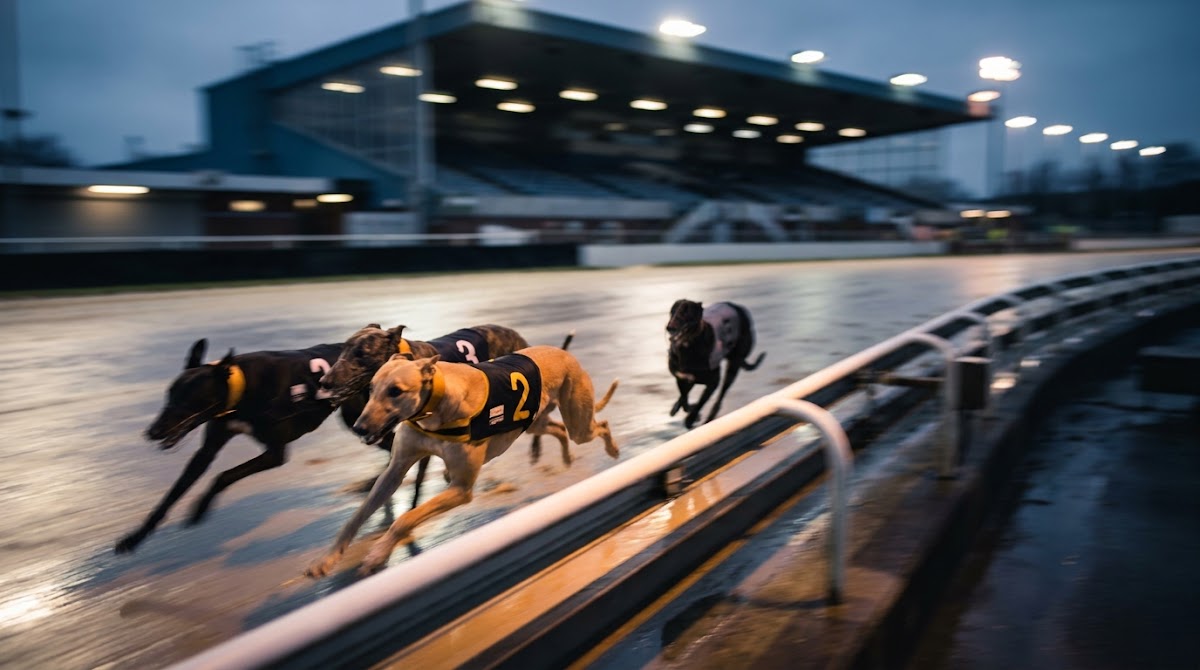
How the starting box affects greyhound racing bets
A starting box, often called a trap in many form guides, is the physical numbered stall where each greyhound begins a race. For anyone placing greyhound racing bets, the box is one of several inputs to weigh when building a betting hypothesis. It is not a standalone predictor of outcome, but it frequently interacts with a dogs natural running style and the track layout to influence early positioning.
On a practical level, the trap determines the dogs initial lane and the likely path into the first bend. That interaction matters because inside and outside traps can produce different traffic patterns at the break, and those patterns can magnify or blunt a dogs early speed or stamina. Readers should treat the box as a context variable that modifies form signals rather than replacing them.
Racecards and greyhound form guides list the trap number for each runner alongside their recent results, sectional times, and notes about preferred racing lines (see Funded Plays). Markets respond to the same information: bookmakers and betting exchanges price dogs based on a mix of form, perceived box advantage, and public money. Knowing where to find the trap number on a racecard helps you combine that detail with replay study and recent form to make a reasoned decision.
When you read racecards focus on how trap draw appears next to each dog, and whether the form lines include comments about how a dog handles inside lanes or the first bend. That combination is the practical starting point for integrating box information into your greyhound racing bets.
How to spot a box bias at your track
Box bias arises when certain traps at a given track consistently perform better or worse, relative to others, after accounting for the quality of runners. To spot such tendencies without complex modelling, look for repeated signals across multiple meetings rather than trusting a few isolated races. Track-wide bias is a persistent pattern that shows up over many race cards, while race-by-race quirks can be driven by a specific field, weather, or track preparation on a single day.
Start with clear indicators: frequency charts you build from recent results, whether the same trap produces repeat winners more often than others, and replay patterns that show consistent crowding or forced wide runs at the first bend. Replays are especially valuable because they reveal the cause of a pattern, for example, whether inside traps are getting boxed in or whether outside traps regularly run a cleaner line (see an example analysis: The Phenomenon of Greyhound Track Bias).
Replays are especially valuable because they reveal the cause of a pattern, for example, whether inside traps are getting boxed in or whether outside traps regularly run a cleaner line.
Practice box-aware analysis using structured challenges
Use the checklist later in this article to collect recent results and replays before concluding there is a persistent box advantage.
When evaluating apparent bias, pay attention to sample size and seasonal variation. Smaller samples are noisy, and track preparation or weather can flip a visible pattern for weeks. Be cautious about declaring a bias from a handful of races and recheck the signal across different race grades and distances to avoid overfitting your impressions.
Finally, document what you observe. A short log of trap performance, replay notes, and conditions will help you distinguish a temporary quirk from a durable track tendency (see investigative reporting on racing transparency: Greyhound racing says it is transparent). That log becomes part of disciplined handicapping and better informs future greyhound racing bets.
Track and race factors that influence box advantage
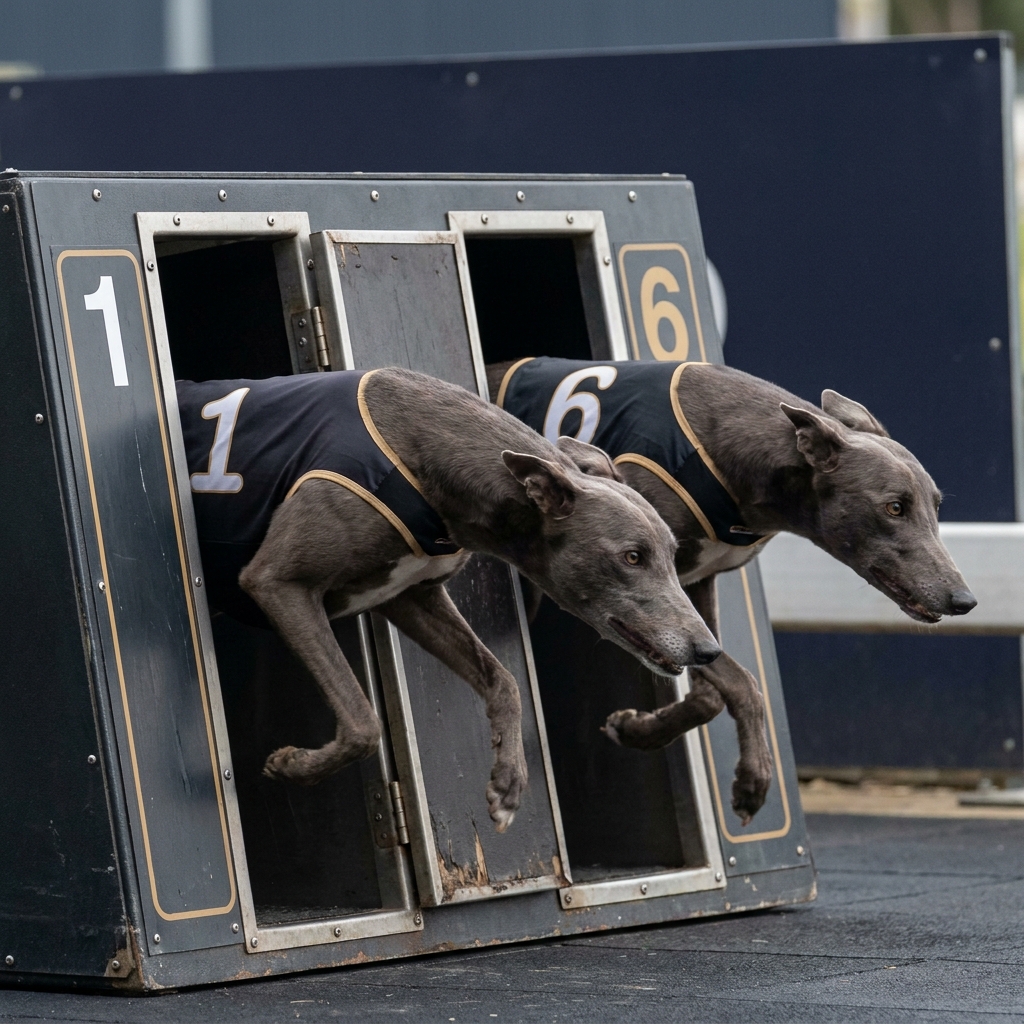
Several physical and race-level factors determine how much advantage a trap might convey. Track layout matters first: a tight track with a sharp first bend favors inside traps in many scenarios because the inside path is shorter and can protect early position. Conversely, a track with a wider opening or a more sweeping first bend can lessen the inside advantage and make outside traps more viable.
Break speed is the next major factor. Dogs that show a quick break and early pace are less penalized by an outside trap since they can secure a position before the first bend. Slow-breaking dogs often suffer from inside crowding if they start wide, or they may be forced into a less efficient line (see research on path following dynamics: Analysis of Racing Greyhound Path Following Dynamics).
Cornering and the dogs preferred racing line also matter. Some greyhounds naturally gravitate to the rail, while others fight for an outside line. That preference, combined with the box number, predicts likely early interactions and can indicate whether a trap will help or hinder a particular runner. In fields with many inside-preferring dogs, an inside trap can become congested even if it would usually be an advantage.

Race size and crowding effects change the calculus as well. In small fields the impact of trap draw can be muted because there is less traffic at the break, while large fields increase the chance of interference. Starting method and grade matter too; top-grade races with uniformly quick starters tend to emphasize raw speed over positional nuance, whereas lower grades can show stronger trap-related effects because performance differences are more influenced by traffic and positioning.
This section gives a straightforward, repeatable sequence to assess how much the box should influence your decision before placing greyhound racing bets. The framework uses publicly available racecards, replays, and simple measures so you can apply it without proprietary tools.
Step 1, collect the right data: pull the racecard, recent results for each dog at the same distance and track, any available sectional times, and replay video for the last three to five runs if possible. These items let you compare how a dog behaved from different traps and under varying conditions.

Step 2, classify runners by running style: label each dog as an early leader, midfield runner, or late runner based on how they usually position at the first bend. Combine that classification with observed break speed from replays and sections to create a simple profile for each entrant.
Step 3, model likely early positioning: using the trap and profiles, sketch the expected order into the first bend. Consider probable interactions, such as whether an inside-preferring dog drawn wide will have space to cross, or whether a fast-break dog in a middle trap will secure the rail. Use replay evidence from recent races to refine these expectations.
Step 4, weigh the box with form and context: if a dog shows consistent finishing speed but is drawn in a trap that historically causes early trouble at the venue, downgrade its short-term prospects. If a dog is an established early leader and its trap should allow a clear path, treat the box as supportive evidence rather than the deciding factor.
Step 5, set an action threshold: decide what combination of box, form, and context will move you from observation to a bet. That threshold is personal and should reflect your risk tolerance, staking plan, and whether you are trading small edges or making larger, speculative plays.
compact copyable checklist to apply the framework
Keep one record per race
Keep records of your hypotheses and outcomes so you can iterate on the thresholds and weight you give to box information. Over time that disciplined approach helps you calibrate when trap draw is driving results at a track and when it is noise.
When box matters less: race types and common exceptions
There are clear situations where the box becomes a lower-priority factor for greyhound racing bets. Short sprint distances emphasize the break and raw speed, so a fast breaker can often overcome a less favoured trap by getting position early. That makes the dogs immediate acceleration and break quality more important than the numeric trap alone.
Top-grade races are another example. When several dogs have consistently fast breaks and high early speed, positional nuances from trap draw can be reduced. In those contests, markets tend to focus on demonstrated speed and consistent finishing ability rather than subtle trap-derived advantages.
Late-runner scenarios form a common exception. A strong closer can still win from an unfavourable trap if race shape produces a fast early tempo or if leaders crowd and check each other. In such cases, focus on form and finishing sections rather than over-weighting the trap number.
Use these rules of thumb: increase focus on box draw in races with mixed early speed and in larger fields where traffic is likely; reduce box emphasis in sprints with clear early speed dominance or in small fields where positioning is simpler. The balanced view is that box is one input among many and that its importance varies by race context.
Common mistakes and how to avoid them when weighing the box
One frequent error is overreliance on small samples. Declaring a trap to be superior based on a few meetings risks chasing noise. Set a minimum sample threshold for your own review process, such as checking several weeks or a defined number of races, so conclusions rest on repeatable patterns rather than chance.
Another mistake is mixing data across conditions. Combining results from different distances, grades, or track states can mislead your analysis because box effects may shift with those variables. Instead, segment your review so you compare like with like and avoid conflating dissimilar race types.

A third error is confusing box tendency with individual dog ability. A dog that repeatedly wins from a trap may be doing so because it is simply superior, not because the trap is inherently advantageous. Cross-check by seeing how the same trap performs with average-quality fields, and inspect replays to determine whether the dog is consistently overcoming or benefiting from the draw.
Corrective actions include cross-checking replays, maintaining a clear sample threshold, and using segmented result tables to see whether an observed advantage persists across similar races. Those habits reduce false positives and align with disciplined, evidence-driven handicapping.
Practical scenarios: applying the framework without proprietary data
Scenario A: inside trap with a slow-break runner. If a dog drawn to the rail typically breaks slowly and drifts to the back in early replays, an inside trap will often produce crowding around it. In that case, treat the box as a negative modifier and look for form signs that the dog can avoid trouble or has demonstrated recovery in similar conditions. If neither appears, downgrade the dogs short-term chances.
Scenario B: wide trap with a proven fast-break dog. A dog that reliably breaks quickly and prefers an outside line can often neutralize the theoretical disadvantage of an outside trap by securing the outside path early. Here the trap is supportive and should increase the dogs short-term appeal, especially at tracks where outside traps have clean running lines into the first bend.
Scenario C: mixed field at a track known for occasional trap quirks. Suppose a field includes several inside-preferring dogs, a couple of fast-break outsiders, and a proven closer. Your checklist should sketch likely first-bend positions for each runner, prioritize replays that show crossing attempts or checking incidents, and then decide whether the trap draw creates a material reshaping of the expected finish order. The focus is on interaction effects rather than single-variable rules.
Final checklist before you place a box-aware bet: 1) confirm the trap number on the racecard, 2) review the last three replays for traffic patterns, 3) classify each dog by running style and break quality, 4) model expected first-bend order, and 5) compare your model with market pricing to see if value exists (see Funded Plays evaluations).
Conclusion: making box-aware greyhound racing bets responsibly
Key takeaways are simple: the starting box is an important context factor for greyhound racing bets but it is rarely decisive on its own. Treat trap draw as a modifier to form and replay evidence, check for persistent track-level biases, and avoid overinterpreting small samples. A disciplined, repeatable framework will yield more reliable insights over time.
Weight the box in proportion to its interaction with a dogs running style, the track layout, and race context; use replays and segmented results to judge how much influence a trap has at a venue before letting it drive your bet.
Next steps for disciplined bettors include applying the step-by-step checklist in live practice, keeping a short results log that links trap draw to outcomes, and periodically reevaluating conclusions as track conditions and fields evolve (see our blog for related posts). Responsible participation means recognising uncertainty and avoiding overconfidence about any single variable.
Remember that no method guarantees winners. Use box-aware analysis to improve the quality of your hypotheses, manage bankrolls prudently, and focus on consistent performance rather than one-off gains when you place greyhound racing bets.
The starting box influences early positioning and traffic, but it is one of several factors. Combine trap draw with form and replays before drawing conclusions.
No. Small samples are noisy. Check a larger set of races and similar conditions before assuming a persistent bias.
Log trap numbers, replays, running style classifications, race conditions, and your betting outcome to evaluate patterns over time.
References
- https://www.fundedplays.com
- https://www.fundedplays.com/blogs
- https://www.fundedplays.com/blogs/how-fundedplays-evaluations-work
- https://towcester-racecourse.co.uk/the-phenomenon-of-greyhound-track-bias/
- https://pursuit.unimelb.edu.au/articles/greyhound-racing-says-its-transparent,-so-we-used-ai-to-check-dog-by-dog
- https://pmc.ncbi.nlm.nih.gov/articles/PMC8468305/
- https://www.fundedplays.com/challenges