
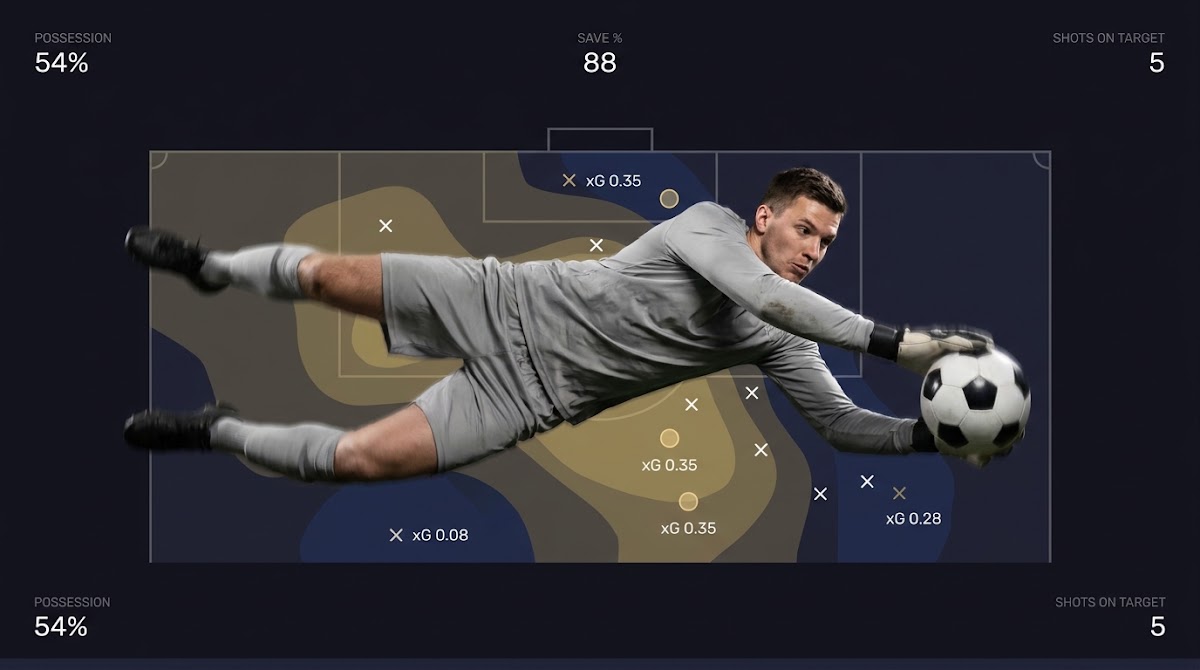
What are goalie save props?
Quick definition: Goalie Save Props Explained
Goalie Save Props Explained means player prop markets that measure the number of saves a goaltender records in a single game or in a specific period, most commonly offered as totals and over/unders.
These props are grounded in recorded events: a save counts only when a shot on goal that would have entered the net is stopped by the goalie. Regulated North American market catalogues list goalie saves among standard player prop categories, which is why you will find full-game and period save markets in many rulebooks AGCO sport and event betting catalogue.
Saves matter to bettors and analysts because they are tied to measurable, periodically recorded events such as shots on goal and period splits. That measurability makes saves a good subject for modelling with team shot projections and shot-quality estimates, which can be combined to form an expected saves number.
Try structured sports prediction challenges on FundedPlays
If you want a compact checklist before the step-by-step framework, read the practical checklist later in this guide to confirm the basics you need to model saves.
Why they matter to bettors and analysts
Player props like goalie saves let skilled users exploit differences between their projections and posted lines because the outcome depends on a countable sequence of events rather than subjective scoring. Because official stat definitions are consistent across full games and periods, a well-documented baseline number of shots against provides the main signal for evaluating these markets NHL stats glossary.
For anyone doing disciplined forecasting, goalkeeper save props offer a defined evaluation window: you can measure your projection accuracy using public stats and make incremental improvements to inputs like expected shots and shot quality.

How saves and shots on goal are officially counted
Official SOG definition
Statisticians record a shot on goal only when the attempt would enter the net without goalie intervention; only those events are eligible to be recorded as saves when stopped by the goalie. This formal definition underpins how saves feed into prop markets and is the baseline for both league and collegiate statkeeping NHL stats glossary.
What counts as a save versus a block or a post
Not every attempt near the goal becomes a shot on goal. A player hit the post without goalie contact and a defender blocks a shot before it would reach the net are not counted as shots on goal, and therefore they do not generate saves in the official book. That distinction is important when you audit game footage against box score numbers NCAA Ice Hockey Statisticians Manual.
When you model expected saves, make sure your shot inputs align with the official SOG definition to avoid overcounting events that do not register as saves in the box score.
Period-based recording rules
Shots on goal and saves are recorded by period under the same official frameworks used for full-game stats, which means first-period and second-period save props rely on the same definitions and are verifiable against period splits in official statistics NHL stats glossary.
That per-period recording lets you isolate short windows for in-depth analysis, but remember that small-sample variance is larger inside a period than across an entire game.
Common goalie save prop types and market structure
Full-game totals and over/unders
Most markets present goalie saves as a total, with bettors taking the over or the under relative to a posted line. Full-game totals are the most common single-item prop and are often the easiest to model because they aggregate the entire 60-minute window and reduce variance relative to period props. See an advanced guide on goalie saves and shots Advanced NHL Props: Goalie Saves & Shots on Goal.
Regulated market catalogues list full-game and period-save categories as standard offerings, confirming these are common product structures in North America AGCO sport and event betting catalogue.
Period and split markets
Bookmakers and regulated catalogues also offer period-based save props, such as first-period saves, and these rely on the same shot-on-goal definitions and period recording rules as full-game markets NHL stats glossary.
Official definitions determine which events count as shots on goal and saves; using the correct SOG baseline ensures your projected saves align with what will be recorded, while xG and tracking data refine the expected outcomes.
Because period props use the same definitions, you can treat them as shorter windows of the same process, but expect more noise and a higher sensitivity to early-game events and line changes NCAA Ice Hockey Statisticians Manual.
Live markets and intra-game adjustments
In-play save markets adjust as the game unfolds and as the public or market makers update expectations about shot pace and opponent attack patterns. Live lines react to immediate events like power plays, injuries or visible lineup changes, and they can offer opportunities for traders who track shots and possession in real time.
Because live markets are short-horizon and reactive, they emphasize accurate tracking of ongoing shots on goal and the official recording conventions that will determine the final stat.
What drives expected saves: shots against versus shot quality
Shot volume basics
Saves totals scale with shots against. Put simply, more shots on goal create more opportunities for a goalie to record saves, so shots against is the primary driver of a goalie's raw saves total in a game NHL stats glossary.
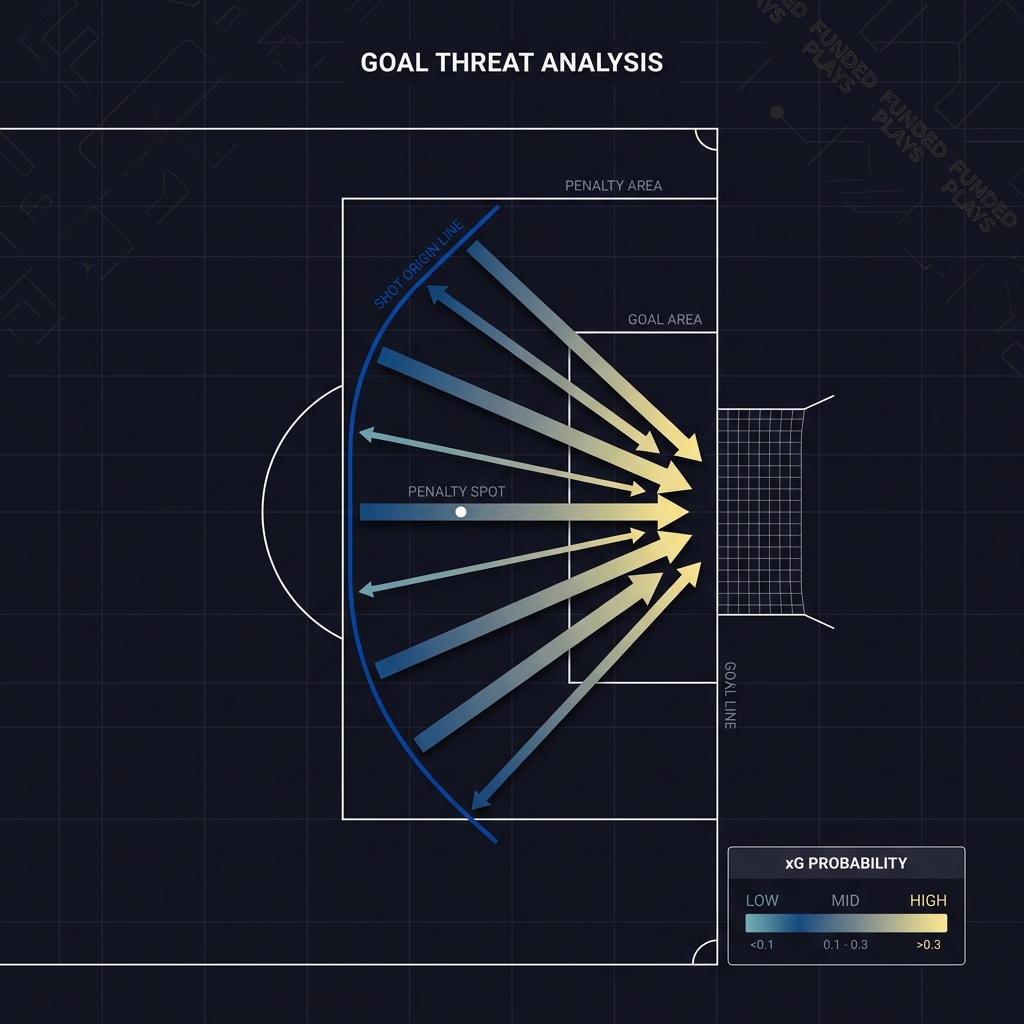
When you begin modeling, use projected shots against as your baseline. Most discrepancies between a projection and a posted line trace back to differences in how many shots each side expects the opposing team to generate.
Shot quality factors
Shot quality changes the expected conversion rate of those shots into goals, and that in turn shifts expected saves. Modern expected-goals frameworks include variables such as shot distance, shot type, rebound or pre-shot movement, and occasionally speed to estimate the chance a given shot becomes a goal MoneyPuck model overview.
Because xG estimates the probability a shot scores, subtracting expected goals from shots against gives an expected saves number in a simple conceptual view. That makes shot quality an essential second input after shot volume.
Why save percentage alone can mislead
Raw save percentage collapses shot quality and workload into a single outcome measure. Two goalies seeing the same number of shots can have different save percentages if one faces higher-quality chances. Relying on save percentage without controlling for the opponent's shot profile can lead to biased expectations about future saves Evolving-Hockey xG methodology.
Use save percentage as one diagnostic variable but not as the primary driver of your projection. Instead, build your expected saves from shots-against projections and shot-quality estimates, and use save percentage to sanity-check extreme deviations.
Using tracking data and xG models to forecast saves
What NHL EDGE adds to shot context
NHL EDGE puck and player tracking supplies precise measurements such as shot distance, puck speed and location, which improve shot-quality models by providing variables that historically had to be approximated from event logs NHL EDGE overview. The NHL's coverage of EDGE developments provides additional context NHL EDGE site article and independent analysis is available in hockey media reporting ProHockeyNews analysis.
Those additional variables help separate high-probability chances from lower-probability attempts, tightening expected-goals estimates and therefore improving expected saves forecasts compared with models that use only coarse location data.
How xG models incorporate distance, type and speed
xG models combine event attributes into a probability that a shot results in a goal. Common inputs include the shot distance to the net, whether the shot was a wrist, slap or rebound, and pre-shot movement or screens. Models weight these inputs to produce a per-shot goal probability that can be summed to an expected goals total for a game Evolving-Hockey xG methodology.
From a forecasting perspective, converting those expected goals back into expected saves is straightforward conceptually: saves equal shots on goal minus goals allowed, and expected saves follow the same relationship using expected goals estimates.
Public data and model sources to consult
Publicly available projects and modelers provide reference projections and methodological details that help inform your own forecasts. MoneyPuck and Evolving-Hockey publish model descriptions and historical outputs that are useful starting points for projecting shots, xG and resulting saves MoneyPuck model overview.
Use public models as benchmarks, not as definitive answers; see the Funded Plays blog for related discussions. They provide context about how different inputs affect expected saves and offer reproducible outputs you can compare to posted lines.

A step-by-step framework to evaluate a save line
Step 1: Gather pregame stats and projections
Start with projected shots against and team xG numbers for both teams. Public models give a useful baseline, and standardized stats such as league shots-against provide a consistent starting point for adjustments NHL stats glossary.
Also collect recent goalie workload, such as games in a row, and look for anomalies in playing time that could change the frame of expected shots faced.

Step 2: Adjust for matchup context and roster news
Apply adjustments for opponent playing style, power-play frequency, and lineup changes. If a top scorer or a defensive starter is out, that can materially change both shot volume and shot quality for the game, which moves your expected saves.
Keep in mind that sportsbooks and regulated catalogues may apply proprietary weight to these contexts, so treat your adjustments as a reasoned offset rather than as a guarantee of market inefficiency.
Step 3: Set an expected saves number with a margin
Combine your shots-against baseline with xG-derived shot quality to set an expected saves figure. Then apply a margin of safety to account for model uncertainty and small-sample noise, particularly for period props. Use standardized metrics like shots against as your baseline and widen the confidence margin when data inputs are sparse MoneyPuck model overview.
Compare your resulting number to the posted line and decide whether the difference exceeds your margin and justifies taking the over or the under. Keep records of your picks so you can refine your margin over time (see Funded Plays evaluations).
Common mistakes and recording pitfalls to avoid
Mixing SOG with blocked or missed shots
A frequent error is treating blocked shots or attempts hitting the frame as shots on goal. Those events do not count as saves in official records, so mixing them into your shot totals inflates expected saves and can systematically skew your projections NCAA Ice Hockey Statisticians Manual.
Overweighting raw save percentage
Overreliance on raw save percentage is risky because it blends shot quality and volume. A goalie with an unusually high save percentage over a short stretch may simply have faced below-average shot quality rather than improved performance that will persist NHL stats glossary.
Assuming tracking-era data eliminated all recording bias
While NHL EDGE provides richer contextual variables that reduce some uncertainty, questions remain about cross-rink consistency and how historical biases are corrected. Treat tracking-era data as an improvement but not as a complete elimination of recording issues NHL EDGE overview.
quick expected saves estimator using shots and xG
use as a sanity check
Practical examples: three scenarios and how to read the line
Scenario A: High-shot-volume opponent
If a goalie faces a high-shot-volume team, expected saves increase proportionally. For example, when an opponent averages significantly more shots against than the league average, your baseline shots-against projection rises and with it the expected saves total NHL stats glossary.
In that case, even if shot quality is average, the volume alone can justify taking an over if your projection exceeds the posted line by a defensible margin.
Scenario B: Low-event defensive matchup
When two defensive teams meet and shots are scarce, the posted totals might look similar to typical games but expected saves can be lower because there are simply fewer SOG events. In low-volume games, a few high-quality chances can determine the result, so weighting xG heavily becomes more important MoneyPuck model overview.
Low-event games favor conservative lines and wider margins of error, so reduce bet size or avoid close margins when your model uncertainty is high.
Scenario C: First-period save prop approach
For a first-period prop, isolate period-level projected shots and period xG. Because SOG and saves are recorded by period under official frameworks, you can compare your first-period expected saves directly to the posted first-period line NHL stats glossary.
Remember that first-period props carry more variance, so a modest difference between your projection and the line may not be sufficient; prefer larger expected-value gaps or smaller stakes for period markets.
Quick checklist and closing recommendations
Pre-game checklist
Confirm the official SOG definition, gather projected shots against, check team and opponent xG numbers, verify goalie lineup and workload, and note special circumstances such as back-to-back scheduling or key injuries NHL stats glossary. Also consult the Funded Plays homepage for tools.
Using those inputs consistently will improve the repeatability of your projections and help you identify where your edge comes from.
In-play reminders
Track shots and period events live, watch for sudden lineup changes or penalties that alter shot pace, and be ready to adjust expectations when the in-game evidence diverges from your pregame projection MoneyPuck model overview.
Keep an eye on whether shots are concentrated in high-xG areas, since a run of high-quality chances can quickly change the expected saves dynamic even if shot counts remain similar.
Responsible participation note
Prop outcomes depend on recorded events and individual performance, not guaranteed returns. Treat save props as skill-based forecasting challenges where disciplined record-keeping and ongoing learning matter more than short-term luck AGCO sport and event betting catalogue.
When disputing recorded stats, follow the official channels and rulebooks that define shots on goal and saves.
A save is credited when a goaltender stops a shot that would have entered the net without goalie intervention; blocked attempts or shots that hit the post without goalie contact are not shots on goal and do not count as saves.
Yes. Shots on goal and saves are recorded by period under the same official frameworks used for full-game stats, so period props follow the same definitions.
Yes. Tracking data adds variables such as shot distance and puck speed that improve shot-quality estimates and can refine expected saves, but it does not completely eliminate recording or rink consistency issues.
References
- https://www.agco.ca/iGaming/sport-and-event-betting-catalogue
- https://www.nhl.com/stats/glossary
- https://ncaaorg.s3.amazonaws.com/championships/stats/icehockey/2023-24D1MW_IceHockeyStatisticiansManual.pdf
- https://moneypuck.com/about.htm
- https://evolving-hockey.com/analysis/expected-goals-model-update-2024/
- https://www.nhl.com/edge
- https://www.fundedplays.com/challenges
- https://www.fundedplays.com
- https://www.fundedplays.com/blogs
- https://www.fundedplays.com/blogs/how-fundedplays-evaluations-work
- https://prohockeynews.com/how-nhl-player-prop-bets-evolve-with-advanced-analytics-in-the-modern-era-2/
- https://www.propsoptimizer.com/guides/advanced-nhl-props
- https://www.nhl.com/news/topic/nhl-edge/nhl-edge-site-new-look-has-advanced-statistics-for-everybody