
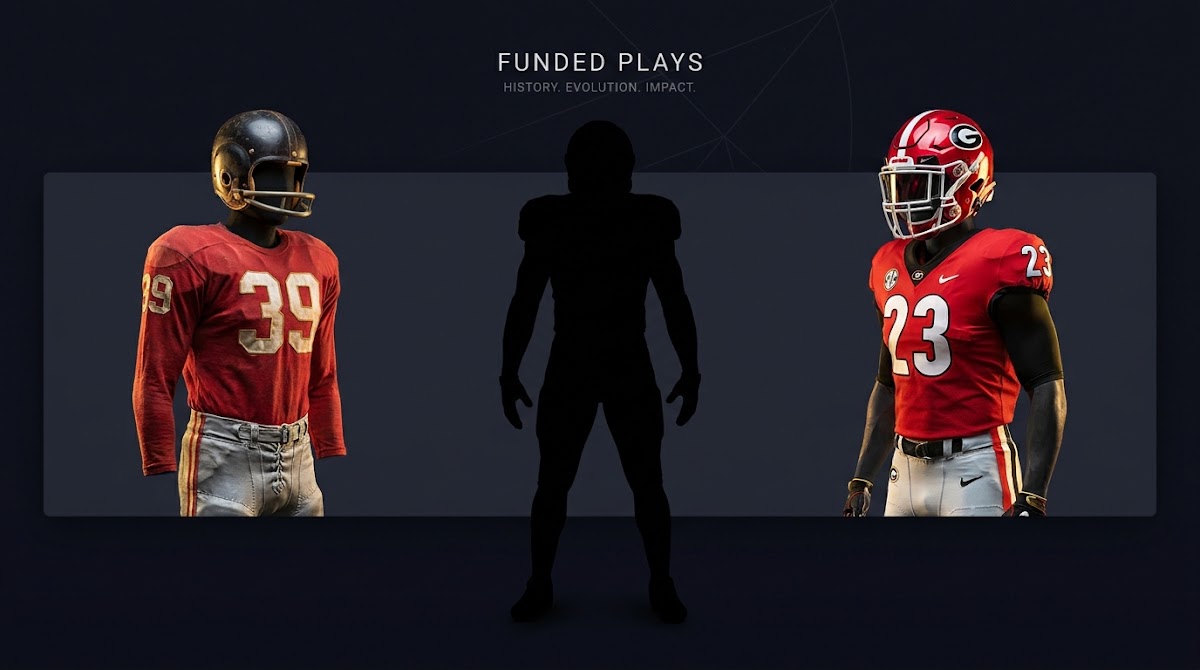
Definition and context: how to judge 'the greatest' in UGA history
Why clarity of criteria matters, georgia auburn point spread
When readers ask who is the greatest player in University of Georgia history, the first step is agreeing what "greatest" means. For a fair, repeatable comparison I focus on three primary axes: college production, national awards, and team impact, with professional career results used only as a secondary tiebreaker. (see how Funded Plays evaluations work)
Production refers to measurable college output such as rushing yards, receiving yards, tackles, or per-game rates listed in program records. Official program registries are the baseline for those numbers, and the Georgia Football Media Guide serves as the primary source for career totals and per-game figures Georgia Football Media Guide.
Awards and honors are the second axis. Major national awards provide independent, season-level validation of peak performance and are easier to compare across eras than some raw counting stats. The Heisman Trophy and other national award registries anchor award-based comparisons in verifiable records Heisman Trust.
Team impact captures how a player altered wins and seasons for Georgia. Championships, consistent starting roles, and measurable contributions in key games belong here. Public narratives tied to rivalry attention or betting frames can amplify a player's perceived impact, but those narratives are separate from the objective axes above; for clarity, lines and betting attention such as georgia auburn point spread are not used as objective metrics when ranking careers.

How awards, production and team impact are weighted
A pragmatic weighting balances the three primary axes: production 45 percent, national awards 35 percent, and team impact 20 percent, with pro career results used only as a tiebreaker. This mix favors college dominance while recognizing that national awards typically reflect both peak production and clear season-long influence.
Normalizing raw counts by per-game or conference-adjusted rates is necessary to compare players across eras. Using program-provided per-game rates and official season lengths from the media guide creates a consistent denominator for production comparisons Georgia Football Media Guide.
The case for Herschel Walker: production, awards, and legacy
Career numbers and school records
Herschel Walker anchors many all-time Georgia lists because his college production sits at the top of official program rankings. He remains listed as Georgia's career rushing leader in the program guide, and those career totals form the core of the production argument for his placement at No. 1 Georgia Football Media Guide. See his program profile for season-level context Herschel Walker profile.
Walker combined high per-game output with long seasons and consistent performance across multiple campaigns. That repeatable production, measured against contemporary season lengths and opponents using the media guide, makes his counting statistics resilient to simple era-based dismissal. Additional biographical context is available in the Georgia Encyclopedia Herschel Walker.
Heisman and All-American honors
Beyond raw yards, Walker won the 1982 Heisman Trophy and was a three-time consensus All-American from 1980 to 1982. Those awards are central to the case that his peak and sustained production were nationally recognized during his career Heisman Trust. See his Heisman profile Herschel Walker Heisman page.
Because national awards are weighted heavily in the framework, a multi-season All-American profile combined with a Heisman season moves a candidate decisively ahead in season-level scoring even before team impact is counted.
Based on college production, national awards, and team impact, Herschel Walker is the clearest evidence-based choice, with Brock Bowers, Stetson Bennett, David Pollack, and Frank Sinkwich as principal challengers.
Why media and record books place him at the top
Multiple program histories and recent media rankings continue to place Walker atop Georgia's all-time hierarchy, a consensus that ties directly to the combination of career-leading production and national awards rather than nostalgia alone Athlon Sports top 50 list.
That media consensus is not definitive proof on its own, but when a clear set of awards and production data point the same way, the ranking becomes robust against alternative weightings.
Brock Bowers: how a modern tight end reshaped the debate
Back-to-back John Mackey Awards and what they mean
Brock Bowers elevated the tight end position for Georgia with back-to-back John Mackey Awards in 2022 and 2023, an uncommon repeat that marks him as the program's most decorated tight end in award terms John Mackey Award recipients.
Those consecutive national honors show both peak dominance and positional redefinition, as Bowers' receiving production changed how evaluators think about tight ends when comparing across eras.
College production versus historical position bias
Comparing a modern, high-usage tight end to a historical running back requires careful normalization. Raw yard totals do not tell the whole story when position usage and opportunity differ by era. Using per-route or per-game receiving rates from program data helps compare offensive production more fairly across positions Georgia Football Media Guide.
Bowers' award profile and consistent receiving output give him a high combined score in the framework even if his counting totals do not exceed long-standing rushing records.
Where Bowers fits on an all-time shortlist
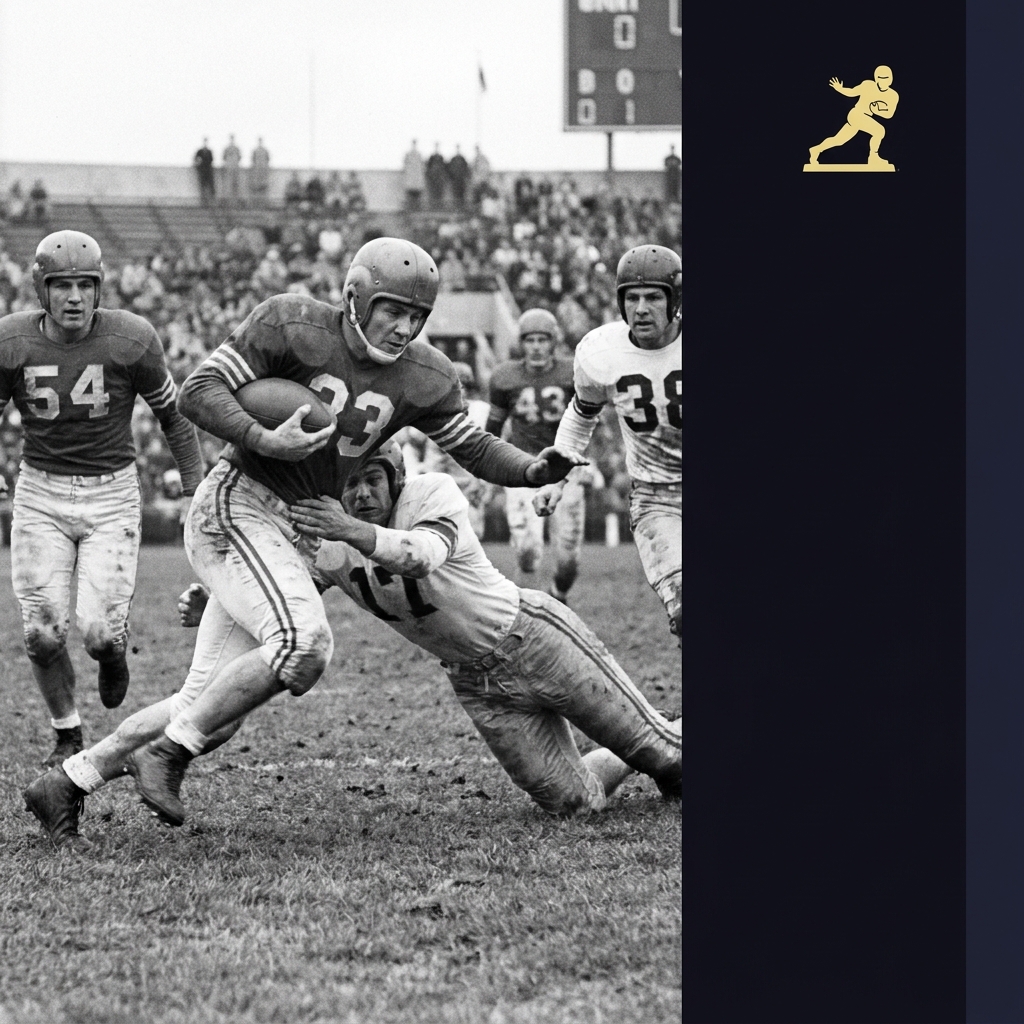
In a points-based ranking that treats awards and team impact seriously, Bowers ranks near the top among non-running-back candidates. His consecutive national awards and clear influence on Georgia's offense make him a modern standard-bearer among contenders.
Stetson Bennett and the championship-era impact
Role in back-to-back national titles
Stetson Bennett's candidacy rests on team impact: he started at quarterback for Georgia's consecutive national championships in 2021 and 2022, an outcome that dramatically increases his team-impact score in the framework NCAA national championships summary.
Championships change public and historical perception because they are direct, high-leverage measures of contribution to program success. That matters especially for positions like quarterback where wins and leadership are core outputs.
Simple ranking score calculator to combine production, awards, and team impact
Use program per-game rates for Production
Team-first metrics versus individual awards
Bennett's individual award list is leaner than those of multi-award winners, but his leadership across two title seasons earns outsized team-impact points under the suggested weighting. Evaluators who prioritize championships will naturally rank him higher than those who place heavier weight on season-level awards.
That dichotomy explains why some modern lists place Bennett among the top candidates even though his award count does not match other contenders; the team contribution axis shifts the balance.
Defensive legends: David Pollack and the defensive case
Pollack's decorated 2004 season
David Pollack presents the strongest defensive case because his 2004 season earned both the Chuck Bednarik Award and the Rotary Lombardi Award, marking a peak defensive campaign that is rare in program history Maxwell Football Club Bednarik award winners.
When a defender wins multiple national defensive awards in the same season, the awards axis of the framework gives that player considerable credit even if cumulative tackle numbers are harder to compare across defensive schemes.
How to compare defensive impact to offensive statistics
Defensive performance is often less stat-friendly than offensive output; tackles, pressures, and run-stop rates can vary with scheme. To compare defenders fairly, use award recognition, All-American status, and opponent-adjusted per-game impact as proxies drawn from program records.
Pollack's combination of awards and national recognition places him among Georgia's all-time greats even if raw tackle totals alone would understate his on-field influence.
Other notable UGA defenders to consider
The program guide lists several defenders with landmark seasons; those candidates are meaningful when peak award seasons align with dominant production and team success, but Pollack remains the clearest defensive-era benchmark from national award evidence Georgia Football Media Guide.
Historic pillars: Frank Sinkwich and other earlier legends
Sinkwich's Heisman and wartime-era context
Frank Sinkwich is one of Georgia's two Heisman winners, and that award anchors his historical status within the program because the Heisman is an enduring benchmark for season-level excellence Heisman Trust.
Sinkwich played in a different era with distinct season lengths and competitive contexts; comparing his counting stats directly to modern totals requires normalizing via per-game and era-adjusted rates drawn from official record books.

How era differences affect direct comparisons
Players from earlier eras often have incomplete or non-standardized statistical records. For that reason, official media guides and award registries provide the most reliable baseline when normalizing across decades Georgia Football Media Guide.
Using per-game rates, conference-adjusted measures, and season-length normalization reduces the bias that would otherwise overvalue raw cumulative totals from longer modern seasons.
A practical ranking framework: step-by-step method you can apply
Normalizing statistics across eras
Step 1, collect official per-game production metrics from the Georgia Football Media Guide and convert career totals to per-game rates when season lengths differ Georgia Football Media Guide.
Step 2, adjust counting stats by conference or schedule strength where possible, using opponent quality proxies for the season to prevent era-driven inflation from skewing the production axis.
Scoring awards, production and team impact
Step 3, assign points for awards: Heisman seasons receive the largest single-season award bump, multi-season consensus All-American status receives strong cumulative credit, and other national awards receive proportional points. This keeps awards comparable without double-counting.
Step 4, compute a weighted total using the 45/35/20 split for production, awards, and team impact. The calculator template in the Tool block above shows a simplified formula you can use with program-sourced inputs.
Example application to a short candidate list
Step 5, apply the framework to Herschel Walker, Brock Bowers, and Stetson Bennett using program per-game figures and official award lists; for Walker the media guide shows career-leading production and national awards that produce a top score under the model Georgia Football Media Guide. For worked examples and further explanation see our blog.
This reproducible method makes debates transparent: different readers can change the weights if they prefer championships to awards, and the framework will show how rankings shift numerically rather than by assertion.
Common ranking errors and cognitive biases to avoid
Recency bias and championship overcorrection
One common error is recency bias, where recent champions are overvalued because their achievements are fresh in memory. Championship seasons matter, but they should be balanced against sustained production and season-level awards.
Another frequent mistake is letting rivalry narratives or visible media moments overshadow consistent career output. Emotional peaks around rivalry games or lines such as georgia auburn point spread may sway fan opinion but should not replace data-driven comparisons.
Practice disciplined sports prediction with FundedPlays Challenges
Try the simple scoring steps and the worked example to see how different weightings change a player's position on the shortlist.
Overreliance on pro careers
Using professional success as a primary criterion for a college-only question skews results toward players who had different professional opportunities; pro careers are better as tiebreakers than primary evidence.
Finally, avoid confusing popularity with measurable on-field impact. Media lists and fan polls are valuable for gauging narrative, but award and production evidence provide the repeatable foundation for an accurate ranking.
Conclusion: an evidence-based shortlist and final take
Top candidates and why they make the list
Using the framework above, an evidence-based shortlist emphasizes Herschel Walker at No. 1 based on program-leading rushing production and national awards, followed by Brock Bowers, Stetson Bennett, David Pollack, and Frank Sinkwich as primary challengers. Walker's combination of career-leading production and a Heisman season is the clearest single-case anchor in the official records Georgia Football Media Guide.

That list is qualified: reasonable alternative weightings that prioritize championships or positional influence can raise candidates like Bennett or Bowers. The framework makes those tradeoffs explicit so readers can re-score lists under different preferences.
How to read the shortlist depending on your weighting
If you weight awards more heavily, Walker and Sinkwich rise because Heisman and multi-season All-American honors are strong award signals. If you prioritize team impact, Bennett's back-to-back championship starts move him up relative to award-focused candidates.
Readers who want to run their own comparisons can use the per-game normalizations and the calculator template above with program-sourced inputs to generate a defensible ordering for their preferred weights.
Next steps for readers who want to test their own rankings
For primary data consult the official Georgia Football Media Guide and the major award registries; those documents supply the per-game rates and award lists needed to populate the scoring model Georgia Football Media Guide. You can also visit Funded Plays for tools and resources.
Using the simple weighted framework and the example calculations will let you produce a personal, reproducible ranking rather than relying on intuition or headline lists.
Normalize by per-game rates, adjust for season length and opponent strength, and use award lists from official media guides to provide comparable baselines.
No, pro careers should be treated as a secondary tiebreaker; college production, awards, and team impact are primary for a college-only question.
Betting lines and rivalry narratives reflect perception and market factors, not objective measures of on-field production or awards, so they are excluded from the core framework.
References
- https://georgiadogs.com/documents/2024/8/1/2024_Georgia_Football_Media_Guide.pdf
- https://www.heisman.com/schools/georgia/
- https://athlonsports.com/college-football/top-50-greatest-georgia-bulldogs-football-players-of-all-time
- https://www.johnmackeyaward.com/recipients/
- https://www.ncaa.com/news/football/article/2021-07-07/georgia-football-national-championships-heisman-trophy-winners-draft-picks
- https://maxwellfootballclub.org/bednarik-award/
- https://www.fundedplays.com/challenges
- https://georgiadogs.com/sports/2017/6/17/sports-m-footbl-spec-rel-geo-legends-walker-html
- https://www.heisman.com/heisman-winners/herschel-walker/
- https://www.georgiaencyclopedia.org/articles/sports-outdoor-recreation/herschel-walker-b-1962/
- https://www.fundedplays.com
- https://www.fundedplays.com/blogs
- https://www.fundedplays.com/blogs/how-fundedplays-evaluations-work