
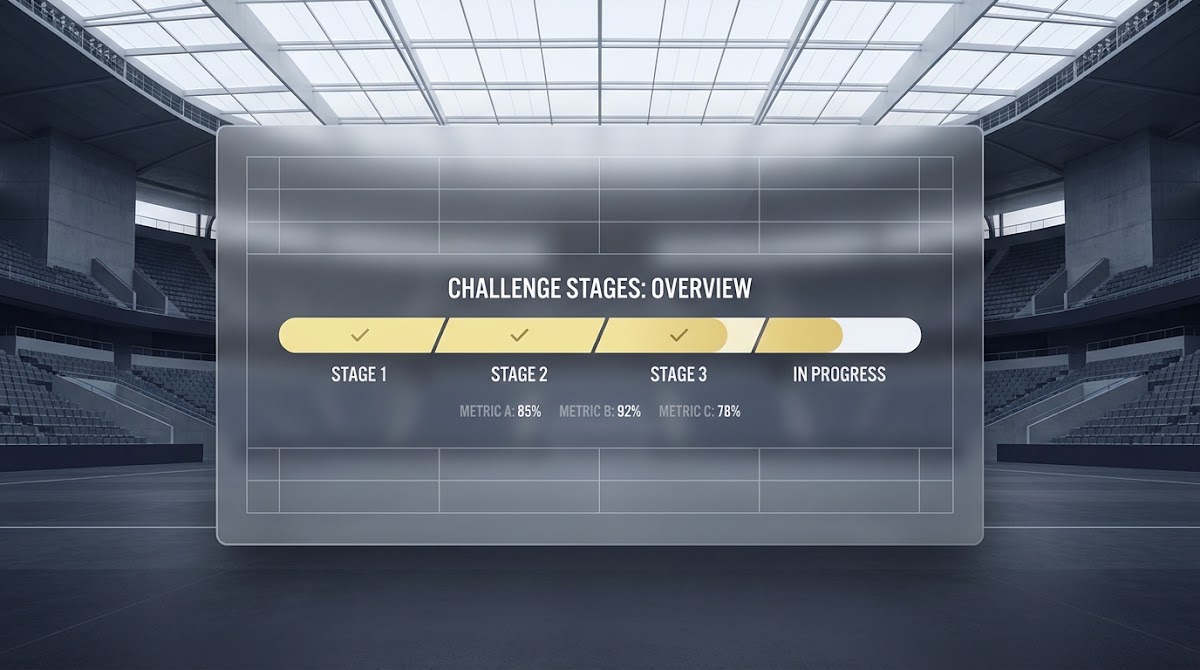
What FundedPlays is and how it differs from traditional sportsbooks
FundedPlays for Beginners: A Complete Walkthrough starts by framing FundedPlays as a U.S.-based, skill-focused sports prediction and sweepstakes challenge platform that uses virtual funded accounts and structured evaluations rather than operating as a traditional sportsbook, so the emphasis is on demonstrating forecasting skill within published program rules rather than placing wagers for odds-based payouts How It Works 6 FundedPlays.
The practical difference is simple: instead of risking your own cash on market odds, you complete evaluation challenges using a simulated bankroll and follow objective performance targets and drawdown limits to qualify for a funded account. That funded account model rewards consistent, rule-compliant performance rather than one-off wins, and the platform explicitly states it does not guarantee earnings or outcomes Official Rules 6 FundedPlays.
Prepare by reading the Official Rules, completing required verification, backtesting and calibrating your forecasting method, choosing conservative stake sizing, and keeping a disciplined results log aligned with platform metrics.
New users will see language on the site that describes evaluation challenges, virtual bankrolls, progress tracking, and the Official Rules that govern eligibility and payouts. Learning this terminology early helps you interpret challenge descriptions and what success requires.
Think of FundedPlays more like a structured skills evaluation than a betting app: the stages, metrics, and limits are defined up front so participants can plan and measure performance against the published standards Terms of Service 6 FundedPlays.

How FundedPlays evaluation challenges work: accounts, objectives, and limits
A typical evaluation challenge starts by assigning a virtual bankroll and a set of objectives to meet within a time window, such as profit targets and explicit drawdown limits that you must avoid breaching. The specific numerical values and progression rules are defined in the platform documents and differ by challenge type, so consult those pages for exact amounts How It Works 6 FundedPlays.
Here are numbered examples to illustrate common elements you will encounter, described generically so you learn the pattern rather than any fixed figure.
- Virtual bankroll allocation: the challenge gives you a simulated balance to place predictions against.
- Profit or performance objective: you must reach a stated target or metric within the evaluation period.
- Drawdown limit: the challenge sets a maximum allowable decline from peak balance.
- Time window: objectives must be met within a defined number of days or number of events.
Challenges are usually staged so you progress only after meeting objectives and passing verification checkpoints. Moving between stages may require additional identity verification and compliance steps that confirm you meet eligibility and fair-play policies Official Rules 6 FundedPlays.
quick tracking sheet for daily predictions and drawdown monitoring
Update after each event
To monitor objective progress, keep a running log that records each pick, the predicted probability or confidence, the stake you assigned, the result, and the running simulated balance. This record makes it straightforward to check whether you are approaching a drawdown limit or meeting a performance threshold.
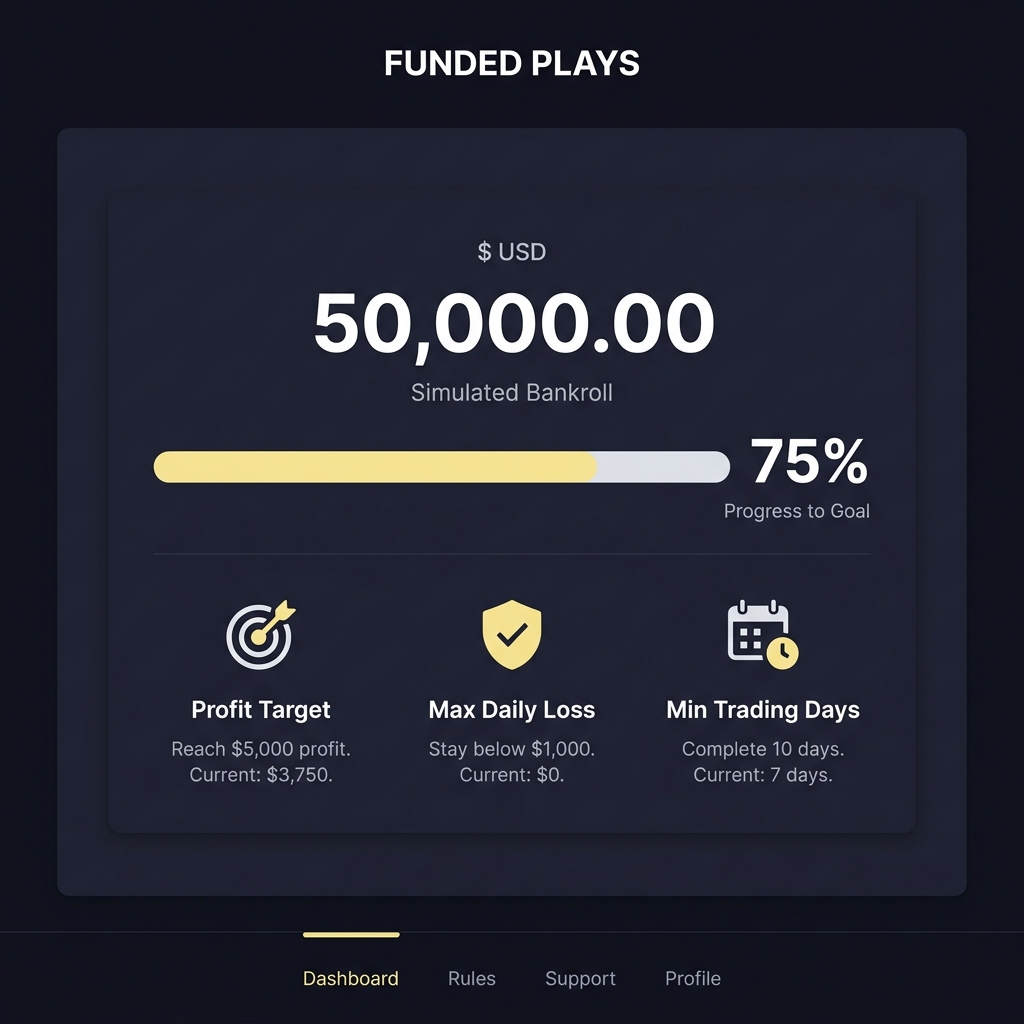
Always remember that the Terms of Service and the Official Rules are the final word on numerical limits and progression mechanics for any particular challenge, so match your tracking fields to how the platform reports results to ensure apples-to-apples comparisons Terms of Service 6 FundedPlays.
Step-by-step setup: creating an account and joining your first challenge
Start the process by registering an account and completing any identity verification steps the site requires for eligibility. The registration and verification flow is described on the platform documentation and typically asks for standard identity confirmation before you can enroll in evaluation challenges How It Works 6 FundedPlays.
After registration, you will see a dashboard that lists available challenge options, your current progress in enrolled evaluations, and basic statistics about your predictions. Use this dashboard to select a challenge that matches your confidence and experience.
FundedPlays for Beginners: A Complete Walkthrough
When choosing your first challenge, pick a level that keeps risks small and objectives achievable. A smaller virtual bankroll or a beginner-level challenge lets you practice discipline and tracking without exposing you to steep drawdown risks while you learn the platform mechanics.

Practical checklist before you click enroll:
- Read the Official Rules for that challenge and confirm your eligibility.
- Prepare a simple tracking sheet or notebook to log picks and outcomes.
- Decide on conservative stake sizes and a stoprule for personal limits.
Immediately after enrollment, review the dashboard layout and any stage-specific instructions. Note which metrics the site uses to mark objective completion and how it reports drawdowns so your tracker lines up with the platform's reporting.
Rules, eligibility, verification and compliance: what to read first
The Official Rules and the Terms of Service are the authoritative documents for eligibility, drawdown definitions, verification steps, and reward conditions, so they should be the first thing you read before joining any challenge Official Rules 6 FundedPlays.
Typical items to check include age and location eligibility, the identity documents needed for verification, how the platform defines a drawdown breach, and the dispute resolution process. Make note of any stage-specific verification that can delay progression.
Check the Official Rules Before You Enroll
Before you proceed, review the Official Rules on the platform to confirm eligibility and the specific drawdown and performance conditions that apply to the challenge you plan to enter.
Remember the platform states it does not guarantee earnings and that compliance with published rules is required to qualify for rewards, so keep copies or screenshots of the challenge rules you relied on in case you need them later for verification or disputes Terms of Service 6 FundedPlays.
If anything in the rules is unclear, contact the platform support or consult the specific challenge page before you commit real time to a challenge, because procedural misunderstandings are a common source of disqualification.
Responsible play starts with deciding how much time and attention you will allocate to challenges and setting a participation budget that you can afford to lose in terms of time and opportunity cost. General guidance on safe participation emphasizes setting budgets, taking breaks, and understanding platform rules before you play 10 Tips for Responsible Gambling 6 ResponsiblePlay.org.
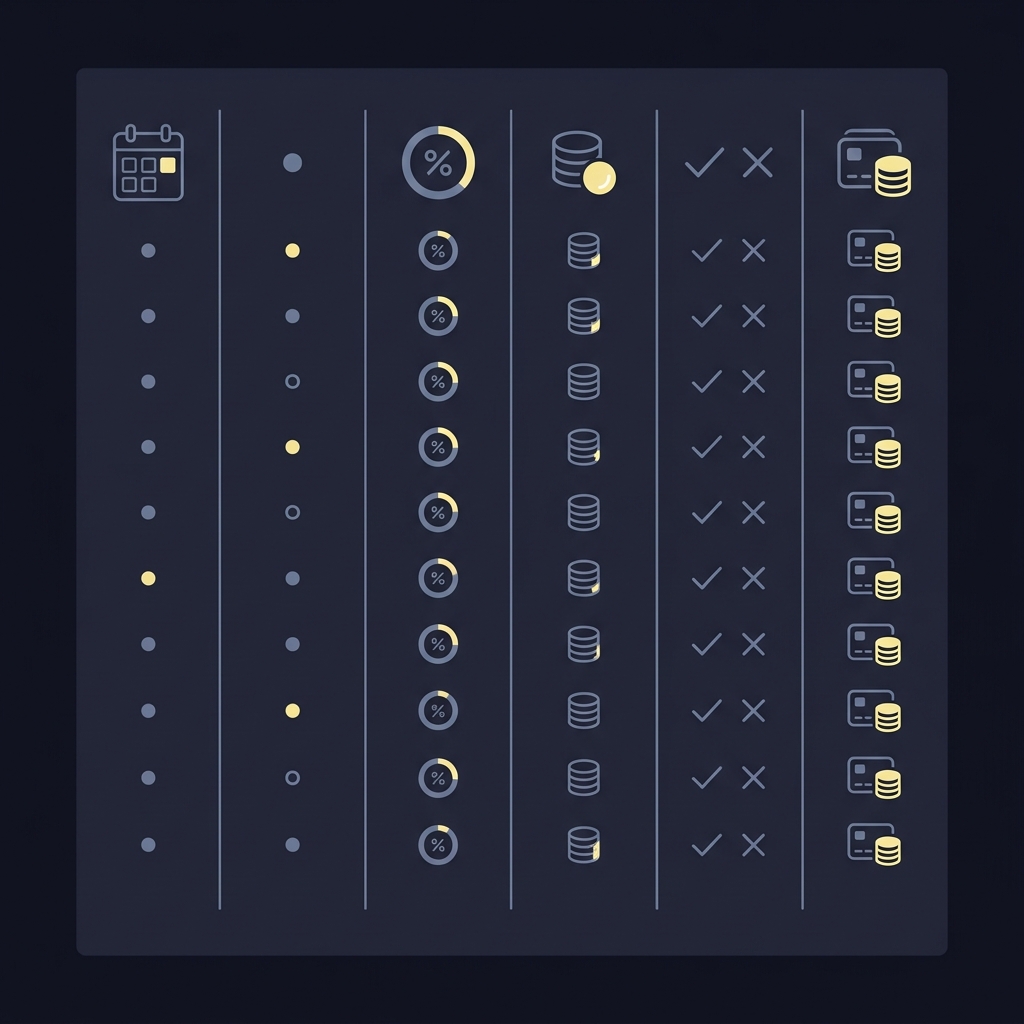
In a challenge environment, personal bankroll rules should complement platform drawdown limits. For example, adopt a fixed-fraction approach to stakes and a personal stoprule that is tighter than the platform's maximum drawdown, so a brief bad run does not force you into unsafe behavior to recover.
Short scenario: if a challenge exposes you to a simulated bankroll and the platform allows a certain drawdown, treat your own emotional and time budget as the primary constraint. Set daily time limits and stop after a preset number of losing events to avoid tilt and chasing losses.
Combining the platform rules with conservative personal limits helps you maintain discipline and reduces the risk that you will trade larger or more emotional stakes just because the account is simulated, which is a common psychological hazard when using virtual balances How It Works 6 FundedPlays.
Measuring and improving prediction quality: scoring rules and backtesting
Good probability forecasting relies on proper scoring rules that reward accurate probabilities rather than just correct picks. Two commonly used measures are the Brier score and log loss, which evaluate the distance between forecast probabilities and outcomes and help identify calibration issues Strictly Proper Scoring Rules 6 JASA.
Calibration checks are simple but powerful: group your predictions by predicted probability and compare the average predicted chance to the observed frequency of wins in each group. Overconfidence shows up when your predicted probabilities routinely exceed realized frequencies.
A basic backtest workflow starts by collecting historical events and applying your forecasting method to a holdout sample. Then compute scoring-rule metrics on the out-of-sample data to estimate how well your model generalizes. The aim is to avoid overfitting so your strategy behaves similarly under live evaluation conditions How It Works 6 FundedPlays.
Practical tip: keep tracking simple at first. Record the predicted probability, the event outcome, and the score for each prediction. After a few dozen events you can compute running averages for Brier score or log loss and watch for trends that indicate model decay or calibration drift.
Stake sizing and strategy rules: Kelly, fractional Kelly, and conservative approaches
The Kelly idea links an estimated edge and outcome variance to an optimal fraction of capital to risk, but full Kelly is often too aggressive in real settings because of estimation error; practitioners therefore prefer fractional Kelly variants to reduce volatility and drawdown risk Kelly Criterion 6 Bell System Technical Journal.
How fractional Kelly works in practice is simple: estimate the full-Kelly fraction, then multiply by a conservative factor such as one half or one quarter to get a safer stake size. This tradeoff sacrifices some long-term growth potential to lower the chance of ruin from poor parameter estimates.
Concrete rules you can use immediately: set a fixed maximum stake percentage of your simulated bankroll, use fractional Kelly with a conservative multiplier, or cap absolute stake sizes so no single event can create a catastrophic simulated drawdown. Validate any sizing choice with short simulated runs on your historical sample before using it in a live challenge Strictly Proper Scoring Rules 6 JASA.
Always remember that variance and estimation error are real, and sizing rules should be chosen to preserve discipline and allow you to complete a challenge rather than chase outsized returns. Simulations are inexpensive and informative for this purpose.
Practical examples, a pre-play checklist, and next steps
Scenario one, a conservative player: choose a lower-level challenge, limit stakes to a small fixed percent of the virtual bankroll, and focus on high-confidence predictions. Track results in a daily log and stop trading after a short losing streak to reassess strategy and avoid tilt.
Scenario two, an analytics-focused player: backtest a probabilistic model, calibrate it using out-of-sample checks, use fractional Kelly with a low multiplier for stake sizing, and keep a results log that records predictions, scores, and parameter changes for iterative improvement How It Works 6 FundedPlays.
Pre-play checklist before your first funded-style challenge:
- Read the Official Rules for the challenge and confirm eligibility.
- Complete identity verification as required.
- Run simple out-of-sample checks and calibration tests on your forecasting method.
- Decide on a conservative stake-sizing rule and a personal stoprule.
- Prepare a results log and tracking sheet aligned with the platform metrics.
After a challenge, review your results objectively. Keep a results log that includes prediction probabilities, outcomes, scoring-rule values, and notes on context or errors. Use that log to adjust your model or decision rules and re-run out-of-sample checks before attempting the next challenge.
Next steps include building an iterative improvement cycle: track, measure with proper scoring rules, adjust parameters conservatively, and revalidate. Always consult the platform documentation before requesting withdrawals or making claims about eligibility, since the Official Rules and Terms define those processes Official Rules 6 FundedPlays.
FundedPlays is a U.S.-based skill-focused sports prediction challenge platform that uses virtual funded accounts and structured evaluation challenges rather than functioning as a traditional sportsbook.
Yes, challenges typically require identity verification and eligibility checks; consult the Official Rules and Terms for specific verification requirements.
Use conservative sizing such as a fixed small percentage or fractional Kelly, validate choices with simulations or backtesting, and set personal stop rules to protect discipline.
References
- https://www.fundedplays.com/how-it-works
- https://www.fundedplays.com/official-rules
- https://www.fundedplays.com/terms
- https://www.fundedplays.com/challenges
- https://www.fundedplays.com
- https://www.fundedplays.com/blogs
- https://www.fundedplays.com/blogs/how-fundedplays-evaluations-work
- https://fundedrules.co.uk/rules/
- https://blackeaglefg.com/es/start-2026-right-with-this-guide-to-funded-trading-accounts/
- https://igamingbusiness.com/sports-betting/sports-betting-regulation/2026-integrity-preview-sports-betting-scandals/
- https://www.responsibleplay.org/10-tips-for-responsible-gambling/
- https://www.tandfonline.com/doi/abs/10.1198/016214506000001437
- https://onlinelibrary.wiley.com/doi/10.1002/j.1538-7305.1956.tb03809.x