
What funded sports trading and traditional sports betting mean today
Clear definitions
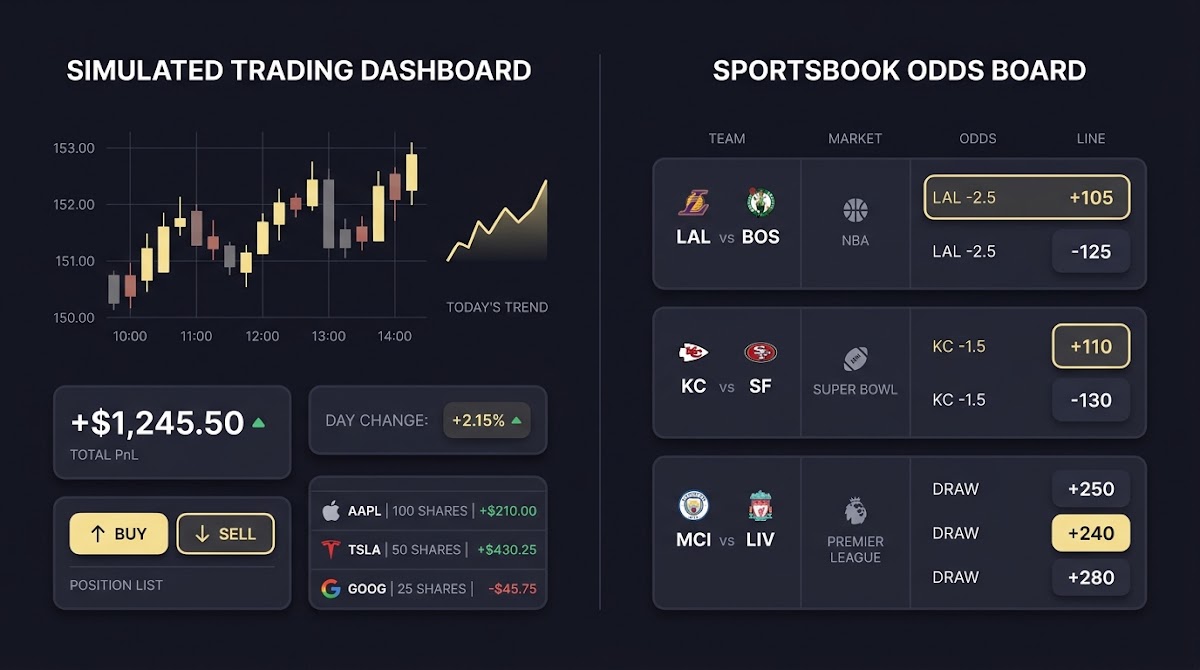
Funded sports trading typically refers to skill-based prediction challenges that give participants simulated or virtual bankrolls and structured evaluation objectives, and these models are presented as alternatives to wagering rather than as direct bets. These challenge formats emphasize measurable performance over time and use rules such as drawdown limits and progress milestones to assess a participant's consistency.
Traditional sports betting describes state-authorized wagering through licensed sportsbooks where real money is staked and operators report taxable revenue to regulators. The regulatory environment and public reporting that accompany licensed sportsbooks create different consumer protections and transparency expectations than those that apply to promotions or sweepstakes State of the States 2025, American Gaming Association.
If your priority is demonstrating predictive consistency under structured conditions without staking personal funds, a funded challenge may fit; if you need direct access to regulated betting markets and the protections and reporting that come with licensed sportsbooks, choose regulated wagering.
Why this distinction matters in practice is simple: the rules that govern a skill-based challenge and a licensed sportsbook determine how operators must disclose terms, how prizes and entry methods are treated, and what protections participants can expect.
How the market has evolved recently
Since 2024 the U.S. sports wagering landscape has continued to develop at the state level, with industry overviews documenting expanding regulated markets and public reporting practices that affect licensed operators and their obligations State of the States 2025, American Gaming Association (see American Gaming Association coverage).
For readers, the practical takeaway from this evolution is that where a product sits on the spectrum from contest to wager affects participant protections, tax and reporting visibility, and the operational compliance burden for the operator.
Quick side-by-side: core structural differences at a glance
What changes for participants
Participant experience differs primarily in whether risk is taken with real money and whether the platform operates under a gaming license. In licensed sports betting, users place real-money wagers and participate in markets offered by sportsbooks; licensed operators often report taxed gross gaming revenue to regulators and the public, creating a transparent revenue trail in some states New York State Gaming Commission sports wagering revenue reports. By comparison, funded challenge platforms typically use simulated funds and structured evaluations rather than direct wagering, which changes the immediate financial exposure for participants. For a quick overview of which states have regulated sports betting, see which US states have regulated sports betting.
Entry and prize mechanics also feel different. Licensed wagering uses odds and betting markets to set returns, while challenge models use qualification thresholds, leaderboards, or prize structures that reflect performance over multiple events rather than single-outcome bets.
What changes for operators
Operators face distinct obligations depending on classification. Licensed sportsbooks must comply with state gaming laws, licensure conditions, and reporting requirements, including financial disclosures in jurisdictions that publish gaming revenue metrics New York State Gaming Commission sports wagering revenue reports. Funded challenge operators that position their product as a promotion or sweepstakes instead follow consumer protection rules focused on clear disclosures and non-deceptive marketing practices, which the Federal Trade Commission outlines for businesses.
Finally, the classification influences whether operators need to provide a free alternative method of entry, register promotions in certain states, or meet bonding and registration thresholds for high-prize promotions.
How funded challenge platforms typically work: the core framework
Challenge design and evaluation mechanics
Funded challenge platforms are usually structured around simulated bankrolls, defined evaluation objectives, and explicit risk limits. A typical challenge will assign a virtual bankroll and require the participant to meet specified targets or avoid predefined drawdowns during a testing period. Those mechanics are designed to assess skill, consistency, and risk management rather than to create single-event wagers.

Because these programs frame outcomes as performance milestones and qualifications rather than typical wagers, their design choices - like whether there is an alternate method of entry - help determine whether a promotion is treated as a sweepstakes or falls under gambling statutes in a given state. See our blog on how Funded Plays evaluations work. Consumer protection guidance emphasizes clear rules and truthful disclosures for such promotions FTC guidance on promotions and sweepstakes.
Participants typically follow a repeatable workflow: create an account on Funded Plays, choose a challenge or account level, execute predictions using a virtual bankroll, and monitor performance against published objectives like profit targets or drawdown limits. Succeeding in the evaluation may grant access to a funded account or rewards, subject to the platform's published rules.
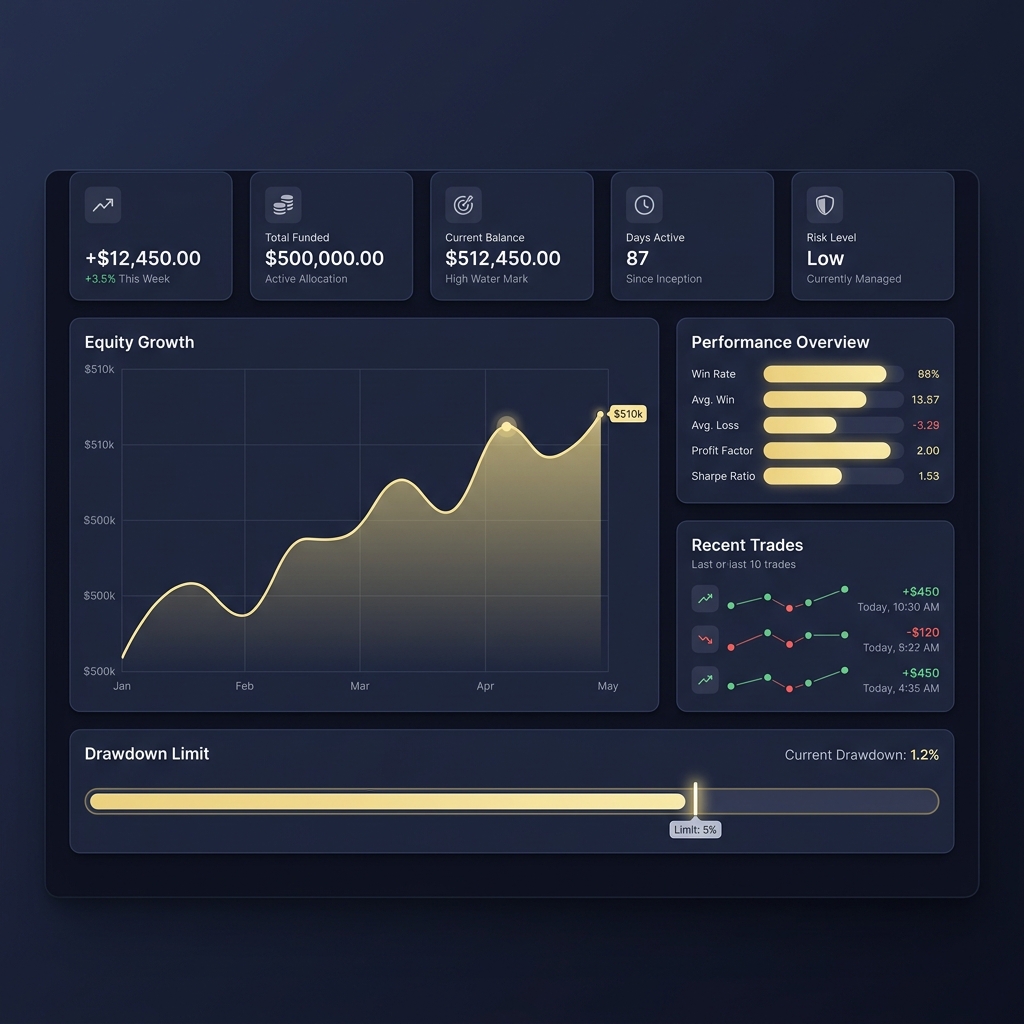
Practically, the workflow emphasizes practice, record-keeping, and disciplined decision-making, because the platform evaluates consistent results over time rather than single-event luck. Operators often provide dashboards and performance reports that let participants track progress against objectives and documented rules.
How traditional sports betting works: licensing, books, and reporting
Regulatory footprint of licensed sportsbooks
Licensed sportsbooks operate under state gaming authority frameworks that control licensure, permissible betting markets, consumer protections, and taxation. Licensing typically imposes operational standards, background checks for operators, and reporting duties that do not apply to simple promotions. The fact that legal sports betting is state-authorized and regulated at the state level is a core structural difference that affects both how operators run and how participants engage State of the States 2025, American Gaming Association.
For users, that regulated status carries trade-offs: access to regulated markets and dispute channels on the one hand, and direct financial exposure plus tax reporting implications on the other.
What public reporting looks like
In some states regulators publish ongoing reports about taxed wagering revenue and market performance, creating public transparency into the scale and fiscal contribution of sportsbook activity. Those reports typically include gross gaming revenue and other taxed figures that are part of the public record for licensed operators New York State Gaming Commission sports wagering revenue reports.
By contrast, promotions and sweepstakes do not generally produce the same kind of public tax-reporting trail, so participants looking for visibility into a platform's overall scale may find different levels of transparency depending on whether they are viewing a licensed sportsbook or a skill-based challenge platform.
Legal and regulatory differences that matter for operators and participants
Three-part gambling test: prize, chance, consideration
Regulators commonly use a three-element test to decide whether an activity is gambling: the presence of a prize, the role of chance, and whether participants provide consideration to enter. Removing chance or consideration, for example by adding a demonstrable skill requirement or providing a free alternate method of entry, can change how a product is classified under state law Washington State Gambling Commission guidance on promotional contests and chance.
Because this legal test is applied at the state level, operators and participants must consider how local definitions and precedent affect classification rather than relying on a national assumption. See state legislative summaries such as the NCSL review of prediction markets NCSL prediction markets summary.
Quick compliance comparison for a promotion versus a licensed book
Use for initial screening only
State-level variations and promotional law
Consumer protection authorities like the FTC require clear, truthful disclosures for contests and sweepstakes and caution businesses about deceptive promotional practices; platforms that run challenge models should publish transparent rules and AME procedures where required FTC guidance on promotions and sweepstakes.
Some states add further obligations. For example, Florida requires registration and bonding for certain game promotions tied to consumer sales when total prizes exceed a set threshold, which is a concrete compliance obligation operators must track during program design and prize structuring Florida game promotions guidance.
Compliance checklist: what operators and serious participants should watch
Operational controls and documentation
Operators should maintain clear published rules, document how skill criteria are measured, keep records of participant results, and be prepared to show how any alternate method of entry operates. Those measures support both legal compliance and consumer trust.
Where prizes are large or tied to consumer purchases, operators must monitor state registration or bonding triggers and maintain evidence of disclosures and contest mechanics for regulators. In jurisdictions with specific promotional rules, failing to register or bond when required can lead to administrative action Florida game promotions guidance.
Participant-facing disclosures and terms
Participants should verify that the platform publishes comprehensive terms and conditions, explains how winners or qualifiers are chosen, and provides dispute procedures. Confirm whether there is any consideration required to enter and whether an AME is offered where appropriate.
Before taking part, careful participants read the published rules, understand how qualification is scored, and check whether the platform provides transparency about progression and rewards; these steps help manage expectations and reduce surprises if an eligibility issue arises.
How to choose: decision criteria for participants
When a funded challenge fits your goals
Choose a funded challenge when your objective is to demonstrate consistent predictive skill under structured conditions, practice strategy without staking personal funds in live wagering, and measure performance against defined objectives. These platforms can be useful training grounds for building discipline and documenting results over time. See our blog for more on challenge design Funded Plays blog.
Because funded challenges emphasize measurable outcomes across multiple events, they appeal to users focused on long-term consistency rather than single-event returns.
When to prefer licensed sportsbook wagering
Choose a licensed sportsbook when you need direct access to betting markets, live odds, and regulated consumer protections that come from operating under a state gaming commission. Licensed wagering provides a clear tax and reporting framework and established dispute channels, which some participants prefer for legal and accounting clarity State of the States 2025, American Gaming Association.
Licensed wagering is the appropriate fit for those who want immediate market exposure and accept the financial risk associated with real-money stakes.
Explore FundedPlays Challenges
Explore structured challenge options, read the full terms carefully, and check your local rules before participating in any challenge or promotion.
Common mistakes and legal pitfalls to avoid
Mistakes by operators
Operator errors often include unclear rules, failing to offer a free alternate method of entry when required, and mislabeling chance-driven promotions as skill-based contests. Those failures attract regulatory attention and can lead to enforcement or reputational consequences if not corrected promptly FTC guidance on promotions and sweepstakes.
Good practice is to draft rules with legal review, publish dispute processes, and document how skill criteria are applied so regulators and participants can verify the contest's design.
Mistakes by participants
Participants sometimes assume skill-based platforms are risk-free or equivalent to regulated wagering; that mistake can lead to misunderstandings about eligibility, withdrawals, or dispute resolution. Always read terms and understand whether rewards depend on long-run performance or other conditions.
Also, participants should check whether a platform's model triggers state-specific requirements that affect prize access or eligibility, so they do not rely on national assumptions about legal status.
Practical scenarios: examples that illustrate the line between contest and wager
A high-prize sweepstakes structured with an AME
Imagine a promotion that offers a large prize pool tied to a consumer purchase but also provides a no-purchase alternative entry method. That AME can be decisive in keeping the program within promotional law rather than gambling statutes, and operators must still track state rules about registration or bonding if their total prizes cross jurisdictional thresholds Florida game promotions guidance.
Design details such as whether entries are skill-graded or random, and whether the platform documents the AME clearly, will influence regulator view and compliance steps.
A skill-based evaluation that removes consideration
Consider a skill-testing evaluation where entry is free and advancement depends strictly on measured forecasting accuracy rather than a monetary buy-in. Removing consideration and documenting rigorous skill criteria can shift the program away from a gambling classification, but operators should still provide clear disclosures and retain evidence of how skill is scored Washington State Gambling Commission guidance on promotional contests and chance.
These scenarios show how small design choices, like whether there is a purchase requirement or how winners are determined, change legal classification and participant obligations.
Responsible participation and integrity: what participants should expect
Platform responsibilities
Platforms should implement integrity controls, monitor for suspicious activity, and publish rules that protect fair play. Integrity and responsible-participation are ongoing concerns in the sports ecosystem and platforms that facilitate skill-based contests should take steps to mitigate risks NCAA survey results on betting exposure.
Transparency about dispute processes and mechanisms for reporting suspected abuse helps participants feel confident that outcomes are fair and verifiable.

Participant best practices
Participants should practice disciplined bankroll rules within simulations, keep clear records, use platform dispute channels when needed, and avoid sharing sensitive account credentials. Self-monitoring and understanding published limits reduce the risk of inadvertent rule violations.
When integrity concerns arise, participants should expect platforms to communicate findings and remediation steps rather than leave issues unresolved.
Licensed sportsbooks in some states file periodic revenue reports that include taxed gross gaming revenue and related metrics, making operator scale and fiscal impact visible to regulators and the public New York State Gaming Commission sports wagering revenue reports.

Those disclosures are part of the regulated environment and help stakeholders evaluate market size, tax receipts, and operator performance in jurisdictions that publish such data.
By contrast, sweepstakes and skill-based challenge platforms do not typically create the same public tax-reporting trail as licensed sportsbooks. Instead, these programs focus on consumer disclosures, prize records, and compliance with promotional statutes where applicable, which means public visibility into their finances can be limited compared with regulated wagering markets.
Users seeking transparency about a platform's scale should therefore look to published terms, prize records, and any voluntary disclosures the operator provides rather than expecting the same reporting as a licensed sportsbook.
Regulatory contrast: Florida registration rules versus New York reporting practice
Florida game promotions and bonding
Florida requires sponsors of certain game promotions that are tied to consumer sales to register and post a bond when total prizes exceed a threshold, creating a concrete compliance step operators must consider when structuring large-prize programs Florida game promotions guidance.
That requirement illustrates how state-level rules can impose administrative steps that an operator must plan for during program design and ongoing operations.
New York public revenue reporting example
By contrast, New York's gaming regulator publishes ongoing sports wagering revenue reports for licensed operators, which highlights how regulated wagering creates a different public transparency profile than most promotional models New York State Gaming Commission sports wagering revenue reports.
The practical lesson is that operators and participants should review state-specific guidance rather than rely on uniform national assumptions about classification or reporting.
Conclusion: practical next steps for readers and platforms
Checklist for participants
Read the platform's terms and published rules, confirm whether entry requires payment or if a free alternate method is available, check dispute channels, and verify jurisdictional compliance for your state.
Prioritize platforms that publish clear objectives, integrity safeguards, and transparent prize mechanics so you understand how rewards are allocated and disputes are resolved.
Checklist for operators
Publish complete rules, document the AME if used, consult state guidance on registration or bonding where prizes exceed thresholds, and keep clear records of participant results and disclosures to support compliance efforts FTC guidance on promotions and sweepstakes.
Remember that neither funded challenge programs nor regulated wagering guarantees earnings; classification and legal obligations depend on program design and applicable state law.
Not automatically. Funded sports trading models typically position themselves as skill-based challenges or sweepstakes; whether they are classified as gambling depends on state tests for prize, chance, and consideration and on program design.
It depends on the platform. Many operators provide a free alternate method of entry to meet sweepstakes rules; check the published terms and AME details before participating.
No. Licensed sportsbooks in some states publish taxed wagering revenue publicly, while funded challenges typically follow promotional disclosure rules and do not produce the same public tax-reporting trail.
References
- https://www.americangaming.org/wp-content/uploads/2025/05/AGA-State-of-the-States-2025.pdf
- https://www.americangaming.org/sports-event-contracts/
- https://www.gaming.ny.gov/gaming/ny_sports_wagering.php
- https://www.ftc.gov/business-guidance/advertising-marketing/promotions-sweepstakes-contests
- https://www.fundedplays.com/challenges
- https://www.fundedplays.com
- https://www.fundedplays.com/blogs/how-fundedplays-evaluations-work
- https://www.paysafe.com/us-en/resource-center/which-us-states-have-regulated-sports-betting/
- https://wsgc.wa.gov/faq/promotional-contests-chance
- https://www.ncsl.org/financial-services/prediction-markets-2026-state-legislation
- https://www.fdacs.gov/Business-Services/Sweepstakes-and-Contests/Game-Promotions
- https://www.ncaa.org/news/2024/5/8/media-center-ncaa-releases-new-survey-results-related-to-ncaa-members-and-sports-betting.aspx