

Quick overview: What Frequently Asked Questions About FundedPlays covers
Frequently Asked Questions About FundedPlays provides a concise orientation to how the platform works, what this FAQ covers, and where to find official details. FundedPlays is a skill-based sports prediction and funded-account challenge platform that uses structured evaluation challenges and virtual funded accounts to assess consistency and discipline, not a sportsbook or an investment product.
This page covers verification and eligibility, how payouts typically work, tax and reporting basics for winners in the U.S., security and payment-data protections, common rule issues and mistakes to avoid, and example scenarios you can follow. It explains core steps you will encounter and points to the FundedPlays Terms and Rules and Support pages for exact numbers and timelines.
Check the FundedPlays Challenges page and Rules
Please review the official Rules and use the checklist on this page before you start a challenge to reduce delays and avoid common verification problems.
Use this FAQ as a practical starting point: read the platform Rules for exact payout windows, fee schedules, and location-specific eligibility, and contact FundedPlays Support for account-specific questions.
How the funded challenge model works: the core process
Evaluation challenges and virtual bankrolls
Start by selecting an evaluation challenge that matches the account size and objectives you want to attempt. In evaluation challenges you receive a virtual bankroll to place predictions over a defined period or number of events; your objective is to meet the challenge criteria while respecting drawdown limits and other rules. Learn more about how FundedPlays evaluations work by reading our detailed post on the topic: how FundedPlays evaluations work.
The typical workflow is straightforward: sign up, choose a challenge, review the challenge Rules, accept the terms, and begin submitting predictions using the virtual bankroll. Treat the virtual funds as a simulation of disciplined bankroll management rather than real wagering capital.
Progression to funded accounts and performance criteria
Progression usually follows objective milestones. If you meet the performance thresholds defined for the challenge, such as consistent positive results, staying within permitted drawdowns, and following submission rules, you may qualify for a funded account allocation or move to the next challenge level. Qualification depends on meeting the specific criteria set in each challenge's Rules.
Remember that qualification and any subsequent reward opportunities are based on performance within the challenge and compliance with the platform Rules. Outcomes are not guaranteed; they reflect your results during the evaluation period and the platform's review of rule compliance.
Account types, virtual bankrolls, and progression paths
Typical account levels and what they mean
Most funded challenge platforms use tiered accounts to separate evaluation stages from funded allocations. Typical tiers you may encounter include initial evaluation accounts, mid-level qualifier stages, and funded accounts that provide access to larger virtual bankrolls or reward opportunities.
Each tier generally changes the size of the virtual bankroll, allowable drawdowns, and performance objectives. Exact tier names and thresholds vary by challenge, so confirm your current tier and its rules on your user dashboard or FundedPlays support materials.

How virtual bankrolls are allocated and tracked
Virtual bankrolls are allocated at the start of a challenge and tracked in your account progress view. The dashboard shows your active bankroll balance, open predictions, realized wins or losses, and drawdown calculations so you can monitor compliance with the challenge rules.
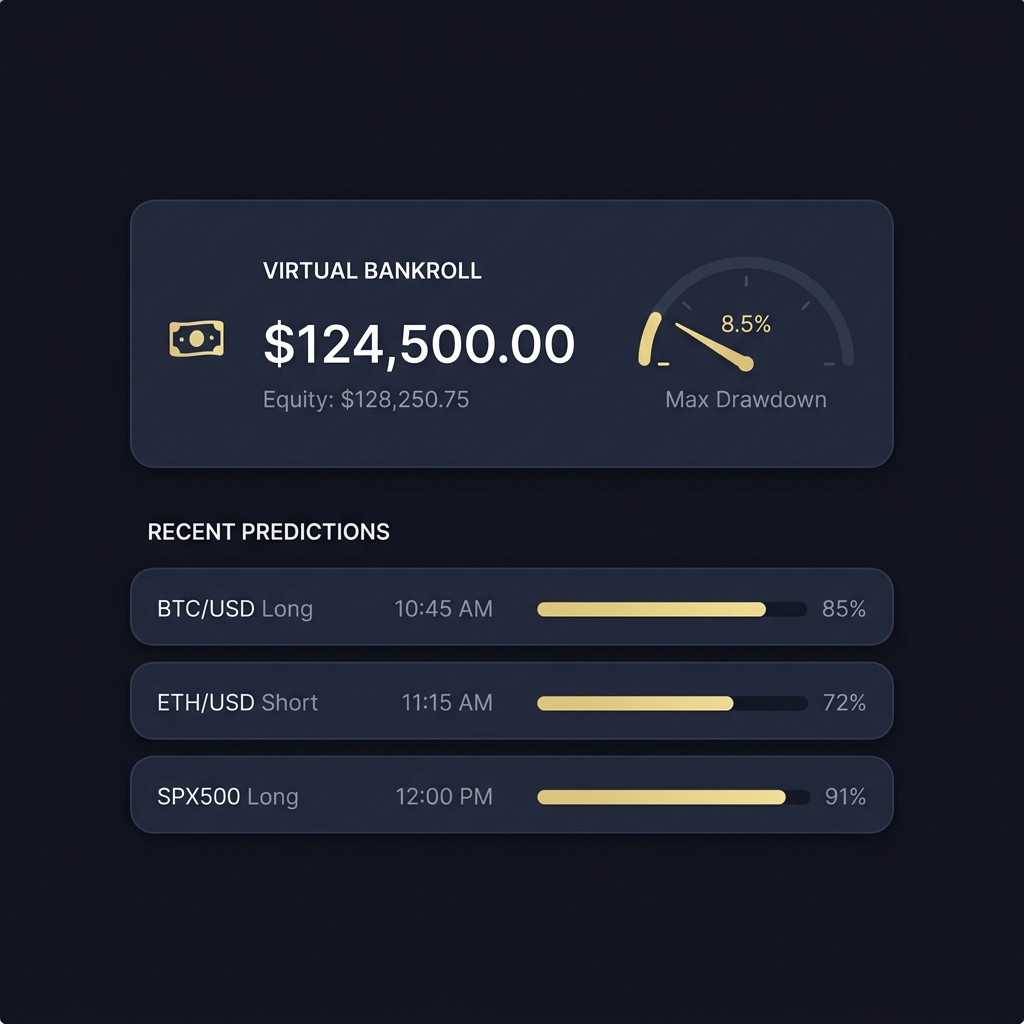
Use these tracking tools to manage risk and to check that submissions were recorded correctly. If you see discrepancies, gather screenshots and timestamps before contacting support so the issue can be investigated efficiently.
Verification, eligibility, and how payouts generally work
Identity and tax information requirements
Platforms commonly require identity verification and tax information before issuing payouts to comply with tax reporting and to reduce fraud risk. Requesting government ID and taxpayer details is a standard step that helps ensure funds are disbursed to the correct person and that reporting obligations can be met IRS Publication 525. See KYC verification guidance and common document requirements: Do I need KYC verification for payouts?
Users should prepare to submit acceptable identification documents, taxpayer information, and any additional materials requested by the platform. Completing verification early can prevent payout delays once you become eligible to request funds.

Typical payout steps and when verification is required
Typical payout flows follow a few consistent steps: you qualify under the challenge rules, you receive a notification that a payout is available, you complete identity and tax verification if not already done, you submit a withdrawal or payout request, and the platform processes and disburses the payment according to its stated timelines.
If you do not complete verification when requested, platforms may hold payouts until required documents are provided. Keep in mind that exact verification steps, acceptable documents, and payout windows depend on platform Rules and the user's jurisdiction.
Taxes and reporting: what winners in the U.S. should know
When prizes become taxable
In the U.S., prizes and awards are generally treated as taxable income and should be reported on your tax return. For an overview of how prizes and awards are classified for tax purposes, consult IRS guidance for taxable and nontaxable income IRS Publication 525.
Keep records of awards and any related documentation you receive from the platform so you can accurately report income if required. Records should include dates, amounts, and correspondence related to prize notifications and payout confirmations.
Forms and reporting thresholds
Payments that reach reporting thresholds may trigger issue of tax forms from the payer. For information about reporting thresholds and how the payer calculates reporting obligations, review the official instructions for payer forms Instructions for Forms 1099-MISC and 1099-NEC.
If you expect material payouts in a calendar year, consider keeping a consolidated record of awarded amounts. For specific tax questions about your situation, consult a tax professional rather than relying solely on platform guidance.

Security, authentication, and payment-data protections
Account security best practices
Protect your account with strong authentication choices and consider enabling multi-factor authentication when available. These measures align with established authentication guidance and reduce the risk of account takeover by making credential-based attacks harder to succeed NIST SP 800-63B.
Use a unique password manager-generated passphrase, avoid reusing credentials across sites, and watch for suspicious account activity. If the platform provides session and device controls, review them regularly and log out of devices you no longer use.
How payment data is protected and standards to watch for
Payment card data handling is governed by industry standards that influence how platforms and their payment processors must protect cardholder information. PCI DSS v4.0 is the current operative standard and continues to shape payment security controls in 2026 PCI DSS v4.0 at a glance.
When you provide payment details for a withdrawal or payout, confirm you are using the platform's official payment flow. Avoid sharing payment details in unverified messages or to unfamiliar channels, and verify any email or support request that asks for sensitive data. For examples of verified payout flows, see this provider documentation: Make a verified payout.
Rules, eligibility and state-level considerations
How state laws can affect eligibility
Sweepstakes and promotional games are regulated at the state level, and operators must tailor eligibility and disclosures by jurisdiction. This means a promotion that is permitted in one state might require additional notices or filings in another, so eligibility can vary by user location.
As an example of state-level requirements, some states require filings or notices for specific game-promotion structures, which is why platforms must adapt their Rules and disclosures by jurisdiction Florida game promotion statute.
Quick eligibility check before you start a challenge
Check platform notices for state-specific restrictions
Filings and notices that may apply in specific states
If you believe your location imposes additional restrictions, consult the platform Rules and official state guidance. Platforms sometimes provide eligibility checkers or notices for states with special requirements; use those resources to confirm whether you can participate without additional filings.
If the platform's published Rules are unclear about your state, contact Support before you enroll in a challenge and document the interaction so you have a record of guidance provided.
Fees, withdrawals, and typical timelines
Possible fees and when they apply
Platforms may apply fees for certain services such as withdrawal processing or third-party payment conversions. Fee policies differ across operators and should be listed in the platform's Terms or Rules; review those pages to confirm any applicable charges before requesting a payout.
Be aware that some fees may originate from payment processors or banks rather than the platform itself. Check the payout flow and the terms from the payment provider if you expect third-party processing costs.
Standard withdrawal steps and expected timeline examples
A typical withdrawal process looks like this: submit a payout request in your account, ensure verification is complete, wait for the platform to process the request, and receive the funds according to the chosen method. Processing time can vary based on verification status and banking timelines. For more on payout timelines and first-payout steps, see this user guide: How to get your first payout as a funded trader.
Verification holds or additional review can extend expected timelines. If a payout takes longer than the platform's stated processing window, gather your request ID and any confirmation emails before contacting Support to speed troubleshooting.
How to submit plays, scoring rules, and dispute handling
Submitting predictions and accepted formats
To submit a play, select the event, enter your prediction according to the accepted format, and confirm the submission before the event start time. The challenge Rules will specify exact formatting and any restrictions on play types.
Confirm each submission appears in your dashboard and keep screenshots of the confirmation timestamp if you anticipate needing to raise a dispute. Submitting early enough to avoid last-second technical issues reduces the chance a play is rejected due to timing.
How scoring, ties, and disputes are handled
Scoring rules, tie-breakers, and any post-event adjustments are defined in the challenge Rules and may vary by challenge. If you disagree with a scoring outcome, follow the platform's dispute process and supply relevant evidence, such as timestamps and screenshots.
Prepare to show the original submission confirmation and any related messages. The platform will review evidence against recorded system logs and published rules to resolve disputes fairly and consistently.
Common mistakes and pitfalls to avoid
Verification and payout delays
One common cause of payout delay is incomplete or inconsistent verification documents. Provide clear, legible ID copies and accurate taxpayer information to minimize review time. If your name or address differs across documents, be ready to explain and support the discrepancy.
Another routine issue is missing signatures or expired documents. Check documents before uploading and update any expiring IDs promptly to avoid interruption of payout processing.
Security pitfalls and scam red flags
Prize-scam red flags include unsolicited requests for payment or requests for sensitive data outside official channels. The FTC outlines common tactics used by scammers and recommends relying on verified platform communications and official support channels to avoid fraud FTC prize-scam guidance.
If you receive an unexpected message claiming you won a prize, verify the sender, check the message against your account notifications, and contact platform Support through the official portal before taking action. Never send money or private credentials to claim a prize.
Troubleshooting, contacting support, and escalation paths
What to prepare before contacting support
Before you open a support ticket, collect your account ID, timestamps of the issue, submission confirmations, screenshots, and any transaction or request IDs. This evidence helps Support investigate efficiently and speeds resolution.
Describe the problem clearly, include the steps you took, and state what outcome you expect. Providing precise information reduces back-and-forth and helps the agent identify whether the issue is a user error, a system problem, or requires escalation.
When to escalate and what records help
Escalate when Support responses seem fraudulent or when an issue remains unresolved after reasonable follow-up. Keep copies of all correspondence, ticket numbers, and the names of representatives you communicate with.
If you suspect fraud, report the interaction to consumer protection authorities and preserve relevant messages and screenshots to assist any investigative process.
Practical examples and step-by-step scenarios
Example: completing an evaluation challenge and qualifying
Example flow: you sign up, select a challenge, accept the Terms, receive the virtual bankroll, and start submitting plays. You track your performance on the dashboard, monitor drawdown limits, and aim to meet the evaluation objectives within the required timeframe. See related posts in our blog for additional examples: our blog.
If you meet the performance criteria and remain compliant with the Rules, you may be offered a funded account or other reward opportunity. Follow the notification steps and complete any requested verification to claim eligibility.
Example: requesting a payout after verification
After qualifying, you receive a notification that a payout is available. Complete any outstanding identity or tax verification steps, then submit a withdrawal request in the account. Processing begins once the platform confirms verification and any internal review is complete.
Allow for banking and processor timelines. If the platform requires tax forms for payouts above reporting thresholds, expect that the platform will request or deliver those forms in line with its payer responsibilities.
Summary and next steps: where to get official details and how to prepare
Checklist before you play: review the challenge Rules, confirm acceptable verification documents, enable multi-factor authentication, and save Support contact details. These steps reduce common delays and help protect your account.
For exact payout windows, fee details, and state-specific eligibility, consult the FundedPlays Rules and Terms and reach out to Support for account-specific questions. Keep records of awards and correspondence to help with tax reporting and any necessary disputes. You can also visit the FundedPlays homepage for general site links and support tools.
Platforms typically ask for government ID and taxpayer information; prepare legible ID, accurate taxpayer details, and any requested verification to avoid delays.
Yes. Prizes and awards are generally taxable income in the U.S., and payments reaching reporting thresholds may trigger issuance of tax forms; consult IRS guidance or a tax professional.
Verify messages through the platform's official support channels, preserve evidence, and report suspected scams to consumer protection authorities if needed.
References
- https://www.irs.gov/publications/p525
- https://www.irs.gov/instructions/i1099msc
- https://pages.nist.gov/800-63-3/sp800-63b.html
- https://www.pcisecuritystandards.org/document_library?category=pcidss&document=PCIDSS_v4_At_a_Glance
- https://www.flsenate.gov/Laws/Statutes/2024/849.094
- https://consumer.ftc.gov/articles/prize-scams
- https://www.fundedplays.com/challenges
- https://help.goatfundedfutures.com/en/articles/14095703-do-i-need-kyc-verification-for-payouts
- https://www.fundedplays.com/blogs/how-fundedplays-evaluations-work
- https://docs.truelayer.com/docs/make-a-verified-payout
- https://audacity.capital/trading-guides/how-to-get-your-first-funded-trader-payout/
- https://www.fundedplays.com/blogs
- https://www.fundedplays.com