
Quick answer and what this guide covers, flamingo sports book
This guide offers a concise, evidence-focused look at what viewers can reasonably confirm about flamingo sports book after a Shark Tank appearance. It explains how to separate on-air claims from independently verifiable records and sets out a step-by-step approach you can follow yourself.
The piece is investigative in scope but not speculative. It will not make new claims without pointing readers to primary sources such as the episode transcript, show footage, official press releases, or public filings when those exist. Instead it provides the tools and questions necessary to verify reported developments.
This article explains how to verify public signals and records to determine a company's status; it does not assert a specific outcome without primary-source evidence.
At-a-glance summary
In short, this article treats the televised presentation as a starting point and then walks through the public signals people typically use to confirm whether a company has raised funding, pivoted, been acquired, or changed operations. If you want a quick way to check the current status yourself, follow the verification checklist in the relevant section below.
How to use this article
Read the Quick answer to understand the investigative approach, then use the step-by-step checks in the middle sections to confirm the company's presence or absence in key public records. Each section explains which records are most authoritative and why social posts or news headlines are not sufficient on their own.

What was shown on the episode: the public pitch and claims
Key elements of the on-air presentation
A televised pitch typically includes a description of the product, how the business works, any revenue or traction claims presented to the panel, and a clear ask that states the funding requested and the proposed valuation. Viewers who want to evaluate what they saw should note these items and treat them as claims that need external confirmation.
For the purpose of verification, write down the exact phrasing used on camera, the numbers the founders quoted, and any verbal references to contracts or partnerships. Those quotations are your search terms when you look for corroborating documents or independent coverage.
What viewers could reasonably conclude from the pitch
Audiences can reasonably conclude the company publicly represented certain things on air, but they should not assume those representations are proven facts until backed by independent evidence. Typical independent checks include the episode transcript, a formal company statement after the show, and coverage in established news outlets that cite primary documents.
Televised presentations are persuasive by design, so treat on-air claims as prompts to verify. Note any regulatory claims or statements about licensed activity carefully, because those claims often require checking licensing records or regulatory filings to confirm.
Immediate aftermath: media coverage, social posts, and public statements
Typical early signals after a TV appearance
The first 24 to 72 hours after an appearance usually produce a mix of signals: social posts from the founders, immediate news coverage, spikes in web traffic, and sometimes rapid customer messages. Those early indicators are useful but can be noisy and should be handled with caution.
When you review social posts, look for time stamps, screenshots of press materials, and statements that link to primary documentation. A company saying it has a new partnership is different from a posted partnership agreement or a filing that references the partnership.
Early headlines and influencer commentary can amplify incomplete information. That amplification often leads to confusion about whether a transaction closed on air or whether an agreement is conditional. Verify any material claim by checking for confirmatory records such as official releases or filings.
Check the verification steps on the FundedPlays Challenges page for how structured evaluations work
Before acting on a post-show claim, pause and verify the information with the steps outlined here to avoid relying on incomplete or promotional posts.
How to read company social media and PR
Company social channels are useful to track official statements, but they may also be used for marketing and should not be the only evidence you rely on. Look for consistent messaging across platforms, press releases hosted on a company domain, and links to formal documents rather than single social updates.
Be wary of statements that use promotional language without linking to verifiable records. A careful reader treats social and PR claims as starting points for confirmation rather than as conclusive proof of an outcome.
Common post-show paths for startups and what each implies
Possible outcomes (funding, pivot, acquisition, shutdown, quiet continuation)
After a TV appearance, startups commonly follow several paths: they may complete a funding deal, decide to pivot the product or business model, be acquired, cease operations, or continue quietly without major changes. Each pathway has different public footprints and indicators you can check.
For example, a new funding round typically appears in press releases, filings, or investor announcements. An acquisition should be documented in company statements or legal filings. Conversely, a shutdown often leaves web pages offline or domain records indicating inactivity.

What each outcome typically looks like in public records
Funding rounds show up in explicit documents such as SEC filings where applicable, state-level business filings if the deal affects ownership structure, or credible press outlets that cite primary documents. Acquisitions and mergers often require official announcements and may generate filings depending on the acquirer and the deal size.
Some outcomes are harder to verify quickly, such as an internal pivot that does not involve a formal corporate action. In those cases, look for changes in product pages, new terms of service, or consistent updates indicating a shift in focus.
How to verify the company's current status yourself
Step-by-step checks: domain, WHOIS, Wayback, state business registry
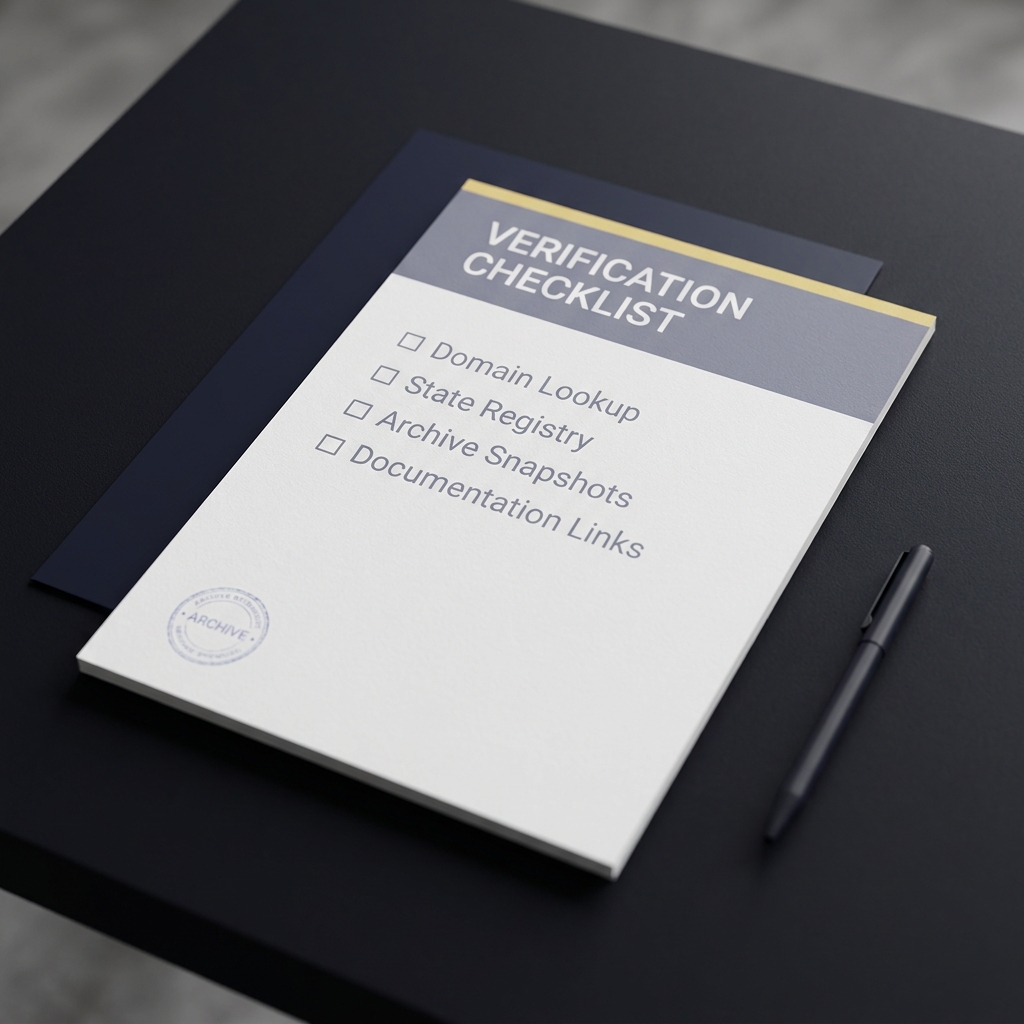
Start with the company's official website: check whether pages are live, whether contact information is current, and whether there are recent announcements or blog posts. A live, updated official site is a positive signal but not definitive evidence of broader claims such as funding or licensing.
Next, run a domain lookup and WHOIS check to see the domain registration status and any recent changes. Use an archive tool to view historical snapshots of pages and to detect deletions or sudden content shifts that could indicate a change in operations.
a compact verification checklist for post-show status checks
Start with domain and registry checks
What to look for in app stores, payment processors, and customer reviews
Check app store listings for recent updates and developer contact information. App availability and update cadence are practical indicators of ongoing development and support. Similarly, look for merchant pages and payment processor notices when evaluating whether a company can accept payments.

Customer reviews and support threads can reveal fulfillment problems or sustained activity. Look for timestamps on reviews and any company replies, which show active customer support. Patterns matter: isolated negative reviews mean different things than persistent unresolved complaints.
If you use these checks, document screenshots and timestamps to compile a clear evidentiary trail rather than relying on memory or single notes.
Where to look for authoritative documentation and records
Public filings and regulatory records
Authoritative legal status is typically found in state Secretary of State filings, which list registered agents, formation dates, and current status. For financial events involving public securities, the SEC database is the authoritative source. For regulated industries, check licensing bodies and regulatory registries relevant to the product category. For example, see a state-by-state overview of sports betting legality at Where Is Sports Betting Legal?
Do not accept a social post or secondary article as a substitute for official filings. If a claim involves licensing or a regulated activity, the corresponding regulator's database is the primary source to confirm whether a license exists and whether it is current.
Press releases, newswire services, and verified company statements
Press releases hosted on a company domain or distributed via recognized newswire services are useful, but they should link to supporting documents when they describe material events. Look for releases that include names of counterparties, dates, and copy of agreements where appropriate.
Archived versions of press releases and product pages can help when content is changed or removed. Use the archive tool to capture snapshots and preserve the context of the claims being made.
Decision criteria: when to assume a company is still operating
Checklist for 'active' versus 'inactive' status
Use a simple checklist to judge ongoing activity: recent web or app updates, active customer support channels, visible transactions or delivery confirmations, recent hires or team changes, and current domain registration. If most items are positive, the company is likely active in some capacity.
Conversely, red flags include a removed product, expired domain, unresponsive support, payment failures, or persistent unresolved customer complaints. Any single red flag does not prove inactivity, but a pattern of red flags strengthens the case for concern.
Questions to ask before trusting a product or service
Before engaging, ask whether the vendor provides clear contact pathways, transparent refund or dispute mechanisms, documented delivery or fulfillment terms, and recent evidence of transactions. Absence of these basics should prompt extra caution and additional verification.
When in doubt, reach out to the company using multiple channels and document responses. If you receive no timely replies, escalate to your payment provider or consumer protection agency as appropriate.
Typical mistakes and pitfalls when following a TV startup story
Common reader mistakes
Readers often assume that TV exposure equals immediate success, that on-air discussions equal formal agreements, or that a single news article is a final record. These are common mistakes that lead to overconfidence in incomplete information.
Another frequent error is ignoring the fine print in offers or conflating a demo or pilot with a wide launch. Mistaking promotional language for legal commitments can produce incorrect conclusions about a company's status.
How to avoid being misled by partial information
To avoid pitfalls, compare multiple primary sources rather than relying on a single report. Verify dates, parties involved, and whether promised deliverables were actually executed. If an article cites a founder claim, look for the underlying document or filing that substantiates it.
Practically, keep a checklist before you act: confirm the company contact, preserve receipts and communications, and allow time for official statements to appear if a material event is claimed.
Practical example: how to build a mini research dossier
Template for a one-page verification report
A one-page dossier should include section headers for episode details, product description, official website status, domain registration notes, recent social posts, app availability, and public filings. For each field, record an entry date, a short summary, and a confidence label such as confirmed, unconfirmed, or contradictory.
Include a references list with screenshots, archived URLs, or filing numbers. This paperwork is useful if you need to escalate a consumer claim or to share findings in a public discussion without relying on memory alone.
Sample entries to populate from public records
For example, under domain registration note the registrar, registration date, and whether the record is private or public. Under filings, list the Secretary of State entity number or any relevant filing reference. Under social posts, paste timestamps and short quoted excerpts to preserve the exact language used.
Store the dossier in a simple document or spreadsheet and date each addition. If you update entries, keep prior versions or note the change to maintain an audit trail.
How TV exposure typically affects customer expectations and brand risk
Short-term demand spikes and long-term follow-through
TV exposure often triggers short-term interest and spikes in demand that can outpace a small team's capacity to fulfill orders or respond to inquiries. That mismatch can lead to fulfillment delays and temporary service degradation even when the underlying business remains solvent.
From a customer's perspective, such spikes increase the importance of clear fulfillment timelines and transparent communication. If a vendor posts expected delivery dates, use those dates as the basis for follow-up and escalation if they are missed.
Reputation and customer service implications
Repeated exposure without consistent service can damage reputation quickly. Consumers should look for clear refund and dispute pathways before committing, especially when a vendor experiences a sudden surge in attention.
Brands that communicate proactively and provide timely updates reduce confusion and help customers make informed decisions rather than relying solely on the excitement of TV coverage.
Case studies and comparable outcomes (how to interpret other examples)
How other on-air businesses evolved
Companies that appear on TV follow varied paths. Some secure investment and scale, others pivot or continue quietly, and a few cease operations. When comparing cases, focus on documented follow-ups such as filings, press releases, or legal records to establish a factual baseline for comparison.
Drawing parallels requires attention to industry relevance and the nature of the deal discussed on air. Do not assume that two companies with similar presentations had similar outcomes without direct evidence to support the comparison.
What to learn from verified follow-ups
Verified follow-ups give insight into timelines for deal completion, common post-show operational pressures, and how companies communicate changes. When you see a well-documented example, note the exact sources used and prefer those forms of evidence when assessing other stories.
When a case study is cited, always ask for the primary source so that readers can trace the proof themselves rather than relying on secondary summaries.
If you were a customer: next steps and consumer protections
How to request refunds or dispute transactions
If you purchased and have concerns, contact the company first and request documented refund terms or a resolution timeline. Keep copies of all correspondence and receipts, and note exact timestamps for each interaction.
If the company does not respond or cannot resolve the issue, contact your payment provider to dispute the charge and provide the evidence you collected. Your bank or card issuer can advise on chargeback windows and the documentation they require.
Who to contact for unresolved issues
For unresolved matters, consider contacting consumer protection agencies or the attorney general's office in the company's state of registration. Provide them with your dossier and any filing references you collected. These agencies can advise on next steps and may accept complaints that reveal broader patterns of consumer harm.
Avoid paying third-party recovery services that promise guaranteed results; those services often require fees and do not offer additional legal rights beyond what a payment dispute or consumer complaint can achieve.
Where to go from here: monitoring and setting alerts
Simple monitoring tools and alerts
Set a small number of alerts to avoid overchecking. Useful options include search engine alerts for the company name and keywords tied to material events, bookmarking of archived snapshots, and following verified company channels that post formal updates.
Keep an eye out for official press releases or filings and set a reasonable re-check schedule. Significant events such as a funding announcement or acquisition warrant immediate re-checks, while routine updates can be reviewed weekly or monthly.
When to re-check and how often
Check immediately after a claimed material event, then again in short intervals such as one week and one month if confirmation remains unclear. For long-term monitoring, quarterly checks are often sufficient unless you have an active consumer issue requiring more frequent attention.
When setting alerts, minimize personal data shared and use anonymous or work-only contact details when signing up for updates to protect your privacy.
Final takeaways and recommended reader actions
Summary checklist
Three short takeaways: verify on-air claims with primary sources, treat social posts as starting points, and document your findings. Use the steps in this guide to build a simple dossier that supports any follow-up action you choose to take.
Responsible next steps
If you want to continue tracking the situation, set a small number of alerts, preserve screenshots and filings, and contact official channels for confirmation before making purchase or investment decisions. If you find verifiable updates, share them in public forums that allow citation of primary sources so others can benefit from the same evidence.
Thank you for reading. If you have verifiable updates based on primary documents, consider contributing them to the public discussion so readers can assess the facts directly.
Look for primary documents such as official press releases on the company site, filings with the relevant state registry or securities regulator when applicable, and corroborating coverage that cites those documents.
Red flags include an expired or unresponsive website, removed app listings, unanswered support requests, and persistent unresolved customer complaints without company replies.
Contact the company in writing, save all receipts and screenshots, request a refund in writing, and contact your payment provider to dispute the charge if the issue is not resolved.