
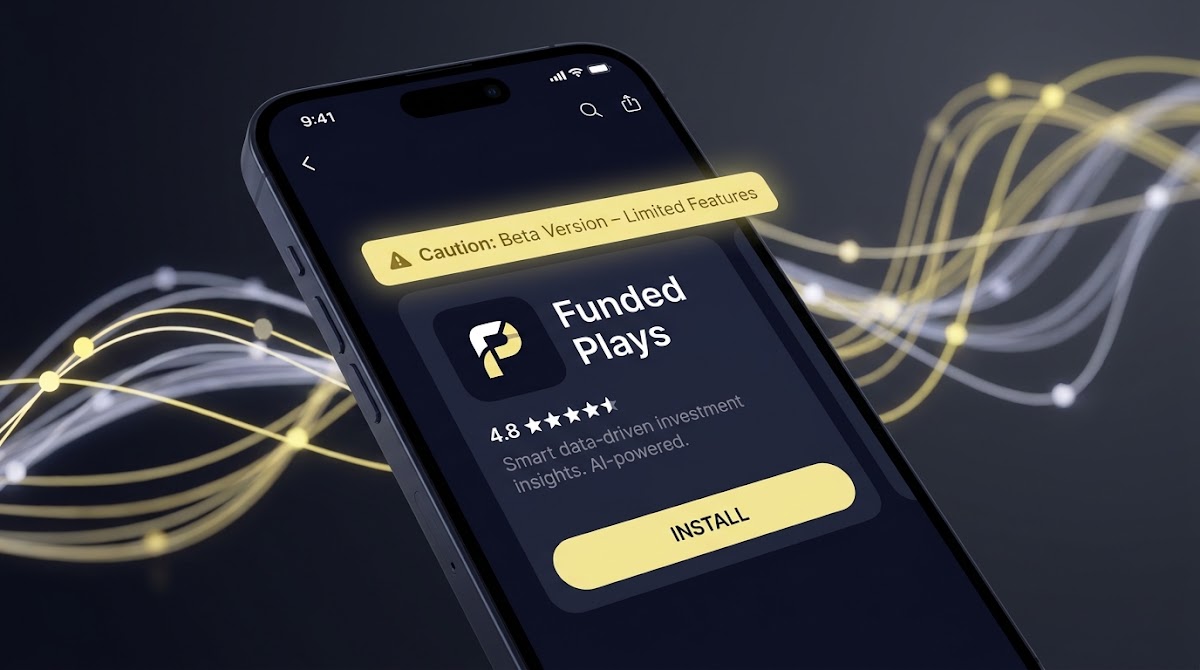
Quick answer: are there AI betting apps and why the term 'fake betting app' matters
Short answer: many apps market "AI" features, but a listing that promises real-money wins or avoids licensing is a likely fake betting app and should be treated with caution. App stores permit real-money gambling only when operators meet strict rules such as licensing and regional controls, so a bold AI claim does not replace those obligations and is itself a red flag when missing supporting disclosures Google Play real-money gaming announcement.
People search "are there AI betting apps?" because the phrase mixes two ideas: AI tools for analysis, which exist, and real-money betting services, which are highly regulated. Peer-reviewed reviews show that AI and machine learning for sports prediction have mixed, context-dependent results, so any app that guarantees consistent wins is making an unsupported claim systematic review of AI for sports prediction.
How app stores and regulators treat AI betting features
App stores do not allow unqualified real-money gambling apps to operate freely. For example, Google makes explicit that eligible real-money gaming apps must comply with licensing, geotargeting, and age verification requirements; legitimate operators publish those details in their listings and support pages Google Play real-money gaming announcement.
Apple’s App Store enforces similar review rules requiring developers to disclose business models and follow regional regulations, and absence of clear licensing or geofencing language in a store listing is a warning sign that the app may not be a legitimate real-money service App Store Review Guidelines.
Explore FundedPlays challenge details and rules
Before you install, use the checklist in this article to check store disclosures, permissions and payment flows.
Beyond store policy, legal rules are tightening on how apps may market AI features to consumers. The EU Artificial Intelligence Act introduces transparency obligations and bans certain deceptive AI practices that could apply to apps advertising predictive or decision-making features, so apps must be clear about how AI is used and about any limits to its performance EU Artificial Intelligence Act. See a developer guide for the EU AI Act for app developers.
Common scams and red flags used by fake betting apps
Scammers often push bogus sports-betting apps around major tournaments and peak interest moments, distributing them via off-store downloads, cloned listings or phishing links; these distribution patterns are a common early indicator that an app is not legitimate analysis of bogus sports-betting apps. Security researchers have documented toolkits that create fake app listings analysis.
Apps can use AI for analysis, but listings that promise guaranteed wins or lack licensing disclosures are often fake betting app schemes; always verify store and legal disclosures before installing.
Fake reviews and inflated ratings are deliberately used to create trust quickly. Check review timelines: a sudden cluster of high scores, many one-line reviews, or identical language across reviews suggest manipulation rather than organic feedback.
Payment and withdrawal flows can reveal fraud. Some scam apps ask users to side-load packages, to send funds through unverifiable channels, or to pay upfront before any transparent rules are shown. App stores also work to stop such schemes at scale, and Apple has reported preventing large volumes of potentially fraudulent transactions as part of those efforts Apple App Store fraud prevention report.

What legitimate AI features actually look like and what they do not guarantee

Responsible apps that use AI typically offer data aggregation, statistical filters, or recommendation engines that highlight patterns in past performance. These features assist user decision-making rather than promise outcomes, and a clear description of inputs and limitations is a sign of a mature implementation.
Academic work finds that AI and machine learning approaches for sports prediction can help in some contexts but are not a universal shortcut to wins; performance varies by sport, data quality, and modeling choices, so blanket claims of guaranteed success are not supported by the literature review of AI for sports prediction.
Good consumer-facing AI also includes transparency features required by newer rules, such as explanations of what the model uses and how confident predictions are. The EU Act pushes apps toward this kind of disclosure, and absence of any explanation or training-data description is another warning sign EU Artificial Intelligence Act.
Step-by-step checklist to spot a fake betting app
Before you download: check the developer identity and licensing statements in the store listing. Legitimate real-money gaming apps typically include regulatory or licensing details and clear geotargeting or age verification language; listings that omit these details may be unlicensed Google Play real-money gaming announcement.
Before you download: avoid side-loaded APKs or packages linked from social posts. Scammers frequently ask users to install outside the official store to bypass review controls and to collect excessive permissions during installation report on distribution of bogus betting apps.
After installation: inspect requested permissions and app behavior. An app that asks for full device access, contact lists, or SMS permissions without a clear operational reason is asking for more than it needs and is a strong red flag.
After installation: test payment and withdrawal flows before depositing significant funds. Legitimate operators use verifiable payment providers and keep transaction records. If you are pushed toward opaque or irreversible payment channels, stop and report the app Apple App Store fraud prevention report.

Check reviews for authenticity, examine support contact details, and search for independent coverage or our blog. If you find repeated complaints about withheld withdrawals or account lockouts, treat the listing as suspicious and avoid giving money or personal data.
Keep records of receipts, screenshots of terms and communications, and any transaction IDs. These records are essential if you later need to dispute charges or report abuse to stores or payment providers.
If you encounter a suspicious app or think you were scammed
Immediate steps: stop using the app, take screenshots of the listing, conversations and payment confirmations, and document the exact sequence of steps you followed. Preserving this evidence helps store review teams and investigators understand how the scam worked advice on documenting scams.

Contact your bank or payment provider immediately to report unauthorized or suspicious charges. Many banks can place temporary holds, reverse charges when fraud is clear, or suggest steps to protect your accounts. Also alert the app store through the official reporting flow so reviewers can investigate and remove fraudulent listings Apple App Store fraud prevention report.
Harden your accounts: change passwords, enable two factor authentication where offered, and monitor statements for recurring or unexpected charges. If you used the same password on other services, update those as well to limit lateral access.
How skill-based, funded prediction platforms differ from betting apps
Some platforms run structured evaluation challenges where participants use virtual bankrolls to demonstrate forecasting skill, rather than placing real-money bets in the conventional sense. These models emphasize rules, drawdown limits, and progression pathways, and they can be a legitimate alternative for users who want to practice or qualify for funded accounts.
quick store and listing checks for legitimacy
Check the listing and support pages before installing
One example is FundedPlays, which operates as a skill-based funded sports prediction platform with challenges and virtual funded accounts rather than as a real-money sportsbook. Read any platform rules carefully to confirm how funds and rewards are handled and whether real-money wagering is involved.
Conclusion and what to watch next
Key takeaways: a bold "AI" label does not make an app legitimate. If a listing lacks licensing, geotargeting or clear disclosures, treat it as a potential fake betting app and follow the checklist above before installing or paying. Regulatory and store enforcement are evolving to curb deceptive AI marketing, but users remain the first line of defense.
Policy trends to watch include enforcement of the EU Artificial Intelligence Act and ongoing app store policy updates that increase transparency and require real-money gaming apps to show compliance. Staying skeptical of guaranteed-win claims and verifying store disclosures will help you avoid scams as rules and enforcement evolve EU Artificial Intelligence Act.
Check the developer identity, licensing disclosures, review authenticity, requested permissions, and payment flows; avoid side-loaded installs and unverifiable payment channels.
Yes, some apps use AI for data aggregation and recommendations, but research shows prediction performance is mixed and no app can guarantee consistent wins.
Preserve receipts and screenshots, contact your bank or payment provider to dispute charges, report the app to the store, and secure your accounts with new passwords and two factor authentication.
References
- https://android-developers.googleblog.com/2024/01/expanding-global-access-to-real-money-gaming-on-google-play.html
- https://journals.plos.org/plosone/article?id=10.1371/journal.pone.XXXXX
- https://developer.apple.com/app-store/review/guidelines/
- https://eur-lex.europa.eu/eli/reg/2024/1689/oj
- https://www.welivesecurity.com/en/scams/euro-2024-dont-fall-bogus-sports-betting-apps/
- https://www.apple.com/newsroom/2024/05/apple-prevented-over-7-billion-in-potentially-fraudulent-transactions-on-the-app-store/
- https://www.fundedplays.com/challenges
- https://www.fundedplays.com
- https://www.fundedplays.com/blogs
- https://www.fundedplays.com/blogs/how-fundedplays-evaluations-work
- https://foresightmobile.com/blog/eu-ai-act-guide-for-app-developers
- https://www.malwarebytes.com/blog/scams/2026/03/friendlydealer-mimics-official-app-stores-to-push-unvetted-gambling-apps