

Evaluating Players After Long Breaks: What to think about first
Evaluating Players After Long Breaks starts with a simple premise: returns after long absences require a different lens than steady-state performance. Long breaks include offseason periods, injury layoffs, suspensions, or broader pauses such as pandemic-related interruptions, and each type raises different questions about immediate readiness.
Before forming firm expectations, separate the broad areas that typically change during a long absence, including physical conditioning, tactical timing, psychological readiness, and potential role changes within the team. Early appearances create small samples that can be misleading, so view initial data as informative but provisional.
Practice a repeatable evaluation checklist
Try a short, repeatable evaluation checklist on the next returning player you track to keep judgments objective and timestamped, and consider signing up for updates if you want structured reminders to review repeat appearances.
Short overview of the problem
Players who miss extended time often show uneven outputs in their first matches back. The challenge for evaluators is to distinguish true decline from temporary rust or conservative deployment by coaches. A clear mental model helps avoid overreacting to single-game outcomes.
When this guidance applies
This guidance applies any time a player has had a meaningful absence from competitive minutes. It is meant for preseason returns, midseason reintroductions after injury, and multi-week suspensions where the player has not had sustained match exposure. The advice is aimed at scouts, handicappers, and anyone making decisions about lineup exposure or stake sizing based on anticipated minutes and role.
Why long breaks matter: physical, tactical and psychological effects
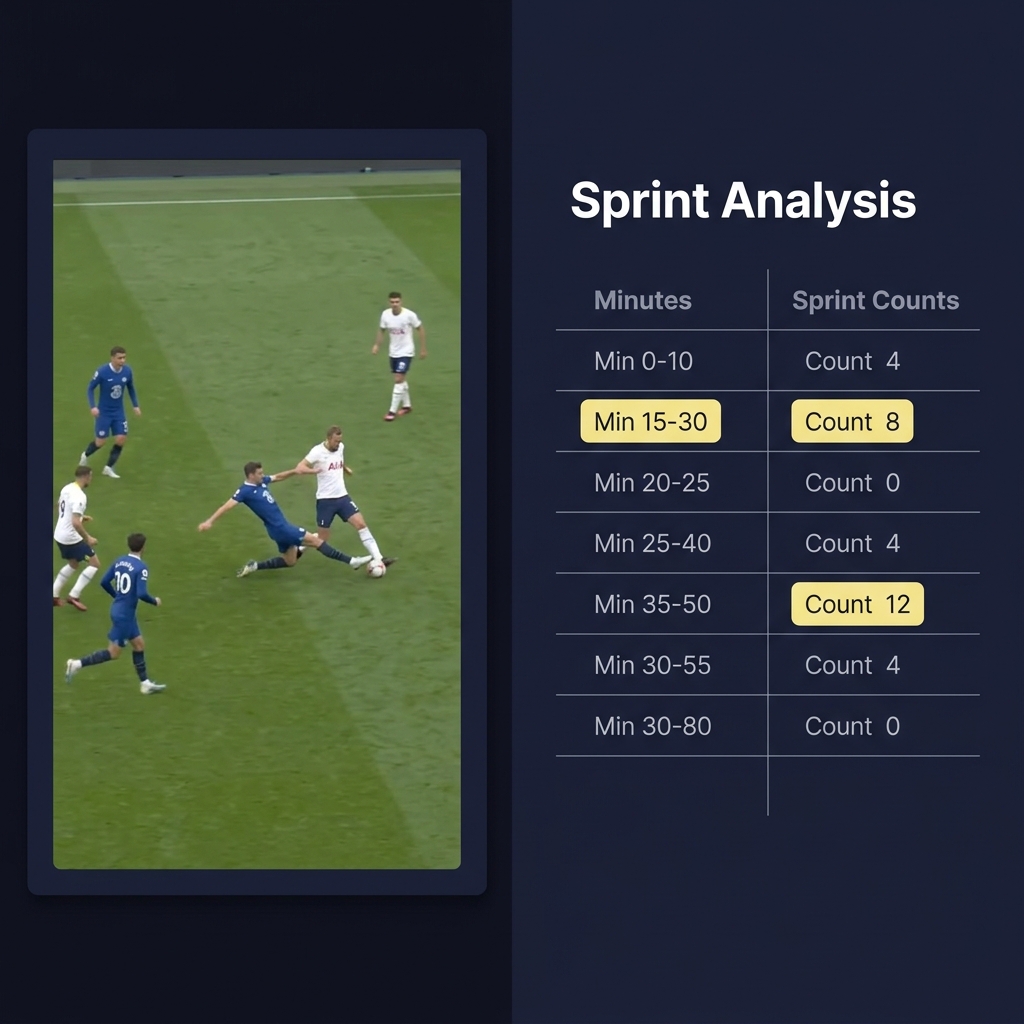
When evaluating a returning player, consider three broad mechanisms that change performance. Physically, athletes may lose endurance and match-specific explosiveness even if they maintain general fitness. Tactically, timing and team chemistry can lag behind fitness, making passes, runs, and rotations less precise. Psychologically, confidence and comfort at game speed influence decision making under pressure.
Before forming firm expectations, separate the broad areas that typically change during a long absence, including physical conditioning, tactical timing, psychological readiness, and potential role changes within the team. Early appearances create small samples that can be misleading, so view initial data as informative but provisional.
Match fitness is distinct from gym fitness; it describes the ability to sustain repeated high-intensity efforts and recover within a match context. After long breaks, watch for reduced distance covered in sustained periods, slower recovery between high-intensity efforts, and a cautious first step that reduces the chance of winning tight contests.
These physical differences matter for minutes and for the likelihood of pushing through contact or repeated sprints late in games. Expect coaches to manage workloads early, which affects observable output.

Physical conditioning and workload tolerance
Tactical timing and decision making
Timing is an underappreciated element of readiness. When a player returns, synchrony with teammates on passes, runs, and defensive shifts often takes time to return. Even small mistimings lead to missed chances and perceived underperformance, so evaluate whether errors are timing-related or fundamental declines.
System changes made during the break can also change a player’s role. A returning player may be asked to occupy different zones or prioritize different actions, which will change the raw counting stats without necessarily indicating a problem.
Confidence and competitive sharpness
Psychological readiness affects risk taking and decision speed. A tentative player may avoid contested situations or delay actions, producing fewer high-value moments. That hesitancy often fades as the player regains comfort with match pace and consequence management.
Coaches and teammates influence confidence as well. Positive reinforcement and steady minutes help, while repeated substitutions or reduced responsibility can reinforce caution and slow the recovery of sharpness.
Key metrics and data to use when evaluating players after long breaks
Start with straightforward objective indicators that map to the mechanisms above. Useful metrics include minutes played, touches or usage rate, distance covered and sprint counts where available, and role-specific outputs such as shots for attackers or defensive actions for defenders. Compare early-return numbers to the player’s typical pre-break baseline to detect meaningful deviations.
Keep in mind that early matches produce small sample noise. Short-term spikes or dips often regress, so avoid wholesale updates to long-term expectations after only one appearance.
Use a structured workflow: confirm training and role pre-match, monitor minutes and key metrics in game, combine video with coach cues, and update exposure only after repeated confirming signals.
Objective on-field metrics to track
Track minutes played first, since exposure determines many downstream metrics. Then record per-90 or per-60 rates for role-relevant actions such as touches in the attacking third, shot-creating actions, progressive carries, tackles won, or clearances. Where tracking systems provide distance or sprint counts, use those to assess match fitness versus training reports.
Baseline comparison is essential. Look at the player’s standard distribution over a relevant prior window and place the early-return metrics in that context rather than viewing absolute numbers in isolation.
Contextual data and sample-size caveats
Contextualize raw metrics with opponent strength, match state, and coach instructions. A returning player facing a high-intensity opponent or a team parked deep will naturally show different numbers than one in a friendly or low-pressure environment. Be conservative about conclusions from small samples and build confidence only after repeated confirmations.
Use simple moving averages or weighted smoothing to reduce overreaction to outliers but keep the smoothing window short enough to respond to true changes in form as they appear.
How to combine quantitative and qualitative signals
Combine the numbers with video-clipped observations. If metrics show fewer sprints and film shows a slower first step, those signals reinforce each other. If metrics look fine but video exposes poor timing or decision delays, treat that as a red flag and record a subjective readiness score to track over matches.
Documenting both quantitative and qualitative notes creates a clearer narrative when later matches provide confirming evidence.
Video and scouting: what to watch in early appearances
Video is uniquely valuable for assessing movement quality and decision speed. Focus on repeatable visual cues rather than isolated highlights. Clip short sequences that show first-step explosiveness, timing on runs, and how the player reacts to opponent pressure.
Record these clips with time stamps and a short note on why the clip matters so that you can compare clips across matches and avoid narrative drift.
Specific visual cues for readiness
Key visual cues include the first step out of static positions, the acceleration over short distances, timing on runs behind a defensive line, and involvement in set plays or rehearsed patterns. These cues indicate whether the athlete is close to match speed and whether muscle memory for specific tasks has returned.
Also watch for subtler body language signs, such as forward lean on the first step, willingness to contest aerial duels, and how quickly the player resumes intensity after a stoppage.
How to score subjective observations
Use a simple three-point rubric for subjective scoring: physical movement, decision speed, and role execution. Score each area on a consistent scale and note examples that justify the score. Over time, these scores provide a pattern that supplements numeric metrics.
Keep rubric definitions precise to reduce observer drift. For example, define what constitutes a score of 2 versus 3 for first-step explosiveness so multiple evaluations are comparable.
Reading team cues and coach behavior
Coach choices signal trust and perceived readiness. Early substitutions, reduced minutes, or conservative positioning often indicate that the staff prefers to ramp workload. Conversely, long starts and late-match minutes show trust that the player can sustain demands.
Pair coach cues with other signals. A long start with low intensity could still be a conservative plan rather than a sign of full readiness, so interpret coaching behavior alongside performance data.
A step-by-step framework to evaluate readiness after long breaks
This framework is a repeatable workflow: a pre-match checklist, an in-match monitoring routine, and a post-match synthesis that updates your confidence and decision tier for future exposure. Treat the process as iterative and document each step for disciplined forecasting.
Start by gathering simple records: recent training availability, official injury notes, minutes in practice matches, and the announced role for the match. These inputs shape expectations and help calibrate in-game thresholds.

Pre-match checklist
Pre-match, confirm the player’s reported fitness, any training minutes logged, and the announced role. Check for lineup notes indicating whether the player is expected to play full time or serve as a managed substitute. Record a baseline expectation such as likely minutes and primary responsibilities.
Also note opponent tendencies and match context, since a manager might limit a returning player against a high-risk opponent even if the player is physically ready.
In-game monitoring process
During the game, follow minute thresholds and key metrics that would trigger an updated view. For example, if a player is expected to reach 60 minutes and is substituted at 30 with lower movement metrics, treat that as an escalation event that requires follow-up. Track touches, high-intensity actions, and clear signs of timing or confidence loss.
Keep an eye on substitution patterns and in-game communication. A player kept on the bench late may not be a fitness issue, but repeated early exits combined with poor movement metrics usually indicate limited readiness.
Post-match synthesis and decision rules
After the match, synthesize the quantitative metrics, video notes, coach cues, and opponent context. Use a simple decision template that moves the player into a probability bucket for future starts: likely ready, marginal with limited exposure, or not ready. Document the rationale and any data that would cause you to move the player between buckets in future observations.
Persist documentation so you can measure how often your initial tiers prove correct and refine thresholds over time.
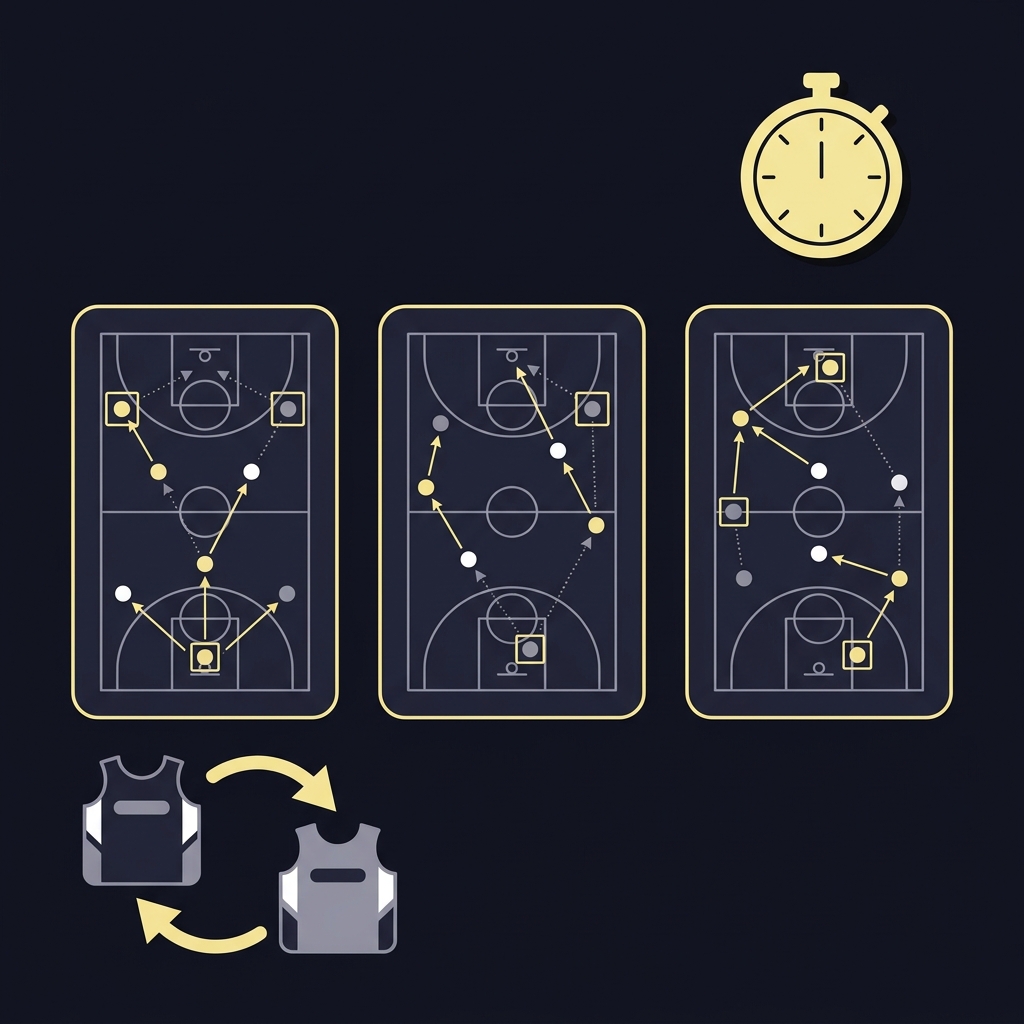
Decision criteria: when to start, bench, or limit exposure
Translate your evaluation into three pragmatic decision tiers: full exposure, limited exposure, and no exposure. Base the tier on combined signals rather than a single metric, and set conservative stake sizing or exposure limits when evidence is mixed.
Adopt behavioral rules such as reducing position size when a player falls into a marginal bucket and requiring one or two confirming appearances before restoring full exposure.
Risk tiers and bankroll guidance
Define exposure rules in advance. Full exposure applies when quantitative metrics, video, and coach cues align. Limited exposure means smaller stake sizes or conditional lineups, and no exposure applies when the signals indicate continued recovery or risk of re-injury. Treat this as risk management rather than prediction certainty.
Use predetermined stake fractions for each tier to reduce emotion-driven changes. This systematic approach keeps forecasting decisions consistent and auditable.
Role-specific thresholds
Set role-specific expectations rather than universal cutoffs. For a striker, prioritize target involvement and shots; for a creative midfielder, prioritize touches in advanced areas and passing tempo; for defenders, prioritize defensive actions and recovery speed. These tailored thresholds give clearer signals than blanket statistics.
Remember that role shifts matter: a returning player may be assigned a new function that changes the metric set you should prioritize.
When to wait for confirming evidence
Require confirmation when signals conflict. If a player posts reasonable distance numbers but continues to show poor timing on film, wait for at least one confirming match where both metrics and video align before increasing exposure. Conversely, multiple solid performances separated by reasonable opponents can justify a return to full exposure.
Patience and documentation reduce costly knee-jerk mistakes and help calibrate future decisions.
Tools and models that help - what to track and how to weight signals
A basic spreadsheet that logs minutes, touches, key actions, a subjective readiness score, and opponent difficulty will cover most needs. Add columns for coach cues and substitution patterns so non-numeric signals are captured.
When combining signals, use a weighting scheme that downweights the earliest match data and upweights repeated confirmations. That reduces the chance of overfitting to noisy early observations.
Track match readiness with objective and subjective fields
Keep one row per appearance
Simple spreadsheets and tracking templates
A spreadsheet should include raw counts and per-90 rates, a short subjective rubric score, and a place for quick video timestamps. Keep the template lean so you update it consistently rather than letting tracking become a chore.
Maintain a column for the pre-match expected minutes and role so you can later compare expected versus actual deployment and spot systematic managerial restrictions.
Lightweight models and weighting schemes
Apply conservative weights to early-return appearances. For instance, treat the first match as informative but worth half a normal data point, and increase weight on subsequent matches. This method yields a smoothed estimate that reacts to real changes but is robust to noise.
Avoid complex machine learning models unless you have substantial data on similar return types, since overfitting noisy early signals is a common failure mode when sample sizes are small.
When automation helps and when human judgment is essential
Automation is helpful for repetitive calculations and alerts, such as flagging a player who falls below expected sprint counts or who misses projected minutes. Human judgment remains essential for interpreting timing, role shifts, and coach intent, which are difficult to encode reliably.
Use automation to surface candidates for deeper review, then apply a structured human checklist to make the final call.
Common mistakes and pitfalls when evaluating returns
Several cognitive and data mistakes recur. The most damaging are overreacting to single-game outcomes, ignoring role changes, and falling into confirmation bias that seeks data to support a prior belief.
Recognize these traps and adopt simple corrective practices such as pre-committing to evaluation windows and doing blind re-evaluations without the game narrative to reduce bias.
Overreacting to single-game performances
A single standout or poor game should rarely trigger a complete change in forecast. Use smoothing and require repeated confirmation before making large shifts in exposure or staking. This prevents noise-driven errors from becoming costly decisions.
Set explicit rules for how many appearances or what evidence is required to move a player between decision tiers so emotional reactions have less influence.
Ignoring role changes and team context
Failing to account for role shifts is a frequent source of error. A drop in shots or progressive runs may reflect a new tactical brief rather than diminished ability. Always verify whether the player’s responsibilities have changed before adjusting core expectations.
Contextual notes should be part of your tracking template so role changes are visible when reviewing patterns across matches.
Confirmation bias and narrative traps
Observers often seek evidence that confirms a favored narrative, such as assuming a veteran will decline or a young player will bounce back. Counter this with blind reviews, short written hypotheses before matches, and routine checks that force you to state what evidence would falsify your expectation.
Structured review practices make it harder to slip into story-driven interpretation and improve long-term forecasting accuracy.
Scenario examples and hypothetical applications
Concrete scenarios show how the framework adapts. The following three hypothetical examples cover an offseason return, a return from a long-term injury, and a mid-season reintroduction after a tactical change. Each example walks through pre-match checks, in-game signals to watch, and the post-match decision tier.
Offseason return example
Pre-match, check whether the player had consistent training and preseason minutes. If the player has established conditioning and is announced as likely to start, set an expectation of moderate minutes with a watch for explosiveness in early phases.
In-game, prioritize distance and sprint counts plus involvement in set plays. Post-match, if metrics and video show near-baseline movement and coach trust, move to a limited-to-full exposure tier. If movement lags or substitution is early, keep limited exposure and require confirming appearances.
Return from long-term injury example
Pre-match, study official reports and any practice matches. Expect cautious deployment even when fitness appears adequate. In game, watch for first-step quickness, willingness to engage in duels, and substitution timing as direct cues of workload tolerance.
Post-match, combine objective metrics with subjective video notes. If the player displays full movement and completes a substantial minute block, consider limited exposure with a plan to scale up after one or two confirming matches. If the player shows hesitation or is removed early, maintain a conservative stance until evidence accumulates.
Mid-season reintroduction after tactical change
When a team has changed systems during a break, the returning player may face a different role. Pre-match, confirm the announced role and any new responsibilities. In-game, assess whether the player is placed in familiar zones and how often they are involved in the sequences the system values.
Post-match, if role execution is incomplete despite good physical metrics, attribute the shortfall to tactical adjustment and prioritize additional matches to measure adaptation before changing exposure materially.
Wrapping up: checklist, next steps and how to keep improving
Summarize the process into a one-page checklist: pre-match records, in-match thresholds to monitor, and post-match synthesis fields. Keep the checklist visible when you evaluate returning players to maintain consistency.
Schedule a regular review cadence to measure forecasting accuracy and refine thresholds. Track how often your initial tiers are confirmed and adjust the weight you place on early-match data accordingly. Remember that uncertainty is inherent and disciplined, documented evaluation improves decisions over time.
One-page checklist
One-page checklist
Pre-match: training availability, expected role, opponent context. In-match: minutes, key metrics, substitution pattern. Post-match: quantitative summary, video notes, coach cues, decision tier. Use this list as the minimum logging items for every return.
How to track progress over a season
Measure simple outcomes such as proportion of initial tiers that proved accurate after three matches and average error in minutes predicted versus actual. Use these signals to refine minute thresholds and the weight you place on subjective scores.
Further learning and disciplined review
Keep learning by documenting edge cases and adjustments you made, then review them periodically. Over time, documented discipline reduces bias and improves your ability to separate temporary variance from real change.
A long break is any absence that meaningfully reduces competitive minutes, such as the offseason, multiweek injury layoffs, suspensions, or broader pauses. Thresholds vary by sport and role, so treat the classification as contextual rather than fixed.
Minutes played and substitution timing are often the most reliable early indicators because they determine exposure and show coach trust; combine them with a subjective movement check for a fuller view.
Require at least one confirming appearance where quantitative metrics and video align before making large forecast changes, and use a documented decision tier to guide timing.
References
- https://www.fundedplays.com
- https://www.fundedplays.com/blogs
- https://www.fundedplays.com/blogs/how-fundedplays-evaluations-work
- https://www.fundedplays.com/challenges
- https://pmc.ncbi.nlm.nih.gov/articles/PMC7967450/
- https://www.gssiweb.org/sports-science-exchange/article/monitoring-recovery-in-american-football
- https://opensportssciencesjournal.com/VOLUME/15/ELOCATOR/e1875399X2112141/