
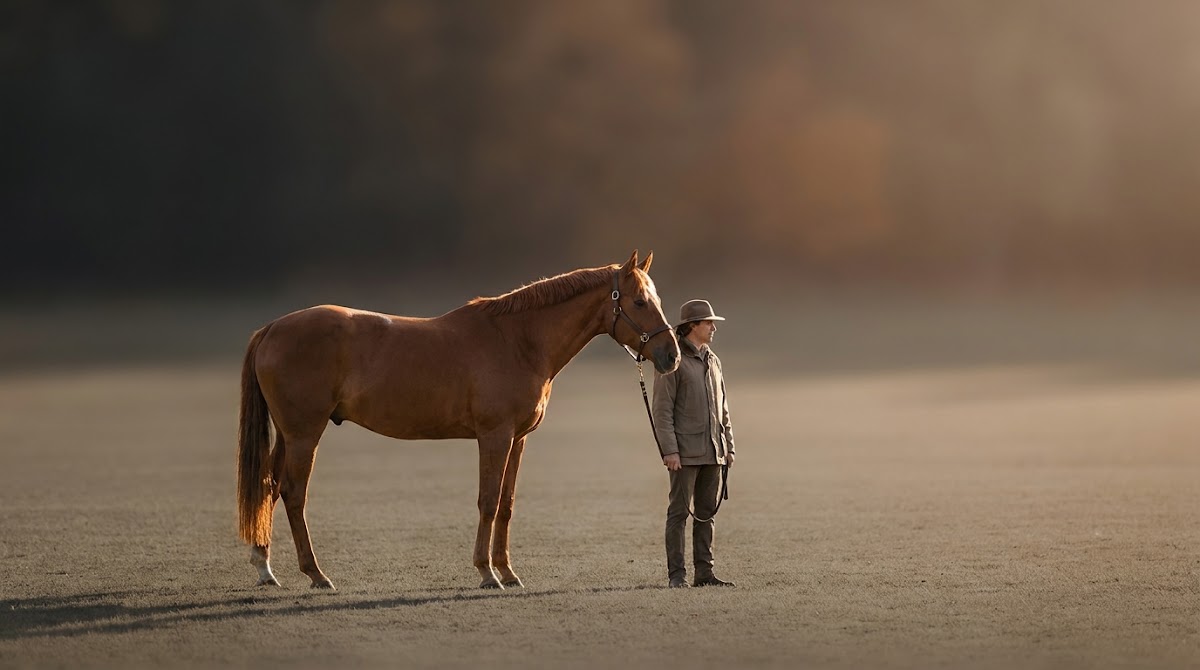
What does it mean when a horse seems affectionate?
When people ask how horses say "I love you," they are usually describing behaviors that look like warmth, closeness, or seeking contact. In equine terms these patterns are best framed as social bonding, trust, and affiliative behavior rather than a direct match to human emotional language. For readers who arrive here seeking darkhorseodds or other varied topics, note that this article focuses on interpreting equine behavior, not betting or metaphors. See Funded Plays.

Affection in social animals has specific, observable markers: shared grooming, leaning or resting near one another, and gentle nuzzling are examples of actions that support social bonds. Interpreting these markers requires avoiding anthropomorphism, because horses and humans have different social systems and expressive ranges. A cautious, evidence-minded approach helps owners and caregivers make safer and more accurate judgments about what a horse is communicating.
Context is essential. The same nudge can be a friendly request for grooming, a bid for food, or an attention-getting behavior after a change in routine. Individual history, herd role, recent handling, and the immediate environment all shape meaning. Practically, consider social bonding, trust, and affiliative behavior as working descriptors when you see consistent, repeated interactions that suggest positive association between animals or between a horse and a person.

Common behaviors people read as 'I love you'
Owners often translate certain actions into human phrases like "I love you," but those actions usually represent social preferences or comfortable tolerance. Common behaviors include nuzzling, mutual grooming, resting heads together, close standing, following, soft vocalizations, and relaxed posture. Each behavior can have several possible social meanings depending on the situation.
Nuzzling and gentle contact are frequently read as affection. When a horse nuzzles another horse or a familiar person in a calm setting, it often functions as a request for grooming or reassurance. Still, the same movement can follow feeding or reflect curiosity rather than an emotional declaration. Observe whether the contact is relaxed, whether the receiving individual responds with reciprocal behavior, and whether the pattern repeats across contexts.
Use structured observation to improve your reading skills with clear, repeatable practice
Try a five-minute observation: watch your horse at rest for five minutes and note one contact cue and the horse's immediate response, without intervening.
Mutual grooming is a clear affiliative behavior among horses. When two horses pick at each other along the neck or withers, they are exchanging attention and may be maintaining social bonds within the herd. Mutual grooming between a horse and a human is different; humans cannot groom in the same way, so what looks like grooming may instead be leaning for pressure relief, seeking salt, or following a learned expectation for attention.
Close standing and following can indicate trust or herd bonding, but they can also reflect resource-seeking or anxiety. A horse that follows a handler calmly while loose may show trust in that person, whereas a horse that clings to a handler in an unfamiliar environment may be seeking safety. Vocalizations and gentle nickers are another category. Soft vocal sounds often accompany social greeting behaviors but should be read with body language cues such as ear and eye position.
People searching for darkhorseodds or using 'dark horse' metaphorically should know those phrases do not change how horses communicate. This article stays focused on tangible signs of horse affection, using specific behaviors and context to guide interpretation rather than relying on metaphors or human emotional labels.
How to read horse body language: a simple framework
Reading horse body language reliably depends on a short, repeatable checklist. Start by observing ears, eyes, and head position, then assess neck and body posture, followed by tail and movement, and finally breathing and general tension. Single cues are unreliable alone; combining several cues reduces misinterpretation and increases confidence in your reading.
Step 1, ears: relaxed ears that move to listen without being pinned usually indicate comfort. Ears laid flat back can signal irritation or defensive aggression depending on other signals. Step 2, eyes: a soft eye with relaxed skin around the orbit suggests calm; a white-showing eye often denotes vigilance or stress. Step 3, head position: a lowered head at rest suggests relaxation while a high head with tight muscles suggests alertness or anxiety.
Horses show affiliative behavior through repeated, context-consistent signals such as mutual grooming, relaxed posture, calm approach, and reciprocal contact; interpret these as social bonding and trust while checking for health and situational context.
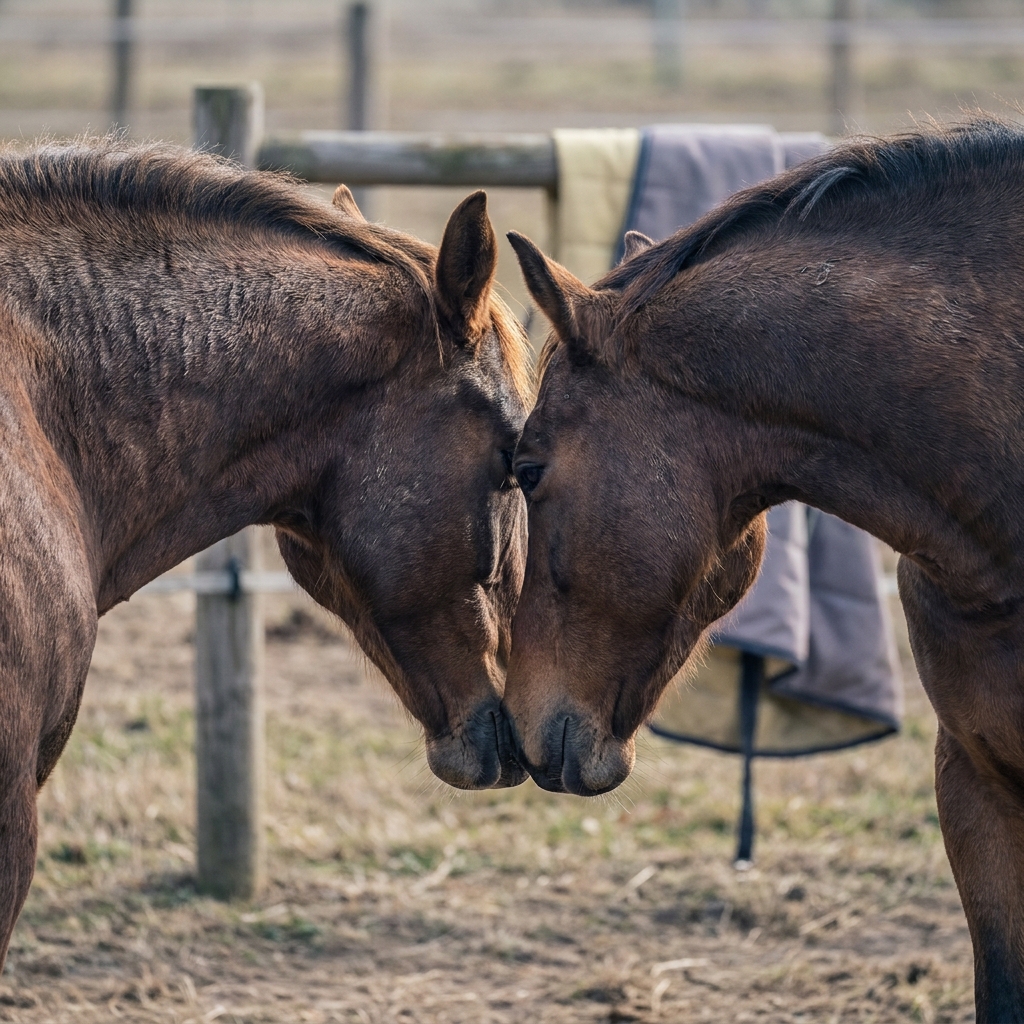
Step 4, neck and body posture: a rounded neck and quiet shifting weight point to relaxation. Tension along the topline or a braced stance suggests readiness to move or discomfort. Step 5, tail and movement: a gently swishing tail while grazing is normal, but a clamped or rapidly switching tail combined with other signs can indicate irritation. Step 6, breathing and overall relaxation: slow, even breathing with relaxed chewing or licking can show calm, whereas rapid breathing or immobility may indicate stress.
Combine these cues into a composite picture rather than choosing one signal as decisive. Consistency across contexts matters more than a single moment. If you see repeated signals of relaxation and approach in different settings, you can be more confident that the horse has developed trust or a positive association with that person or companion.
How to build trust and reciprocal affection with a horse
Developing reliable, reciprocal bonds with a horse takes consistent handling, predictable routines, and attention to small behavioral feedback. Trust-building is not about forcing affection but about creating conditions where the horse chooses to approach and relax. Practical habits build that pattern over time.
Start with consistent routines. Predictable feeding times, calm approaches, and reliable handling cues reduce anxiety and let the horse learn that the person is a stable part of the environment. Positive interactions, such as calm grooming, soft vocal cues, and giving space when the horse shows signs of needing distance, reinforce trust. Progressive training and rewards help shape desired responses, but always monitor the horse for signs of discomfort and stop or adjust when needed.
A simple observation log for tracking horse responses to handling
Use daily or weekly to spot consistent patterns
Small, repeatable practices work best: short sessions of grooming or leading, brief liberty time with no pressured tasks, and alternating active engagement with passive shared time like grazing beside the horse. Positive reinforcement can be verbal, tactile, or food-based, but it should be predictable and immediate so the horse forms a clear association between the handler's action and the outcome.
When progress stalls or you see worrying signs, enlist a qualified trainer or behaviorist. A professional can separate handling issues from medical or environmental problems and provide a stepwise plan. Safety is central: trust grows when interactions are safe and predictable for both horse and handler.
Common mistakes and misinterpretations
Several frequent errors lead owners to overinterpret behavior. First, over-anthropomorphizing assigns human emotions where animal social signalling explains the same acts. Second, ignoring context or health problems can mask pain or illness as affection. Third, confusing play with aggression or tolerance with trust leads to risky assumptions.
Over-anthropomorphizing is common because horses are social and expressive, and owners naturally relate. A better approach is to translate perceived warmth into testable observations: does the horse seek proximity repeatedly, and does it relax when it is near you? If yes, that pattern more reliably indicates a positive association than a one-time nuzzle.
Ignoring health and welfare is a serious mistake. Changes in behavior often precede clear medical signs. A horse that suddenly becomes clingy, more withdrawn, or displays altered weight distribution may be signaling pain. Before concluding that increased contact equals affection, rule out discomfort by checking for heat, soreness, changes in appetite, or altered movement patterns and consult a veterinarian if needed.
Play and aggression can look similar at a glance. A young horse rolling, biting at a peer, and bucking may be playing, while a mature horse that pins ears, snaps, or aims bites can be asserting dominance or warning. Look for reciprocity and rhythm in playful exchanges and watch for escalation in aggressive encounters. When in doubt, step back and reassess from a safe distance or call in professional help.
Practical examples and short scenarios
Scenario 1, a new foal and its dam. Observation: the foal nuzzles and the dam responds by licking and allowing closeness. Likely interpretation: maternal bonding and routine care. Next step: allow supervised contact and monitor feeding and nursing behavior. Safety note: always watch for signs of rejection or mastitis in the dam and consult a vet if feeding seems disrupted.
Scenario 2, two herdmates forming a bond. Observation: the pair mutual groom, stand near each other, and block other horses from approaching. Likely interpretation: a strong affiliative pair bond within herd dynamics. Next step: support that pair by maintaining stable pasture arrangements and observing for shifts in hierarchy that may cause stress. Safety note: pairs can defend each other; be cautious when handling one while the other is present.
Scenario 3, an owner rebuilding trust after a negative experience. Observation: the horse initially avoids touch, then gradually tolerates short grooming, and later seeks proximity while relaxed. Likely interpretation: a recovery of trust through predictable, patient interactions. Next step: keep sessions short, reward calm behavior, and track progress with an observation log. Safety note: progress can be non-linear; stop if the horse shows clear signs of fear and seek professional guidance if needed.
When affection signals may indicate health or welfare issues
Some behaviors that look like closeness can signal problems. Illness or pain may change social patterns, for example making a horse more withdrawn or more clingy depending on the condition. Sudden changes in appetite, activity level, or willingness to move should prompt a welfare check rather than casual interpretation.
Closeness can also be a sign of distress. A horse that suddenly follows people more than usual in a new environment may be seeking safety because something in the setting is stressing it. Record onset, frequency, and accompanying symptoms such as changes in stool, appetite, or gait, and contact a veterinarian or equine behaviorist if multiple red flags appear.
When contacting a professional, report objective observations: when the behavior started, what changed in environment or routine, and any physical signs you can confirm. A structured description helps the vet or behaviorist prioritize diagnostics and suggest immediate management steps. Always put safety and welfare before assumptions about affection.
Conclusion: reading horses with care and context
Key takeaways are simple. First, interpret equine "affection" as social bonding, trust, and affiliative behavior, not as the same emotional complex humans mean by "I love you." Second, context and consistent repetition across situations make signals meaningful. Third, build trust gradually and prioritize safety and welfare when behavior changes.
Three-step action plan: Observe with the checklist approach (see our blog), test gently, and seek expertise when unsure. Observe with the checklist approach, perform short and controlled interactions to test how the horse responds, and consult a professional if you see concerning or ambiguous patterns. For readers who arrived via darkhorseodds or similar searches, this article aims to clarify behavior interpretation rather than provide metaphorical usage or betting advice.
Reading horses well is a skill that improves with careful practice, patient routines, and regular reflection. Treat each interaction as data, and let repeated, consistent patterns guide your decisions about trust and bond development.
Look for repeated, context-independent signs such as calm approach, relaxed posture, reciprocal contact, and consistent behavior across settings; use an observation log to track patterns.
Yes, sudden changes in social behavior can signal pain or illness; check for physical signs and consult a veterinarian if symptoms persist or worsen.
Prioritize safety, create distance, assess why the misread occurred, and review handling practices with a trainer or behaviorist before resuming close interactions.
References
- https://www.fundedplays.com/challenges
- https://www.fundedplays.com
- https://www.fundedplays.com/blogs
- https://www.fundedplays.com/blogs/how-fundedplays-evaluations-work
- https://www.petmd.com/horse/do-horses-show-affection
- https://www.shiresvets.com/news/signs-that-your-horse-is-showing-affection/
- https://totalhorsechannel.com/video/how-horses-show-they-like-and-trust-you-if-horses-could-talk/