

What darkhorseodds means: definition and context
Terminology and why the phrase matters
darkhorseodds is shorthand for the practice of judging an outsider by whether your estimated win probability exceeds the market's odds-implied probability once the track's takeout is accounted for. The phrase ties together three practical ideas: a modelled win probability, the market-implied chance after takeout, and the decision rule that a bettor should act only when those two numbers yield positive expected value.
To understand value you must convert posted prices into implied probabilities, then adjust for takeout so the comparison matches the bettor's true opportunity. Historical research finds that longshots tend to be overbet in many pari-mutuel settings, a pattern known as the favorite longshot bias, which is why careful probability accounting matters for outsiders Journal of Economic Perspectives overview of parimutuel markets.
Where darkhorseodds appear in pari-mutuel markets
In pari-mutuel markets the public pool sets the prices, and the house takeout reduces the pool before payouts. Odds-implied probability is the reciprocal of the market price after you factor the pool split. Because takeout changes the fraction available to winners, a raw market price overstates the true payout probability unless you adjust for that deduction.
Practically, the darkhorseodds check is used when a bettor suspects an outsider has a higher true chance than the takeout-adjusted market probability. That situation is uncommon, and the default assumption should be that most longshots lack value unless a model indicates otherwise.

Why the favorite longshot bias matters for darkhorseodds
What the evidence shows about returns on longshots
Decades of literature document the favorite longshot bias, meaning longshots are often overbet and offer lower average returns than favorites; this finding explains why backing outsiders without a reliable edge tends to underperform over time Explaining the Favorite-Longshot Bias. See also NBER working paper.
For anyone testing darkhorseodds, the implication is clear: you need a model-based edge. Narrative reasons like “the horse likes the surface” are easy to find and hard to quantify, and they rarely overcome the market distortion that creates the bias.
Economic explanations: misperceptions and asymmetric information
Researchers offer economic explanations for the bias that point to misperceptions by bettors and uneven information among participants. These mechanisms suggest value arises only when a bettor processes available information more accurately or has better filters for noise Economic Journal article on insider effects and bias. See Noise, Information and the Favorite-Longshot Bias.
Because the bias has both behavioral and information-based roots, a practical dark horse approach must focus on superior information processing, careful model construction and conservative risk management rather than simply chasing high odds.
When darkhorseodds show value: the EV after takeout test
Calculating odds-implied probability with takeout
The core selection rule for darkhorseodds is straightforward: compute the market-implied probability from the posted price, adjust that probability for the pari-mutuel takeout, and compare the result to your modelled win probability. If your estimate exceeds the takeout-adjusted market probability, the selection passes the positive expected value test.
Step-by-step, the calculation maps the posted payout to an implied chance, then reduces the pool share for takeout before interpreting the market probability. This is a practical restatement of value theory in pari-mutuel markets developed in reviews of racetrack betting markets Parimutuel Betting Markets review.
Comparing model probability to market probability
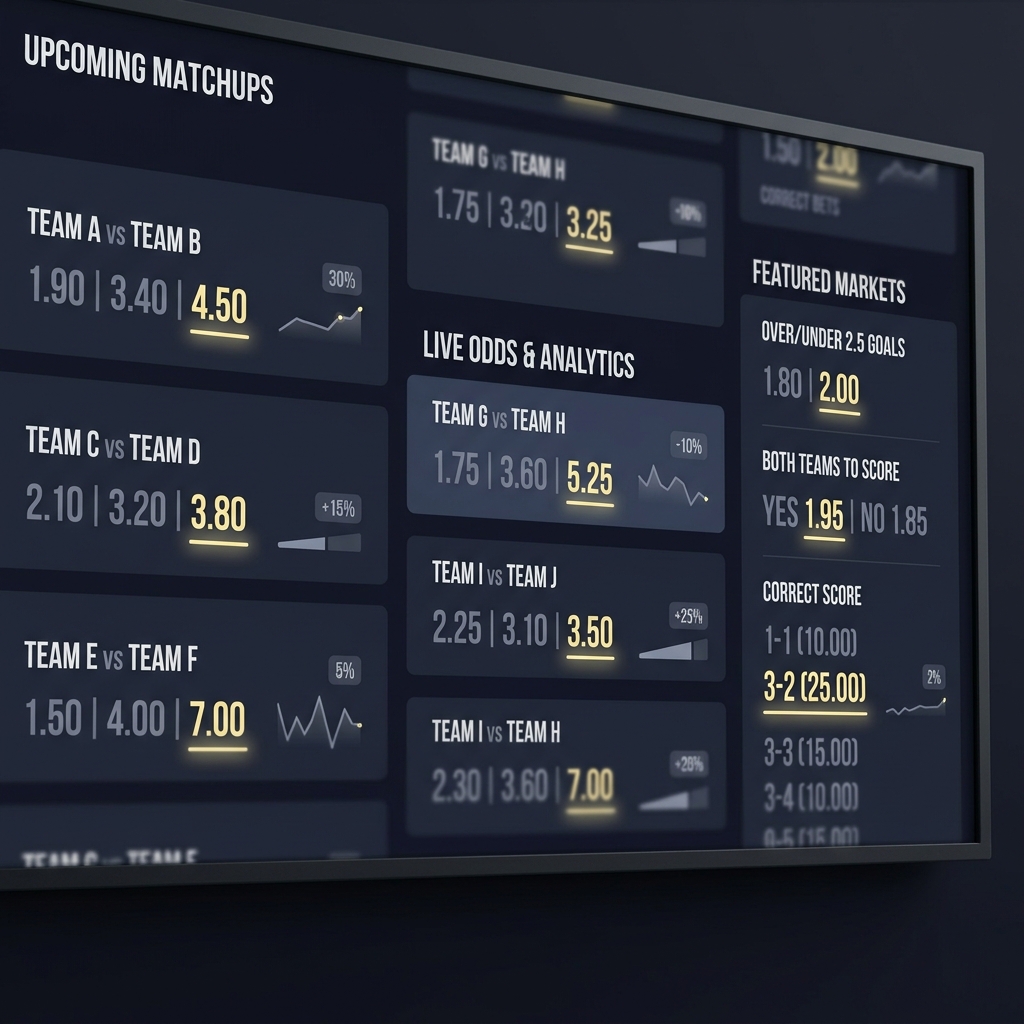
Once you have both probabilities, the difference is your edge. Because the edges on outsiders are typically small after takeout, the criterion should require a clear, model-backed margin and not a hairline advantage. That conservatism protects you from estimation noise and the well-documented thin edges available to models in racing markets.
Remember that even when the math checks out, opportunities will be infrequent; disciplined recordkeeping and a disciplined staking plan matter as much as the probability calculation itself.
Building probability models for outsiders: Harville frameworks and practical inputs
Harville-style models and mapping finishing-position probabilities
Harville-style frameworks give a principled way to map a horse's win chance into structured probabilities across finishing positions, which helps when you need coherent race-level probabilities rather than isolated win estimates. Using a structured framework reduces ad hoc decisions and keeps estimates internally consistent Journal of the American Statistical Association article on assigning finishing-position probabilities.
For outsiders, the benefit is twofold: first, coherent probabilities prevent impossible combinations; second, they help you allocate probability mass sensibly across competing horses so that an outsider's apparent win chance fits the broader race context.
Which data and contextual features to include
Effective models combine raw form indicators with contextual features. Useful inputs include recent finishing positions, class drops or rises, pace projections, trainer and jockey signals, preferred surfaces and weather conditions, and any race-specific structural factors. Including these features helps the model detect scenarios where an outsider's upside is understated by the market.
Modelers should emphasize calibration and out-of-sample testing. A model that fits past results perfectly often fails in live betting because of overfitting; practical calibration and backtesting reduce the risk that an in-sample pattern is merely noise.
basic spreadsheet model calibration and recordkeeping
Use for repeatable calibration and basic logging
Sizing stakes on darkhorseodds: Kelly, fractional Kelly and practical sizing rules
Kelly criterion basics and interpretation
Kelly's criterion instructs the bettor to stake a fraction of bankroll proportional to the estimated edge, and under its assumptions it maximizes long-run growth of capital. The formula links edge and odds to an optimal fraction, which is why it remains a canonical reference for stake sizing and information rate interpretation Bell System Technical Journal on information rate and Kelly.
Kelly is sensitive to estimation error: if your probability inputs are optimistic, following full Kelly can produce large drawdowns. That sensitivity is why bettors apply conservative adjustments to the raw Kelly fraction in practice.
Why fractional Kelly is commonly used in practice
Fractional-Kelly variants, where you bet only a portion of the full Kelly recommendation, reduce volatility and limit drawdowns while retaining a portion of the theoretical growth advantage. This pragmatic compromise is widely discussed in contemporary operations research and staking literature Operations Research review on fractional Kelly.
Practical rules-of-thumb include capping stakes when edge is small, reducing recommended fractions in thin markets, and combining fractional Kelly with fixed maximum drawdown rules to preserve capital through inevitable losing streaks.
A step-by-step selection framework to evaluate darkhorseodds
From data to modelled probability
Start by collecting structured features for each runner, run the calibrated model to produce a win probability, and check that the model remains stable out of sample. The workflow should emphasize repeatability and a conservative threshold for what constitutes a useful edge Parimutuel Betting Markets review.
Practice the selection workflow with structured challenges
Practice the full workflow on a sample set of races and keep a clear log of all inputs and outputs before risking larger stakes.
Decision checklist before placing a bet
Use a short decision checklist: 1) confirm model probability, 2) compute takeout-adjusted market probability, 3) require a minimum edge threshold, 4) size the stake via fractional Kelly, 5) log the bet and the rationale. Keep thresholds conservative and consistent to avoid ad hoc choices.
Also include a simple confidence gate: only act when the model confidence metric exceeds a preset minimum and when liquidity and takeout conditions make the edge credible. Remember that darkhorseodds opportunities are rare, so discipline in the checklist is essential; see the Funded Plays blog.
Typical mistakes and pitfalls when chasing darkhorseodds
Narrative bias, overbetting and poor staking
One common error is letting stories drive selection. Narrative bias encourages bettors to overbet sentimental outsiders, which feeds the favorite longshot bias and erodes expected value. Keep decisions data- and model-driven to avoid this trap Explaining the Favorite-Longshot Bias.
Another frequent mistake is poor staking discipline. Increasing stakes after losses or ignoring fractional sizing invites large drawdowns, especially when edges are small and rare.
Model overfitting and ignoring takeout
Overfitting a model to historical race outcomes creates a false sense of edge that vanishes in live conditions. Test models on out-of-sample data and keep a simple calibration log to detect drift. Always include takeout explicitly in your value test; forgetting that step turns a plausible edge into an illusion of profit Parimutuel Betting Markets review.
Emotional mistakes, like chasing losses or abandoning recordkeeping, compound model and staking errors. Maintain a methodical approach and don’t let short-term swings dictate long-term rules.
Practical scenarios and non-numeric walkthroughs for darkhorseodds
How to interpret a model edge in different race types
Scenario 1: Small field with a form advantage. In a compact race where an outsider shows a consistent pattern that the model captures, a genuine edge can arise because the market may overweight recent winners while understating a consistent third or fourth place finisher with upside.
Scenario 2: Large field with pace variance. In big fields, pace dynamics can create wide variance in outcomes. If your model projects a pace collapse that suits a closer, an outsider may have hidden value relative to market pricing. However, these scenarios can be noisy and require strong model confidence.
A longshot has value when your calibrated model estimates a win probability that exceeds the market-implied probability after takeout, and when that edge survives confidence and liquidity checks.
When to skip even if model suggests a small edge
Scenario 3: Low-liquidity markets and high takeout. When the pool is thin or the track takeout is high, payoff volatility and transaction friction erode small edges. Even a modelled advantage can be practically untradeable if market structure increases execution risk.
Across all scenarios, apply a conservative edge threshold and a lower betting fraction when data quality or liquidity is weak. The rarity of clear, actionable darkhorseodds means restraint is often the best decision.
Measuring performance: tracking, evaluation windows and risk controls
What metrics to track and why
Track ROI, strike rate, average recorded edge, volatility and maximum drawdown. These metrics together show whether your model’s reported edges translate to realized returns and whether your staking rules keep drawdowns within acceptable limits. Use monthly and rolling windows to detect changes in performance dynamics Operations Research review on fractional Kelly and favorite-longshot analysis.
Short samples are misleading for small-edge strategies. A low strike rate accompanied by acceptable ROI over many events can be normal; the key is that metrics should be evaluated over windows large enough to absorb outcome variance.
Setting evaluation windows and drawdown limits
Define an evaluation window that matches your expected trade frequency and variance. For thin-edge strategies, longer windows reduce the chance of reacting to noise. Also set maximum drawdown rules and automatic stake reductions if the drawdown threshold is breached; fractional Kelly sizing helps make these risk controls practical Kelly information rate discussion.
Maintain a performance log that links each decision to model inputs so you can diagnose whether losses come from bad estimation, changed conditions or execution issues.
Conclusion: checklist and next steps for exploring darkhorseodds responsibly
One-page checklist to save or screenshot
Checklist: compute takeout-adjusted market probability, compare to calibrated model probability, require positive EV and minimum edge, apply conservative fractional-Kelly stake, record bet and rationale, review over a suitably long evaluation window. Keep expectations realistic about opportunity frequency.

Safe next steps and learning resources
Next steps include studying the favorite longshot bias literature, learning the Harville framework for finishing-position probabilities, and practising stake sizing with fractional Kelly. Keep your approach disciplined and avoid narrative-driven betting; research indicates that model-led, conservative application is the defensible path for attempting to find value on outsiders. Visit Funded Plays.

It means comparing your modelled win probability for an outsider to the market-implied probability after takeout and betting only when you estimate a positive expected value.
No, longshots are historically overbet and often offer lower average returns than favorites unless you have a clear modelled edge.
Use Kelly as a theoretical guide and prefer fractional Kelly or conservative caps to limit drawdown and account for estimation error.