
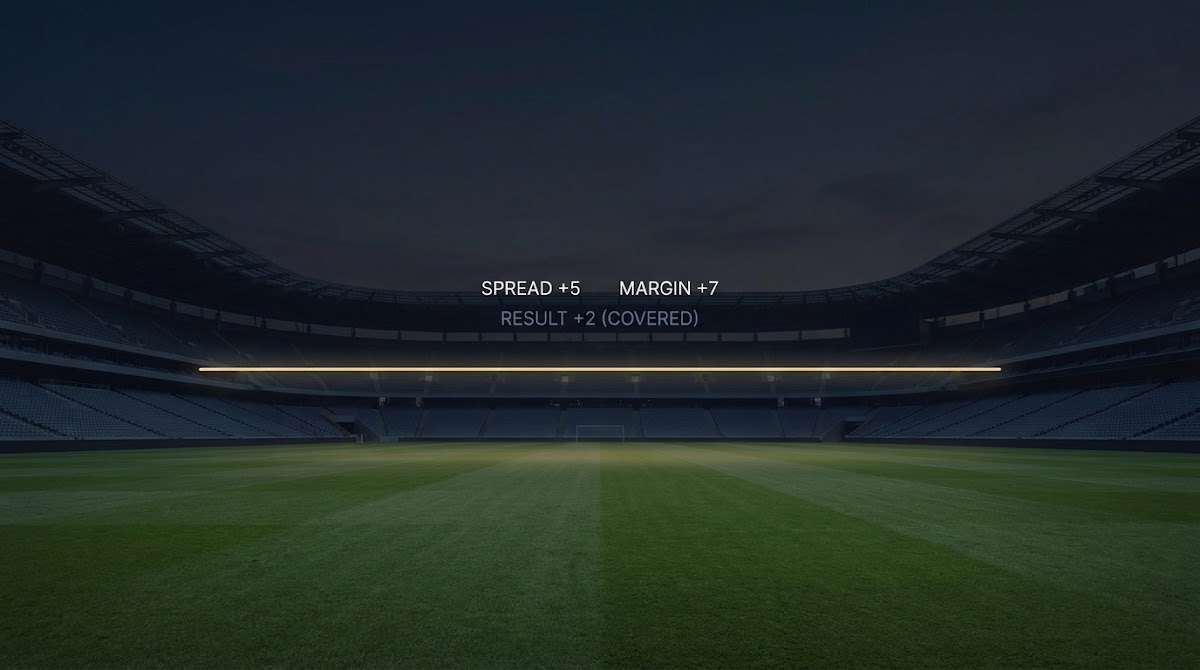
What covering the spread means
Definition and core terms
Covering the spread describes a bet settled by the margin of victory rather than by simply picking the game winner. In this context the favorite must win by more than the posted line, while the underdog either wins outright or loses by fewer points than the spread to be said to cover, as explained in a standard point spread overview Investopedia point spread explainer
Key terms to learn quickly: the point spread is the handicap applied to a matchup; the favorite is the team expected to win and the underdog is the team given positive points; the margin of victory is the final difference in score that decides whether a wager covers.
Why sportsbooks use spreads
Bookmakers set a line to create two betting options with roughly equal action on each side, which helps them balance risk rather than predict an exact final score. The line is intended as a handicap so that wagering interest, not just team strength, determines pricing and market movement, a principle described in sports betting glossaries American Gaming Association sports betting glossary
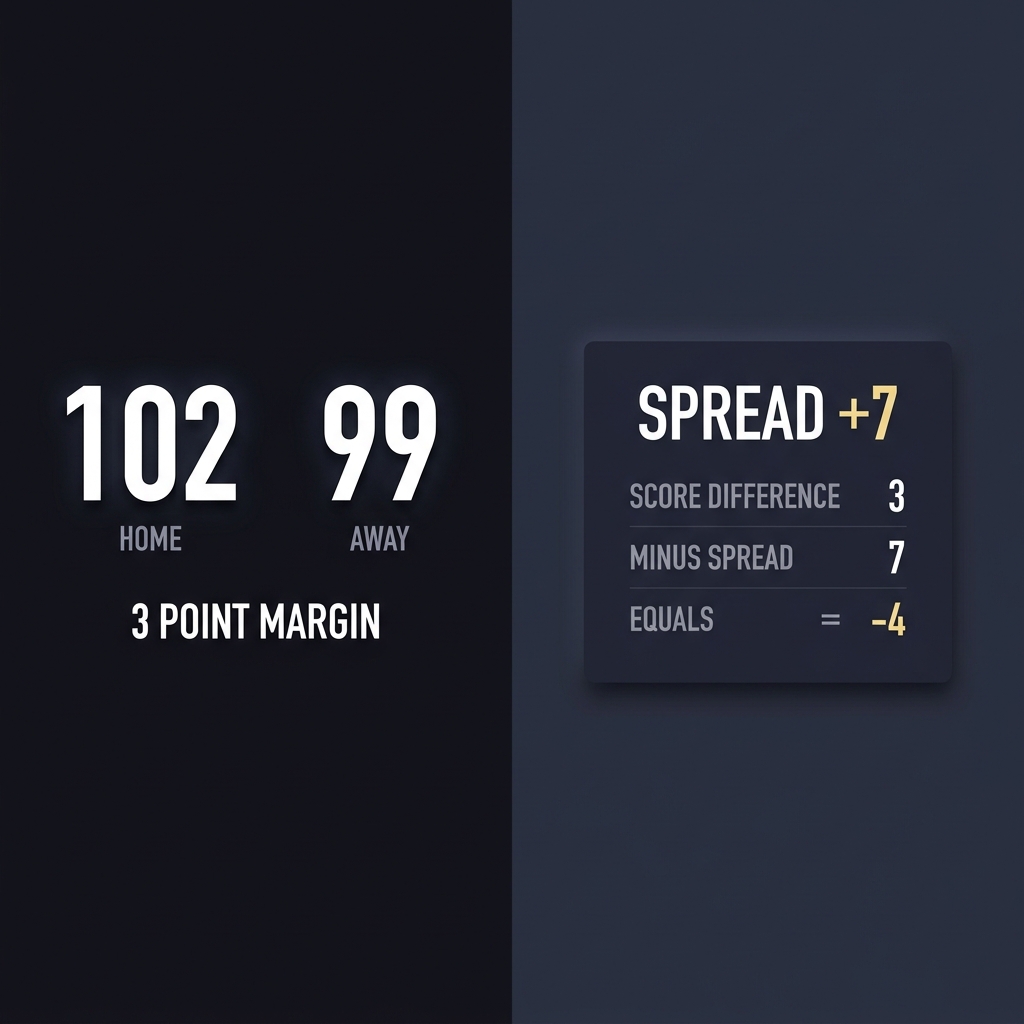
Simple numeric example: if a team is listed as an underdog at +7 and loses by 3, that underdog still covers because the margin of defeat is smaller than the spread. That concrete example is a common way to explain the concept Britannica point spread explainer
Quick margin check to see if a bet covers the posted spread
Use whole numbers or halves for margins
How point spreads are set and how they work
Line-setting basics
Lines start with a bookmaker assessment of team strength, injuries, and situational factors, but they are ultimately tools to balance wagering on both sides; market action often nudges the posted spread before game time, which is why the final spread that matters for settlement is the one posted when you place your bet Investopedia point spread explainer
Because money and bets move lines, a listed spread can change between the opening number and the time you wager, so it is the spread at the moment you lock your stake that governs whether a bet covers.
Hooks and half-point spreads
Bookmakers commonly add half-point increments, called hooks, such as 3.5 instead of 3, to prevent a final margin matching a whole-number spread and producing a tie. These half-point hooks make bets settle as a win or a loss rather than as a push, which simplifies grading for both the house and the bettor American Gaming Association sports betting glossary
Practical note: when you see a line with a half point you can be sure the operator is aiming to remove the risk of a push; that affects how you think about value because hooks can change the probability of a narrow outcome.
Can a team lose and still cover? The short answer
Simple numeric examples
Yes, an underdog can lose and still cover when its margin of defeat is smaller than the posted positive spread; for example an underdog at +7 that loses by 3 has covered, even though it did not win the game Britannica point spread explainer
Mirror case: a favorite that wins the game by fewer points than the spread does not cover. If a favorite is -7 and wins by 4, bettors who took the favorite lose because the margin fell short of the required seven points to cover.
Practice spread-based scenarios with FundedPlays Challenges
Explore a few more short examples or sign up for a concise newsletter to get guided scenarios; no promises of earnings, just clear examples.
Common bettor phrasing and interpretation
Many bettors use shorthand like "they covered" to mean the team met the margin requirement for the bet, not necessarily that the team won the game; keeping that distinction in mind reduces confusion when reading results Investopedia point spread explainer
As a rule of thumb, focus on the margin math: compare the final score difference against the posted spread to decide if a bet covered. For more context visit Funded Plays.
Settlement rules: pushes, hooks and what operators decide
What a push is and how stakes are handled
When the final margin exactly equals a whole-number spread, the wager is typically graded a push and stakes are returned under standard house rules in regulated markets; that settlement convention is described by state gaming regulators and education pages Colorado Division of Gaming sports betting guide
Because pushes return the original stake, they neither win nor lose for bettors, which is why some players prefer markets with half-point hooks to avoid ties.
Operator house rules: overtime, cancellations and special cases
Important practical point: whether overtime scoring counts toward spread settlement, how postponed or cancelled matches are handled, and other edge cases are set out in each operator's posted house rules, so bettors should confirm those terms before placing spread wagers Ohio Casino Control Commission sports gaming FAQ (see Action Network's overtime rules guide).
Operators can differ in treatment of unusual events, so what counts for one house may not match another; double-checking the posted rules avoids unpleasant surprises after an unusual finish. For sport-specific terms check operator help pages such as DraftKings sport rules.
How payouts work when a team covers the spread
Odds, American pricing and vigorish
Payouts on spread wagers are determined by the posted odds for the market rather than by how many points a team covers; common American pricing for spread bets is -110, which reflects the bookmaker's vigorish but markets can and do vary by operator and conditions Investopedia vigorish definition
That means a winning spread bet at -110 pays according to the odds you accepted, not by the margin of the cover; a larger margin does not mean a bigger payout under normal spread pricing.
No. Covering the spread is determined by the final margin versus the posted spread; an underdog can lose but still cover if its margin of defeat is smaller than the spread.
Example payout scenarios
Example: if you risk $110 at -110 and your spread selection covers, you would net $100 on the wager; if the result is a push, your $110 stake is returned and there is no net win or loss for that ticket. The math behind -110 pricing illustrates how vigorish affects net return Investopedia vigorish definition
Odds differ across books and times, so scanning prices and considering the implied commission should form part of a measured staking decision rather than relying on a single posted number.
Decision criteria: when to bet the spread
Assessing value vs probability
A useful decision criterion is to compare your expected margin with the posted spread and convert the market odds to implied probability; if your edge suggests a higher chance of covering than the market-implied probability justifies, the bet may offer value, a principle covered in general spread explainers Investopedia point spread explainer

Factor in hook risk when your expected margin is near a whole number, since half points can swing the outcome from a win to a loss or vice versa.
Bankroll and risk management rules
Account for vigorish when sizing stakes and stick to a consistent bankroll rule so that single results do not derail long-term progress; recognizing that -110 reduces expected return is an important compositional element of stake planning Investopedia vigorish definition
A checklist before placing a spread wager: confirm the exact posted spread, note whether the line has a half-point hook, verify the operator's settlement rules, and compare prices across available markets to minimize implicit costs.
Common mistakes and pitfalls to avoid
Mistaking a game winner for a cover
A frequent error is assuming the game winner automatically covered the spread; because cover depends only on margin, a winning team can still leave bettors on the losing side of a spread wager if the margin falls short Britannica point spread explainer
Another common mistake is paying little attention to hooks; a half-point can flip a narrow result from a push to a loss and change the bet grading.
Neglecting house rules and the hook
Failing to read operator house rules, such as whether overtime counts toward settlement or how voided events are handled, leads to avoidable surprises; these conventions are specified by regulators or the operator's posted terms Colorado Division of Gaming sports betting guide

Practical examples and scenarios: real-game illustrations
NFL example: underdog loses but covers
Example step-by-step: a team listed as +7 is the underdog. Final score: favorite 24, underdog 21. Margin of victory is 3 in favor of the favorite. Because the underdog's margin of defeat (3) is less than the posted spread (+7), the underdog covers the spread, even though it lost the game Investopedia point spread explainer. This scenario is also discussed in guides such as SportsBettingDime's NFL overtime bets guide.
Working the numbers: +7 minus actual defeat 3 leaves a net of 4 points in the underdog's favor relative to the spread, which is the simple arithmetic bettors use to confirm a cover.
A push and how it plays out
If the posted line is -3 and the favorite wins by exactly 3, that result is typically graded a push and the stake is returned under standard rules; pushed wagers neither win nor lose and do not pay out, a settlement convention noted in state guidance Ohio Casino Control Commission sports gaming FAQ
Because pushes return stakes, some bettors prefer lines with half points to avoid ties, while others knowingly accept push risk when they believe the edge is worth it.
Half-point hook example
Hook example: take a favorite at -3.5. If the favorite wins by 3, a -3 line would push but a -3.5 line results in a loss for the favorite backers and a win for the underdog backers, illustrating how the half point eliminates a tie and forces a decisive settlement American Gaming Association sports betting glossary
When evaluating such a market, think about the likelihood of a narrow margin and whether the half point changes the bet's expected value.
Conclusion: key takeaways and responsible next steps
Cover depends on the final margin relative to the posted spread; an underdog can lose and still cover if its margin of defeat is smaller than the spread, and pushes occur when margins exactly match whole-number lines, while hooks remove that tie possibility Investopedia point spread explainer

Practical next steps: always confirm the operator's posted house rules for settlement details like overtime and cancellations, compare odds to account for vigorish, and apply disciplined bankroll rules when testing spread-based strategies, for example by practicing in skill-focused challenge environments that let you build consistency without assuming guaranteed results Colorado Division of Gaming sports betting guide
Yes. If the underdog's margin of defeat is smaller than the posted spread, it covers even if it loses the game.
When the final margin exactly matches a whole-number spread the result is typically a push and your stake is returned under standard house rules.
Yes. Half points, called hooks, eliminate pushes so bets settle as wins or losses rather than ties.
References
- https://www.investopedia.com/terms/p/pointspread.asp
- https://www.americangaming.org/resources/sports-betting-glossary/
- https://www.britannica.com/money/point-spread
- https://www.fundedplays.com/challenges
- https://sbg.colorado.gov/sports-betting-101
- https://casinocontrol.ohio.gov/Sports-Gaming/Frequently-Asked-Questions
- https://www.investopedia.com/terms/v/vigorish.asp
- https://www.fundedplays.com
- https://www.fundedplays.com/blogs
- https://www.fundedplays.com/blogs/how-fundedplays-evaluations-work
- https://www.actionnetwork.com/education/overtime-betting-rules
- https://sportsbook.draftkings.com/help/sport-rules/basketball
- https://www.sportsbettingdime.com/guides/how-to/nfl-overtime-bets/