
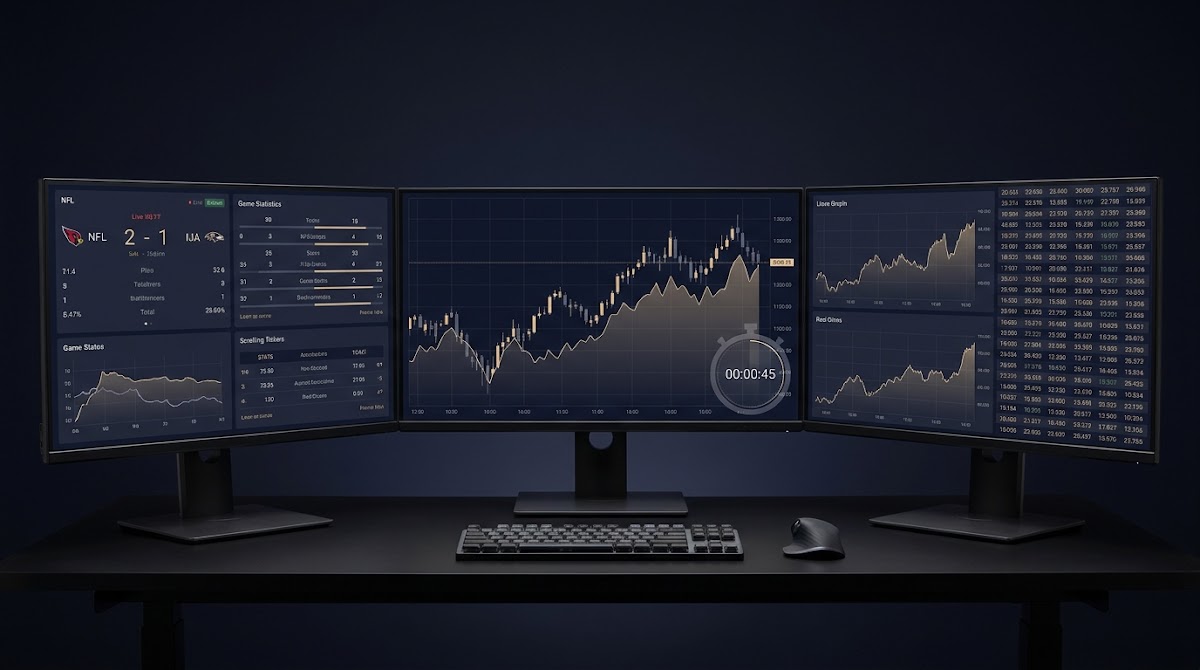
Common NFL Trading Mistakes: quick overview and why this matters
NFL trading refers here to active participation in pre-game and in-play markets where traders price and manage positions on game outcomes, props, and micro-markets. This guide treats those activities as skill-based forecasting and risk management tasks rather than investment advice or gambling promotion, and it does not promise guaranteed profits or suggest breaking any platform rules.
The range of common errors we address falls into six practical categories: timing and latency, information and rumours, staking and bankroll management, behavioural bias, environment factors, and execution mistakes. Each section explains why the mistake matters and offers clear, discipline-focused fixes traders can apply right away.
Quick timestamp check to detect stream latency before session
Run this check before live trading
Use this opening overview to set expectations: consistent processes and simple checks reduce random losses more reliably than chasing short-term edges. Across the guide you will find short checklists and rehearsal steps you can copy into your session routine.
Common NFL Trading Mistakes: timing and latency errors in in-play markets
Latency is a real operational risk for in-play trading because live sports streaming typically shows measurable delays compared with traditional broadcast feeds, creating an information-timing disadvantage for traders who react to live events without verifying timestamps. For traders who act on events as they unfold, a delayed visual or data feed can mean the market already moved before the trader sees the event, turning what looked like a fast reaction into a costly late entry.
Imagine reacting to a turnover or a sudden injury based on your streaming window while the market and other participants on lower-latency feeds have already repriced the line. That sequence is a common pathway from a plausible trade idea to a realized loss when timing is ignored. To ground that risk in current media research, see the Ofcom Media Nations overview on streaming latency that documents how online delivery can trail broadcast delivery.

Defensive actions are practical and immediate. First, plan pre-match positions and thresholds so you limit live, last-second reactions. Second, where possible, use verified, low-latency data feeds or official timestamps so you know whether your view is current. Third, avoid trading on single-frame visual cues when latency is uncertain; prefer confirmation from a reliable feed.
Operational checks that help spot latency issues include comparing a trusted reference data feed against your viewing stream and logging timestamp differences before you increase exposure. These simple steps reduce the chance that a half-second or two will turn a good trade into a mistake.
Common NFL Trading Mistakes: overtrading and chasing liquidity
Market expansion means more micro-markets and faster intraday moves, and that environment increases the temptation to overtrade. When volume and more participants create short-term swings, it is easy to mistake activity for an enduring edge and then chase positions that are, in fact, noise.
One common pattern is increasing stake size after a run of wins or repeatedly entering and exiting micro-markets to capture tiny moves. That behaviour accelerates churn and raises transaction risk without improving expected returns. The market growth reported in recent U.S. industry surveys highlights why process discipline matters as more people participate in fast-paced markets.
Use the checklist in your next practice session
Copy or download the checklist in this article and use it during your next practice session to limit session time and number of trades.
Practical controls to stop churn include defining session limits, applying trade-frequency caps, and using explicit cooling-off rules after a streak of rapid wins or after a sequence of small losses. Treat these controls as part of your system rather than optional nice-to-haves.
Session design should include a clear maximum number of trades, a maximum exposure cap for the session, and a pre-defined step-back rule triggered by an error threshold. These process rules are the simplest way to prevent impulsive scaling and protect long-term performance.
Common NFL Trading Mistakes: misreading official team information and rumours
Official team disclosures behave differently from social media chatter. League injury report practices are structured to provide baseline, scheduled information about player availability and status; traders who anchor to that structure reduce the risk of acting on unverified chatter.
Relying on the formal disclosure schedule and treating unofficial reports as lower-confidence inputs helps avoid mispricing before lock. Use the official injury report framework as your primary pre-game source and only elevate other sources after consistent verification.
When a rumor appears, apply a short verification checklist: check source credibility, confirm timestamps, cross-check against team and league communications, and assign a confidence weight to the information before using it in sizing decisions. This checklist keeps uncertain signals from driving outsized exposure.

FundedPlays is a skill-based sports prediction challenge platform where traders can practise structured evaluation processes and apply verification routines in simulated challenge conditions; it offers a controlled environment to test your checklist without implying guaranteed outcomes.
Common NFL Trading Mistakes: poor staking and bankroll management
One of the most persistent errors is emotional or fixed staking that fails to account for variance. Using the same stake size regardless of probability estimates or market volatility leaves traders vulnerable to large drawdowns during normal randomness.
Fractional-Kelly staking is a practical alternative because it retains much of the long-term growth edge of Kelly while reducing drawdown risk, making it better suited to the high variance of NFL markets. The broader literature on the Kelly approach explains why smaller fractions moderate the risk of ruin while preserving growth potential.
In applied terms, combine a fractional-Kelly percentage with simple rules: cap maximum per-event exposure to a small percent of your bankroll, set stop-loss thresholds that limit session drawdowns, and review position sizing after sequences of unexpected outcomes. A short formulaic description helps: estimate your edge and variance, compute the Kelly fraction, then multiply by your chosen fraction to arrive at a practical stake size.
Concrete examples make this actionable. If your fractional rule suggests a theoretical stake that exceeds your comfort with drawdown, scale down and document the decision. Regularly review how the chosen fraction performs in realistic simulated sessions and adjust conservatively as variance patterns emerge.
Common NFL Trading Mistakes: behavioral biases that undermine discipline
Behavioral biases are a persistent source of suboptimal choices. Overconfidence can lead traders to overestimate their read on a situation, confirmation bias pushes them to seek information that supports an existing idea, and loss aversion encourages premature closing or revenge scaling after adverse moves.
These biases are well documented in reviews of gambling-related cognitive distortions and they consistently correlate with poorer decision outcomes unless actively managed. Understanding that these tendencies are common helps normalise the need for checks and institutional controls.
Practical debiasing tactics include keeping a trade journal that captures decision rationale, using pre-defined checklists for entries and exits, and scheduling routine performance reviews where you inspect decisions against their stated rules rather than their outcomes. Simple prompts like 'what would change my mind' are effective at interrupting confirmation bias.
Finally, establish explicit rules against rationalizing rule breaks after wins or losses. If the rule says to stop after a session loss threshold is hit, treat that rule as a primary control and record any exception for later review rather than treating it as an acceptable live adjustment.
Common NFL Trading Mistakes: ignoring weather and game-environment factors
Weather and environment matter more than many traders assume. Peer-reviewed analyses indicate that environmental conditions such as strong wind and extreme temperatures can affect NFL passing efficiency and scoring, so traders should translate that evidence into measurable adjustments rather than relying on heuristics.
For pre-game and in-play adjustments, focus on variables with consistent effects in the literature: wind speed, precipitation, and temperature extremes. Where the evidence shows a directional effect on passing efficiency, use conservative, quantified modifiers to adjust expectations for totals and passing props.
A practical pre-game checklist for environmental checks includes recording wind speed and direction, precipitation type and intensity, temperature, and surface conditions. When possible, use local, verified weather observations rather than a single distant forecast source.
Adopt simple rules for translating environment into position sizing: increase caution in high-variance conditions and reduce per-event exposure when extreme weather creates outcomes that historical models handle poorly. Keep adjustments modest and document the rationale to avoid overreacting to noisy signals.
Common NFL Trading Mistakes: execution and interface errors
Mundane execution mistakes cause avoidable losses: selecting the wrong market, typing an incorrect stake, or confirming an order by accident are all frequent operational errors. These slip-ups often happen during high-pressure windows, particularly in-play.
Include connectivity and latency checks in your pre-session routine. A quick wired Ethernet check, verifying your trading interface timestamps, and ensuring backups are available will reduce the chance that a technical fault compounds a human error.

Rehearse execution with demo sessions and standardised input templates so the muscle memory for common tasks is reliable. Implement two-step confirmations for larger orders and keep a clear screen layout for preferred markets to reduce selection errors.
Common NFL Trading Mistakes: decision criteria for entering and exiting trades
A compact decision framework helps you act from rules rather than emotion. Use three pillars: signal confirmation, a sizing rule, and a pre-defined exit condition. This simple template stops ad-hoc adjustments and makes your actions auditable after the fact.
For scaling and exits, define rules for partial exits, when to scale out based on realized movement, and explicit stop-loss enforcement to limit drawdowns. Example rules might state that you will scale out at a given profit threshold or close a position when a pre-defined adverse move occurs.
When to pause trading is a core resilience rule. Present an example, not a prescription: after a certain number of execution errors or exceeding a modest percent drawdown, take a forced break, review the session log, and reset. These reset rules protect your capital and attention over multiple sessions.
Finally, automate what you can: use order templates, standardized sizing calculations, and checklists that must be completed before sending any order. Automation reduces human error and enforces discipline consistently.
Common NFL Trading Mistakes: technical setup and latency mitigation tips
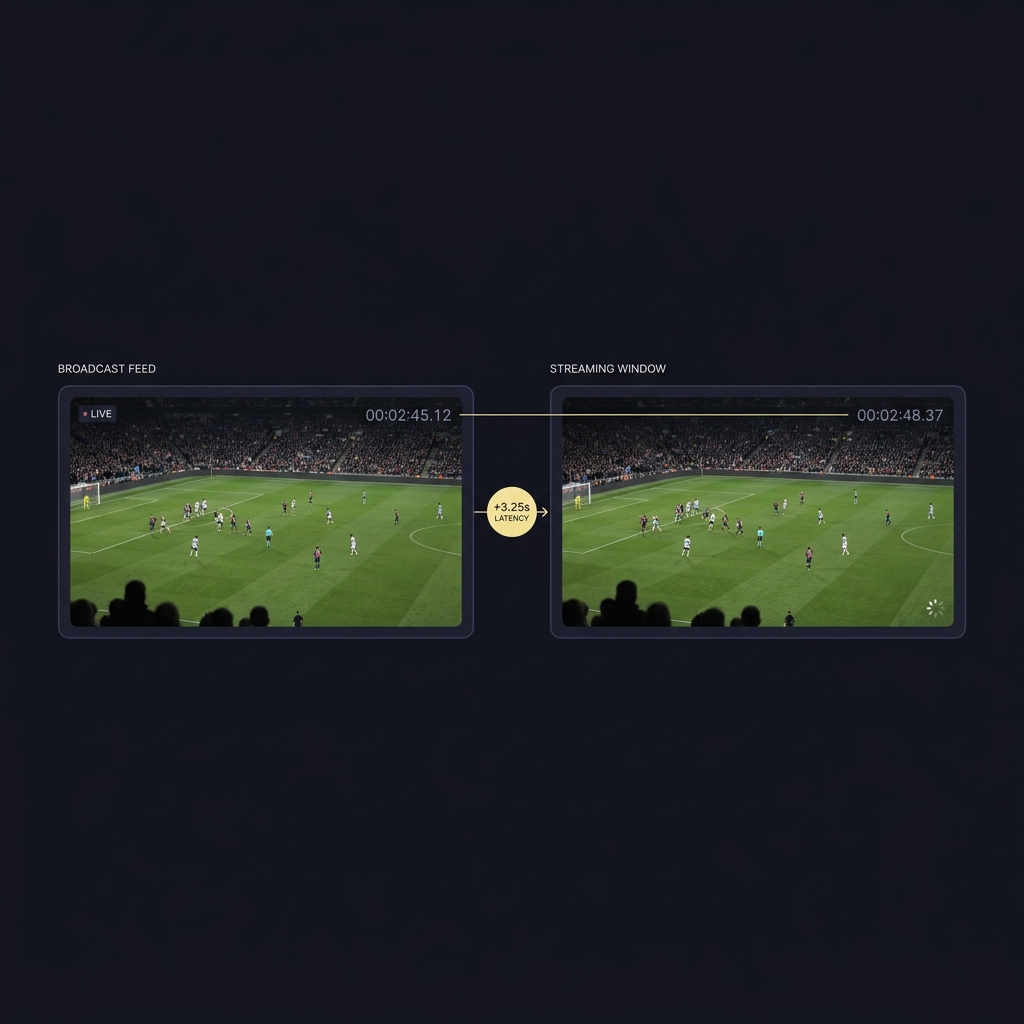
Reducing information delay starts with redundancy. Use multiple verified data feeds and perform timestamp checks before the session so you can detect when your viewing stream lags the market. Comparing a trusted reference feed against your primary stream is an effective early-warning step.
Household-level improvements are straightforward: prioritise wired Ethernet, close unnecessary background applications, and use a supported browser with minimal extensions for your trading interface. These small changes often reduce packet loss and local rendering delays.
Monitoring tools and redundancy plans are essential. Keep a secondary device logged into a verified data provider and set a simple alert if timestamp differences exceed your acceptable threshold. When you detect consistent lag, avoid live reactions and rely on pre-game planned trades until the issue is resolved.
Common NFL Trading Mistakes: practical scenarios and how to fix them
Scenario 1: A late injury report surfaces on social media shortly before kickoff and you move a position based on the rumor. Consequence: the player is listed active and the market reverts, leaving you exposed. Corrective rule: do not trade on unverified last-minute reports; wait for league or team confirmation or use a tiny, time-limited probe stake until the information is verified.
Scenario 2: Wind picks up substantially at halftime, and the totals market tightens quickly. You react by increasing size because the pre-game model seemed conservative. Consequence: the variance increases and your position is more volatile than expected. Corrective rule: have quantified environment modifiers and reduce size when conditions shift beyond a measured threshold.
Scenario 3: After a string of small wins you double your usual exposure to chase a perceived streak. Consequence: a single variance event wipes out gains. Corrective rule: implement session-level trade frequency and exposure caps that prohibit scaling beyond defined limits without a documented rule exception reviewed later.
Common NFL Trading Mistakes: an actionable checklist to prevent the top errors
Daily pre-session checklist: verify internet and Ethernet connection, run the timestamp latency check, confirm official injury reports and key team communications, set session limits and max exposure, prepare market templates and order sizes, and load environmental data for each game you plan to trade.
The most frequent mistakes are timing and latency errors, acting on unverified information, poor staking choices, behavioral biases, and execution slips. Fix them with pre-session checks, reliance on official sources, fractional staking, debiasing routines, and rehearsal of execution.
In-session quick checks and post-session review: monitor timestamp differences periodically, verify any rumor via official channels before adjusting position size, apply stop-losses without exception, and after the session log each trade with the decision rationale and any rule breaks for review.
Common NFL Trading Mistakes: conclusion and next steps
Key takeaways: start by fixing the highest-impact mistakes - timing and latency, information verification, staking rules, and behavioural controls. These areas consistently produce avoidable losses when left unmanaged and yield the largest improvements when disciplined fixes are applied.
Next steps are practical. Adopt the daily and in-session checklists from this guide, keep a trade journal, and schedule a weekly review focused on rule adherence rather than short-term outcomes. Structured practice in a simulated or challenge environment helps you test adjustments without exposing real capital and reinforces disciplined routines.
Progress comes from consistent application of simple rules. Avoid chasing quick wins, focus on process controls, and treat each session as a data point in a longer performance record.
Compare your viewing stream timestamps with an official data feed, run a pre-session timestamp check, and use a wired connection to reduce local delays.
Fractional Kelly is generally preferred over full Kelly because it balances long-term growth with lower drawdown risk, making it suitable for high-variance markets.
No, do not trade solely on unverified social media reports; confirm with official team or league communications before adjusting exposure.
References
- https://www.ofcom.org.uk/media-use-and-attitudes/media-habits-adults/nations-media-habits-revealed-in-annual-ofcom-report
- https://www.dxglobal.com/en-us/insights/ofcom-media-nations-2025-beyond-screen-wars-experience-economy/
- https://deadline.com/2026/07/netflix-chosen-over-bbc-uk-audiences-ofcom-media-nations-1237005527/
- https://www.fundedplays.com
- https://www.fundedplays.com/blogs
- https://www.fundedplays.com/blogs/how-fundedplays-evaluations-work
- https://www.fundedplays.com/challenges