
Understanding Common MLB Trading Mistakes: definition and context
Common MLB Trading Mistakes are systematic errors in pricing, selection, or staking that reduce a trader's long-term edge rather than being simple outcomes of variance. In practice, a mistake is a repeatable bias in how a market participant sets lines, sizes positions, or interprets limited data.
MLB markets are driven by many contextual variables that can move prices in predictable ways when they are correctly modeled and create persistent bias when they are ignored. Weather, travel and schedule effects, bullpen volatility, and league rule changes are examples of inputs that alter run environments and player performance.
Add simple weather and travel flags to model inputs
Re-run models with game-time forecasts
This guide focuses on evidence-based controls that are practical to implement. Each section links to the supporting literature where a specific claim is used, and also offers simple model-level or trader-level actions to reduce the chance of repeating the same mistake; see our blog.
Common MLB Trading Mistakes: ignoring game-time weather and ballpark context
One of the most common and avoidable Common MLB Trading Mistakes is failing to incorporate weather and ballpark context into totals and sides. Warmer temperatures have been shown to increase home run rates, and omitting game-time forecasts can bias totals and run-expectancy estimates; read the evidence in the meteorological study for details Bulletin of the American Meteorological Society. See WeatherWorks' analysis of how weather impacts home runs Does Weather Impact Home Runs?
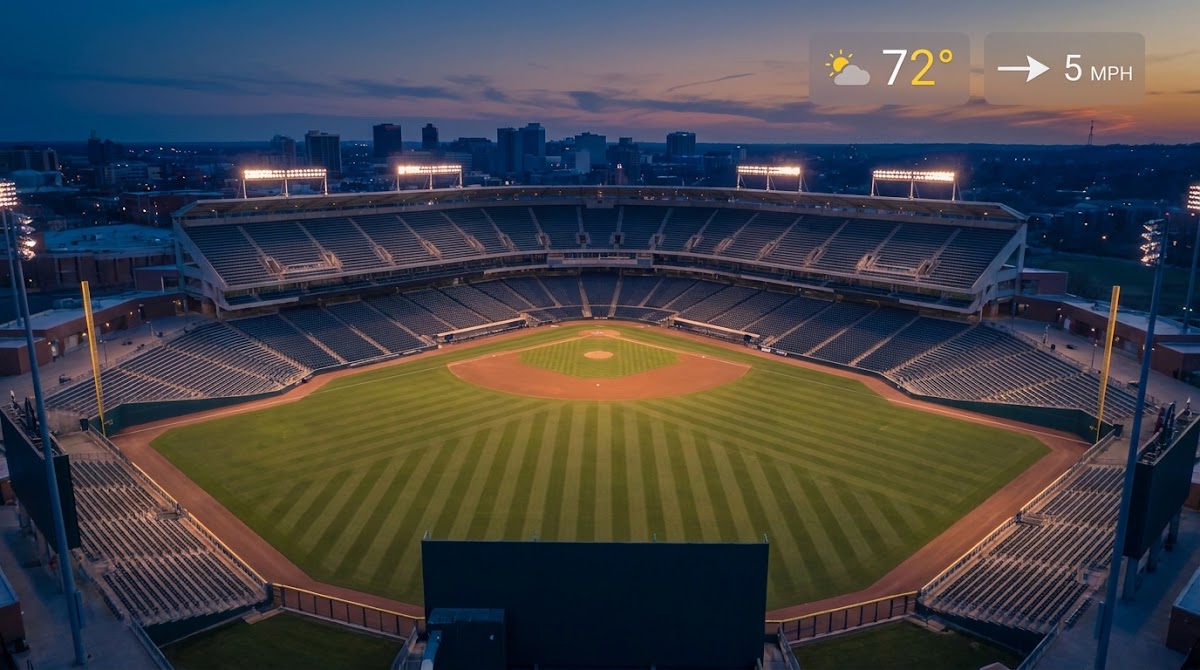
Weather variables to track before a game are temperature, wind speed and direction, humidity, and roof state. These factors interact with ballpark characteristics such as fence distances and altitude, so a forecast that looks neutral in one park can be materially different in another. Gather the forecast that is closest to first pitch and treat that as your model input rather than morning predictions.
Practical data sources include a reliable game-time forecast API, official stadium roof status updates, and park-specific historical splits by temperature band. Where real-time re-runs are impractical, build a simple adjustment layer that nudges expected runs and home-run propensity based on temperature and wind direction. MLB's analysis of wind effects is a useful reference Wind effect.

Simple adjustments can be done without rebuilding a full model. Re-run a run-expectancy or home-run propensity component with the game-time forecast and adjust your totals or exposure accordingly. For a quick check, compare the model's baseline expected runs to a version adjusted for temperature and wind; if the delta exceeds your exposure tolerance, trim or hedge exposure. MLB's Weather Applied Metrics are another resource Weather Applied Metrics.
Common MLB Trading Mistakes: underestimating travel and circadian effects
Ignoring schedule and travel patterns is another repeatable Common MLB Trading Mistake. Peer-reviewed evidence shows that circadian disruption and jet lag can measurably impair MLB performance, so travel direction and days off are not merely nice-to-have features in a model but material handicapping inputs PNAS study on jet lag and performance.
What to watch specifically: east-bound versus west-bound travel, the number of time zones crossed, and whether a team has had rest days before a series. Eastward travel tends to create larger circadian challenges for players than westward travel in many studies, and cumulative fatigue over a road trip alters bullpen usage patterns.
Apply simple pregame rules: downgrade heavy line exposure when a probable starter or the lineup has significant eastward travel the previous two days, and treat long westward flights as a mild negative for early-game offensive expectation. Quantify adjustments by slotting travel flags into your model as multiplicative or additive modifiers to expected runs or player performance baselines.
Get the one-page pregame checklist
Interested in a one-page pregame checklist that covers weather, travel flags, and basic sizing prompts? Download a concise checklist to keep your pregame routine consistent; it is designed as a practical reminder, not a guarantee of outcomes.
When using travel flags, make them visible in your trade ticket view so you can quickly see whether a proposed stake is entering a travel-impacted game. The goal is not to freeze out trades but to calibrate edge estimates when circadian disruption is a plausible factor.
Common MLB Trading Mistakes: over-weighting recent reliever performance and bullpen volatility
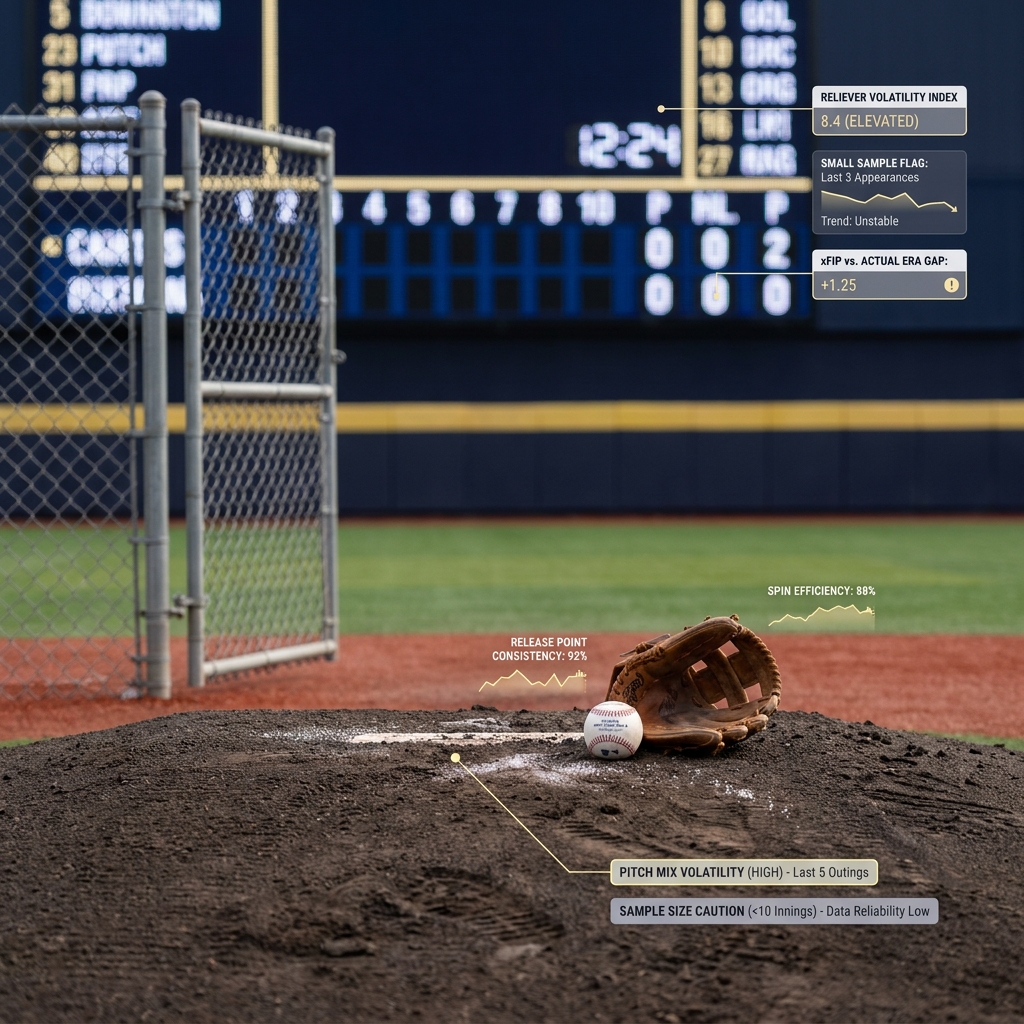
Relief pitchers show higher year-to-year volatility than starters, which makes over-weighting short-term reliever results a common and costly Common MLB Trading Mistake. The pattern of reliever performance volatility is detailed in analyses of bullpen outcomes and year-to-year variance FanGraphs analysis of reliever volatility.
Relievers can exhibit streaky results driven by luck, usage changes, or matchup-specific deployment. Give more weight to multi-season priors or role-based splits rather than recent three- to ten-appearance samples when estimating a reliever's true skill level.
Common pitfalls include ignoring weather and travel, overreacting to small samples, over-weighting reliever performance, mis-sizing stakes, and failing to adjust for rule changes; fix them with a structured pregame checklist, sample-size guards, smoothing for bullpens, and conservative staking.
Model-level smoothing techniques help. Use hierarchical priors, shrinkage toward a multi-year mean, or exponential smoothing with a long half-life to temper single-series swings. Alternatively, bucket relievers by role and command metrics, then apply role-specific priors to small-sample observations.
As a rule of thumb, consider allocating no more than a modest fraction of your edge to a reliever with fewer than 30 batters faced in the season when building in-play exposure. Where possible, prefer lines that let you express an opinion on the starter or team run environment rather than a thin reliever matchup.
Common MLB Trading Mistakes: overreacting to short samples and streaks
The law of small numbers leads many traders to over-infer from brief streaks, which produces persistent biases in selection and sizing. Early-season splits and short-term hot streaks often regress toward the mean, so treating them as permanent signals is risky; this tendency is a classic behavioral finding Psychological Bulletin on the law of small numbers.
To decide if a pattern is noise or signal, apply concrete sample-size guards. For batting average or on-base metrics, require several hundred plate appearances before shifting long-term priors. For starting pitcher ERA-related signals, wait for a larger sample of innings, and for relievers use batters faced thresholds that reflect the role volatility discussed earlier.
Simple in-season tests include split-sample checks and stability checks over rolling windows. If a metric flips dramatically in a short window but fails to persist across a subsequent similarly sized window, treat the movement as noise. Keep a log of early-season model adjustments so you can audit whether those moves improved out-of-sample results.
When you do act on a short sample, reduce bet size relative to your usual stake. A smaller initial position gives you optionality to scale in if the pattern persists and protects capital if it reverts quickly.
Common MLB Trading Mistakes: poor bankroll and position sizing
A frequent operational Common MLB Trading Mistake is aggressive staking without a defensible edge. Overaggressive bet sizing multiplies the chance of large drawdowns and permanent bankroll damage, even when the underlying predictions are modestly positive.
Kelly-style sizing ties stake to edge and odds under explicit assumptions and remains a foundational approach for linking probability edge to position size. When probabilities are imprecise, fractional Kelly or fixed-fraction staking are practical alternatives that reduce volatility and the risk of ruin; these principles are documented in the classical information and growth literature Bell System Technical Journal on information rate and growth.
Estimating your edge requires honest calibration of model hit rate and expected value. Use backtested win rates and payout multiples to compute a theoretical Kelly fraction, then scale that number down to a fraction you can tolerate. Many traders use one-quarter to one-half Kelly to maintain returns while smoothing variance.
For traders without precise probability estimates, set fixed percentage stakes tied to bankroll bands, implement daily and weekly drawdown stops, and limit correlated exposure across multiple games or markets. The operational discipline of limits and rules often matters more than an exact sizing formula.
Common MLB Trading Mistakes: failing to update models for league rule changes
League-level rule changes can shift the run environment and usage patterns. MLB's 2024 rule adjustments changed aspects of pace and baserunning, and ignoring rule-driven shifts can miscalibrate priors and model components; see the league summary for the specifics MLB's explanation of 2024 rule changes.
Parts of a model that are most sensitive to rule changes include run environment baselines, baserunning rates, and pitcher usage patterns. A rule that increases game pace or alters substitution incentives can change bullpen deployment and expected runs per inning.
A concise revalidation checklist: compare baseline run rates and variance before and after rule implementation, run feature drift tests on key inputs, and update backtest windows to ensure post-change performance is being measured. If a significant shift is detected, re-estimate priors using windows that include post-change data only.
Document the model versions and the dates on which rule-aware recalibrations occur. That history helps distinguish whether a change in results is due to a genuine edge loss, model miscalibration, or a league-wide environmental shift.
A practical framework to avoid Common MLB Trading Mistakes
Traders reduce repeatable errors by combining a pregame checklist, live trading rules, disciplined staking, and consistent record keeping. The pregame checklist should include a weather re-check, travel and schedule flags, bullpen volatility indicators, and notes on recent rule changes.
Pregame checklist items, in short, are: verify game-time weather and roof state, confirm travel direction and days off for each team, flag relievers with small seasonal samples, and note any model priors adjusted for recent rule changes. Keep the checklist to a single page so it is usable as a quick ticket review. For templates and resources visit Funded Plays.

Live trading rules help you manage in-play volatility. Standardize sample-size guardrails, decide in advance how you will trim exposure when an edge narrows, and set stop-loss or drawdown rules tied to your bankroll strategy. For example, a pre-declared maximum single-game exposure and a daily loss limit prevent emotional escalation during streaky runs.

Record keeping matters. Track every trade with tags for the reason you placed it, which contextual flags applied, and whether it was sized according to your rules. Backtest regularly, look for feature drift, and run periodic out-of-sample validations to confirm your edge remains intact.
Typical errors, how to diagnose them, and recovery steps
Typical red flags include persistent P&L deviations from expected variance, parameter drift in model weights, and correlations between errors and contextual variables such as temperature or travel. These signals suggest a structural bias rather than random noise.
Quick diagnostic tests include split-sample checks, out-of-sample backtests, and sensitivity analyses for weather and travel inputs. If a suspected bias correlates with a context variable, run a controlled test that holds other inputs constant while varying the suspect feature.
Recovery steps are pragmatic: pause new positions that heavily rely on the suspected bias, reduce sizing across affected markets, re-estimate priors using conservative shrinkage, and rebuild the specific model component. Communicate the change log so future audits can trace which steps were taken and their outcomes.
Conclusion and next steps for disciplined MLB trading
Common MLB Trading Mistakes cluster around four themes: missing context, overinterpreting small samples, mis-sizing stakes, and failing to adapt to structural shifts. The single most effective habit to reduce these mistakes is a disciplined pregame check combined with conservative sizing rules.
Monitor evolving interactions between weather, travel patterns, ballpark environments, and league rules using current-season data so models remain timely. No system guarantees profits, so continuous validation and cautious position sizing are essential to long-term survival in MLB trading. Learn more about how our evaluations work at how Funded Plays evaluations work.
Weather affects air density and ball carry; warmer temperatures and wind can increase home-run propensity, so traders should incorporate game-time forecasts into totals and run-expectancy checks.
Track east-west travel, time zones crossed, and recent off days; measurable circadian disruption can affect performance, so downgrade exposure for teams with difficult travel patterns.
Kelly links stake to estimated edge and odds but assumes precise probability estimates; use fractional Kelly or fixed-fraction approaches if your probability calibration is uncertain.
References
- https://www.fundedplays.com/blogs
- https://journals.ametsoc.org/view/journals/bams/104/7/BAMS-D-22-0137.1.xml
- https://weatherworksinc.com/news/baseball-weather-home-runs
- https://www.mlb.com/news/the-big-impact-of-wind-on-baseball-outcomes
- https://technology.mlblogs.com/weather-applied-metrics-in-major-league-baseball-aa0e556eb49f
- https://www.pnas.org/doi/10.1073/pnas.1704410114
- https://blogs.fangraphs.com/the-volatility-of-relievers/
- https://psycnet.apa.org/record/1972-03007-001
- https://onlinelibrary.wiley.com/doi/10.1002/j.1538-7305.1956.tb03809.x
- https://www.mlb.com/news/mlb-rule-changes-2024
- https://www.fundedplays.com/challenges
- https://www.fundedplays.com
- https://www.fundedplays.com/blogs/how-fundedplays-evaluations-work