

What this guide covers and why college football trading is unique
College football trading refers to structured market activity where traders price and trade team and player markets in college football using probabilities, bankroll rules, and execution plans, distinct from casual betting or fantasy play. This guide focuses on practical errors traders repeat and the routines that reduce those errors, with attention to institutional drivers such as transfer-portal timing and playoff structure that change market incentives; for guidance on transfer-window changes see the Division I summary on recruiting calendar adjustments DI Council recruiting calendar changes.
Weekly notes on roster moves, rule updates, and sizing best practices
Subscribe for concise weekly notes on roster moves, rule updates, and sizing checklists to keep your college-trading workflow current.
Readers who will get most from this piece are active sports traders, advanced handicappers, and analytics users who trade NCAA markets or build automated strategies. Newcomers can still use the checklist sections as a starting routine; experienced users will find the framework for converting odds to probability and the position-sizing templates immediately applicable.
High-level differences versus pro football markets matter because roster churn, conference-level rule choices, and playoff incentives create variable motivation and liquidity. The College Football Playoff expansion to 12 teams changed late-season calculus and needs to be priced into motivation models; official details of the 12-team format are available from the CFP announcement College Football Playoff 12-team format.

Top structural changes since 2024 that move lines
Over the last seasons traders must treat several institutional shifts as persistent inputs to models rather than one-off noise. One is that conferences can opt into new sideline technologies, creating week-to-week differences in information flow and live pricing.
The NCAA approved optional in-game technology for football beginning in 2024, and adoption varies by conference, which can create information asymmetries that affect in-play markets; the NCAA announcement explains the optional-technology approval Optional technology rules approved for 2024.
Regulatory shifts also changed product availability, as the NCAA publicly urged states to ban individual player props and several jurisdictions acted, reducing prop choice and pushing volume into team markets.
Finally, governance changes adjusted transfer-portal notification windows, concentrating roster change into defined periods that traders must monitor to avoid stale depth charts; the DI Council discussion on recruiting calendar changes summarizes those reforms DI Council recruiting calendar changes.
How rule and legality changes create trading pitfalls
When adoption of optional in-game tech is inconsistent between conferences, live markets can price as if information is uniform when it is not; that mismatch creates exploitable but risky windows for traders who track which conferences actually use the equipment.
Because the NCAA urged bans on player props and states responded, individual-athlete markets thinned in many jurisdictions, shifting liquidity into team markets and derivatives where spreads and execution risk differ from player props; background on the NCAA guidance is available in the public statement NCAA statement on player prop bans.
Common mistakes include trading on stale depth charts, importing NFL heuristics, mis-sizing without probability conversion, and poor execution in thin markets; traders reduce error by weekly regrades, monitoring rule adoption, converting odds to probability, and using fractional Kelly with liquidity caps.
A common pitfall is assuming a single feed or line provider reflects the whole market; when player props vanish, that feed can cease to represent aggregated liquidity and traders who do not cross-check multiple venues face poor fills and wider realized slippage.
Regrading rosters: avoiding transfer-portal blind spots
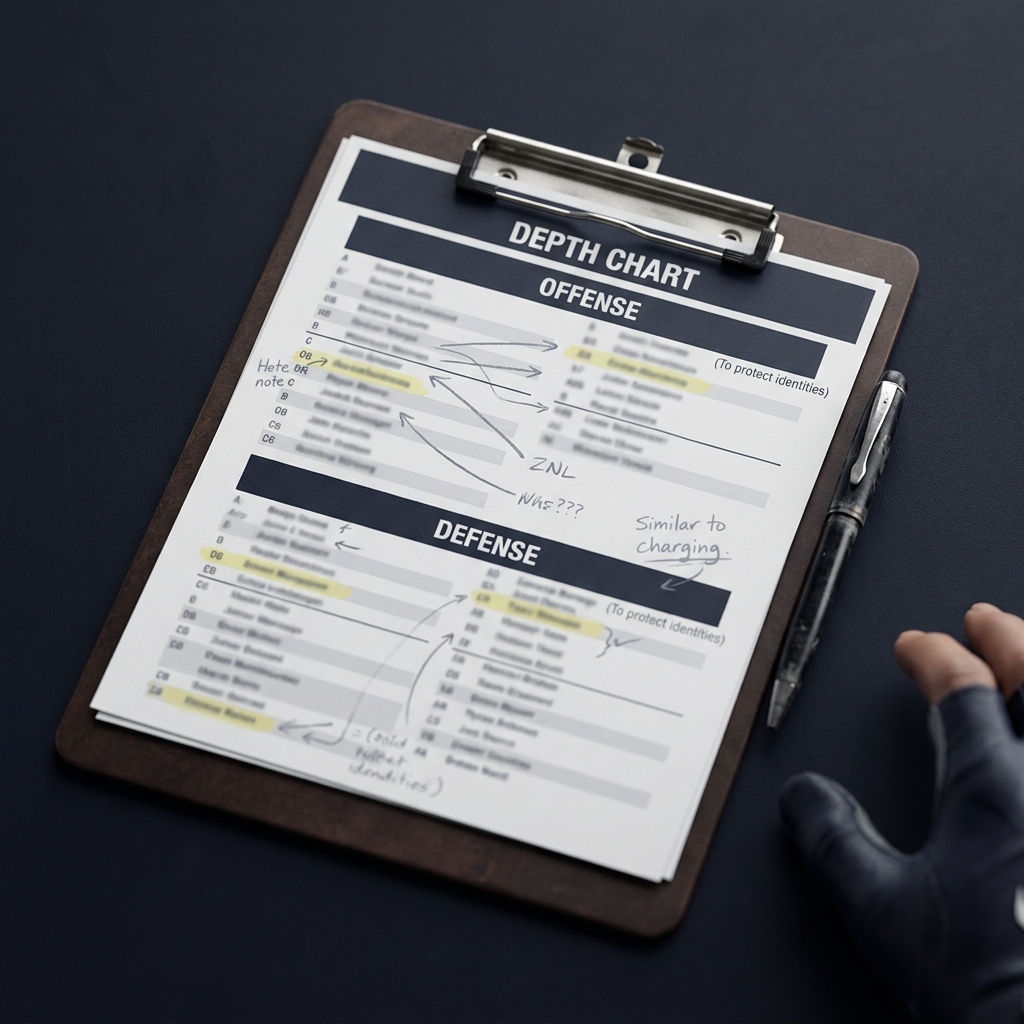
Transfer-portal windows were modified in 2024 and 2025 so that roster turnover clusters in shorter, predictable periods and can change team strength quickly; traders who do not regrade depth charts around those windows often trade on outdated assumptions about starters and backups, as noted in the DI Council summary DI Council recruiting calendar changes.
To reduce mistake risk, use a compact regrading checklist: identify confirmed ins and outs, assign an impact rating to each move, update starting assignments, and adjust injury replacement assumptions. The checklist below is a repeatable mini-template traders can use every portal cycle.
Step 1: Collect confirmations from school releases and beat reports. Step 2: For each incoming player, mark role probability on the depth chart: likely starter, rotation, or depth. Step 3: Convert role probability into a short numeric impact rating for offense and defense, then aggregate by positional group to get a team-level adjustment.
Warning signs that markets are still stale include lines moving sharply on small news, inconsistent depth-chart reports across outlets, and sudden volume spikes after portal announcements; those are signals a regrade is overdue and a conservative sizing response is prudent.
Late-season incentives after CFP expansion and how they shift value
The 12-team College Football Playoff changed end-of-season incentives by granting seeds 1 through 4 a bye and giving seeds 5 through 12 first-round home games, which alters coaching decisions about rest and lineup choices late in the season; see the CFP release for format details CFP 12-team format details.

Traders should translate those incentives into concrete rules: teams competing for a bye are more likely to rest marginal players earlier when a bye is secured; teams fighting for home first-round advantage may prioritize short-term wins and play deeper rotations. Watching announced rest days and confirmed lineup decisions provides clearer signals than assuming standard end-of-season behavior.
Practical signals to watch include official practice reports, coach press conferences that mention lineup priorities, and roster usage patterns in preceding games; when price moves contradict those signals, investigate whether markets misread incentive dynamics before sizing positions.
Monitoring conference tech adoption to avoid live-market surprises
The NCAA approved optional in-game technology in 2024, but adoption is a conference-level choice, so traders need a routine to detect which conferences and venues actually use the tech each week; the NCAA announcement describes the approval context Optional technology rules approved for 2024.
Set a simple monitoring routine: check weekly conference press releases, follow team beat reporters, and maintain a short watchlist of venues known to adopt new tools. Keep a small log indicating conference adoption state so live traders can adjust assumptions about in-play data latency and coach communications.
When you detect adoption in a venue, increase caution on live fills because information asymmetry can cause rapid in-play line changes; conversely, when adoption is absent, expect slower live moves and price accordingly.
Where reduced player-prop availability changes your playbook
As player-prop markets thin due to regulatory pressure, much volume shifts to team markets and derivatives, which have different liquidity profiles and execution characteristics that require changes to sizing and market selection; the NCAA discussion on prop bets provides context for the regulatory push NCAA guidance on player prop bans.
quick market selection checklist for thin player prop environments
use before trading thin derivatives
Actionable rules when props shrink: prefer team markets with established liquidity, reduce single-ticket size relative to the average daily traded volume, and prepare to split orders to manage execution risk. Avoid assuming the same edge exists in derivatives as it did in player props without a re-evaluation of execution cost.
When you migrate from player props to team markets, widen your execution risk margin and factor in larger slippage and wider fair-value ranges; incorporate these adjustments into pre-trade sizing to prevent overexposure in thinner markets.
A core trading framework: from odds to probability to size
Convert odds or spreads into implied probability before backing a position; working in probability prevents many mis-sizing errors because it makes edge explicit and comparable across markets. For a practical primer on converting odds to implied probability and why the conversion matters, see the educational resource on probability conversion How to convert odds to implied probability.
Use implied probability to compute edge by comparing your model probability to market-implied probability. If your estimated win probability exceeds the market-implied probability by a pre-defined threshold, consider initiating a position sized by your staking rule rather than by a fixed unit approach.
Make edge calculation standard in your workflow: record model probability, record market-implied probability, compute edge percent, and then pass the edge to your sizing function. Keeping this as a strict sequence reduces ad hoc sizing and emotional overbets.
Position sizing in practice: Kelly, fractional Kelly, and pragmatic rules
The Kelly criterion gives a theoretical optimum for long-run bankroll growth, but full Kelly is often too aggressive in college markets due to higher variance and liquidity constraints; the theoretical context for Kelly is well articulated in the literature The Kelly criterion: theory and practice.
Practical templates include fractional Kelly rules, such as half-Kelly or quarter-Kelly, plus absolute caps per ticket and per matchweek. For thin markets, add a liquidity cap: limit any single ticket to a small percentage of typical liquidity, and reduce fractional Kelly proportionally when spreads widen.
Execution safeguards matter: use limit orders when spreads are wide, stagger large tickets across time to reduce market impact, and enforce a hard maximum portfolio exposure per matchweek so one event cannot materially impair your evaluation account.
Common analytical and heuristic errors traders repeat
One repeated mistake is importing NFL heuristics directly into college markets. College roster volatility from transfer portal and the different playoff incentives in the 12-team CFP make such transplants unreliable; governance changes affecting the transfer portal are summarized by the DI Council DI Council recruiting calendar changes.
Another error is underweighting recent samples after roster churn; a simple fix is to increase recent-sample weighting for teams with stable rosters and decrease it where major portal turnover occurred. Pair this with frequent depth-chart checks to avoid assuming veteran continuity that does not exist.
Finally, traders often ignore motivation and rest signals created by playoff structure. Quantify motivation effects where possible and add a conservative uncertainty premium when motivation is inferred rather than confirmed by roster or coach statements.
Execution mistakes: timing, market selection, and not trading liquidity
Timing errors include waiting until the last minute when markets reflect clear public news and chasing stale lines after sharp intraday moves. A rule of thumb: if a line moves significantly on thin volume, investigate liquidity and recent news before increasing size.
Market-selection mistakes rise when player props disappear and traders jump into derivatives without assessing daily volume. Prefer markets that show consistent depth across time and avoid single-source feeds for execution decisions.
Best practices include order splitting to manage impact, using limit orders when spreads are wide, and tracking fill rates to detect deteriorating execution quality; keep a weekly log of fill rates per market to learn where your execution rules should tighten or loosen.
Practical scenarios: three trade examples and how to correct mistakes
Scenario A: You price a spread using last season's starter list but miss several incoming transfers who alter the offensive line and rushing profile. Diagnosis: depth-chart stale. Fix: rerun the mini-template regrade after portal confirmations, adjust your team EPA assumptions, and apply a conservative fractional Kelly until the market settles.
Scenario B: A state-level restriction removes a popular running-back prop, and volume cascades into team-yardage derivatives with thin books and wide spreads. Diagnosis: execution risk increased. Fix: reduce ticket size, split orders, and avoid assuming identical edge in the new market without re-evaluating slippage.

Scenario C: You back a pick sized by intuition, not by converting odds to probability, and you overleverage when the market was only slightly mispriced. Diagnosis: missing probability conversion. Fix: convert the displayed odds to implied probability, compute edge, then apply fractional Kelly and a liquidity cap before placing the trade; see the odds-to-probability primer for practical conversion steps Odds to probability guide.
Decision checklist: criteria to accept, size, and exit a college football trade
Pre-trade acceptance questions: has the roster been regraded this week, is the market showing consistent depth, is implied edge positive after odds conversion, and is there a clear exit trigger for news or liquidity changes. Make these a checkbox routine before any commitment.
Sizing rules: apply fractional Kelly, cap single-ticket exposure by a percentage of typical market liquidity, and set a maximum percentage of portfolio exposure per matchweek. If liquidity is thin, reduce size further or skip the trade.
Exit triggers: close or reduce positions on confirmed lineup changes, on fills that exceed expected slippage, or when correlated news materially changes your model probability. Keep tight, predefined thresholds to prevent ad hoc escalation.
Final summary: how to avoid the most common college football trading mistakes
Recurring errors cluster around outdated depth charts, misapplied pro heuristics, execution on thin liquidity, and sizing without explicit probability conversion. The single most important habit to adopt is a weekly routine that regrades rosters, checks conference tech adoption, converts odds to probability, and applies conservative fractional sizing.
Next steps: implement a weekly checklist, track portal-driven roster changes, record fill rates to monitor execution quality, and incorporate probability conversion into every trade decision. Remember that structured routines improve long-term consistency but do not guarantee outcomes, and responsible participation and risk awareness are essential.
Regrade immediately after confirmed roster moves are posted, and update depth charts continuously during the first two weeks after the window because role clarity often changes rapidly.
Full Kelly is usually too aggressive for college markets; use fractional Kelly with liquidity caps and conservative portfolio exposure limits instead.
Look for sharp line moves after minor news, inconsistent depth charts across sources, and sudden volume spikes following portal announcements.
References
- https://www.ncaa.org/news/2024/10/9/media-center-di-council-recommends-changes-to-football-recruiting-calendar-including-modification-to-transfer-windows.aspx
- https://collegefootballplayoff.com/news/2024/2/20/college-football-playoff-unveils-12-team-format-details-for-2024-25.aspx
- https://www.ncaa.org/news/2024/4/18/football-optional-technology-approved-for-2024-season.aspx
- https://www.ncaa.org/news/2024/3/27/media-center-ncaa-calls-on-states-to-ban-prop-bets-on-college-athletes.aspx
- https://www.fundedplays.com/challenges
- https://www.mybookie.ag/sports-betting-guide/how-transfer-portal-changes-affect-college-football-futures-odds/
- https://www.fundedplays.com/blogs
- https://www.covers.com/ncaaf/transfer-portal-buy-sell-hold-best-bets-2026
- https://www.pinnacle.com/en/betting-resources/educational/how-to-convert-betting-odds-to-probability
- https://doi.org/10.1142/9789814335409
- https://www.fundedplays.com/blogs/how-fundedplays-evaluations-work
- https://www.fundedplays.com
- https://thesportjournal.org/article/the-impact-of-head-coach-and-student-athlete-decision-making-in-the-transfer-portal-era-of-college-sports/