
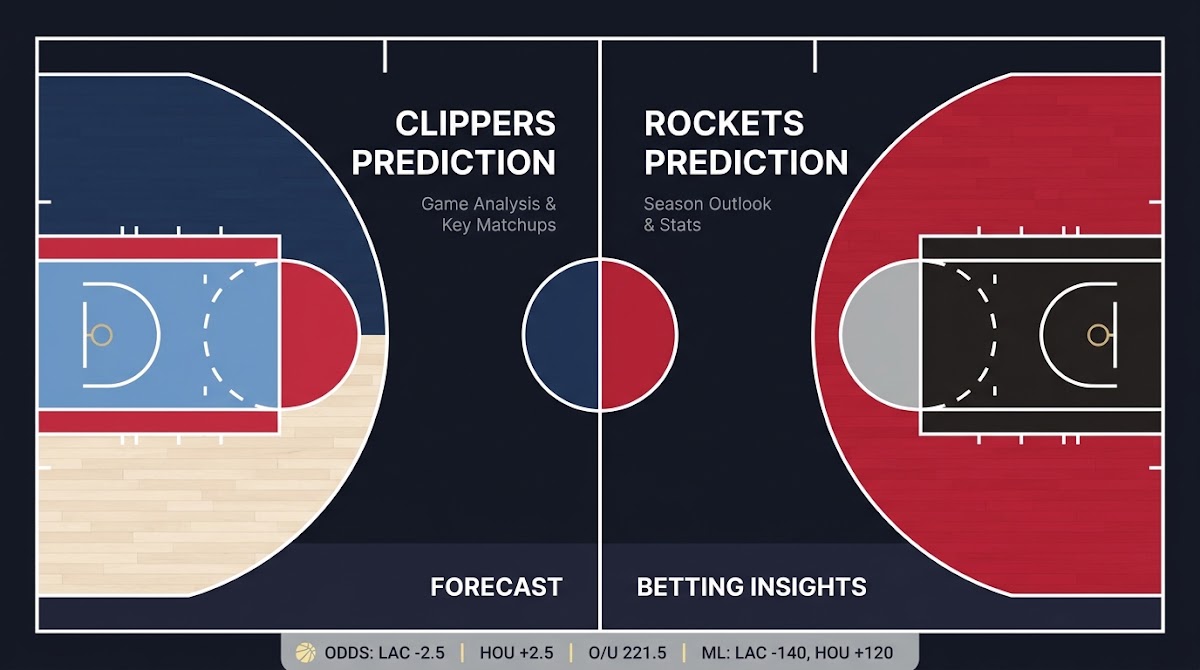
clippers prediction, market consensus and quick verdict
Immediate answer: based on consensus lines aggregated before tip, identify the market favorite and a practical spread to expect, then lock your view only after an injury re-check and any late line movement. For a reliable view of current pricing and who is favored, use a live aggregator to see the consensus moneyline and spread and any drift toward one side, for example Action Network odds provide an up-to-date market snapshot that shows which team the market favors at a glance Action Network odds.
If published model projections disagree with the consensus by multiple points, note the divergence and treat it as an input rather than a decisive signal; neutral models can explain why a market view might differ and help set an estimated score band TeamRankings projections.
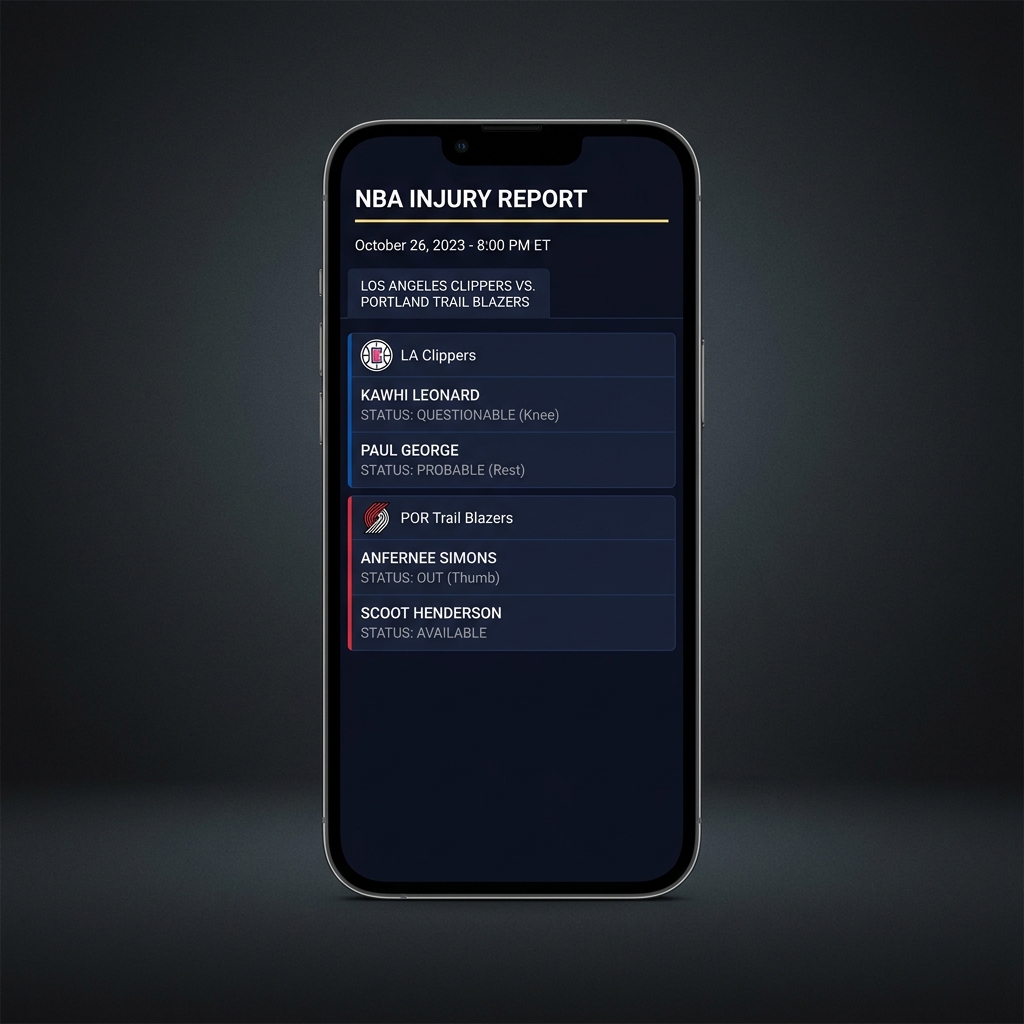
Always verify player availability near tip because official game-day updates can change pricing sharply; checking the NBA official injury report within the last hour is part of the final verification process NBA official injury report, or consult RotoWire's injury report for an additional feed.
How to read the NBA injury report before lock
Check the official NBA injury report on game day to confirm starter and rotation statuses, then map any absence to the likely rotation change. The NBA official injury report is the primary source for game-day statuses and is updated through the day, so treat it as your authoritative status feed and re-check it close to tip NBA official injury report. You can also consult the team injury summaries at Covers.

Which designations move lines most, and why. The absence of a primary starter, a primary playmaker, or a key rim defender typically alters the spread more than a rotational bench scratch. When a starter is listed out or questionable resolves to out, expect larger market movement because that absence changes both minutes and matchup assignments.
Practical 60-minute workflow, step by step. First, confirm the official report 60 minutes before tip. Second, check follow-up items such as coach confirmations, late scratches reported by team media, and lineup indicators that suggest a different rotation. Third, translate the status into a simple expected minutes and role change for opposing players and re-evaluate the price.
a short live injury-check workflow you can run before lock
Run this in the last 60 minutes before tip
Use the checklist to decide whether a reported status requires changing or holding your initial view. If the check produces two or more material changes to expected minutes or role, treat the situation as a major update and re-open your market assessment.
Advanced metrics to anchor a clippers prediction
To anchor a clippers prediction use standardized efficiency metrics such as Offensive Rating, Defensive Rating, and Net Rating as defined by the NBA Stats glossary; these metrics measure points scored or allowed per 100 possessions and give a more context-stable view than raw totals NBA Stats glossary.
Net Rating is the simplest single-number summary for comparative purposes because it combines offense and defense into a per-100-possessions differential. Use the net rating gap between teams to estimate how many points per 100 possessions one side should outscore the other, then convert that gap into a practical projected score differential for a single game.
In practice, combine a short net rating check with recent form and matchup details. If the net rating gap is small, treat the game as tiltable by injuries, line movement, or recent schedule effects rather than a stable mismatch.
Head-to-head and matchup factors between Clippers and Rockets
Use the season game logs to summarize head-to-head outcomes but weight those results below current form and injuries; game logs list dates and results that show trendlines, but small-sample head-to-head can mislead if either team has had roster or coaching changes Basketball-Reference game log. For roster status cross-checks you can also view team injury summaries at CBS Sports.
Key matchup areas to watch include how the Clippers defend on the perimeter versus the Rockets ball movement, which wing matchup decides three-point leverage, and the interior rebound battle if the Rockets use a bigger look that limits Clippers' offensive second-chance opportunities. These positional matchups can swing single games even when season ratings are close.
Confirm live odds before you commit
Before finalizing a pick, check the live consensus moneyline and spread to confirm there has been no late shift in market sentiment.
When you translate head-to-head into a practical edge, focus on which team forces the opponent into uncomfortable lineups and whether that tendency is repeatable against the standing rotation you expect to see on game day. For continued commentary and posts, see the Funded Plays blog.
Tracking market movement and what to watch
Watch consensus live odds and line drift on a reliable aggregator so you can see both the consensus price and how that price moves over time; aggregators show whether a side is receiving sustained action and if the market is shifting toward that team Action Network odds.
Common causes for late market moves include injury updates, significant lineup confirmations, and large tickets from sharp accounts that force books to adjust. When you see late drift, note the timing and the likely cause before changing your pick.
A simple rule of thumb to decide whether to follow market drift is this. If the market moves more than a threshold you define for yourself because of a verifiable update such as a starter confirmed out, follow the market. If the move lacks a clear cause or is small relative to your threshold, hold your original view and treat the change as a public noise indicator.
Published projections and projected score ranges
Published models produce expected scores by combining efficiency inputs, pace, and home-court adjustments; those projections are a neutral estimate to compare against the market and can be converted into a projected spread by subtracting the away score from the home score TeamRankings projections.
When model outputs diverge from the market, quantify the gap. For example, a projected home advantage of five points implies a spread near that value before books factor risk and liabilities. If the live spread differs by multiple points, the disagreement is worth investigating for possible value.

Skill-based challenge platforms let users record picks, document rationale, and measure consistency without implying any guaranteed outcomes. Use the model versus market comparison as a documented input when you submit a pick on a performance-focused platform. See Funded Plays for platform details.
How to form a concise clippers prediction and checklist
Checklist item details. Market: record consensus moneyline and spread and note any rapid drift. Injuries: confirm starters and primary rotation changes. Net rating: check the per-100-possessions gap. Head-to-head: note matchup quirks. Model: use a neutral projection to set a score range.
Decision criteria to accept a pick. Accept when at least three of the five inputs point to the same side and no game-day injury creates more than a two-rotation impact. Reject when the inputs split without a clear driver, or when late information invalidates your prior edge.
Because platform rules or the objectives of a challenge may change how you size or enter a pick, document the time and source of each input and keep a concise log so you can review outcomes against your stated rationale later.
Common errors, traps, and how to avoid them
A frequent mistake is overweighting small-sample head-to-head results. Small samples can highlight anomalies that are not repeatable; instead use head-to-head as context, not as the primary driver of a pick.
The market favorite is the team with the consensus moneyline advantage on a live aggregator; confirm the favorite and any late injury or line movement within the last 60 minutes before tip before making a final pick.
Another common trap is ignoring late injury updates. Failing to re-check the official report close to tip can leave you exposed to abrupt market moves you did not anticipate. The safeguard is a routine re-check within the last 60 minutes.
Chasing market movement without a rules-based reason is also damaging. If you do follow drift, record the reason. If you do not, log that decision so you avoid second-guessing during live outcomes.
Conclusion: short pick, estimated range, and next steps
One-sentence conditional pick. With a market consensus showing the favorite and no late injury reversals, take the market-favored side when three of the five inputs align, but only after a final injury re-check in the last hour.
Estimated score and spread range. Use neutral projections to set an expected score band, then convert that to a spread band and compare it to the live number; if model and market are within your tolerance return to step checks, if they diverge materially, prioritize injury and rotation clarity before committing to a different side TeamRankings projections.
Next steps and record keeping. Note the time of your market and injury checks, keep a short rationale for the pick, and log the outcome so you can evaluate pattern performance over time. For challenge users, this disciplined record is central to consistent evaluation.
Re-check the official injury report within the last 60 minutes before tip and again at lock if practical.
No, use model projections as a complementary input; prioritize market odds and injury clarity for the final decision.
Log the time, consensus price, injury statuses, model output, and a short rationale so you can review outcomes objectively.
References
- https://www.actionnetwork.com/nba/odds
- https://www.teamrankings.com/nba/predictions/
- https://official.nba.com/injury-report/
- https://www.rotowire.com/basketball/injury-report.php?team=LAC
- https://www.covers.com/sport/basketball/nba/teams/main/la-clippers/injuries
- https://www.nba.com/stats/help/glossary
- https://www.basketball-reference.com/leagues/NBA_2026_ratings.html
- https://www.basketball-reference.com/teams/HOU/2026_games.html
- https://www.cbssports.com/nba/teams/LAC/los-angeles-clippers/injuries/
- https://www.fundedplays.com/challenges
- https://www.fundedplays.com
- https://www.fundedplays.com/blogs
- https://www.fundedplays.com/blogs/how-fundedplays-evaluations-work