
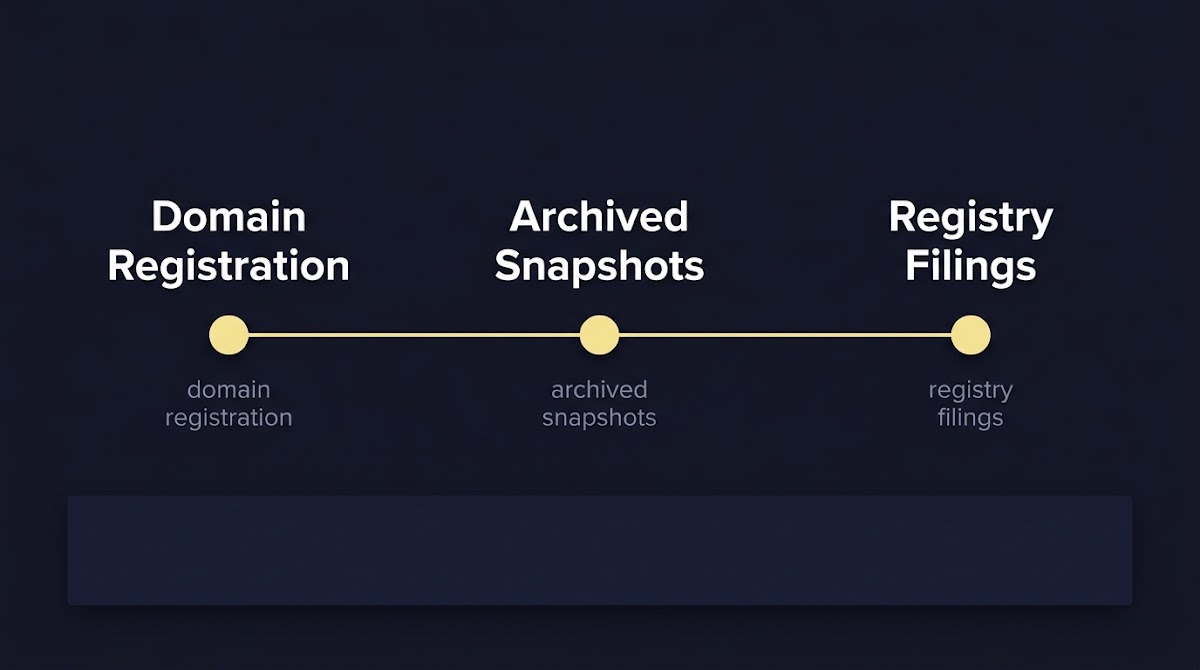
What 'How long has BUSR been around?' really asks
Definition: age vs. operating history
When someone asks how long BUSR has been around they may mean different things. The phrase can refer to the legal founding date of the company that owns BUSR, the date the brand first offered public-facing services, or the date a particular website or domain went live. Clarifying which of these meanings you intend helps avoid publishing misleading statements.
For writers and researchers the practical distinction matters. A company can be incorporated long before a product reaches the public, a brand can be relaunched after a reorganization, and a domain registration date does not equate to the date a service launched. Treat those as separate milestones when building a timeline.
Precision helps readers understand the maturity and track record of the service they are researching, and helps publishers avoid repeating inaccurate claims. For example, distinguishing a corporate incorporation year from the product launch date can change how a reader interprets longevity and reliability.
Accuracy also matters for trust and regulatory contexts. Readers assessing a sportsbook-like service will often look for licensing records and contemporaneous press coverage, so being precise about terms such as founding, launch, and rebrand reduces confusion.
Quick answer and how to trust it
When a short answer is possible
A short answer can be appropriate when a clear primary source exists, such as a government business registry entry or a contemporaneous press release announcing a public launch. In those circumstances you can provide a concise statement that gives the relevant milestone and cites the primary source you used to verify it.
When you cannot find primary documentation, offer a cautious summary instead of a single confident year. For example, say the brand appeared online in a given range of years and note that the date is based on the earliest archived snapshot you could verify.
When a precise date needs verification
Always treat specific years and dates cautiously until you verify them. If you see a year listed on a secondary source, do not publish it without corroboration from at least one primary or contemporaneous record. This protects readers and preserves editorial credibility.
Before publishing a precise founding year, compile the immediate signals that require verification, such as the site footer, an about page, a press release, or a licensing database entry. If those do not align, present the discrepancy and explain which sources you relied on.
Context: what to check about any sportsbook brand
Public records and corporate filings
Start with official public records when they are available. Business registries and corporate filings can reveal incorporation dates, registered agent details, and sometimes historical ownership changes. Those records are often the strongest evidence of a company's legal existence.
Keep in mind that a legal registration date is not always the same as the date a consumer product or website launched. Use the registry to establish when the company was formed, then corroborate product launch timing with contemporaneous public-facing records.

Online presence and historical snapshots
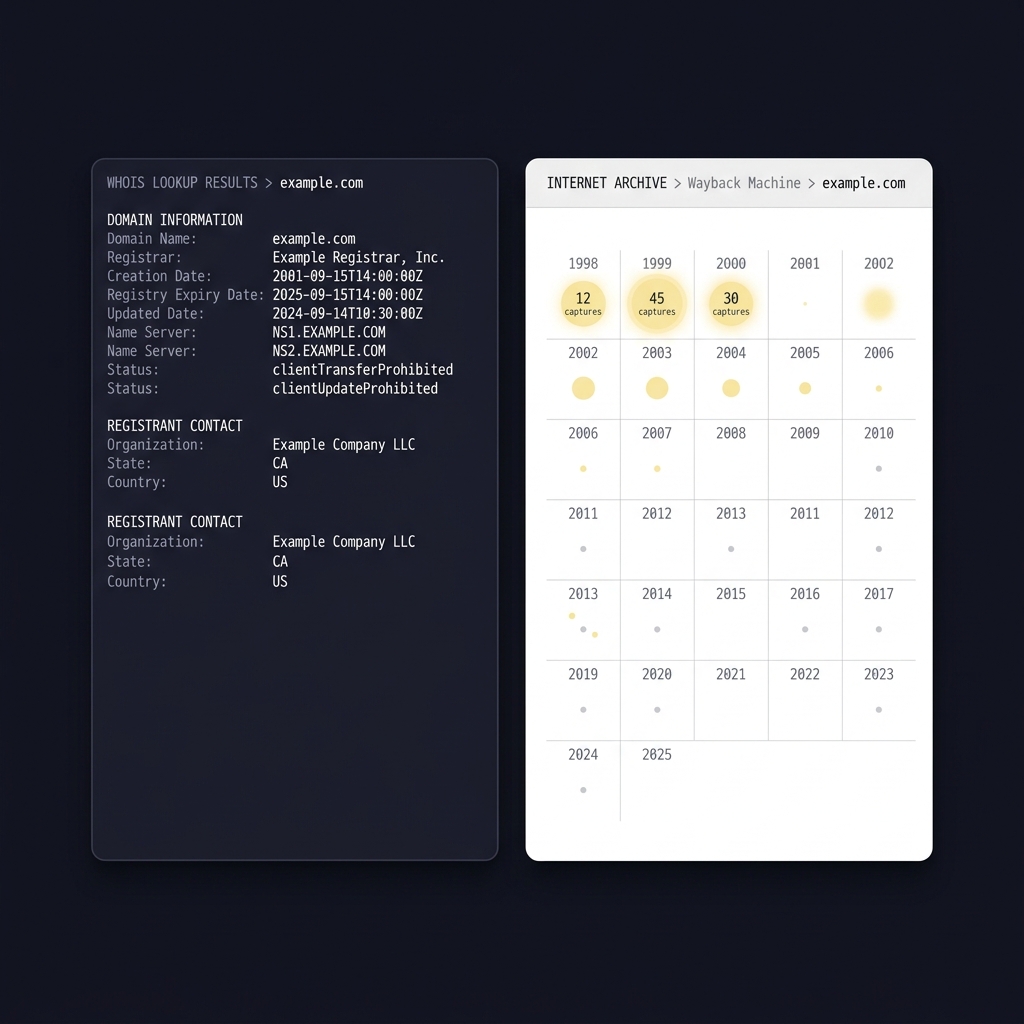
Domain records and web archives are practical tools for mapping public operating history. WHOIS information can show when a domain was registered and when it was last updated, and the Wayback Machine can reveal the earliest captured public pages.
When you document online presence, note both domain registration and earliest public snapshots separately. A domain might be registered and unused for years before a live product appears, and a rebranding can replace older content with a new site that masks earlier operations.
Step-by-step framework to verify BUSR's founding and public operating history
Step 1: official site and corporate disclosures
Begin by checking the brand's own disclosures. Look for a clear about page, terms of service, privacy policy, or corporate information section that names the operating entity and any licensing statements. These pages sometimes include establishment or launch dates, but those claims must be corroborated with primary records.
Record the exact URLs and take screenshots or PDF saves of the pages you consult so you can show contemporaneous evidence of what the site stated when you checked it. If the site lists a company name, use that name in follow-up registry searches to look for a match.
Review the FundedPlays Challenges page for details about how structured challenge platforms document their operations
We welcome corrections and source tips. If you find an official record or archived page that clarifies BUSR's timeline, please check your sources and share the details with the publication to help keep the timeline accurate.
Step 2: domain WHOIS and archive snapshots
Run a WHOIS lookup on the primary domain to capture the domain creation date, registrar, and any public update timestamps. Record these data points and treat them as domain milestones, not definitive product launch dates.
Next, search the Wayback Machine or other web archives for the earliest captures of the domain and any related brand pages. Save the earliest stable snapshot links and note the page content and any dates or press mentions visible on the snapshot.
Step 3: regulatory and licensing records
Search relevant licensing authorities and regulatory databases for entries that match the operating company or brand. Licensing records often show the effective date of authorizations and can be strong evidence of when a service began regulated public activity.
If you find a licensing entry, capture the public record URL, the date listed, and any associated documentation. Licensing may be regional; identify which jurisdiction issued the authorization and whether the license applies to the specific service you are researching.
Step 4: press coverage and press releases
Search press archives for contemporaneous coverage and press releases. Early news articles, industry blogs, and official press statements can provide independent confirmation of launch dates, major rebrands, or ownership changes.
Give preference to contemporaneous coverage published close to the milestone you are verifying. Later summaries may repeat errors from earlier sources, so tracing the earliest independent mentions is often more reliable.

Public records and official sources to consult
Types of records that confirm age
Primary records to consult include national or state business registries, licensing authority databases, and official regulatory notices. These sources often provide legal dates and the names of officers or registered agents, which help tie a brand to a corporate entity.
Other useful records include official press releases, archived versions of corporate websites, and public filings that mention the brand by name. When available, prefer primary records and contemporaneous documentation to later summaries or third-party recaps.
How to verify authenticity
Check for consistent identifiers across sources, such as a corporate registration number, identical corporate names, or matching addresses. Discrepancies in those fields can indicate a rebrand, a related but distinct business, or an error in reporting that needs resolving.
When a record is behind a paywall or in a private database, capture the citation details and note any limits on public access. If you rely on a paid database, document the record fields you used so an editor or reader can follow the same trail.
Using web archives, WHOIS and press coverage effectively
How to read archive timestamps
Archive timestamps indicate when an external service captured a copy of a public page. Use the timestamp as evidence that the content existed in public form by that date, but remember it does not prove the page first appeared exactly then. The earliest capture is a lower bound for public availability.
Save Wayback snapshot permalinks and cite them in your research file. When multiple snapshots exist, compare versions to see when key content such as product descriptions or press sections first appears and how it changed over time.
To determine how long BUSR has been around, verify legal filings, domain records, web archives, licensing databases, and contemporaneous press. Do not assume domain registration equals launch, and only publish a specific year when at least two independent primary or contemporaneous sources agree.
Interpreting WHOIS creation and update dates
WHOIS records list domain creation, last updated, and expiration dates. Treat creation dates as the earliest verifiable record of domain ownership, but not as proof of product launch. If a domain was registered long before it hosted public pages, the registration date alone is insufficient to claim a launch year.
Note that some WHOIS details can be redacted for privacy, and historical WHOIS records may be limited. When available, export or screenshot WHOIS output that contains the key fields you used.
Spotting early press mentions
Search news archives and industry sites for the earliest independent mentions of the brand. Early press coverage often records launch events, product rollouts, or executive hires that help place a service on a public timeline.
When you find an early mention, check whether the article cites a press release or an interview. If so, document both the press article and the source it references to build a more robust chain of evidence.
Decision criteria: when an age claim is reliable enough to publish
Minimum evidence to state a founding year
Adopt a conservative publication rule: state a specific founding or launch year only when you have at least two independent primary or contemporaneous sources that converge on the same date. Examples of acceptable pairs include a business registry entry plus a contemporaneous press article, or a regulatory license date plus an archived site snapshot.
If only one primary source is available, label the claim clearly and explain the limitation. Avoid presenting single-source claims as fully verified when a second independent confirmation cannot be produced.
When to present a range or tentative dates
If sources give conflicting dates, present a range or describe the uncertainty. For example, state that the earliest verified online presence dates to a range of years according to archive captures, and explain which sources were checked and why they differ.
Use cautious phrasing such as probably, appears to have, or earliest verifiable evidence indicates when you cannot confidently assert a single founding year. This gives readers an honest account of the evidence instead of a false certainty.
Common mistakes and pitfalls when reporting a sportsbook's age
Confusing registration and launch
A frequent error is treating a domain registration or corporate incorporation date as synonymous with a public product launch. That conflation can produce incorrect claims about how long a brand has served customers.
Another mistake is failing to notice rebrands. A company can operate under different names or brands; calling a rebrand the founding event can mislead readers unless the distinction is explicitly explained.
Relying on third-party summaries without verification
Do not depend solely on aggregator sites, forum posts, or later summaries that may repeat mistakes. Always trace claims back to primary or contemporaneous documents when possible, and document any discrepancies you find between sources.
Before publishing, run a pre-publish checklist: verify each cited URL, save Wayback snapshot permalinks, and confirm corporate or licensing records. If a date cannot be confirmed, flag it as uncertain rather than inventing a year.
Practical examples and scenarios for writers to follow
Example 1: clear founding record exists
Template: If you find a clear founding year in a government registry and a contemporaneous press release announcing a public launch in the same year, state the year and cite both records. Explain which date corresponds to the legal formation and which corresponds to public launch when they differ.
Editable sample sentence: "BUSR's operating entity was registered in [Year], and contemporaneous press coverage shows the brand launching public services later that year." Follow that with citations to the primary records you used.
Example 2: founding date unclear or disputed
Template: When evidence is conflicting present a conditional summary and list the sources you checked. For example, say the earliest archived site snapshot is from one year while a corporate registry shows a different year, then explain which documents you relied on and why you present a range.
Editable sample sentence: "Available records show the domain was first captured in [Year A] and a corporate filing lists registration in [Year B]; based on these independent records we describe the timeline as [Year B] for registration and earliest public evidence from [Year A]."
Template language for unknown cases or limited evidence
Template: If you cannot locate sufficient verification explain the research steps taken and invite readers to share primary documents. Use transparent language like: "We could not find primary records that confirm BUSR's founding year; here are the sources we checked and the earliest archived pages we could verify."
Editable sample sentence: "No primary record could be located that confirms a single founding year; the article outlines the checks performed and the earliest verifiable online presence we identified."
Checklist: what to capture and how to document sources
Minimum citation fields to record
For each source capture these fields: full URL, snapshot permalink if applicable, snapshot or publication date, access date, and a short note explaining how the source supports the claim. This creates a reproducible trail for editors and readers.
File naming and archive habits
Use a consistent file naming convention for saved evidence, such as brandname_source_date, and store screenshots or PDFs in a shared folder with an index file that lists what each saved item proves. Doing this minimizes the risk of losing essential verification documents.
When saving archived pages, keep the Wayback or archive permalinks and record the exact capture timestamp. For official registries, save the document ID or registration number along with a screenshot of the record page.
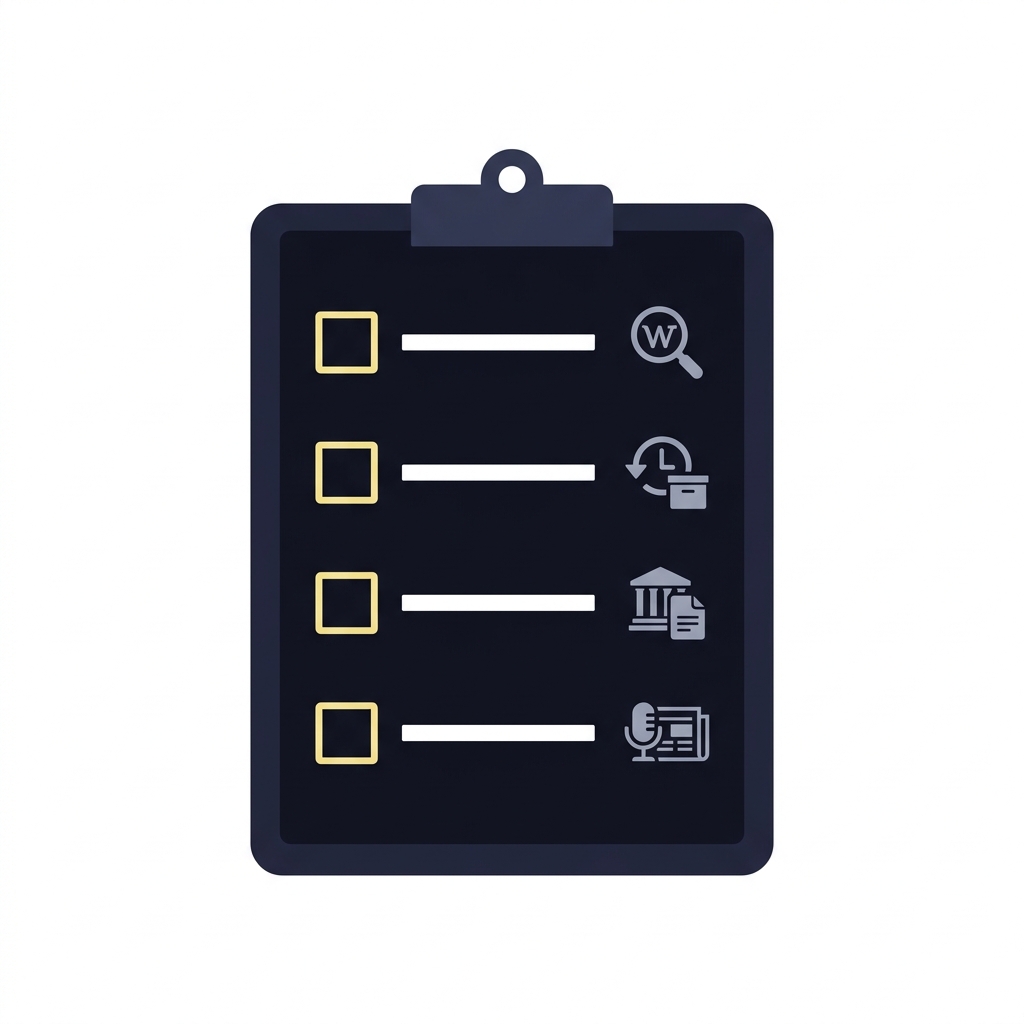
Also record any conflicting evidence and note how you resolved or presented the disagreement in your draft. That transparency helps readers and future researchers follow your reasoning.
How to present the final answer about 'How long has BUSR been around?'
Headline phrasing options
Choose conservative headline phrasing that matches your evidence. If you have a confirmed date use a headline like: "BUSR founded in [Year], according to registry and press records." For probable or range-based findings use: "BUSR: earliest verifiable online presence [Year] to [Year]."
If the evidence is insufficient, use a headline that signals uncertainty and explains why. For example: "BUSR timeline unclear, here is what we checked and why."
In-body phrasing with cited sources
In the first paragraph state the most defensible milestone and the type of evidence that supports it. Use precise language such as: "According to [source], the company was registered in [Year], and the earliest archived public page we found dates to [Year]." Be explicit about what each source proves.
When uncertainty remains, include an editors note or a short methodology box explaining the checks performed and where readers can submit corrections or additional documents that may clarify the timeline.
Final summary and recommended next steps for researchers
What to do if you cannot find conclusive records
If primary records are not available, publish the best-supported account you can with transparent caveats and invite readers to provide documentation. Keep a public research log of the sources checked so readers can see the trail of evidence and suggest additions.
Monitor official channels and the brand's public statements for updates, and set a reminder to recheck registries and archives if new information appears. Avoid asserting precise dates until you have corroborating primary records.
How to flag updates
If new primary evidence emerges after publication, update the article promptly and note the change in an editors note. Cite the newly found primary document and explain how it changes the previously reported timeline.
Maintain a brief corrections policy section that explains how readers can submit evidence and how you will verify and incorporate it into the article timeline.
Further reading and tools to use
Quick list of verification tools
Useful tools include WHOIS lookup services, the Wayback Machine, government business registries, licensing authority databases, and reputable news archives. Use them in combination to build a converging set of evidence rather than relying on a single type of record.
When asking for help from editors or readers, provide a short template for submission that asks for the source URL, a screenshot, and an explanation of the document's provenance.
How to ask for help from editors or readers
Template request: Please provide the URL or a screenshot of the official record, note the date on the document, and explain how it connects to BUSR's timeline. We will review and update the timeline where appropriate.
Closing advice: prioritize primary sources, save archive snapshots before publishing, and avoid stating unverified founding dates. That approach protects readers and strengthens reporting.
No. WHOIS creation shows when a domain was registered, which is a useful milestone but not definitive proof of product launch or public operations.
At least two independent primary or contemporaneous sources that converge on the same date, such as a business registry entry plus contemporaneous press coverage.
Explain the research steps you ran, present a tentative range if appropriate, and invite readers to submit primary documents that clarify the timeline.