
Quick answer and how we measure 'most feared' on the court
Provisional, evidence-based takeaway: when we combine recent GM Survey perceptions with award recognition for clutch play, defensive hardware, and All-NBA offensive dominance, the players who most reliably create opponent anxiety in 2026 are those who threaten lineups across multiple axes rather than a single skill. This summary uses bulls prediction as an analytical lens to show how consensus inputs can be folded into practical forecasting and discussion.
To be clear about method: we do not claim a single definitive person holds the title forever. Instead, the label 'most feared' is treated as a measurable perception derived from league consensus and awards, and it can change with postseason results, injuries, and season-to-season shifts in role or usage. Using a structured approach makes the question useful for modelers, analysts, and engaged fans.
Why league consensus matters. General managers and front office voters are asked annually about whom they view as toughest to guard, who they would trust with a last shot, and who they view as the best defenders; these responses, collected in the GM Survey, offer consistent peer perception data that complements award voting patterns and All-NBA designations 2025-26 NBA GM Survey. Coverage and commentary on the survey are also available from major outlets such as NBC Sports.
How each measurement maps to fear: perception shows opponents' expectation of difficulty, clutch recognition signals late-game trust and shot-making that affect endgame strategy, defensive awards and All-Defensive teams reveal who suppresses opponent efficiency, and All-NBA status flags players who force coverage changes across possessions. Together these axes create a multidimensional view that is useful for conversation and for models that need to weight opponent choices and lineup planning.

What we mean by 'most feared' and how bulls prediction relates to perception
Operationally, 'most feared' in this article means a player who creates measurable matchup difficulty across at least two of these axes: defensive deterrence, offensive creation, late-game trust, and the degree to which opponents must alter rotation or coverage. That definition keeps the discussion anchored to observable decisions made by coaches and front offices rather than to anecdote or viral highlights.
GM Survey categories such as 'toughest to guard' and 'last-shot trust' are valuable because they express how league decision-makers expect a matchup to go. Those responses reflect on-court outcomes and strategic judgment across many scheduling contexts, so they work as proxies for fear when combined with awards and selections 2024-25 NBA GM Survey. Further written takeaways on the survey appear in outlets such as The New York Times.
Connecting this to bulls prediction: using consensus inputs from surveys and awards mirrors how a modeler might treat opinion data within a forecasting framework, weighting signals for consistency and situational value. A bulls prediction approach that incorporates GM Survey signals alongside objective performance indicators can help capture which opponents change game plans, though the term here describes an analytical style rather than any claim about a single system's accuracy.
Why this matters to fans and analysts: treating 'fear' as a composite perception helps avoid overconfidence that comes from single highlights or box score tales. It also makes the concept usable for lineup decisions, late-game planning, and scenario construction in predictive work without leaning on unquantified narratives.
See how the FundedPlays Challenges page explains structured evaluation programs and skill‑based forecasts
Read the evidence and follow updates to see how consensus measures change across the season; a structured view helps you reason about matchups rather than rely on hot takes.
The framework: four metrics to rank fear in 2026
Metric 1, GM Survey perceptions. The GM Survey records which players league executives and decision makers see as hardest to guard or most trusted in clutch situations. As a peer-sourced measure, it captures a strategic view that is hard to replicate from box score data alone and is therefore a useful first axis for our ranking 2025-26 NBA GM Survey.
Metric 2, Clutch Player recognition. Awards such as the Kia NBA Clutch Player of the Year highlight players whose late-game outcomes change coaching approaches. Recognition here signals that opponents must plan specifically for end-of-game scenarios rather than treating late possessions as neutral; Stephen Curry's recent Clutch POY underscores that a recognized clutch profile alters opponent behavior in close games Stephen Curry named 2023-24 Kia NBA Clutch Player of the Year.
Metric 3, Defensive hardware and All-Defensive selections. Defensive Player of the Year winners and All-Defensive teams identify who suppresses opponent efficiency through rim protection, switching versatility, or on-ball disruption. Those players force linchpin changes to pick-and-roll coverage, cutting lanes, and interior attack strategies; Rudy Gobert's DPOY recognition is a clear example of how award recognition maps to paint intimidation Wolves’ Rudy Gobert named 2023-24 Kia NBA Defensive Player of the Year.
Metric 4, All-NBA offensive dominance. All-NBA selections reflect offensive impact that consistently forces defensive adjustments. Players who make All-NBA teams often create coverage stress that changes opponent rotations and defensive matchups. The 2023-24 All-NBA teams included players whose offensive footprints require special planning, and that offensive threat is an essential part of fear for opposing coaches and players 2023-24 Kia All-NBA Teams announced.
Weighting logic, qualitatively. Perception inputs from GM Surveys should be treated as a high-value signal for how coaches conceive matchups, while awards and team selections provide confirmation of a player's realized impact. Clutch recognition provides situational multiplier value for late-game fear, and All-NBA offensive status provides baseline daily matchup stress. For a practical bulls prediction style ranking, give perception and All-NBA status primary weight for matchup planning, defensive hardware secondary weight for immediate rotation effects, and clutch recognition a multiplier for game-ending decisions.
Limitations. GM Surveys contain expert opinion but remain subject to sample bias, and awards can lag a player's current form or be influenced by narrative. Injuries and postseason performance can quickly change the fear calculus; the framework exists to be updated as new survey and award data arrive.
Top contenders in 2026: what the evidence highlights
Using the four-axis framework narrows the field to a subset of players who appear repeatedly in the consensus metrics. On offense, elite creators who force defensive changes show up on All-NBA lists and in GM Survey responses as matchup problems. Nikola Jokić, Luka Dončić, and Shai Gilgeous-Alexander fall into this category as players whose presence typically requires special defensive plans because they generate offense in ways that standard coverages struggle to fully contain 2023-24 Kia All-NBA Teams announced.
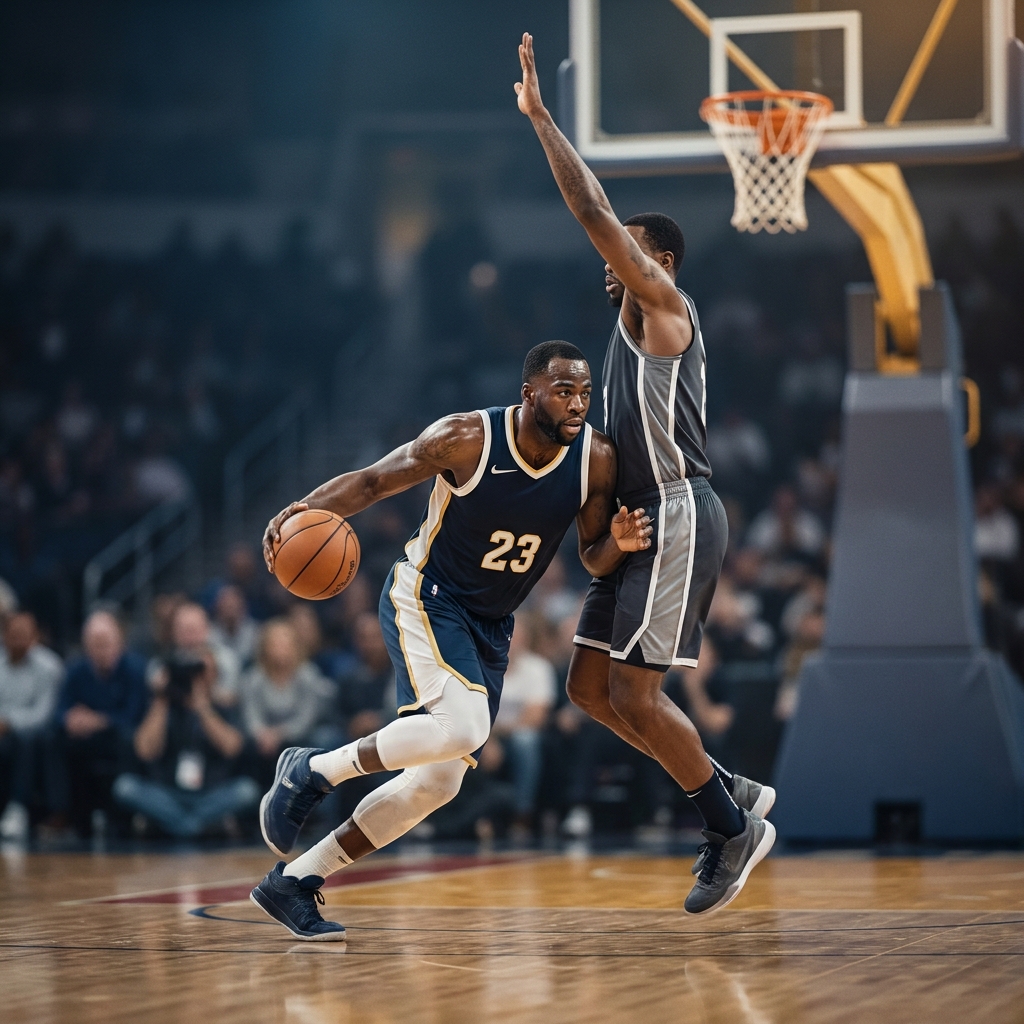
Offensive matchup nightmares change how opponents allocate defensive resources across 48 minutes. A player who can consistently create for himself and others, or who forces double teams that open shots for teammates, creates strategic headaches that ripple through rotations and substitution patterns. Those effects are visible in All-NBA recognition and in how GMs and coaches respond in survey questions about matchup difficulty.
Clutch threat: Stephen Curry stands out in the clutch recognition axis. Winning the 2023-24 Kia Clutch Player of the Year indicates a leaguewide acknowledgment of late-game shot-making and the trust that opponents and peers place in that capacity. That recognition carries psychological and tactical weight when defending close games; teams must plan endgame coverages differently when a recognized clutch scorer is on the floor Stephen Curry named 2023-24 Kia NBA Clutch Player of the Year.
Defensive intimidators also make the list because they change shot selection and attacking patterns. Players recognized on All-Defensive teams, or who have won Defensive Player of the Year, alter opponent behavior simply by their presence. Rudy Gobert, for example, is widely seen as a rim deterrent whose recognition in defensive awards forces interior changes to offense planning Wolves’ Rudy Gobert named 2023-24 Kia NBA Defensive Player of the Year.
Putting the pieces together, the most feared list in 2026 is not a single name presented without nuance. Instead, it is a short set of players who each lead in at least two fear axes: dominant offense that forces coverage, defensive recognition that suppresses efficiency, and clutch profiles that change endgame deployments. That multidimensionality is the common trait among the top contenders.
Players who appear across GM Survey perceptions, clutch recognition, defensive awards, and All‑NBA lists are the ones who most consistently force opponent changes; the consensus method identifies a short set of multi‑axis players rather than a single uncontestable name.
The consequence for matchups is that a player who checks more boxes becomes the de facto focus of opponent game planning whether the threat is scoring, defensive disruption, or late-game finishing. For analysts and fans, framing who is most feared in this way preserves nuance while making the concept useful for models and conversation.
Two-way threats and why multi-axis players create the most fear
Two-way threat is when a player contributes materially on both ends of the floor in ways that require opponent adjustment. In our framework that looks like a player who appears in GM Survey perceptions for 'toughest to guard' or 'last shot trust' while also appearing in All-Defensive lists or defensive award discussions. When both offensive and defensive recognition align, the player increases the cost of substitutions and forces coaches to think differently about rotations and matchup minutes.
Clutch shooting elevates defensive threat because endgame trust changes late lineup decisions. A recognized clutch scorer can shorten a coach's rotation in close games and attract defensive resources that would otherwise be allocated differently. That situational multiplier is why clutch recognition is included as an axis rather than treated as an afterthought Stephen Curry named 2023-24 Kia NBA Clutch Player of the Year.
Examples of multi-axis profiles are instructive: a player who forces double teams regularly because he can score and create for teammates simultaneously imposes offensive headaches, and if that same player can switch on defense or deter interior shots, opponents face compounded lineup problems. The strategic effect is greater than the sum of parts because the opposing coach must weigh both possession outcomes and matchup fatigue when setting rotations.
For analysts using a bulls prediction approach, two-way players demand higher weight because their presence reliably shifts conditional probabilities in late possessions and across substitution windows. See the Funded Plays evaluations blog for related methodology.
Defensive intimidators: a deeper look at paint and switch defenders
Rim protectors and paint intimidation operate differently than perimeter disruption. A rim protector changes shot selection inside the paint, deters offensive drives, and alters where shots are taken. Rudy Gobert's Defensive Player of the Year recognition is an example of how award acknowledgment corresponds to paint deterrence that opponents must account for on every pick-and-roll and drive Wolves’ Rudy Gobert named 2023-24 Kia NBA Defensive Player of the Year.
Versatile switchers and perimeter defenders suppress opponent efficiency by shrinking clean passing lanes and by forcing isolation or less efficient looks. The 2023-24 All-Defensive First Team shows a range of defensive profiles that opponents must address differently, from shot blockers to adaptable perimeter stoppers 2023-24 Kia NBA All-Defensive Teams announced.
Length, positioning, and the ability to switch without a mismatch are practical traits that translate into the perception of fear. A defender who can credibly switch on a variety of ball-screen actions will cause coaches to alter play design; similarly, an elite rim protector will change driving angles and early clock decisions. In both cases the defensive intimidator's presence reshapes play calling and lineup choices.
FundedPlays operates as a place where users can test prediction approaches and structured challenges related to player impact and matchup outcomes. For those seeking to practice skill-based forecasting around how matchups behave, the Funded Plays Challenges page explains the platform's evaluation programs and challenge structure in a factual way

Common mistakes when labeling someone 'the most feared'
One common pitfall is overreliance on a single statistic or highlight clip. Fear is a perception shaped by repeated opponent adjustments, not isolated plays; equating one viral moment with consistent matchup dominance risks mislabeling a player.
Another error is recency bias without context. Playoff performances, injury returns, or a short hot streak can skew narratives. GM Survey perception data and award recognition act as stability anchors because they aggregate viewpoint across the league and across time 2025-26 NBA GM Survey. Additional reporting on survey results is available at USA Today.
A third mistake is conflating popularity or media attention with opponent fear. Coaches and GMs often respond differently than fans; survey and award inputs reflect strategic judgment rather than social buzz. Combining multiple evidence axes helps correct for this confusion and yields more reliable conclusions.
How to use this ranking: practical scenarios and final takeaways
Scenario 1, lineup construction. If a player appears as a top fear candidate across GM Survey responses and All-NBA recognition, coaches may shorten their rotation against him in late game situations. For analysts, that suggests adjusting expected minutes and possession allocation in models when that player's opponent fielding matchups are tight 2024-25 NBA GM Survey. Read more on the Funded Plays blog.
Scenario 2, late-game planning. Clutch recognition should change how you view end-of-game defensive assignments and timeout strategies. Teams may prioritize defensive matchups or foul strategies differently when a player with documented clutch recognition is on the floor Stephen Curry named 2023-24 Kia NBA Clutch Player of the Year.
Scenario 3, analytical modeling. A bulls prediction model that includes GM Survey inputs and award recognition will better capture shifts in opponent behavior than one relying solely on box score per possession rates. Treat perception and awards as multiplier signals that change conditional probabilities for lineup outcomes.
weight consensus signals for matchup fear
Use consistent weights and update after surveys
Final takeaways. The most credible way to name who is most feared in 2026 is to combine GM Survey perceptions with recognition for clutch play, defensive awards, and All-NBA offensive status. That composite approach highlights players who consistently force opponent changes rather than rewarding single-axis dominance. Check GM Survey updates and award announcements regularly to keep the ranking current 2025-26 NBA GM Survey, Wolves’ Rudy Gobert named 2023-24 Kia NBA Defensive Player of the Year. You can also browse resources on Funded Plays.
Evidence-based verdict: no single uncontestable name fits every context, but the players who lead in multiple fear axes are the practical candidates for 'most feared' because they consistently change opponent behavior. Use this framework to keep the conversation anchored in measured consensus rather than headline narrative.
GM Surveys aggregate front office and coach perceptions on matchup difficulty and clutch trust, offering a peer perspective that complements statistical measures.
Clutch recognition adds situational weight for late games but is one axis among several; it should be combined with defensive recognition and All‑NBA status for a fuller view.
Yes, injuries and postseason performance can shift perceptions and should be monitored through updated surveys and award results.