

Quick summary: the most likely pick range for Chicago
One-sentence takeaway, bulls bucks prediction
The short answer on a bulls bucks prediction for 2026: consensus mock boards and live projection trackers center Chicago around a late-lottery selection, roughly picks 9 to 12, with meaningful uncertainty from the lottery and season swings.
This central range reflects rolling mock drafts and standings-based boards that place the Bulls outside the bottom tier but not securely in the play-in threshold; that placement, and the consensus interpretation of team metrics, is what drives the 9 to 12 estimate Tankathon mock draft.
The NBA's post-2019 lottery format and the randomness of the draw mean a top-four outcome remains possible for any non-bottom team, though statistically unlikely; treat the 9 to 12 range as the most probable planning window rather than a certainty NBA draft lottery explainer.
Keep your draft outlook grounded and check live tools often
Track live projection boards and check pick protection trackers before changing trade or roster expectations.
Finally, note the Bulls' 2026 first-rounder carries protection language that can prevent conveyance if the pick lands at the very top; that fact can materially change whether Chicago actually makes a selection in that range RealGM draft pick summary.
What this projection means for fans and analysts
For fans and analysts, a bulls bucks prediction centered on picks 9 to 12 implies a realistic expectation of mid-tier rookie talent, trade flexibility, and lower odds of landing a blue-chip top-4 prospect. Use this projection as a probability framework for roster planning rather than a fixed outcome.
Across the season, treat mock boards as tools for scenario planning: they update with standings and injuries and are most useful when combined with an understanding of lottery odds and protections.
How the current NBA Draft Lottery actually works
Odds structure for top picks
The modern lottery format gives the three worst teams equal top odds, with each of those clubs assigned a 14 percent chance at the No. 1 pick; those post-2019 odds remain the structural baseline that shapes how teams outside the bottom tier are projected NBA draft lottery explainer. See Tankathon's lottery odds for a team-by-team breakdown.
Because the three worst teams share 14 percent odds, the distribution of probability across the remaining non-bottom teams compresses, which reduces but does not eliminate the chances for later teams to jump into the top selections.
Which picks are drawn and how the rest are ordered
The lottery process draws four slots at the top; those four picks are determined by chance among the eligible teams, and after those four selections the remaining first-round positions are ordered by regular-season record. This structure is why records and the random draws interact in non-intuitive ways.
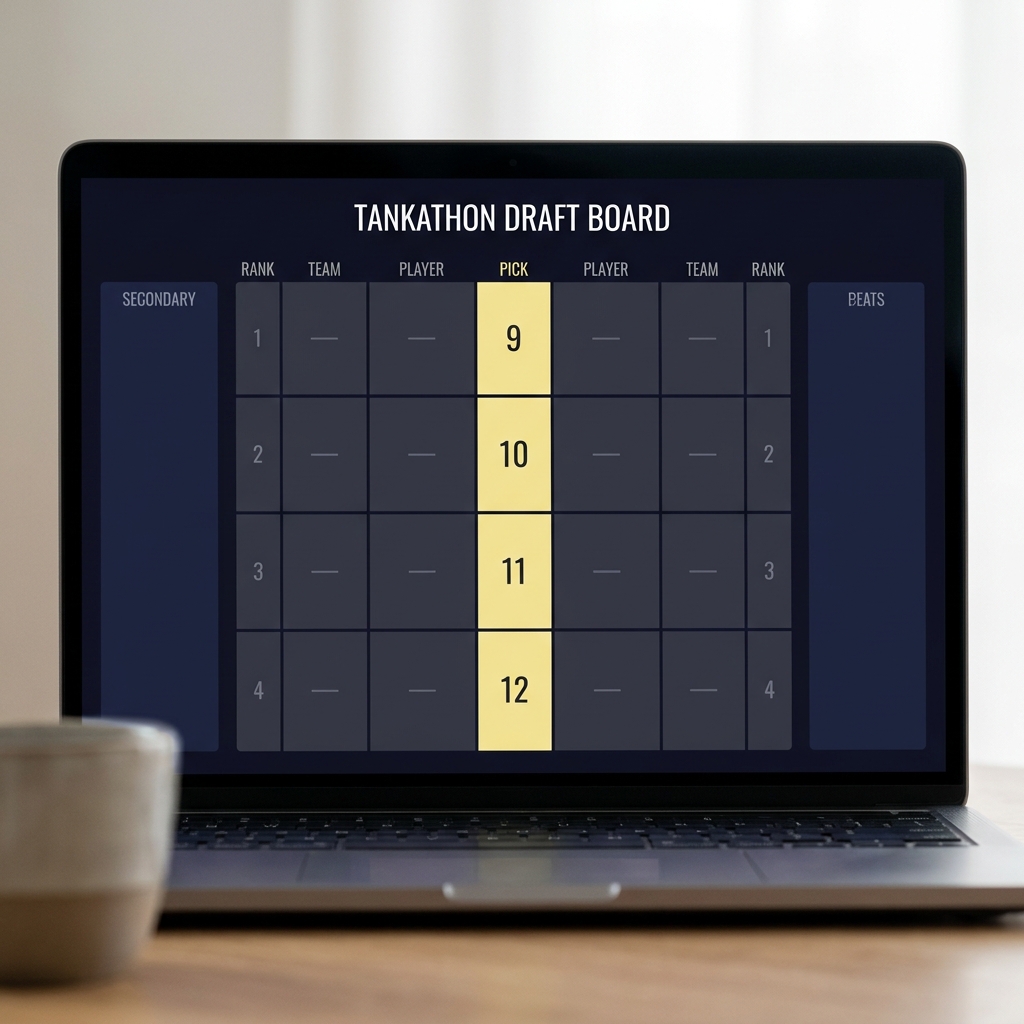
In practice, that means a team with a middling record may still land inside the top four if the draw favors them, while teams with similar records settle into deterministic slots after the four draws are complete.
Lottery variance can produce large jumps for non-bottom teams because the event only decides the first four slots, and an unlucky or lucky combination of outcomes can move a club several places relative to deterministic expectations; the Dallas example in 2025 illustrates how that jump can occur even for teams not at the league bottom 2025 lottery results.
Why most mocks place the Bulls in the late lottery
Team performance and standings context
Consensus 2026 mock-draft boards place the Bulls in a late-lottery range because Chicago's performance metrics and current standing pattern them into a middle-late first-round profile rather than the bottom-three tier or guaranteed play-in safety Tankathon mock draft.
Based on consensus mocks and live projection boards, the Bulls' most likely 2026 outcome is a late-lottery selection, roughly picks 9 to 12, but lottery randomness and pick protections create meaningful uncertainty.
Consensus from rolling mock boards
Across multiple outlets, including ESPN and The Athletic, early 2026 mocks cluster the Bulls near picks 9 to 12, reflecting similar evaluations of roster construction and wins above replacement expectations; those mocks form the basis of the conservative late-lottery projection ESPN mock draft.
Mock consensus should be read as a synthesis of scouting views and current standings rather than a literal prediction: it captures the most commonly expected landing zone today while leaving room for season-end movement.
How pick protections and trades change the picture
What the Bulls' protection language means
Chicago's 2026 first-round pick carries protections that can prevent conveyance if the selection lands high; those protections mean mock boards that list Chicago with a given slot do not automatically imply the pick will change hands RealGM draft pick summary.
When a pick is top-protected, the originating team keeps the pick if it falls inside the protected range, and the obligation to convey typically rolls forward or converts to future considerations per the trade agreement; that dynamic makes perceived value and actual conveyance distinct concepts.
Common conveyance scenarios
Simple scenarios help: if Chicago lands in the late lottery and the protection blocks only top-one or top-three conveyance, the pick moves to the counterparty. If the protection covers the late-lottery range, Chicago retains the pick and the trade terms trigger alternate compensation, which can change front-office strategy.
Because protections can alter whether an actual selection leaves Chicago, always verify conveyance rules on a pick tracker before assuming trades or mock outcomes will play out on draft night.
Reading live projection boards and odds trackers
What to look for on Tankathon and live boards
Live rolling boards update with every result and standings change, and they typically show a probabilistic distribution of likely slots alongside a snapshot mock order; for teams like the Bulls, those snapshots will often show movement between late-lottery and fringe-lottery slots as the season progresses Tankathon mock draft. For broader tools try Tankathon.

When using live boards, watch whether those tools display odds or just deterministic mock slots; see our blog for context. Probability maps and heat maps communicate uncertainty, whereas static mock orders can mask how much chance remains for upward or downward movement.
Why small standing changes move the probable slot
Small shifts in the standings, especially around play-in thresholds, reweight the chances that Chicago either finishes just inside the play-in or slips into a clearer late-lottery slot. Because the lottery draws only four slots, even one additional win or loss that changes the seeding band can shift the likely pick by multiple positions.
Practically, that means a few late-season games often carry outsized informational value for teams in the middle of the league; tracking schedule strength and remaining opponents helps interpret near-term swings on live boards.
Scenarios that can move Chicago up or down the board
Downside scenarios: wins, play-in qualification, injuries to other teams
Downside movement for Chicago typically comes from better-than-expected results: wins that push them into play-in contention or into a record band ahead of other lottery-hopeful teams reduce the chance of a late-lottery slot and move their most likely draft outcome lower in the order.
Injuries to rivals that remove bottom-tier losses from the schedule or a late-season surge by teams below Chicago can also push the Bulls down relative to a static mock. These are deterministic effects on record-position ordering when the lottery draws are fixed.
model simple standings scenarios to estimate likely pick range
Use as rough guide not definitive
Upside scenarios: losses, unlucky opponents, and rare lottery jumps
On the upside, a modest losing stretch late in the season can move Chicago into a lower-record band that increases the probability of a higher pick. Because the lottery still determines the top four slots, teams outside the bottom three retain a non-zero chance to jump via the draw, as the Mavericks' unexpected 2025 win shows 2025 lottery results.
Those lottery jumps are low-probability events for non-bottom teams, but they are the primary reason to avoid treating a mid-season mock as final; the combined effects of record changes and the random draw create wide error bars for any projection.
What a late-lottery pick means for the Bulls' roster strategy
Types of prospects typically available in the late lottery
Late-lottery selections (roughly 9 to 12) typically contain prospects who are seen as first-round talents with narrower ceilings than the top-4 class; these players often offer immediate role-fillers, two-way wings, or high-upside developmental pieces rather than consensus franchise cornerstones.
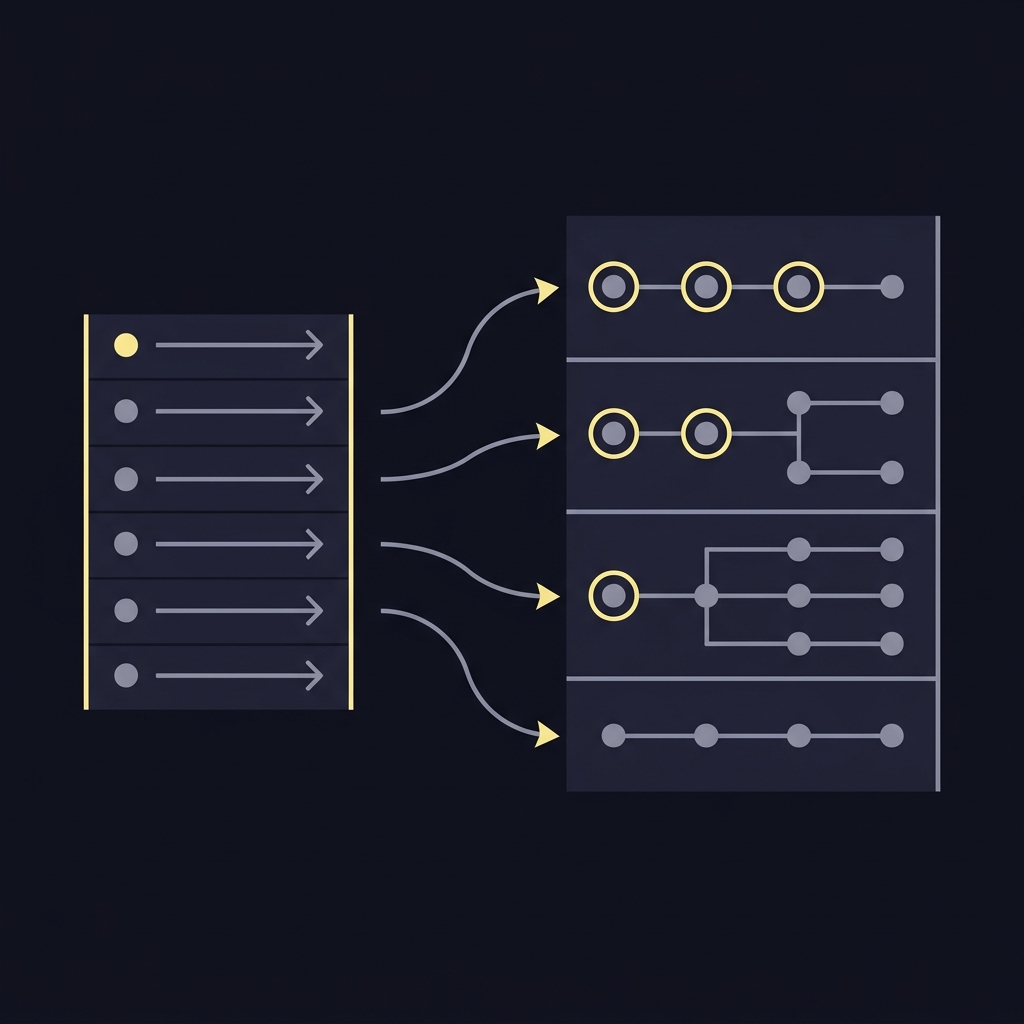
Scouts value different traits at this range: some picks are ready for rotation minutes, others are longer-term projects who bring size or shooting upside; the late-lottery produces a mix rather than a single archetype.
How teams use late-lottery picks strategically
For a team like Chicago, a pick in this window can be treated as a direct roster upgrade, a trade asset for targeted veteran help, or a developmental addition depending on the front office's timeline. That flexibility is one reason teams prize late-lottery depth even if it lacks top-tier certainty Tankathon mock draft.
Because the pick's conveyance can be altered by protections, teams often plan multiple uses in parallel: keep-and-develop if retained, or package if conveyance and trade opportunities make more sense given roster needs.
Common mistakes when interpreting draft projections
Overreading single mock drafts
Relying on one mock draft snapshot is a frequent error; single mocks are useful for flavor but can mislead if treated as precise forecasts rather than one practitioner's view among many.
Even reputable rolling boards update quickly, so a single day's order can be unrepresentative of longer-term probabilities. Cross-check multiple sources to avoid overfitting to one projection.
Confusing probability with certainty
Another common mistake is turning a probabilistic range into a certainty. Historical lottery surprises demonstrate that low-probability jumps occur, and that should temper definitive language about where a team will pick 2025 lottery results.
Also, failing to check pick protections leads to incorrect assumptions about whether a team will actually make a selection; protections can keep a pick in the original team's hands even if a mock lists it elsewhere RealGM draft pick summary.
Practical tips for fans and analysts: how to use this projection
Monitoring the final weeks
Watch the standings bands around the play-in cutoffs and track opponent difficulty in the final stretch; those two factors often explain why live boards move quickly and which games are most consequential for draft outlooks Tankathon mock draft. See SI's Tank Tracker for another take.
Check injury reports and minutes trends for both Chicago and nearby teams: an unexpected absence or return can create short-term swings in projected slots.
How to factor pick protection into trade talk
Before endorsing a trade or assuming conveyance, verify protections on a trusted tracker. See how we evaluate protections: our evaluation guide. If a pick is top-protected, plan for the possibility that Chicago keeps the pick and frame trade value accordingly RealGM draft pick summary.
In conversations and modeling, always present both 'if conveyed' and 'if retained' scenarios so that assessments remain robust to conveyance outcomes.

Bottom line and takeaways
Bottom line: use the bulls bucks prediction as a probability map, not a guarantee. The most defensible central estimate today places Chicago in the late lottery, roughly picks 9 to 12, but lottery randomness and pick protections create wide error bars that merit cautious planning Tankathon mock draft.
For readers, the practical steps are straightforward: monitor live projection boards, watch play-in and standings movement, and confirm pick protections on a reliable tracker before drawing firm conclusions. Also visit the Funded Plays homepage.
It is possible but unlikely; the current odds and consensus mocks place the Bulls outside the bottom tier so a top-4 lottery jump would be a low-probability event.
Yes. Protections on Chicago's 2026 first-round pick can prevent conveyance if the pick lands inside the protected range, so always verify on a pick tracker.
Monitor standings near the play-in cutoff, opponent difficulty in remaining games, injury reports, and live projection boards to track meaningful swings.