
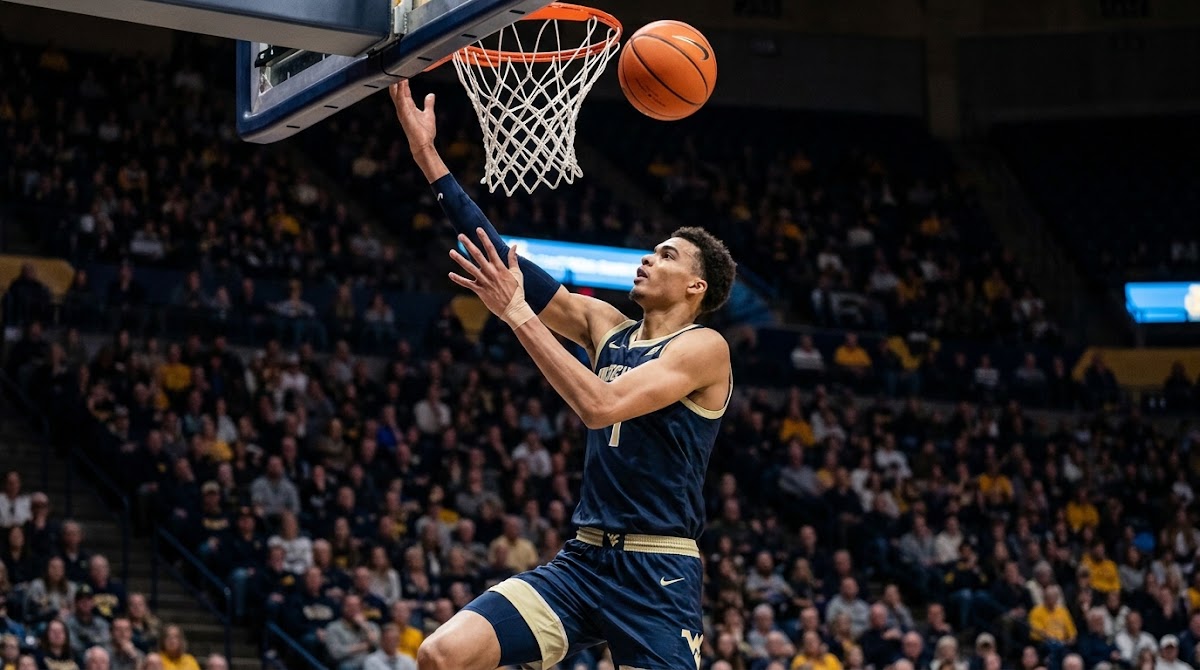
Who is Matas Buzelis? Definition and short context
Matas Buzelis entered the NBA as a first-round pick, a draft status that shapes both expectation and the development runway teams offer; Chicago selected him 11th overall in the 2024 draft, which signaled a clear investment in a long, versatile forward prospect Chicago Bulls press release.
Chicago moved quickly to integrate that selection into the roster structure, finalizing his rookie-scale deal before the 2024-25 season and assigning him a developmental role with specific performance and growth goals Chicago Bulls signing announcement.
Data sources used for this profile, listed for reader reference
Consult the linked team and scouting pieces for original language
Scouting circles framed Buzelis as a long-wing combo forward in the 6-8 range with a tools-first profile, combining slashing and transition finishing with defensive length and secondary rim protection; that characterization anchors the projection approach used here The Ringer scouting report. (See the Funded Plays blog.)
How the Bulls integrated him early: draft, signing, and role roadmap
The timeline from draft night to contract finalized a basic roster plan: the Bulls used a lottery-first-round pick and a standard rookie-scale deal to secure a player they intended to develop rather than to expect immediate star usage; the timing and structure of the contract are consistent with a multi-year development window Chicago Bulls signing announcement.
Front-office and coaching communications framed Buzelis as a developmental forward, with public messaging emphasizing incremental, two-way growth and an emphasis on consistency and winning habits rather than rapid role inflation; that language set expectations for measured minutes and clear learning objectives in 2024-25 Chicago Bulls feature on development goals. (Similar reporting appeared in the Chicago Tribune.)
Rookie-scale contracts commonly come with the implicit understanding that a player will receive structured opportunities over multiple seasons to refine specific tools, and Chicago’s early roster usage reflected that approach by positioning Buzelis where minutes would be meaningful but not rushed.

Scouting profile: strengths, weaknesses, and the tools that matter

Pre-draft consensus identified core strengths: the ability to attack close to the rim, reliable finishing in transition, plus defensive length that allows for secondary rim protection and positional switching; those are the primary tools that shape his near-term role projection The Ringer scouting report.
Scouts also flagged the key uncertainties that limit immediate upside, most notably spot-up shooting consistency and the need for added functional strength to finish in half-court contact situations; those gaps are the connective tissue between a useful rotation player and a higher-ceiling starter.
The profile is usefully described as tools-first: evaluators emphasized physical and athletic abilities that project to more refined outcomes over several seasons as technique, shot mechanics, and strength work compound; that maturation path is typical for forwards coming through developmental programs and scouting frameworks CBS Sports scouting report.

A practical development framework the Bulls likely used
Chicago’s stated emphasis on two-way growth maps to incremental development targets: stabilize perimeter shooting, add measurable strength for half-court finishing, and build consistent defensive habits and communication on switches; those goals were part of the team messaging around his early seasons Chicago Bulls feature on development goals.
On-court practice plans that align with those targets typically include high-volume perimeter reps, contested finishing drills, and periodized strength and conditioning cycles tailored to improve contact finishing without sacrificing mobility; coaching staff use minutes allocation and matchup exposure to let a player apply those reps in live contexts and measure transfer.
Minutes management matters: targeted rotations against softer defensive matchups and staggered lineups next to a primary creator or rim protector provide a controlled setting where a developing long-wing can focus on skill execution rather than full offensive creation.
2026 projection: likely role and specific fit in Bulls versus Bucks matchups
bulls bucks prediction
By 2026 the most realistic role projects as a rotation-caliber small forward or power forward who defends multiple positions, switches onto wings, and finishes plays when paired with a primary creator and a rim protector; that projection reflects both his tools and the conservative timeline scouts set for maturation The Ringer scouting report. (See how Funded Plays evaluations work.)
The matchup specifics versus Milwaukee emphasize where his length and help-defense are situationally valuable: he can contest drivers, take charges in rotation, and provide switchability on smaller lineups, creating matchup problems for teams that overuse pick-and-roll or lack size; those fit notes come from how evaluators grade his defensive toolkit and team role expectations Chicago Bulls feature on development goals.
He is most likely to be a rotation-caliber SF/PF who offers defensive versatility and finishing upside; his ultimate ceiling depends on whether perimeter shooting and added strength reach consistent, league-average levels.
For Buzelis to be a consistent plus against the Bucks in higher-leverage minutes, two variables are decisive: perimeter shooting stabilization to prevent defensive sagging, and added strength to maintain finishing efficiency against playoff-caliber interior defenders; both determine whether his length translates into sustained matchup advantage. (See reporting in Yahoo Sports.)
How to judge his progress: decision criteria and evaluation checklist
Use clear, repeatable markers rather than single-game spikes. Short-term metrics to track include three-point percentage and attempts, rim finishing rate on drives and putbacks, and defensive switch outcomes measured by opponent field-goal rate when he is the primary defender; scouts point to shooting stabilization as the primary ceiling determinant The Ringer scouting report. (See the CBSSports player profile.)
Medium-term observational markers include comfort on-ball in late-clock situations, consistency in guard-to-forward defensive rotations, and measurable gains from strength work manifested as higher contact finishing rates. Combine these with role clarity: is he getting minutes in matchups that test his switching and finishing, or is he mostly in low-leverage spaces?
- Checklist to monitor season-to-season progress: three-point percentage and attempts; rim finishing rate and adjusted finishing at the rim; defensive switch success rate and defensive assignment outcomes.
- Interpretation guide: meaningful change is multi-game trend-level improvement, not isolated hot streaks; stabilize over a half-season before revising long-term grades.
Reasonable time windows for judgment are multiple seasons for tools-first prospects; patience matters because physical and mechanical upgrades compound with repetition and tailored coaching.
Common scouting and fan mistakes to avoid when assessing Buzelis
A frequent error is overvaluing physical tools and short flashes while underweighting the structural importance of shooting and strength for half-court finishes. Length and athleticism are helpful, but without perimeter reliability teams can scheme to limit those advantages CBS Sports scouting report.
Another pitfall is reading limited-minute hot streaks as stable growth. Small-sample performance variability is normal for rookies and rotational youngsters; treat early-season minutes as experiments rather than final verdicts unless the underlying shot mechanics or conditioning changes persist over many weeks.
Track player development with FundedPlays Challenges
Subscribe for balanced player development updates and coverage that tracks tools, role changes, and verified progress over time.
Practical scenarios and lineup examples: where he helps most and least
Scenario where he helps: small-ball lineups with a floor-spacing center allow his length to roam in help coverage while the offense relies on a primary creator; here his transition finishing and help rotations can produce effective points and defensive stops The Ringer scouting report.
Another useful deployment is staggered minutes beside a rim protector in which Buzelis takes on switch assignments and closes driving lanes, letting the rim protector handle contested interior shots; the combination hides some finishing and strength limits while magnifying switchability.

Where he struggles: traditional big lineups that require heavy half-court post finishing or consistent pick-and-roll creation will expose gaps in functional strength and perimeter gravity, limiting positive impact until those areas improve Chicago Bulls feature on development goals.
Conclusion: realistic outlook and what to watch next
Verdict: the evidence supports a realistic outcome of a rotation SF/PF whose value hinges on shooting stabilization and added strength; that profile generates consistent minutes in switch-heavy or small-ball lineups but does not guarantee starter-level production absent clear improvements The Ringer scouting report.
Watch items: 1) perimeter shooting trend and three-point volume, 2) on-ball and off-ball defensive impact in switch scenarios, and 3) how minutes are allocated in matchups against teams like Milwaukee. Those three measures will most directly confirm or refute the projection over the coming seasons Chicago Bulls press release. (Track these on the Funded Plays homepage.)
Expect a multi-season timeframe; tools-first prospects typically need several years of targeted development before securing consistent starter minutes.
Perimeter shooting stabilization is the primary ceiling determinant, because it affects defensive spacing and how opponents defend him.
Yes, defensive length and switchability can create rotation value, but complementary offensive consistency is needed for higher usage roles.