
Quick verdict and how to read this piece
Short answer summary
Short answer: possible but unlikely in the near term, unless Milwaukee changes course or Chicago can assemble a rare combination of matching salary, unencumbered firsts, and front office willingness to push near-term flexibility. This assessment rests on Giannis Antetokounmpo's contract control, the Bucks' encumbered draft ledger, and the NBA rules that restrict who can take back large salaries.
What the article will and will not cover
This article covers trade mechanics, where draft picks are already committed on each side, how apron and salary-tax thresholds affect trade construction, and concrete archetypal package sketches. It does not offer gambling advice or promise outcomes. For readers primarily interested in headline "Giannis to Bulls odds" numbers, this piece explains the ledger and cap signals that move realistic probability rather than repeating rumor-driven percentages.
Test trade math with structured challenges
If you want the hypothetical offer sketches, jump to the packages section below; the detailed examples are meant to illustrate feasible structures and the constraints any serious Bulls proposal would face.
Giannis' contract status and what it means for trade incentives
Key dates and player-option details
Giannis Antetokounmpo signed a three-year extension in October 2023 that keeps him under contract through at least the 2026-27 season, with a player option for 2027-28, which materially reduces the immediate urgency for Milwaukee to move him Milwaukee Bucks contract announcement. (Spotrac)
Why contract control reduces immediate trade pressure
A long extension and a player option give Milwaukee leverage, because the team controls the timing and can choose to remain competitive around its star rather than selling at perceived market lows. Teams that have multi-year control over a superstar typically demand a very high return in draft capital and salary relief, or they only move the player if internal goals change, such as a sudden rebuild decision or persistent health concerns. Framing decisions around contract control helps explain why headline rumor volume often overstates the short-term trade probability.
Bucks draft assets: what is encumbered and why it matters
Summary of trade obligations and swap rights
The Bucks' future draft ledger is significantly encumbered by past trades, including an unprotected 2025 first-round obligation and swap rights in 2026, plus additional swap rights tied to later years and a 2029 unprotected first tied up elsewhere, which narrows the pool of immediately available firsts the Bucks can demand in a megadeal Milwaukee Bucks future picks tracker.
How encumbered picks constrain deal flexibility
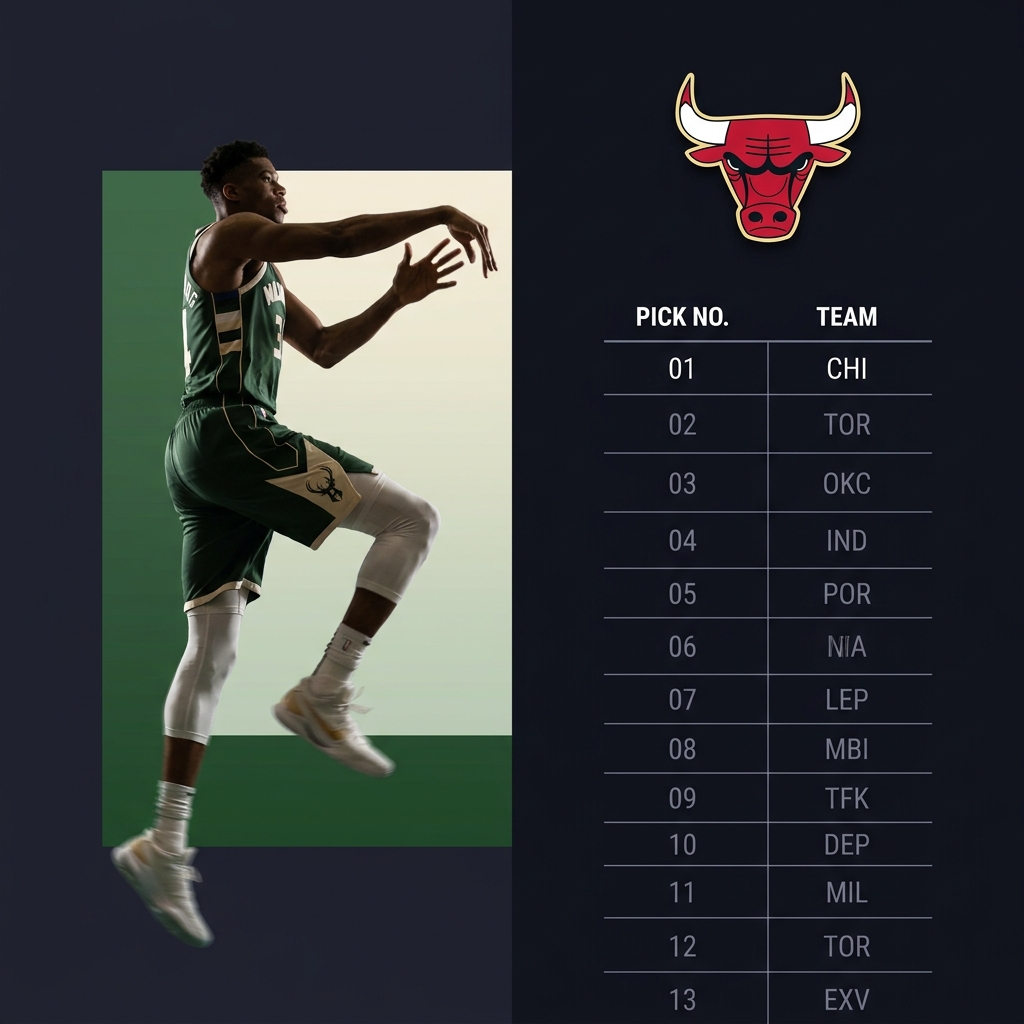
Encumbered picks are valuable conceptually, but they are not the same as unencumbered firsts that a receiving team can promise without caveats. Teams negotiating for a superstar want high-certainty, near-term assets because those picks offer clearer value and can be used in future trades or to restock the roster quickly. When a franchise's ledger shows many committed firsts or swaps, counter-parties must either offer more-or different-assets, or accept that the asking price will remain out of reach.
They have a chance but it is limited; Giannis' extension and Milwaukee's encumbered draft assets raise the price and reduce the immediate likelihood unless several ledger or strategic variables shift.
Which Bulls assets would be most persuasive to Milwaukee depends on how many truly unencumbered firsts Chicago can assemble and how quickly those picks would convey. That inventory constraint is a primary gating factor in any serious offer.
What the Bulls actually have to trade: outgoing commitments and limits
Chicago's protected firsts and timing
Chicago also has outgoing protected first-round commitments that reduce the count of unencumbered firsts it could offer today, limiting how many near-term high-value picks the Bulls can include in a package without stretching compensation into the distant future Chicago Bulls future picks tracker.
Why that constrains immediate offer construction
Protected picks are treated differently than unprotected picks because protections change conveyance timing and the probability of landing a worthwhile selection. In a megadeal context, that downgrade in certainty means Chicago would need to add other value, whether in matching salary, swap rights, or willing players, to meet Milwaukee's price. Pushing assets further into the future can reduce the immediate championship window and is often a deal breaker for teams intent on retooling around an incumbent star.

CBA rules, aprons, and salary-tax thresholds that shape any mega-deal
Key apron levels and their trade consequences
The current CBA sets explicit apron thresholds that change who can take back salary and how much roster flexibility a team has. For 2024-25 the NBA established a salary cap, luxury tax level, a first apron, and a second apron; these thresholds determine which teams face stricter trade and free agent limits and therefore which trade constructions are legally feasible NBA salary cap and apron figures.
When a team is above the second apron, it faces the strictest constraints. That includes limitations on aggregating incoming salaries and restrictions on taking back more salary than they send out, which directly raises the execution risk for any trade that would otherwise rely on complex salary juggling to bridge a superstar-sized contract.

How the second apron changes who can take back salary
These apron rules are not clerical; they change the practical options available in negotiations. A team that is comfortable trading under apron constraints has to build a package that is cap compliant at league processing, not just conceptually attractive. That often forces trades toward simpler structures: clear salary matches, fewer moving parts, and higher-quality picks for value rather than complicated multi-team salary routing.

Practical trade mechanics: matching salary, exceptions, and tradeable contracts
How salary matching rules apply to a Giannis-sized contract
Acquiring a max-level contract requires matching incoming and outgoing salaries in a way that fits the CBA rules. For the Bulls, that means combining several high-salary contracts or identifying specific exceptions that can legally bridge the gap, while always testing proposed structures against apron limits so the league will process the deal.
Common exceptions and why they likely will not solve all problems
There are trade exceptions and carve-outs teams use to smooth trades, but they rarely remove the need for high-quality draft capital in a superstar swap. Exceptions can help with modest mismatches, but apron restrictions and the sheer size of a Giannis-level salary reduce the number of workable exception-based routes. That constrains plausible three or four team solutions unless a partner has the right cap profile and willingness to absorb temporary salary pain 2023 NBA-NBPA Collective Bargaining Agreement.
Sketching realistic Bulls trade packages
Package A: Short-term win-now offer
Core idea: assemble near-term, high salary matching with established rotational players plus two or more unencumbered firsts or swaps that convey soon. This seeks to keep Chicago competitive immediately and give Milwaukee immediate draft assets rather than deferred claims. The feasibility hinges on Chicago having at least one or two true unencumbered picks and the payroll space to match salaries.
Package B: Balanced salary plus future picks
Core idea: combine mid-level salary contracts with a larger bundle of protected and unprotected future firsts and swap rights, pushing some value slightly deeper into the future to preserve roster continuity. This package is more palatable if Milwaukee values quantity of picks and timeline flexibility over immediate top picks, but protections reduce perceived value.
test basic package math for matching salary and pick value
Use as a rough scenario tester
Package C: Long-term rebuild offer
Core idea: sacrifice short-term competitiveness by offering multiple future unprotected firsts and swap rights alongside salary matching that uses younger cost-controlled players. This might be the only path if Chicago lacks near-term unencumbered picks, but it leaves the Bulls with a delayed chance to build around a superstar and risks fan and roster friction.
Each archetype above must be validated against both teams' pick ledgers and apron math. Packages that look attractive on paper can fail at league processing if they rely on taking back too much salary for a team above the apron or on picks that are not truly transferable in the proposed years Milwaukee Bucks future picks tracker.
Four scenarios: best case, workable short-term, long-shot, and no-deal
Best-case timeline and assumptions
Best-case for Chicago requires multiple conditional shifts: Milwaukee rethinks its win-now posture, the Bucks decide to accept heavier draft-forward compensation, and Chicago can offer a clean salary match plus near-term unencumbered picks. This sequence is unlikely without a clear change in Milwaukee's competitive trajectory or a contract development that alters leverage, such as a mutual opt-in change or a new extension decision window Giannis extension overview. As ESPN explored potential bidder tiers, few teams meet the full salary and pick combination.
Workable short-term scenario
A workable short-term deal would pair a large salary match with one or two high-value picks and one or two swap rights that can move sooner or be converted into a prospect. It would require Chicago to accept some protected picks or add a promising young player. The deal would be delicate because protections and apron limits can erode the perceived value during league approval and processing, making execution risk real.
Long-shot scenario
A long-shot scenario is where Chicago trades away deep future assets and core rotation players in exchange for Giannis but sacrifices long-term flexibility. This path is high-risk and depends on accurate projections of both roster fit and sustained championship viability, and many front offices will shy away from this unless convinced of immediate title windows.
No-deal as the plausible default
Given contract control, encumbered pick ledgers on both sides, and apron constraints, a no-deal outcome is a plausible default. Milwaukee's leverage, combined with Chicago's limited near-term unencumbered firsts, means negotiations would need to overcome multiple structural headwinds before a trade can occur Chicago Bulls future picks tracker. For local coverage see Milwaukee Journal Sentinel.
Decision criteria: how the Bulls front office should evaluate pursuing Giannis
Value thresholds and pick valuation
Checklist for evaluation: 1) Confirm count of unencumbered firsts available within three years (see how Funded Plays evaluations work), 2) model apron cushion to ensure the proposed salary exchange is league processable, and 3) calculate expected on-court fit and timeline alignment. These criteria separate headline wishlists from feasible offers and help quantify the opportunity cost of trading future flexibility.
Cap and roster consequences
Any pursuit should explicitly model payroll scenarios for the next three seasons to ensure Chicago does not trap itself above apron thresholds that would limit future roster building. That analysis is as important as pick valuation because the CBA mechanics can invalidate otherwise attractive proposals at the league-processing stage 2023 NBA-NBPA Collective Bargaining Agreement.
Common mistakes and negotiation pitfalls to avoid
Overpaying draft capital and future flexibility
One common error is valuing short-term gain over long-term optionality. Front offices that trade away multiple future unprotected firsts for a single-season bump can find themselves with little runway if the championship bid stalls, and recovering that flexibility is difficult without a meaningful win or fortunate draft outcomes.
Ignoring apron-driven trade constraints
Misreading apron impacts is another frequent pitfall. Deals that look cap-compliant in raw salary terms can fail when the aprons and second apron rules restrict how salaries are aggregated or who can take back excess salary. Proper league-level prechecks can prevent wasted negotiation capital and public friction Second apron explainer.
If the Bulls choose not to fully pursue a trade, preserving optionality by protecting a couple of unencumbered picks and resisting knee-jerk asset sales retains future leverage without committing to a risky all-in move.
How to estimate probability and public 'odds' without gambling claims
What moves probability materially
Three ledger and cap signals that materially change the probability are contract control developments, newly available unencumbered picks, and a demonstrable shift in the selling team's competitive posture. Rumor volume alone is a weak signal compared with changes in these objective categories.
How to interpret rumor coverage versus ledger facts
Rational interpretation of public odds requires cross-checking rumor claims against pick-tracker ledgers and cap thresholds. When pick availability and apron math do not support a rumored offer, treat the rumor with healthy skepticism until tangible ledger changes appear Draft-pick ledger example.
What Giannis' contract timeline means for timing and strategy
Near-term windows versus waiting for the player option
The player option for 2027-28 shifts the timing calculus because Milwaukee retains a built-in decision point. If Chicago waits, it may gain clarity on Milwaukee's intentions but risk losing market leverage if the Bucks stay competitive and retain Giannis. Conversely, pursuing now requires Chicago to be willing to meet Milwaukee's current price or to tempt them with a package that reshapes their timeline.
Trade now versus wait-and-see scenarios
The cost-benefit trade is simple on paper: trade now to try to maximize a core window versus wait for more favorable ledger changes that reduce the price. Because the extension locks Giannis under contract through 2026-27, there is a defined period for both sides to reassess without immediate contract-driven pressure Contract timeline reference.
Short-term tactical steps the Bulls can take now
Asset management and roster moves that preserve optionality
Practical steps: catalog all truly unencumbered picks, avoid trading away immediate draft capital for marginal veterans, and run apron scenario models to see which roster moves keep the team under restrictive thresholds. These internal actions maintain flexibility if an opportunity emerges suddenly. (see our site Funded Plays)
Communication and signaling to the market
Signaling can be subtle. Teams sometimes communicate asset unwillingness or readiness through trade calls and public posture. The Bulls can signal interest without overexposing assets by preparing transparent valuation ranges internally and sharing firm, narrow asks when market conversations begin. That helps avoid driving up the price through ambiguous or overly aggressive public leaks Chicago picks context. (more on this in the Funded Plays blog)
Conclusion: realistic takeaways for Bulls fans
Final short answer and key conditional factors
Realistic takeaway: Giannis to Chicago is not impossible, but it requires alignment of several low-probability factors. Contract control via the 2023 extension, the Bucks' encumbered pick ledger, and apron-driven trade frictions set a high bar that Chicago must clear with both matching salary and quality unencumbered picks Extension detail.
What to watch next
Watch for three signals that would materially increase the Bulls' odds: newly unencumbered Milwaukee picks, a credible public shift in Milwaukee's competitive posture, or a contract development that changes Giannis' leverage. Those events, combined with careful apron math, are what could turn a long-shot into a real negotiation window.
Giannis' 2023 extension keeps him controlled through 2026-27 with a 2027-28 player option, which reduces the Bucks' urgency to trade and increases their negotiating leverage.
Encumbered picks convey later or conditionally and are less attractive than unencumbered near-term firsts, lowering their trade value in superstar acquisitions.
Yes. Apron thresholds can make a deal non-processable if salary and takeback rules are violated, so league-level compliance is essential before agreement becomes final.
References
- https://www.nba.com/bucks/news/milwaukee-bucks-sign-giannis-antetokounmpo-to-contract-extension
- https://www.hoopsrumors.com/milwaukee-bucks-future-draft-picks
- https://www.hoopsrumors.com/chicago-bulls-future-draft-picks
- https://pr.nba.com/nba-salary-cap-set-for-2024-25-season/
- https://www.fundedplays.com/challenges
- https://nbpa.com/cba
- https://www.cbssports.com/nba/news/nba-second-apron-explained-what-to-know-about-stricter-tax-penalties-and-how-they-impact-free-agency-trades/
- https://www.spotrac.com/nba/player/_/id/13328/giannis-antetokounmpo
- https://www.espn.com/nba/story/_/id/47723485/nba-trade-deadline-giannis-tiers-draft-picks-players-29-teams-offer-bucks
- https://www.jsonline.com/story/sports/nba/bucks/2026/06/22/giannis-trade-rumors-news-and-updates-milwaukee-bucks-draft--live/90644942007/
- https://www.fundedplays.com/blogs/how-fundedplays-evaluations-work
- https://www.fundedplays.com
- https://www.fundedplays.com/blogs