
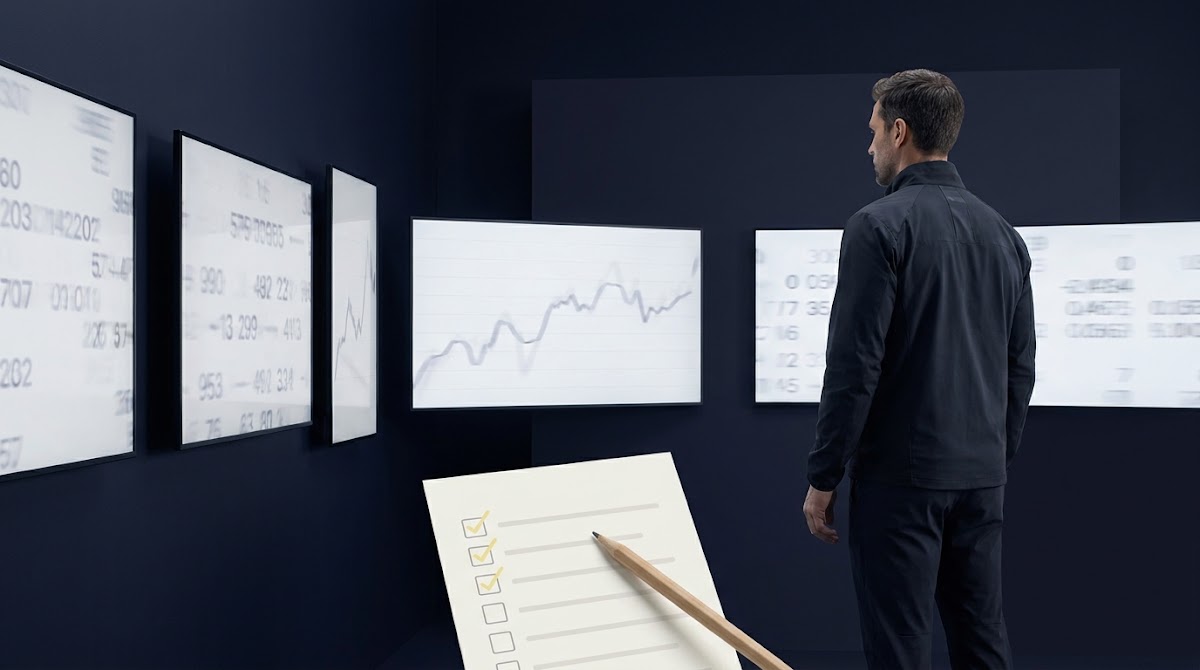
Building Patience in Fast-Moving Sports Markets: introduction and what to expect
Patience in sports forecasting means deliberately delaying action until a defined set of criteria are met rather than reacting to every market twitch. In fast-moving sports markets, where in-play lines and quick pre-game swings are common, patience helps preserve optionality and reduces the chance of acting on short-term noise.
This article lays out simple definitions, practical rules and drills you can use to turn the idea of waiting into repeatable behavior. It is aimed at people who make frequent timing decisions, from hobbyists who follow live lines to experienced predictors practicing disciplined sports trading.
Get the timing drills and checklist for practicing patient decisions on funded challenges
If you want a short checklist and weekly timing drills to practice waiting under pressure, sign up for a simple email series that sends one exercise each week.
Expect clear, actionable steps rather than abstract advice. Each section includes examples you can adapt, short routines to practice, and rules you can test in simulation before using any real or virtual capital.
Responsibility note: this piece is educational and does not promise earnings. FundedPlays is mentioned here only as an example of a funded challenge platform where users can practice timing decisions in a structured environment.
Building Patience in Fast-Moving Sports Markets: definition and context

Operationally, patience is a rule: delay execution until predefined criteria are satisfied. That can mean waiting a minimum time before locking a pre-game pick, requiring line stability for a set window, or insisting on a minimum expected value before placing a prediction.
Fast-moving sports markets include rapid pre-game line swings, volatile in-play pricing and situations where liquidity and information flow change quickly. These market elements alter the decision context because the same observable - for example a three-point line move - can mean different things depending on when and how it happens.
To put the idea in plain terms, consider two choices: acting immediately on every perceived opportunity, or following a short checklist that defines the moment when action is permitted. The first is reactive and tends to magnify variance. The second is patient: it trades short-term excitement for clearer, repeatable decision signals.
In short, patience is a mechanical habit you build into your rules and your workflow. Treat it as a process control that reduces needless variation and makes performance easier to evaluate.
Building Patience in Fast-Moving Sports Markets: why patience matters in fast-moving sports markets
Waiting for higher-probability setups reduces your exposure to noise. In rapid markets, small swings can reflect random order flow or temporary information asymmetry rather than a durable change in value. By insisting on clear entry conditions you avoid acting on those transient moves.
Consistency in timing also improves the integrity of your sample. When you apply the same wait rules across similar situations, your results are easier to interpret and your learning accelerates.

Define clear, testable entry criteria, set mandatory wait windows, use an execution checklist and practice with low-stakes simulations; review decisions regularly to reinforce the habit.
Impatience often increases slippage and leads to oversized positions taken under pressure. When you act without a plan you are more likely to change sizing mid-decision, which magnifies losses and obscures whether an idea was strong to begin with.
Ultimately, patience is not a moral stance. It is a risk control and a measurement tool that improves long-term decision quality.
Building Patience in Fast-Moving Sports Markets: a practical framework for Building Patience in Fast-Moving Sports Markets
Turn patience into a workflow using three core steps: pre-commitment rules, timing filters and an execution checklist. These elements convert intent into behavior and make waiting a repeatable habit.
Step 1, define entry criteria. List the signals you require before acting, such as minimum probability edge, verified team news, or a period of line stability. Write them down and make them non-negotiable for the session.
Step 2, set mandatory wait windows. Examples include minimum minutes before kickoff for pre-game markets or a fixed stability window for in-play moves. Common simple filters are: do not act within X minutes of a line swing, and require Y minutes of stability before taking a position.
Step 3, use a short checklist at execution. The checklist should include the trigger met, time since the trigger, current liquidity conditions, proposed stake size and an explicit stop or sunset condition if the setup deteriorates. Checklists reduce emotion at the moment of decision.
When a criterion is met, follow the checklist exactly and record the decision with a short note. If the criterion is not met, document why you passed and move on. That log becomes the core of your review process and helps reinforce the value of waiting.
Building Patience in Fast-Moving Sports Markets: decision criteria: when to act and when to wait
Quantitative triggers give you a defensible reason to act. Examples to consider: a minimum expected value threshold, a minimum probability edge over the market, and a minimum liquidity level that ensures your position size can be executed sensibly.
Qualitative signals can override waits when they are verified and material. Examples include confirmed injury reports from official sources or schedule changes communicated by teams or leagues. Use verified information only; rumors are a frequent cause of premature action.
When combining triggers, decide whether conditions are conjunctive or disjunctive. For example, you might require both an edge threshold and line stability together, or allow a single strong verified event to override a waiting window. Define these combinations before you trade so that you are not deciding under stress.

In a typical funded challenge environment, metrics such as consistency, drawdown and accuracy are emphasized more than single-event wins. Use those metrics as your compass: they reward steady timing, not impulsive high-variance bets.
Document each decision trigger in your trade notes so you can map which rules resulted in the better outcomes over a large sample. Over time, you will see whether your wait rules improve realized edge or simply cause missed opportunities.
Building Patience in Fast-Moving Sports Markets: bankroll and risk rules that support patience
Risk controls make patience sustainable. Fixed-percentage sizing or tiered risk levels reduce the pressure to act to recover losses. When your position size is predictable, it is easier to wait for cleaner setups.
Drawdown rules are important. Define a drawdown threshold that triggers reduced activity or a mandatory review. This is not punishment; it is an operational signal to inspect whether your rules are working and to remove emotion from immediate decision-making.
Position sizing that rewards waiting can be simple: allocate a baseline stake for standard setups and a separate, smaller allocation for reactive or override situations. This architecture lowers the temptation to exceed normal sizing when under stress.
Remember that rules exist to protect your capital and to flag when the strategy needs adjustment. They are not a promise of success but a guardrail that helps preserve optionality and learning capacity.
Building Patience in Fast-Moving Sports Markets: common cognitive biases and mistakes that erode patience
Several psychological traps push people to act early. Recency bias makes recent outcomes feel more likely to repeat, and loss chasing drives larger, riskier actions to recover recent losses. Both patterns reduce patience and increase variance.
Confirmation bias and overconfidence are other common issues: people notice information that supports a view and dismiss contrary signals, which short-circuits waiting rules. Awareness alone is not enough; you must apply a corrective routine.
A short timing checklist to enforce wait rules
Use this at point of execution
Immediate countermeasures include pre-commitment, cooling-off periods and accountability partners. For example, require a 10 minute cooling-off before any override, or share decisions with a peer who can confirm whether your trigger logic is applied.
Journaling and objective metrics help strip emotion from timing. Record the trigger, whether you waited, the outcome and a short note on why you acted or passed. Over time, this record will show whether impatience correlates with worse outcomes or merely different variance.
Building Patience in Fast-Moving Sports Markets: practical drills and routines to train patience
Training patience requires practice in low-stakes settings. Timed waiting exercises are simple drills: pick a market and commit to not acting for a predefined window even if you see tempting swings. After the window closes, record whether the move met your criteria. For live contexts, consult advanced in-play resources such as OddsIndex's live-betting strategy guide.
Simulated challenge rounds are another option. Run short sessions using virtual funds or paper trading where the goal is not to maximize wins but to apply wait rules faithfully for a set number of decisions. Score sessions by compliance to rules rather than profit alone.
A weekly review routine should focus on timing decisions rather than just outcomes. Review a small sample of calls, note whether wait rules were followed, and extract one learning point. This keeps practice manageable and focused on behavior change.
Use virtual accounts to practice without financial risk. They let you test timing filters, observe how often your criteria trigger, and refine windows before applying the same rules under any funded conditions.
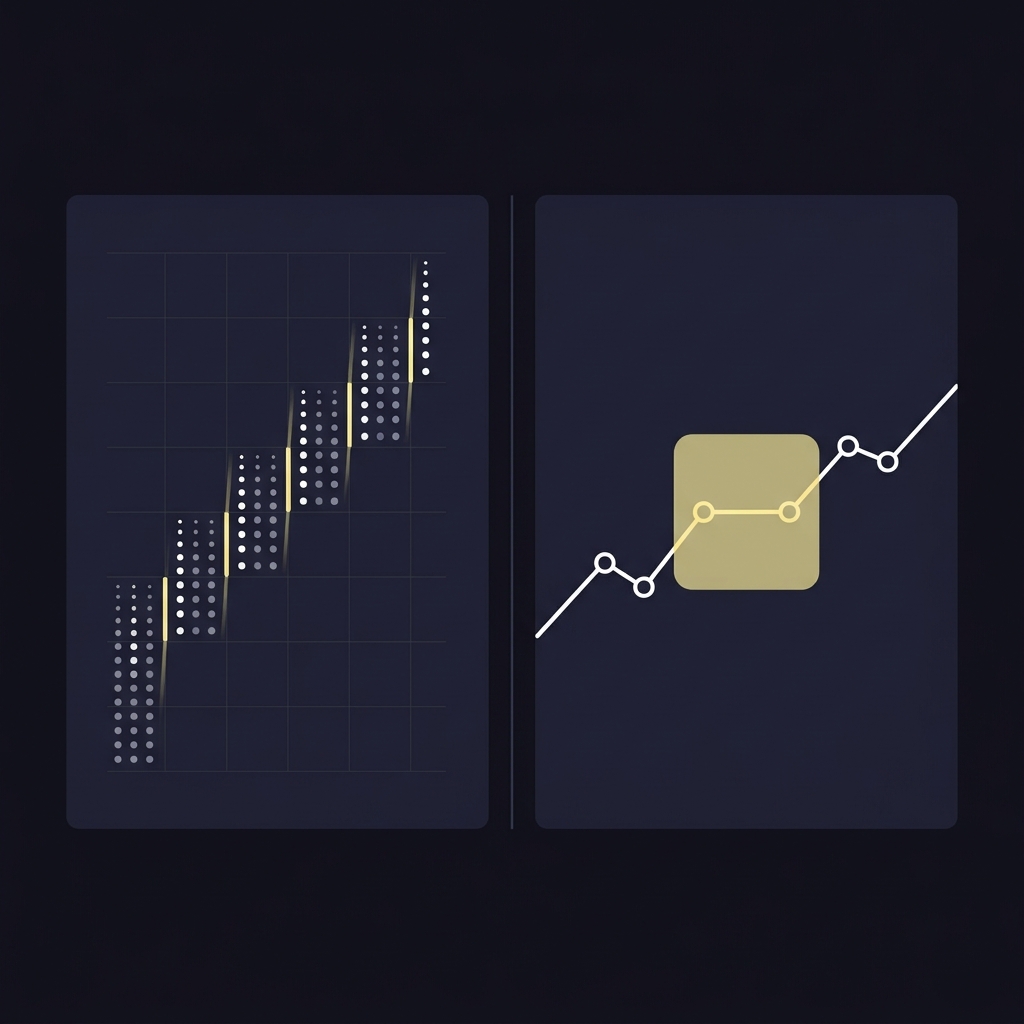
Building Patience in Fast-Moving Sports Markets: using data and signals to reinforce waiting
Measure expected value and slippage to make waiting measurable. Track the theoretical edge you thought you had at entry and record realized slippage versus that expectation. Over time you will see whether waiting reduces slippage and preserves edge.
Historical line movement patterns can help set objective wait thresholds. If certain market situations typically produce noisy short-term swings, set a longer stability window. Conversely, if markets settle quickly in other contexts, a shorter window may be warranted.
Simple metrics to monitor include percentage of calls that met the checklist, average time waited before action, and slippage relative to initial quote. Keep metrics minimal and consistent to avoid analysis paralysis.
Building Patience in Fast-Moving Sports Markets: how to test patience on funded challenge platforms
Skill-based challenge platforms provide a controlled environment to practice patient behavior without traditional wagering. These platforms often supply dashboards and simulated bankrolls that let you measure consistency and drawdown over time.
Typical evaluation metrics emphasized by challenge environments include consistency, drawdown and percent accuracy. Use those metrics to judge whether your timing rules are improving decision quality rather than fixating on short-term returns.
Platforms like FundedPlays are examples of funded challenge environments where you can practice these routines. Use the platform tools to tag decisions that followed your wait rules so you can analyze whether patient decisions perform differently over many events.
Building Patience in Fast-Moving Sports Markets: when to adjust your patience rules
Adjust rules when market regimes change. Signals that justify a change include sustained differences in volatility or liquidity that make your previous windows either too long or too short. Use data, not short-term outcomes, to decide.
Set a regular cadence for review, such as monthly or quarterly, and avoid tweaking rules in response to individual sessions. Frequent tinkering often reflects noise rather than structural improvement and can erode discipline.
When you do change rules, document the reason, the new parameters and a plan for how long you will test before judging effectiveness. That discipline reduces overfitting and preserves the capacity to learn from real variation.
Building Patience in Fast-Moving Sports Markets: mistakes to avoid when trying to be patient
A common overcorrection is paralysis by analysis: setting wait windows so long that you miss nearly every opportunity. Avoid this by setting maximum sunset windows after which you re-evaluate the situation rather than wait indefinitely.
Another mistake is waiting past useful edges. Define sunset rules that specify how long a setup remains actionable. If the edge has likely eroded after the sunset, accept the missed opportunity as a data point rather than a failure.
Track missed opportunities in a learning-friendly way. Record why you waited, what happened next and what you would do differently. Treat these notes as input for rule refinement rather than self-reproach.
Building Patience in Fast-Moving Sports Markets: example scenarios: annotated decisions that show patience in action
Pre-game line swing example: a sharp pre-game swing occurs three hours before kickoff. Your rule requires a minimum one-hour stability window before taking action. You observe the line for the hour, it stabilizes and your trigger is met. You take a modest position per your sizing rules and log the decision for later review.
In-play hold example: during the second quarter, an unexpected substitution causes a rapid in-play drift. Your checklist requires waiting two full possession changes and confirming no official injury information. You hold and then act only once the substitution proves durable and liquidity returns. You record the rationale and outcome.
Both examples are generic and focus on the decision logic: the rule, the observation window, the action and the post-event reflection. Use this template when annotating your own calls.
Building Patience in Fast-Moving Sports Markets: conclusion: practicing patience as a competitive edge
Summary checklist: define clear entry criteria, set mandatory wait windows, use a concise execution checklist, track timing decisions and review them regularly. These steps turn patience from a vague intention into a measurable skill.
Next steps you can take today: write two simple entry criteria, schedule one timed waiting drill this week and start a short decision log to capture the trigger and whether you waited. Keep the practice small and repeatable.
Responsible participation reminder: practice with simulations or structured challenges before risking real funds, and remember that no platform guarantees outcomes. Consistency and disciplined timing are the objective, not single-event wins.
Improvements can be seen within weeks with focused drills, but lasting change requires consistent practice and regular review cycles.
Yes, use conservative sizing or tiered allocations so that practicing waiting does not create excessive pressure to act.
Yes, skill-based challenge environments are useful for practicing timing rules using simulated or structured conditions without traditional wagering.
References
- https://www.fundedplays.com
- https://www.fundedplays.com/blogs
- https://www.fundedplays.com/blogs/how-fundedplays-evaluations-work
- https://www.fundedplays.com/challenges
- https://oddsindex.com/guides/live-betting-strategy-guide
- https://sportradar.com/content-hub/blog-en-us/in-play-betting-playoff-profit-optimization-strategies/?lang=en-us
- https://bet2invest.com/blog/Why-Patience-is-an-Essential-Trait-for-Serious-Bettors