
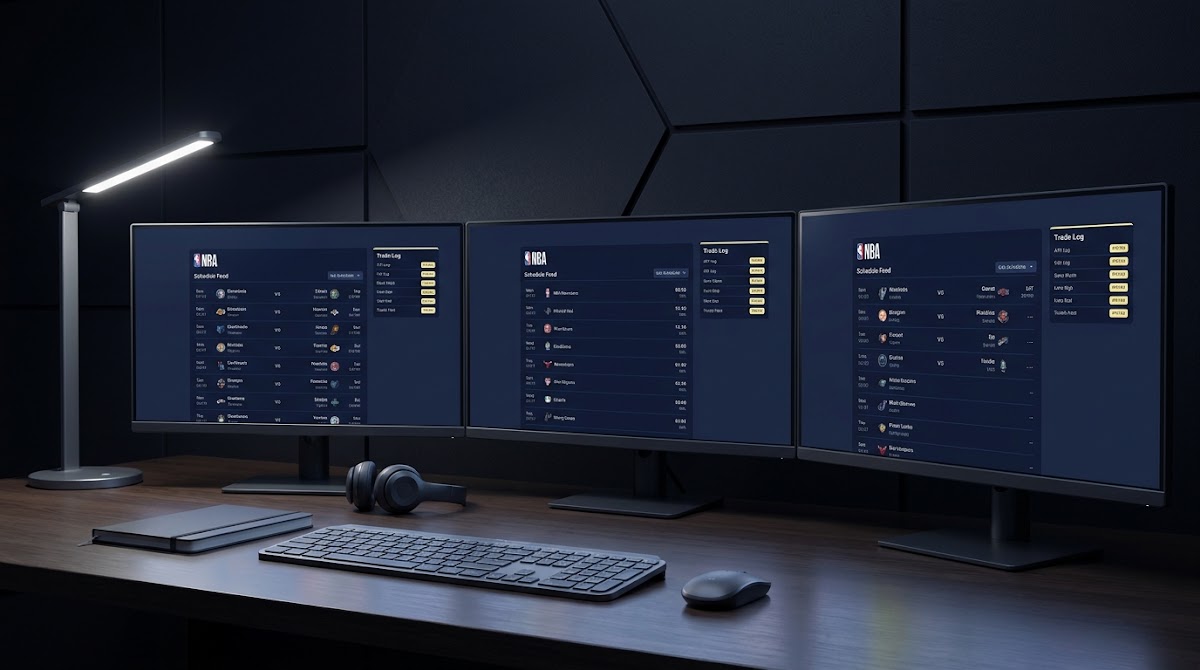
Building an NBA Daily Trading Routine: why a consistent nightly routine matters
Building an NBA Daily Trading Routine starts with a simple premise: consistency reduces noise and improves decisions by fixing timing, inputs, and stake discipline. Anchoring your nightly work to official, time-stamped league communications creates predictable decision windows and helps avoid last-minute misinformation, as the NBA Player Participation Policy sets clear availability standards for high-profile games NBA Player Participation Policy announcement.
Practice disciplined decision-making with FundedPlays Challenges
Adopt a short, time-stamped checklist tonight and save this guide for your pregame routine; it will help you stay disciplined and audit trades after the session.
Routine consistency also supports responsible stake sizing and recordkeeping by turning reactive choices into repeatable procedures. A documented nightly approach makes postgame reviews meaningful and helps separate entertainment from financial need, following widely accepted responsible-play ideas.
Essential sources and time-stamped checkpoints to anchor your routine
Start by prioritizing official league communications and season releases as your master sources for timing and policy changes. The 2024-25 season schedule release provides the authoritative calendar you need to identify back-to-back patterns and travel contexts that matter for fatigue-aware decisions 2024-25 NBA regular-season schedule announcement.
Use the league press releases and team statements as time-stamped anchors, and treat these as the primary sources to supersede informal reports during late windows. That reduces rumor risk and stabilizes your pregame checklist.

Daily pregame checklist: when to act and what to lock
Adopt a three-step cadence: a two-hour window for research and prioritization, a 60-minute window for model runs and sizing, and a 30-minute lock tied to formal lineup submissions. The 30-minute starting lineup submission deadline is a dependable operational lock-in point for final depth checks and prop baselines ESPN coverage of the 30-minute lineup rule.
Two-hour checks are where you gather context: schedule flags, travel notes, and any public availability updates. Use the 60-minute checkpoint to filter and size, then wait for the 30-minute confirmation before final execution.
Build a time-stamped cadence anchored to official league communications, use schedule-aware flags for fatigue, enforce pre-set stake limits, and keep a short postgame audit to convert outcomes into testable improvements.
At 30 minutes, treat the starting lineup submission as your operational lock and finalize any exposure that depends on confirmed starters. If a significant PPP notice arrives before this checkpoint, fold that into your final sizing decisions.
Core workflow: a step-by-step NBA nightly trading routine
1) Gather, 2) Filter, 3) Execute. Begin by pulling the official schedule and any league or team communications, then layer lineup notices and Player Participation Policy updates before you run models. Rely on official timing and announcements rather than unverified chatter at this stage NBA Player Participation Policy announcement.
Gathering should include the day's schedule context, a quick travel and back-to-back check, and a list of players on watch for PPP statuses. Filtering means applying availability rules, rest or congestion flags, and matchup adjustments to reduce the candidate set to trades you will price and size.
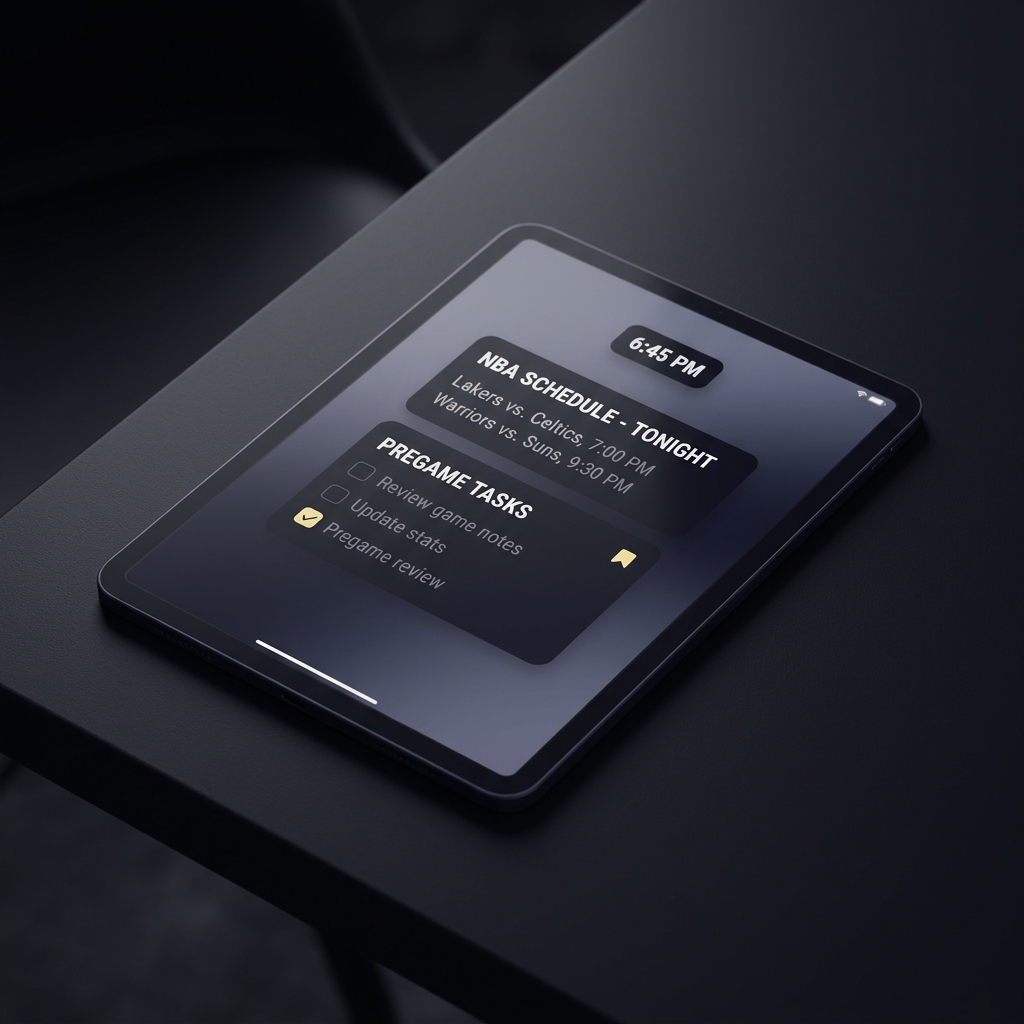
Execute with pre-set stake limits and a brief trade rationale recorded before placing any market exposure. This execution checklist stops impulsive sizing and ensures every trade is auditable in the postgame review.
Model inputs and decision rules: what to weight and why
Give official availability signals high priority in your inputs. When a PPP notice or a starting lineup submission contradicts informal sources, let the formal notice override earlier assumptions because league updates are time-stamped and authoritative NBA Player Participation Policy announcement.
Operationalize schedule data with feature flags for back-to-backs, travel distance, and game density. Peer-reviewed work supports the idea that congested schedules can modestly affect performance, which justifies these congestion flags in nightly models systematic review on match congestion and performance.

Bankroll management and responsible play within your routine
Embed pre-set stake caps and daily loss limits into the routine and enforce them without exception. Responsible-play frameworks recommend clear limits and separation of entertainment from financial need to protect users and encourage consistent behavior Responsible Marketing Code for Sports Wagering.
Keep a compact trade log entry for each exposure with rationale, stake, and immediate outcome. Over time, that record becomes the basis for meaningful postgame audits and small, testable adjustments to your rules.
Monitoring lineups, PPP, and late changes: a protocol for status updates
Set up a watchlist that tracks PPP notices, official NBA updates, and team communications in the 60-to-0 minute window. Use official lineup submission timing as your fail-safe and escalate any confirmed contradictions to immediate exposure review ESPN coverage of the 30-minute lineup rule.
monitor PPP notices and lineup windows
Keep alerts minimal to avoid noise
Have a simple emergency rule: if a late-confirmation materially changes expected minutes for a key player, reduce or cancel related exposure immediately and record the action for the postgame log.
Tools and quick references to speed nightly decisions
Focus on four categories: a reliable schedule feed, a lineup feed, a travel-distance calculator, and a compact trade log or dashboard. These categories cover the inputs you need to capture the key signals fast and repeatably.
Small automations help: alerts for official PPP notices and lineup submissions preserve decision windows. Avoid over-automation that hides rationale; keep a human final-check before the 30-minute lock.
Small automations help: alerts for official PPP notices and lineup submissions preserve decision windows. Avoid over-automation that hides rationale; keep a human final-check before the 30-minute lock.

Schedule-related features: travel, back-to-backs, and congestion flags
Translate season schedule structure into concrete model features. Use the official season calendar to mark back-to-back games and clusters of travel, then add a congestion flag when a team plays multiple games in a short span 2024-25 NBA regular-season schedule announcement.
Because peer-reviewed evidence suggests modest performance effects from congested schedules, treat these flags as adjustment multipliers rather than determinative rules. Track their impact in your postgame reviews to test team-specific sensitivity.
Execution rules and stake-sizing templates
Use simple unit sizing as your baseline. For example, define a unit as a fixed percentage of your working bankroll, then express small, medium, and high-confidence trades as 0.5 units, 1 unit, and 2 units respectively. Tie these unit sizes to pre-set daily loss limits.
Have emergency responses for late lineup changes and PPP updates: reduce exposure proportional to the expected minutes change or cancel the trade if the edge no longer exists. Record any exception in your deviation log to preserve accountability Responsible Marketing Code for Sports Wagering.
Postgame review: learning loop and hypothesis testing
Every session should end with a short postgame audit entry that records the expected rationale, the outcome, and any variance from expectations. That log is the primary tool for testing hypotheses like team-specific sensitivity to travel or PPP enforcement systematic review on match congestion and performance.
Plan weekly and monthly reviews that aggregate session results. Use small sample tests to update feature weights rather than making wholesale rule changes based on single sessions.
Common mistakes and pitfalls in nightly routines
Frequent errors include reacting to unverified reports, ignoring the 30-minute lineup lock, and abandoning stake rules after losses. Each of these degrades long-term performance and can be prevented by a disciplined nightly process ESPN coverage of the 30-minute lineup rule.
Document any deviation from the routine and the reason for it. The deviation log helps you separate lessons from one-off mistakes and keeps emotional drift in check.
Practical scenarios: building a routine for big-slate evenings
For dense slates, prioritize targets using schedule and PPP sensitivity. Start by identifying games with clear lineup confirmations and low congestion flags, then triage the remaining opportunities by expected edge and required attention 2024-25 NBA regular-season schedule announcement.
When multiple PPP notices arrive on a slate, rank them by impact to minutes and role. Allocate bankroll to the highest-priority confirmed edges and keep a reserve for late confirmations at the 30-minute mark.
How to adapt your routine across the season
Adjust your nightly checklist for early season, dense midseason, and end-of-season stretches by simplifying during travel-heavy periods and using the full routine during normal weeks. Use aggregated postgame reviews to recalibrate congestion and PPP sensitivity over time 2024-25 NBA regular-season schedule announcement.
Keep a lightweight version of your routine for heavy travel windows that focuses on confirmed starters, basic congestion flags, and strict stake caps to limit volatility.
Summary and next steps: testing, documentation, and continuous improvement
Copy this compact checklist to start tonight: 1) load official schedule and notes, 2) run two-hour pregame checks, 3) set 60-minute filters and sizing, 4) finalize at the 30-minute lineup lock, 5) record every trade and run a postgame audit. These steps reinforce discipline and rely on official league checkpoints.
Run a 30-day experiment that tracks number of trades, win rate, variance from expected outcomes, and the impact of congestion flags. Use the results to update your feature weights and keep the routine focused on responsible play and repeatable improvement Responsible Marketing Code for Sports Wagering.
Teams submit starting lineups at least 30 minutes before tip, making that deadline a dependable operational lock for finalizing trade decisions.
Treat congestion flags as adjustment multipliers that modestly alter expected outputs and test their impact over time in postgame reviews.
A short log of rationale, stake, outcome, variance from expectations, and any rule deviations for future hypothesis testing.
References
- https://www.nba.com/news/nba-board-of-governors-approves-new-player-participation-policy
- https://pr.nba.com/2024-25-nba-regular-season-schedule/
- https://www.espn.com/nba/story/_/id/38386013/how-nba-new-rules-resting-stars-work
- https://pr.nba.com/nba-board-of-governors-approves-player-participation-policy/
- https://papers.ssrn.com/sol3/papers.cfm?abstract_id=5503798
- https://www.fundedplays.com/challenges
- https://www.americangaming.org/code/responsible-marketing-code-for-sports-wagering/
- https://www.fundedplays.com/blogs/how-fundedplays-evaluations-work
- https://www.espn.com/nba/story/_/id/27691332/nba-require-teams-submit-starting-lineups-30-minutes-tip
- https://www.fundedplays.com/blogs
- https://www.fundedplays.com