
Why a standardized match research checklist matters
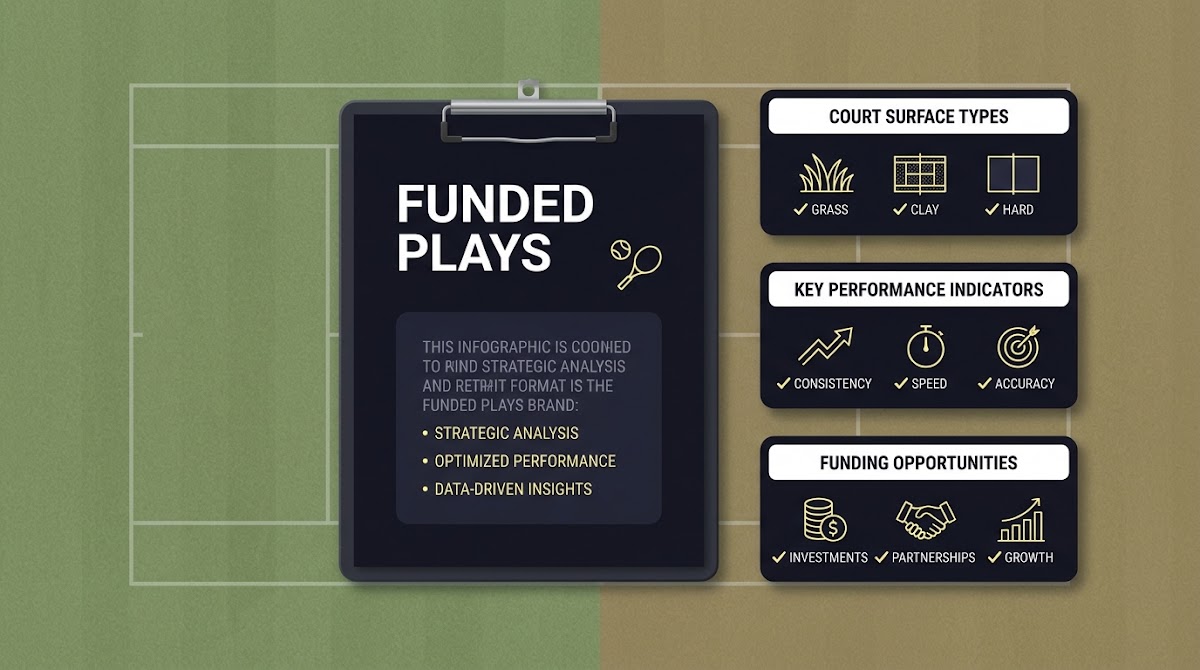
Building a Tennis Match Research Checklist starts with the purpose: reduce ad-hoc judgement and create repeatable pre-match preparation that can be reviewed and improved over time. A clear, consistently used checklist helps convert scouting inputs into disciplined decisions, which is especially useful for analysts and participants in skill-based prediction challenges.
Standardizing what you record ensures two practical benefits, first, repeatability across matches so patterns emerge when you review logs, and second, transparency in decision-making so others can understand your rationale. Systematic reviews emphasize that technical-tactical indicators, such as serve and return effectiveness and rally patterns, are central to match analysis and should be core items on any checklist, so highlight those fields early in your template, and reference the evidence when setting priorities Frontiers in Psychology systematic review.
A pared checklist to capture context and core tactical metrics
Keep to one page
Surface and equipment context change how the metrics translate into likely outcomes. For example, court pace and ball classification alter bounce and speed, so include separate fields for those rather than relying on ranking-based summaries. Use ITF classifications to label court pace when available, and record the event ball when known to avoid conflating raw player stats with environment-driven effects ITF court pace classification.
Finally, operational checks matter. Tournament rules on conditions such as extreme heat can change preparation windows and match dynamics, so add a verification step in your template to confirm relevant event policies before finalizing notes Australian Open extreme heat policy.

Key contextual variables to record: surface, ball, and environment
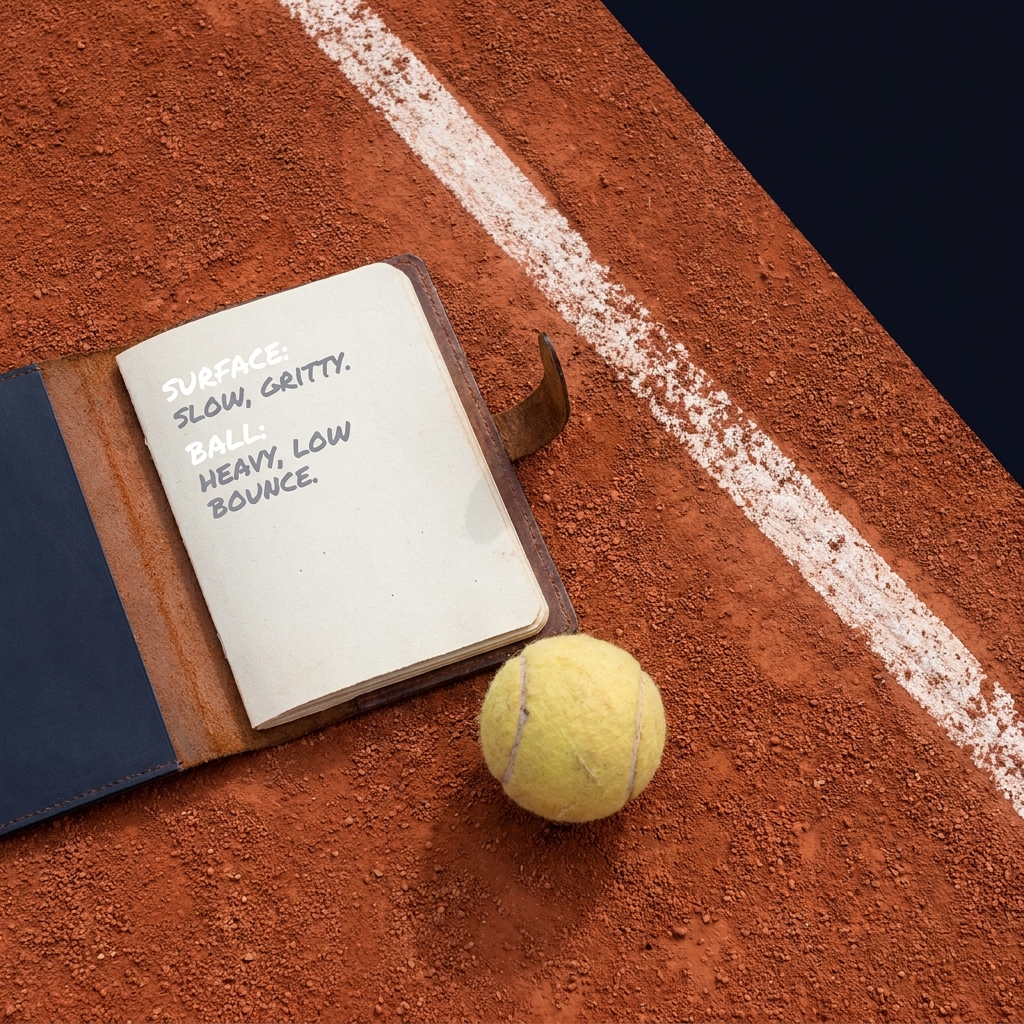
Define the surface field using the ITF Court Pace Rating categories, and capture both the nominal category and any local notes, for instance slow clay with heavy foot-traffic or a newer acrylic court surface. Record the category as slow, medium-slow, medium-fast, or fast, and include a short local note for grip and bounce tendencies to help translate raw metrics into match expectations ITF court pace classification. ITF technical booklet (2025)
Event ball type is another essential field. Use the ITF approved ball classification to log whether the tournament uses slower high-bounce balls or lower-bounce fast balls, and capture the manufacturer and ball model when available to contextualize serving speeds and rally tempo, since ball specifications materially affect bounce and speed ITF approved balls and classifications. ITF organisational requirements (juniors)
Environmental fields should include temperature, wind direction and estimated strength, and any indoor-outdoor contingency that could change play. Meteorological effects can shift serve and rally outcomes, so note the conditions and consider how they interact with surface and ball choices when preparing tactical guidance Journal of Sports Sciences environmental analysis.
Finally, add an event-policy verification field to confirm whether specific match procedures, such as heat or suspension rules, may alter start times, warmup allowances, or match management. Checking the tournament site for these rules before match day reduces last-minute surprises Australian Open extreme heat policy. ITF world tennis tour organisational requirements
Player technical-tactical profile: what to log for serve, return and rally patterns
Start technical-tactical logging with a short serve profile section. Record first-serve percentage, first-serve effectiveness in points won, common serve target zones, and qualitative notes on serve speed relative to event norms. These fields let you judge whether a server's headline numbers will be amplified or reduced by surface and ball context, and systematic reviews recommend these core indicators as central to match analysis Frontiers in Psychology systematic review.
Include return profile fields: return positioning, success against first serves, ability to neutralize second serves, and favored return directions. Note whether returns are short, deep, or designed to force low-trajectory exchanges. These notes help predict how matches evolve when facing big serves or high-spin deliveries.

For rally patterns, log typical rally length, preferred court zones in baseline exchanges, and common finishing shots such as inside-out forehand or crosscourt backhand. Capture whether the player frequently shortens points with serve plus one tactics or prefers extended baseline construction. These rally pattern notes bridge point-level tendencies and the larger prediction rationale.
When possible, pair each technical entry with a short evidence note, for example, cite a recent match or specific recorded observation rather than general impressions. This practice improves traceability and supports later backtesting efforts when you evaluate which technical fields most often correlate with correct predictions. See Funded Plays.
How to capture recent form: windows, surface-specific splits and sample sizes
Use two complementary recent-form windows, a short window such as the last 10 matches to capture immediate momentum, and a longer surface-specific window such as the last 52 weeks to capture meaningful surface trends. This dual-window approach balances responsiveness to current form with stability from larger samples, and literature on performance analysis supports separating recent and surface-specific form to avoid misleading aggregates Frontiers in Psychology systematic review.
Always compute surface splits separately, for instance clay results versus hard court results across the specified windows. Surface-specific splits reduce noise introduced by mixed-surface play and make it easier to spot true strengths or weaknesses on a given surface.
Set minimum sample rules before you treat a surface trend as reliable. For many practical checklists, require at least five surface-specific matches before using a surface trend as a primary signal. When sample sizes are small, flag the result as tentative and avoid overweighting it in your final decision.
Match-up scouting: head-to-head, styles and anticipated adjustments
Interpret head-to-head records in context. A raw head-to-head count is less informative without surface and ball context, so always annotate head-to-head entries with the surface and ball used in those meetings to see which outcomes transfer to the upcoming match ITF court pace classification.
Style clashes should be recorded in short, standardized phrases, for example, big server, counterpuncher, aggressive baseliner, or serve and volley. For each style clash note, add a line for probable vulnerabilities and likely in-match adjustments so your prediction can reflect adaptive tactics rather than static expectations Frontiers in Psychology systematic review.
Focus on capturing surface pace, event ball, environment, and a compact set of technical-tactical indicators such as serve and return effectiveness, then use a simple weighting framework and backtests to confirm which fields add predictive value.
When predicting adjustments, use simple if-then rules. For example, if a big server meets a low-bounce fast ball on a quick court, then expect fewer long rallies and place more weight on serve effectiveness. If a counterpuncher faces a high-bounce clay court, expect longer rallies and emphasize return consistency.
Finally, note probable in-match tactical changes that each player could make when conditions change, such as increasing slice use in windy conditions or adopting more drop-shot attempts on slower clay. Linking these anticipated moves to your checklist fields improves the specificity of the prediction rationale.
Pre-match verification: event policies, schedule checks and ball confirmation
Verify official event policies that could change preparation or match progression, such as extreme heat procedures or indoor-outdoor contingency plans. These policies can influence warmup allowances, break schedules, and even suspension rules, so confirm them through the tournament site and record the confirmation date in your checklist Australian Open extreme heat policy.
Operational checks should include court assignment confirmation, start time verification, and whether the match is assigned indoors or outdoors. Add a field for last-minute schedule changes and a quick contact or resources line to reconfirm on match day if necessary.
Always confirm the event ball type and warmup restrictions before the match. Record the ball model and manufacturer when available, and note whether players are limited in warmup time or have special practice court access, because these factors can change how a player settles into match rhythm ITF approved balls and classifications. ITF organisational requirements (juniors)
Decision criteria: how to weigh variables into a clear prediction note
Create a simple weighting framework that classifies checklist variables as high, medium, or low impact for the match at hand. Default the highest weights to surface pace and event ball when there is a pronounced mismatch, followed by technical-tactical fits such as first-serve dominance or return neutralization, then environmental and policy checks as modifiers. Use the weights to produce a short ranked list of the top three drivers behind your forecast ITF court pace classification.
Define trigger conditions to downgrade ranking-based expectations. For example, if a higher-ranked player shows a significant surface-specific form falloff in the last 52 weeks, or if the ball and court combination strongly favors the lower-ranked player's style, mark the ranking as secondary and elevate contextual signals in your note Frontiers in Psychology systematic review.
Save a reusable weighting template for consistent decisions
Save a blank template of your weighting framework so you apply the same decision criteria to every match, and review a recorded rationale after each result to learn what worked.
Finish the decision section with a required short free-text rationale field that ties the top weighted checklist items to a concise prediction. Requiring that short explanation improves auditability when you later backtest decisions and refine weighting.
Data sources, APIs and live-reference tools to populate the checklist
Use official tour stats and leaderboards for baseline figures and methodology descriptions. Official leaderboards provide definitions and context for statistical categories, making them the preferred source for baseline comparisons and ensuring consistent definitions in your logs ATP stats overview and leaderboards.

Pull court pace and ball certification details from ITF documentation when available, and copy the court pace category and ball approval notes directly into event-level checklist fields to avoid guesswork about surface or equipment characteristics ITF court pace classification.
For environmental checks, use trusted weather services to record temperature and wind forecasts, but always cross-check for local microclimate notes and confirm with event updates, since local conditions and policies can alter how weather affects play Journal of Sports Sciences environmental analysis.
Common mistakes and cognitive biases when researching matches
One common error is over-reliance on rankings or headline stats without adding context. Rankings summarize long-term performance but can hide surface-specific weaknesses, so always consult surface-specific splits and recent-form windows to reduce this risk Frontiers in Psychology systematic review.
Confirmation bias appears when scouts seek information that supports their initial impression, often using recent high-profile wins as proof while ignoring contrary evidence. A practical corrective is to predefine your recent-form windows and stick to them when evaluating a player, so your checklist reduces retrospective adjustments.
Beware of small-sample errors in surface-specific conclusions. When only a handful of matches exist on a surface, flag the result as tentative and avoid overweighting it. Prefer larger windows or complementary indicators such as observable technical features that support a surface claim Journal of Sports Sciences environmental analysis.
Two practical checklist templates: quick card and extended match log
Quick pre-match card, the 10 essential fields: surface pace category, event ball model, temperature and wind note, confirmed start time and court, short-form recent form last 10 matches, surface-specific last 52 weeks flag, first-serve percentage note, return effectiveness note, likely style clash summary, final prediction rationale. Keep these as short phrases to use as checkboxes in live prep.
Extended match log sections should include full fields for match-by-match play-by-play notes, detailed serve and return tables, rally pattern observations, equipment and ball confirmation, environmental notes, and a post-match reflection field for lessons learned. Use extended logs for deeper analysis and backtesting, especially when tracking adjustments over a season.
Choose which template to use based on time and tournament level. Use the quick card for live or same-day matches, and reserve the extended log for matches you plan to study or include in a backtest sample.
Scenario examples: how to apply the checklist in common match environments
Hot, slow clay with heavier balls, what to emphasize: prioritize return consistency and rally construction fields, because slower conditions and higher-bounce balls favor long rallies and increase the value of endurance and point construction, so upweight return effectiveness and rally length in your decision framework ITF approved balls and classifications.
Fast hard court with low-bounce balls, tactical flags: emphasize first-serve effectiveness, serve direction, and short-point finishing ability. In faster courts with low-bounce balls, serving becomes relatively more valuable and rally length shortens, so increase the weight on serve metrics and quick aggression fields.
Windy outdoor match, which signals matter most: record wind direction, gust tendencies, and anticipated favoring of slice or high-bouncing shots. Wind amplifies the advantage of low trajectory hitting and can neutralize heavy topspin, so flag likely shot selection adjustments and warmup observation fields accordingly Journal of Sports Sciences environmental analysis.
Turning checklist outputs into concise prediction notes and records
Write a one-paragraph match rationale using three sentences: a lead sentence naming the top two contextual drivers, a middle sentence summarizing the core technical-tactical reason, and a final sentence stating the explicit expectation. This structure forces precision and ties the prediction directly back to checklist fields, improving later auditability Frontiers in Psychology systematic review. Funded Plays blog
For record-keeping, tag each note with surface, ball, and environment tags such as clay, heavy-ball, hot, or windy. These tags enable quick filtering when you assemble backtest datasets, and they make it easier to measure which conditions correlate with higher prediction accuracy.
Recommend retention practices such as saving quick cards for 12 months for rolling backtests and archiving extended logs for multi-season analysis. Consistent naming and tagging conventions support iterative improvement and allow simple automated filtering in spreadsheets or databases.
How to test and iterate your checklist: simple backtests and A/B approaches
Basic backtest steps: collect a sample of past matches with completed checklists, define outcome metrics such as hit rate of the stated prediction, and measure the correlation between checklist drivers and success. Use consistent sample windows and tags so comparisons are meaningful and reproducible ATP stats overview and leaderboards. See how Funded Plays evaluations work.
A/B style improvements work by changing one checklist field at a time across a sample of matches. For example, test whether adding an explicit ball-type field improves hit rates by splitting your sample into matches where the field was used and matches where it was not, then compare results. Keep tests small and incremental to avoid spurious conclusions.
Decide when to retire or promote a field based on clear rules. For instance, retire fields that add no predictive value after a defined test period or promote fields to the quick card when they consistently show high impact in multiple backtests.
Summary, next steps and maintaining discipline in match research
Recap the checklist categories: context, technical-tactical, verification, and decision rules. Keep these categories visible in your daily routine to ensure each match receives the same lens and to make later comparison simple and consistent Frontiers in Psychology systematic review.
Recommended routines: before a tournament, prepare court and ball confirmations for each event, and set up template quick cards for each match day. Daily tasks should include updating short-form recent results and confirming the day's operational checks.
Finally, maintain realistic expectations. A checklist improves consistency and decision quality, but it does not guarantee outcomes. Use disciplined record-keeping, backtesting, and iterative adjustments to improve over time, and treat the checklist as a tool for learning and transparency rather than a certainty.
A checklist creates repeatable preparation, reduces ad-hoc judgement, and makes decisions auditable for later review and backtesting.
Use ITF court pace categories for surface and note the event ball model and manufacturer to contextualize bounce and speed.
Use a short window like the last 10 matches for momentum and a surface-specific window like the last 52 weeks for stable trends.