

Why Building a Player Prop Research Checklist matters
A research checklist is a compact, repeatable sequence of steps you run before you commit to a player prop. It codifies the facts you check, the contextual signals you value, and the risk controls you follow so decisions are consistent from day to day. A clear checklist reduces noise and helps keep process above emotion.
When you start Building a Player Prop Research Checklist you set expectations: you will improve decision quality and consistency over many plays, but you will not eliminate variance or guarantee wins. A checklist makes your reasoning visible and testable, which is essential if you want to learn from outcomes and adapt your approach.
Download the checklist and templates on the Funded Plays Challenges page
Using a short checklist preserves attention for the highest-impact checks and points you to the printable template section so you can adopt a ready workflow quickly.
Start small, document every choice, and measure. Over a season, the real benefit is not a single perfect call but a steady improvement in how you find and size edges.
Key terms and context for Building a Player Prop Research Checklist
Before applying a checklist, align on the vocabulary you will use. Common player prop formats include counting stats such as rushing yards, passing yards, receptions, and three-pointers made, and scoring props like points or rebounds depending on the sport. Sportsbooks typically display a line or a number and an associated price; your checklist should record both the market number and the price you can get.
Market concepts that belong on the checklist include the posted line, any apparent limits on bettors, and recent line movement. Limits or restricted markets can signal early sharp money or operational caution. Tracking line movement helps you detect when new information is being priced in and when a quick decision is needed.
Finally, note the difference between challenge-style prediction work and wagering. In a funded challenge or skill-based sweepstakes environment you operate with structured rules and virtual accounts; your checklist should therefore align with the challenge objectives and account constraints rather than assuming unrestricted exposure.

Core framework: a step-by-step Building a Player Prop Research Checklist
Organize the checklist into three high-level stages: pre-day preparation, same-day finalization, and last-minute checks. The goal is to reduce scrambling and ensure the same factors are considered each time. Begin this H2 by listing the stages so they are easy to follow under time pressure.
Pre-day work prepares baselines and notes. Same-day work updates those baselines with matchup and lineup news. Last-minute checks confirm any late injuries or market moves and finalize size.
Identify moments when you make fast decisions under pressure, such as last-minute lineup changes or sizing choices. Convert those into explicit checklist steps and require a short justification for each action so you can review them later.

Use a simple record-keeping line for each prop: date, market, baseline projection, adjustments, final projection, bet size, and result. That record is the basis of each post-mortem review. Make the record concise so it is realistic to keep every day.
High-level stages and a compact checklist give you a repeatable flow. They create a rhythm where research precedes emotion, and documentation enforces accountability.
Core framework: pre-day checklist
1) Data pull: export box scores, recent play-by-play summaries, and usage tables for the relevant players over the last sample window you prefer. 2) Baseline projection: build a simple per-minute or per-target baseline for the prop you plan to target. 3) Initial matchup notes: note defensive tendencies and likely rotation patterns that could matter.
Record what you expect to see if the game follows a neutral script and flag scenarios that would change your projection. These baseline entries reduce the need for ad hoc reasoning on game day and make later adjustments transparent.
Core framework: same-day and last-minute checks
Same-day checks refresh injury reports, confirm likely starters, and incorporate weather or venue notes for outdoor sports. Last-minute checks look for late lineup news, sudden limit changes, or sharp movement in the market price that require you to choose whether to take, pass, or reduce size.
Finish each same-day entry with a final justification line: primary reasons for the call, key risks, and how much of your permitted exposure you will use. This step keeps sizing disciplined and defensible.
Core framework: the three checklist pillars: data, context, decision
The pillars are simple. Data means accurate evidence: box scores, play-by-play, and usage numbers. Context translates that data into likely game outcomes: pace, projected total, and matchups. Decision combines your projected edge with confidence and a sizing rule.
Treat each pillar as a column in your tracker so each prop entry includes at least one data point, one contextual adjustment, and a clear decision rule. That structure is the heart of Building a Player Prop Research Checklist and it keeps reviews focused on where mistakes occurred.
Reliable data sources and how to vet them
Choose primary sources you can check quickly. Official box scores and play-by-play feeds are the baseline because they reflect what actually happened. Trusted analytics sites like Props.Cash that publish rate stats and matchup information can be secondary sources for enrichment. For your checklist, name one authoritative source you will use as the single source-of-truth when discrepancies appear.
Vet sources by update frequency, historical reliability, and transparency about how they collect or calculate metrics. A data source that updates slowly or lacks clear methodology makes it hard to react to late news, so mark such sources as lower priority in your checklist.
When you rely on APIs for automation, include a manual verification step in your same-day checks so you do not act on stale or truncated feeds. Keep a short note in your checklist that specifies how often you refresh each source and who to trust if two sources disagree.
Contextual factors to include in your checklist
Matchup-level context belongs in the checklist. Note opponent defensive tendencies, matchup minutes for the player in question, and how rotations are expected to play out. For example, whether a defense funnels plays to a specific side or tends to rotate early can change usage estimates and thus your projection.
Game-level context includes pace, projected total, venue, and weather for outdoor sports. A slower pace reduces volume and often lowers counting stat expectations, while a high projected total can increase scoring props. Encode these items as checklist fields so they are not overlooked.

Also include roster signals like rest days, recent minutes trends, and blowout risk. Roster and rotation signals are often the single biggest reason to diverge from a baseline projection, so they must be explicit checklist items.
Statistical metrics and models to track
Decide on a small set of metrics that give the most predictive value for each prop type. For volume props, per-target rates, usage rate, and target share are central. For yardage props, per-touch or per-carry rates and opponent yards allowed per carry are useful. Keep the metric set lean to avoid overfitting.
Sample size and variance belong on the checklist. Note how many games you used to build a baseline; small samples deserve wider confidence bands. Use a simple rule in the checklist that inflates uncertainty when the sample is short or the player has changing role signals.
Track daily props and record decisions
Use one line per prop
Keep your model outputs simple. A baseline average and an adjusted projection are often enough to decide whether the market offers an edge. Save complex modeling for offline analysis and include a one-line summary in the checklist when you use advanced outputs.
Contextual factors: matchup-level and game-level variables
Matchup notes in the checklist should cover minutes projection, matchup defense tendencies, and likely personnel matchups. If a player faces a tough matchup for their primary skill, record the expected impact and whether that changes your size.
Game-level variables such as projected pace and total should be recorded as numeric checklist fields when possible. For outdoor sports, a quick weather check is essential; wind and precipitation can materially change volume and yardage expectations.
Statistical metrics and models to track: practical choices
Track per-minute or per-possession rates rather than raw totals when comparing players across different usage contexts. For passing or receiving props, per-target efficiency and target share translate directly into volume expectations. For shooting props in basketball, consider recent three-point attempt rate and role in the rotation over the last five games.
When you create a simple model for baseline projections, save the inputs with the prop record so you can rerun or adjust the model during post-mortem reviews. That makes it easier to learn which inputs were most predictive and which were noise.
Decision criteria: when to act and how to size
Define a decision rule that combines expected value and confidence. For example, require a minimum projected edge and a confidence level based on sample size to take a prop. Encode these thresholds in the checklist so you do not make ad hoc calls.
Sizing should be linked to your virtual bankroll or challenge account rules. Use conservative per-prop limits and daily exposure caps that align with challenge account rules. The checklist should force you to record the sizing justification each time you act.
Decision criteria: sizing examples and logging
One practical approach is a tiered sizing rule: small size for low edge or low confidence, medium for moderate edge with adequate sample, and large only when both edge and confidence meet stricter thresholds. Put these tiers directly into the checklist as selectable options.
Always log your decision rationale in one sentence. Over time, review how well your tiers correlated with outcomes and adjust the thresholds rather than changing sizing ad hoc after a loss or win.
Bankroll management and risk rules for a checklist workflow
Set per-prop exposure limits and daily loss caps in your checklist so risk control is automatic. For virtual funded challenges, align these limits with the challenge rules to avoid breaching drawdown constraints. Conservative limits help preserve the ability to participate consistently.
Include a simple drawdown tracker in your daily template. If you hit a predefined drawdown threshold, your checklist should require a cool-down period or a full review of recent entries before you can continue acting.
Common mistakes and cognitive biases to watch for
Frequent mistakes include small sample overfitting, ignoring role changes, and confirmation bias where you search only for supporting information. A checklist helps by forcing explicit checks that counter these biases, such as a required sample size note and a dedicated rotation check.
Use post-mortem reviews to spot survivorship bias and selection bias. When reviewing winners, ask whether the same approach would have selected a losing candidate under the same rules. Record these observations in your monthly iteration notes.
Practical example 1: building a checklist for a running back yards prop
Step 1, baseline: compute the running back's per-carry yardage and carry share over the last six games. Step 2, matchup adjustment: note opponent rush defense ranking and likely game script. Step 3, same-day check: confirm starter status, weather, and any shift in game script due to injuries.
Document the final projection and sizing, then record the actual result for a post-game review. In many cases a running back yards prop decision boils down to anticipated carry share and script; make those items explicit in your checklist to avoid fuzzy reasoning.
Practical example 2: building a checklist for an NBA three-point prop
Start with usage and role: check recent three-point attempts per game and minutes trend. Next, review the opponent's defensive three-point rate and any lineup changes that affect coverage. Same-day checks should include late rotation notes and minute risk for key teammates.
If minutes are uncertain or the opponent has a defensive change that reduces attempts, reduce size or pass. Track outcomes and record whether minutes or matchup estimates were the main error to refine the minutes field in your checklist.
Daily workflow, templates, and time-saving tools
Create a reproducible daily routine: morning pre-day pulls, noon matchup refresh, two-hour pregame finalization, and a last-minute confirmation. Prioritize props by expected edge and liquidity so you spend time where it matters most, using tools like PropFinder.
Use template fields such as Date, Prop, Market, Baseline, Adjustments, Size, Result, and Notes. Automate alerts for injury reports and line movement when possible, and keep a single tracker file as your source of truth to avoid fragmented records. Consider consulting services like PropsMadness for matchup data.
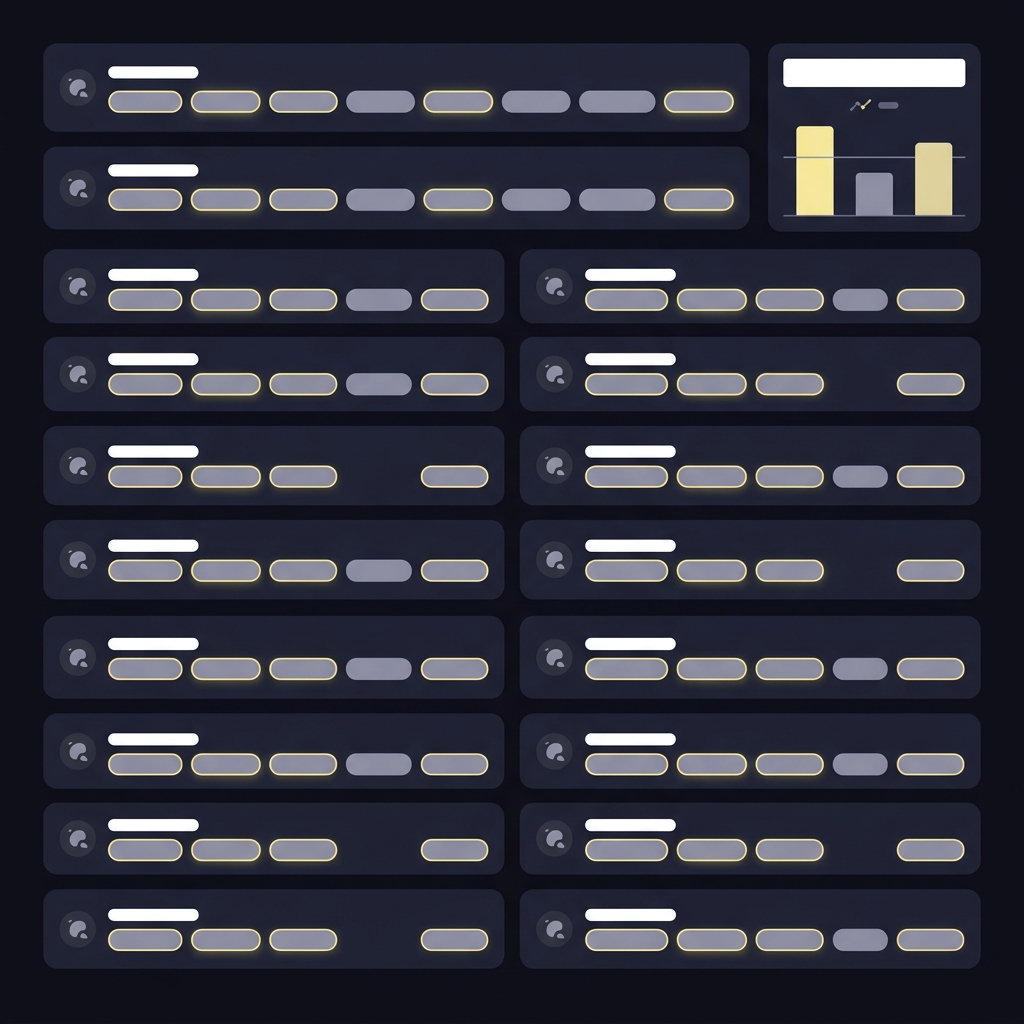
Quick printable checklist and templates to use right away
One-page checklist, copy-paste format: 1) Pull baseline data; 2) Record matchup notes; 3) Check injuries and rotations; 4) Check weather and venue; 5) Finalize projection and size; 6) Record result. Keep each item as a short imperative so it is easy to follow under time pressure.
Two-minute pre-game checklist: confirm starter list, confirm minutes expectation for target player, check market line and any late movement, finalize size. Sample template table header: Date | Sport | Player | Prop | Market | Baseline | Adjustment | Final | Size | Result.
Conclusion: maintaining the checklist and next steps
Review your tracker monthly and measure how often your projected edge led to expected outcomes. Use a simple monthly report that shows number of props recorded, win rate by tier, and common error causes so your improvements are targeted and evidence driven.
Expand the checklist gradually by adding new fields only when they consistently improve decision quality. Maintain discipline: new items that are noisy or rarely used should be removed so the checklist stays actionable and fast.
Keep a single tracker file as your source of truth to avoid fragmented records and visit Funded Plays for more resources.
Keep it as short as possible while covering data, context, and decision fields; one page or a two-minute pre-game checklist is ideal.
No. A checklist improves decision quality and repeatability but does not remove variance or guarantee outcomes.
Review monthly and after notable drawdowns to track trends, common errors, and meaningful improvements.