
Building a Live Trading Decision Framework: definition and why it matters
Building a Live Trading Decision Framework means defining the policies, automated checks, and operational processes that transform a model signal into an executable order while ensuring governance, pre trade controls, and continuous monitoring. This definition ties three domains together: regulatory and supervisory obligations, risk limits embedded in execution logic, and secure software delivery practices, and it clarifies who may change or stop a running strategy in production. ESMA RTS 6 (ESMA Supervisory Briefing)
Viewed this way, a decision framework is not just code or a risk spreadsheet, it is an auditable system that must deliver safe deployment, fast shutdowns, reproducible tests, and clear records of why each automated decision fired. Regulators and supervisors treat these controls as organisational responsibilities because failures can cause market disruption, client harm, or material losses, so builders must design for traceability and oversight from day one. CFTC Electronic Trading Risk Principles

Building a Live Trading Decision Framework: regulatory baseline and expectations
Start with the baseline regulatory controls that recur across jurisdictions. In the EU, ESMA RTS 6 specifies governance, pre trade risk limits, testing expectations, kill switches, and real-time monitoring that firms must operationalise as part of their algorithmic trading arrangements. Translating those elements into operational checklists is the first practical step for any live deployment. ESMA RTS 6 (MiFID II final report)
In the United States, the CFTC principles emphasise pre deployment testing, automated risk controls, and the ability to halt malfunctioning systems. That expectation implies documented acceptance criteria, simulated runs or paper trading and automated halting mechanisms tied to clear thresholds. CFTC Electronic Trading Risk Principles
Market regulators and self regulatory bodies also expect active supervision and post trade review. FINRA has reiterated expectations for supervisory oversight, change management and transaction level reviews such as transaction cost analysis to evidence best execution and detect drift or anomalies after deployment. These post trade reviews are often the evidence requested in supervisory conversations. FINRA 2024 Annual Regulatory Oversight Report
Download the deployment checklist and rule template
Download the checklist template in the practical example section to map these regulatory expectations to a first controlled rollout.
Building a Live Trading Decision Framework: governance, roles and responsibilities
Explicit roles reduce confusion when an automated rule behaves unexpectedly. Typical role definitions include an owner for each decision rule, a risk owner responsible for limit calibration, an independent validator, and an operations or run desk accountable for live status and emergency responses. Each role needs documented responsibilities and a single authoritative contacts list for incident escalation.
Minimum controls include documented governance and ownership, pre trade hard limits, independent validation and paper trading acceptance criteria, staged releases with rollback triggers, and reliable kill switches plus monitoring and post trade analysis.
Approval gates and supervisory review must be defined in playbooks. At minimum, changes to decision rules require documented sign off from the owner, a risk reviewer and an independent validator before any staged release. Incident response procedures must name who can trigger a hard halt and who must be notified internally and externally after a stop is invoked.
Building a Live Trading Decision Framework: core components and decision flow
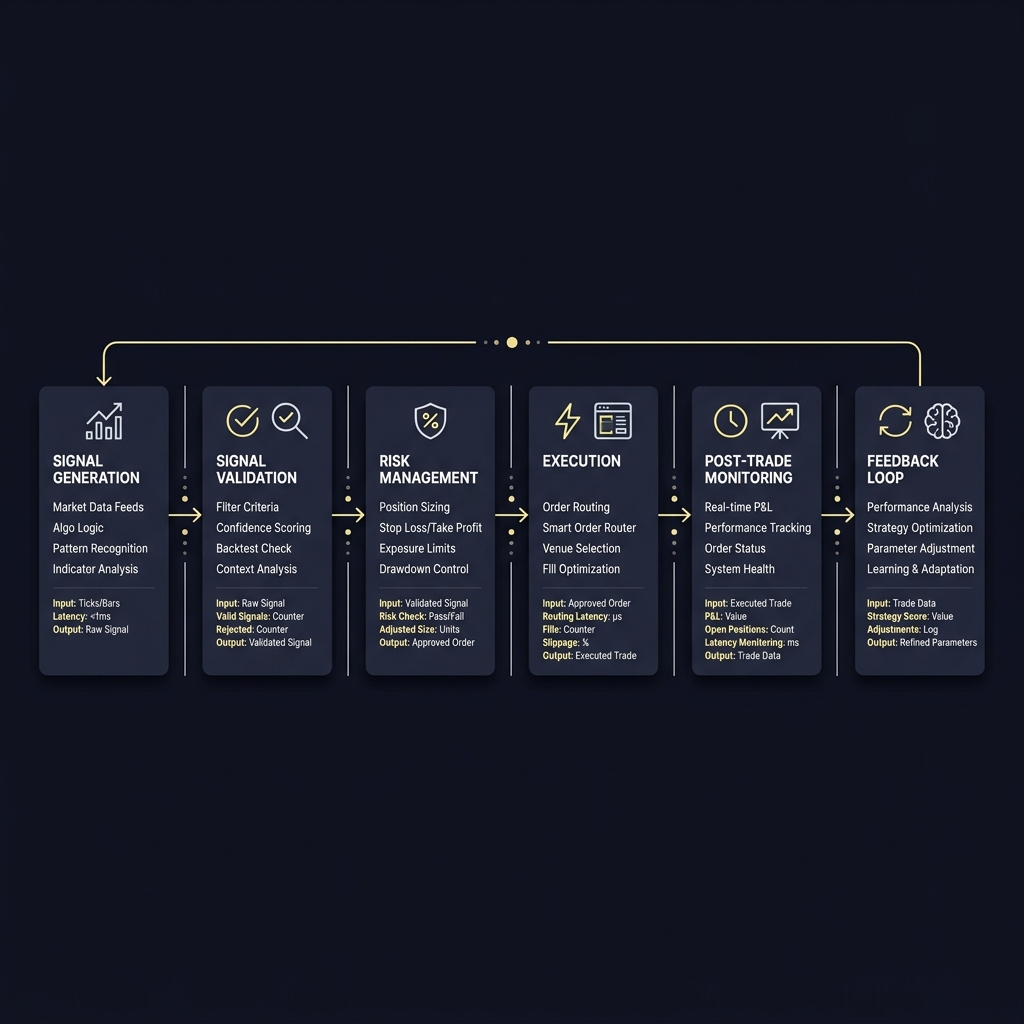
Map your system into a clear component flow. A minimal component map includes governance and policy, the model or signal generation layer, pre trade controls that enforce limits, the execution layer that shapes orders, monitoring and alerting, and a kill switch tier that can halt activity. This flow makes it obvious where to place checks and which teams to involve for each gate. CFTC Electronic Trading Risk Principles
Decision rules interact with risk limits and execution constraints in two ways. Pre trade checks act as a last line before an order leaves the system, enforcing caps such as instrument whitelists, maximum order size, and price bounds. The execution layer applies exposure smoothing and adaptive sizing so that the live order respects both the signal and the operational limits that protect the platform and its users.

Practical pre trade checks include volume caps to avoid moving markets, price bounds to prevent trades at stale prices, instrument whitelists to limit scope, and aggregate exposure checks to prevent concentration in correlated names. These checks should be parameterised and configurable so that threshold tuning can be tested without code changes.
Building a Live Trading Decision Framework: documenting decision rules and thresholds
Version control and immutable change logs are essential. Tag rule releases in the same versioning system used for code, include test results and TCA baselines in the release artifact, and require an approval signature before promotion to a staged rollout. Machine readable manifests enable automated audits that reduce time to evidence during supervisory review.
Building a Live Trading Decision Framework: model validation, backtest risks and mitigation
Validation must move beyond in sample backtests. Use out of sample and walk forward testing to simulate how a model adapts to new data and to reduce overfitting risk. Walk forward testing iteratively trains and tests on rolling windows so performance stability, not peak historical returns, becomes the criterion for acceptance. The Probability of Backtest Overfitting
Independent review is a practical safeguard. Have validation results reviewed by a team or individual who did not build the model, and require written sign off that documents red flags such as unstable parameters, sensitivity to look back windows, or optimistic transaction cost assumptions. These records form part of the evidence package for any supervisory discussion. NIST AI RMF
Building a Live Trading Decision Framework: testing, paper trading and staged releases
Align unit, integration and end to end tests with secure software practices. Unit tests should assert deterministic behavior of small functions, integration tests verify interactions across layers such as signal and pre trade control, and system tests exercise realistic data flows and failure modes in a staging environment that mirrors production. These practices follow SSDF recommendations for version control, code review and automated testing. NIST SSDF
Paper trading is the bridge between validation and live exposure. Run the strategy against live market data with simulated orders that follow the same execution paths and latency characteristics as production. Define acceptance criteria for paper trading including stability of fill rates, expected slippage within a tolerance band, and no material rule triggered exceptions for a fixed sample period before staged release.
a short paper trading and staging playbook
Use with simulated orders that mirror production
Adopt staged rollout patterns such as shadowing, canary releases and progressive exposure (see Funded Plays homepage). Shadowing runs decisions in parallel without sending orders so you can compare live signals to expected behavior. Canary releases enable small initial exposure that increases if metrics remain within agreed thresholds. Progressive exposure limits and clear rollback triggers are required before increasing live volume.
Building a Live Trading Decision Framework: run-time controls, monitoring and kill-switch design
Run time safety is a mix of hard limits and soft alerts. Hard limits automatically stop trading on conditions such as cumulative drawdown, breached exposure caps or rapidly increasing error rates. Soft alerts surface anomalies to operators for investigation before they become critical. Combining both approaches gives fast protection while retaining human judgement when appropriate. ESMA RTS 6
Design kill switches to be reliable and low latency. They should be callable by automated checks and by authorised operators, have dedicated monitoring and test routines, and include clear ownership so no ambiguity exists during an incident. Regular drills and test cases prove the kill switch behaves as expected under simulated failure modes. CFTC Electronic Trading Risk Principles
Alerting strategies must use tiered severity so that critical thresholds generate immediate action while lower severity events create tickets for investigation. Tune thresholds using historical stress tests and paper trading results to avoid alert fatigue while keeping the system sensitive to genuine operational concerns.
Building a Live Trading Decision Framework: post-trade review, TCA and drift detection
Post trade analytics show whether live behavior matches expectation. Core metrics include execution quality, slippage relative to benchmarks, fill rates, and realized versus expected PnL distributions. Capture these metrics at the trade and strategy level to provide a clear supervisory view. FINRA 2024 Annual Regulatory Oversight Report
Transaction cost analysis is a practical control. Define a TCA baseline from paper trading and calibration runs, then monitor live slippage and fills against that baseline. Significant divergence should trigger an investigation and may require rolling back to a previous version or moving the strategy back to validation. Monitoring should include automated drift detection that flags distributional changes in inputs and performance metrics. NIST AI RMF
Building a Live Trading Decision Framework: secure deployment and software practices
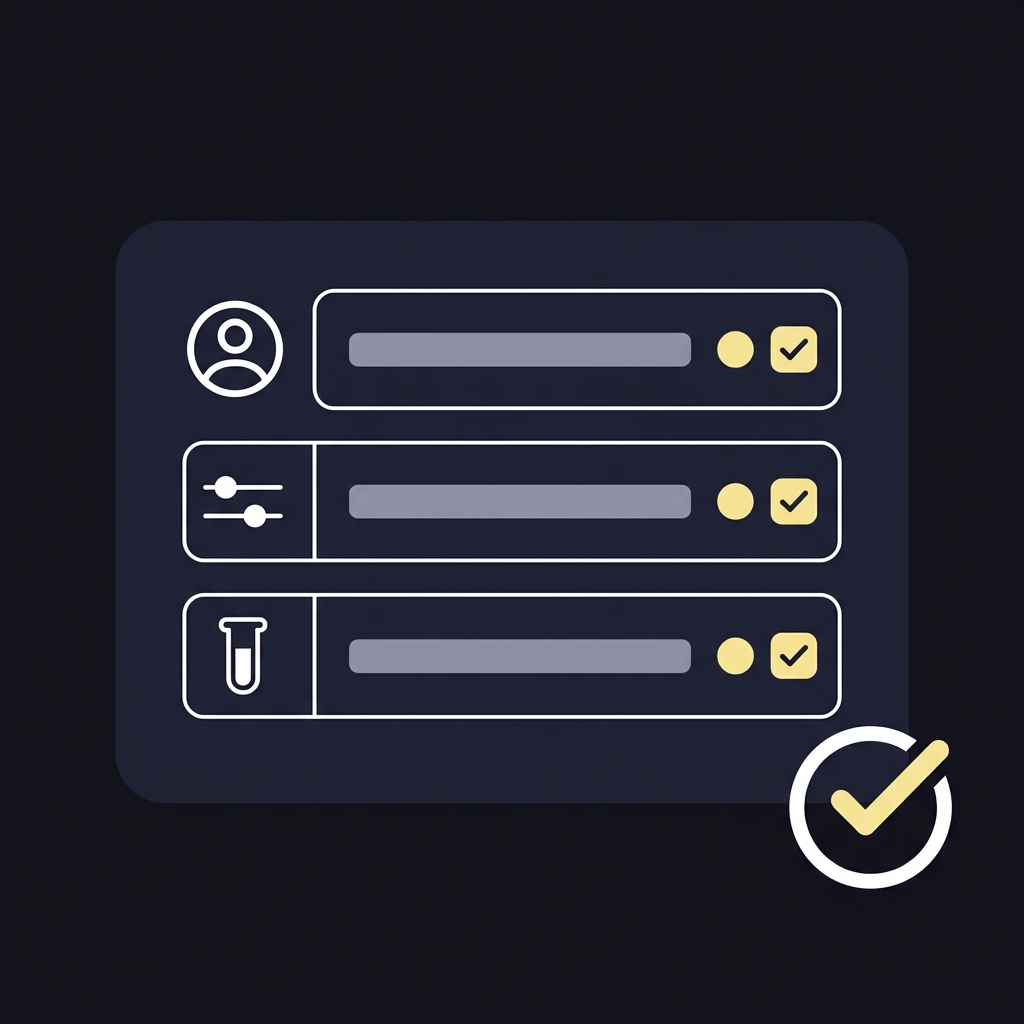
Staged infrastructure and rollback planning are equally important. Keep immutable build artifacts and use deployment gates that check test passes, paper trading outcomes and required approvals before promoting a release. Maintain a rollback playbook with clear criteria and automated scripts so reverting is predictable and auditable.
Building a Live Trading Decision Framework: change management and supervised updates
Changes to models or decision rules must follow approval gates. A practical gate set includes developer unit test sign off, independent validation sign off, risk owner calibration, and an operations readiness check before any staged rollout. Document who signs and what evidence they reviewed for accountability. FINRA 2024 Annual Regulatory Oversight Report
Required artifacts for a change should include test results, a TCA baseline comparison, a deployment plan listing rollout phases and exposure caps, and rollback triggers. Keep audit logs and immutable records so supervisors can later reconstruct the decision path and confirm compliance with internal and external requirements. NIST SSDF
Building a Live Trading Decision Framework: operationalizing thresholds and avoiding false positives
Calibrate alerts and thresholds using historical stress tests, paper trading results, and scenario analysis. Use a combination of absolute thresholds for regulatory hard limits and relative or statistical thresholds for operational alerts that depend on recent variability. This layered approach balances safety and continuity. The Probability of Backtest Overfitting
Document the rationale for chosen thresholds so you can explain conservative or permissive settings during supervisory reviews. Conservative thresholds reduce tail risk but increase false positives and operational interruptions; permissive settings improve continuity but require stronger monitoring and faster incident response.
Building a Live Trading Decision Framework: common pitfalls and how to avoid them
Overfitting and pursuit of peak backtest metrics are common failure modes. Teams that chase in sample wins often find their strategies perform poorly live. Mitigate this by prioritising robustness tests, walk forward validation and independent review before live rollout. The Probability of Backtest Overfitting
Governance failures such as unclear ownership, missing approval gates, and poor documentation are frequently cited by regulators after incidents. Avoid these by codifying owner lists, approval workflows and minimal documentation standards for each decision rule. Operational mistakes include insufficient testing, lack of kill switch drills and weak alert management; include regular drills and post mortem practices in your operational calendar to address them.
Building a Live Trading Decision Framework: practical example checklist and templates
Use a concise deployment checklist before any live launch: 1) confirm governance owners and approval signatures, 2) complete validation and paper trading acceptance criteria, 3) set pre trade controls and exposure limits, 4) configure monitoring and TCA baselines, 5) enable kill switches and test them, 6) stage a canary with progressive exposure and rollback triggers. These items map directly to regulatory expectations and to secure software gates. (see our blog) NIST SSDF
A template for documenting a decision rule should include name, owner, intent, inputs, outputs, thresholds, tests performed, validation artifacts with links to test runs, TCA baseline and rollback steps. Copy this template into your version control and require completion as a release artifact. (example in our evaluations post: how-fundedplays-evaluations-work) Before full rollout, run a short validation exercise in paper trading and compare live shadow metrics to expected behavior.
Building a Live Trading Decision Framework: conclusion and next steps
Prioritise a three step roadmap: identify and document the critical few decision rules that would cause the largest operational risk if they fail, validate those rules with rigorous testing and paper trading, and implement hard limits plus monitoring for the first staged release. This sequence creates measurable progress while aligning to supervisory expectations. ESMA RTS 6 (MiFID II RTS published notice)
Continue routine post deployment reviews and iterate. Maintain alignment between your change management gates and secure software practices from SSDF so updates remain auditable and safe. Over time, expand coverage from the first critical rules to a broader set of strategies while preserving the same controls and documentation discipline.
Run paper trading long enough to capture representative market conditions and sufficient trade samples for TCA; a common minimum window is two weeks but adjust by strategy frequency and market coverage.
Limit kill switch authority to a small set of authorised operations and risk staff with documented escalation paths, and require immediate notification to supervisors after activation.
Include name, intent, owner, inputs, outputs, thresholds, tests, validation artifacts, TCA baseline and rollback criteria as the minimum record.
References
- https://eur-lex.europa.eu/legal-content/EN/TXT/?uri=CELEX:32017R0589
- https://www.cftc.gov/LawRegulation/FederalRegister/finalrules/2020-15067.html
- https://www.finra.org/rules-guidance/guidance/reports/2024-annual-regulatory-oversight-report
- https://csrc.nist.gov/publications/detail/sp/800-218/rev-1/final
- https://ssrn.com/abstract=2326253
- https://www.nist.gov/itl/ai-risk-management-framework
- https://www.fundedplays.com/challenges
- https://www.esma.europa.eu/sites/default/files/2026-02/ESMA74-1505669079-10311_Supervisory_Briefing_on_Algorithmic_Trading_in_the_EU.pdf
- https://www.esma.europa.eu/sites/default/files/library/esma70-156-4572_mifid_ii_final_report_on_algorithmic_trading.pdf
- https://www.fia.org/fia/articles/mifid-ii-rts-published-eu-official-journal
- https://www.fundedplays.com
- https://www.fundedplays.com/blogs
- https://www.fundedplays.com/blogs/how-fundedplays-evaluations-work