

Why a daily college basketball checklist matters
Building a College Basketball Daily Checklist
A daily checklist is a compact, repeatable routine that guides your pre-game and post-game steps so decisions are deliberate rather than impulsive. For anyone focused on measurable progress, a short checklist turns scattered tasks into a process you can test and refine.
Think of the checklist as a daily habit that enforces discipline, highlights where you deviate from your rules, and produces the records you need to evaluate long-term performance consistency. It supports a performance-driven mindset without promising specific outcomes or earnings.

When used with structured challenge workflows, a checklist helps map your actions to evaluation criteria such as drawdown limits and exposure caps. Keep entries simple: an explicit pre-game scan, a final verification step before tip-off, and a brief post-game log will cover most needs.
A checklist reduces avoidable mistakes by creating a fixed order for checks that matter, so you do not skip vital items when under time pressure. It also makes your process auditable, which is essential for tracking improvement.
Consistency comes from repeating the same checks and recording the same fields after each game. Over time this allows you to separate random variance from systematic errors and refine rules accordingly.

Core components of an effective checklist
Data inputs you should check every day
Start with a compact set of data points you can scan quickly each day: official availability and injury reports, confirmed starting lineups, recent rotation patterns, matchup factors like height or tempo mismatches, and any travel or rest anomalies that affect performance.
Keep the list short so you actually use it. Prioritize items that historically change last minute, such as late scratches and starting lineup updates, rather than deep historical statistics that do not affect immediate decisions.
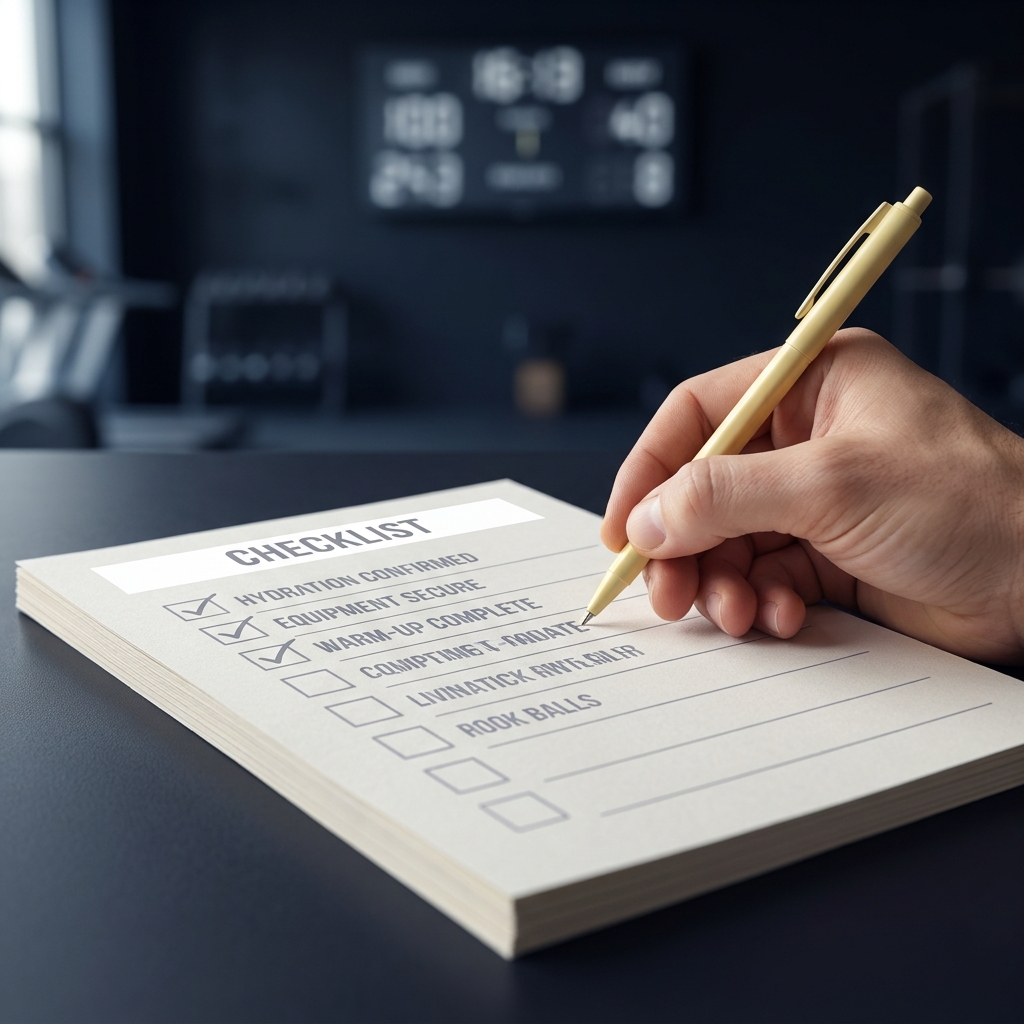
Start with a compact set of data points you can scan quickly each day: official availability and injury reports, confirmed starting lineups, recent rotation patterns, matchup factors like height or tempo mismatches, and any travel or rest anomalies that affect performance.
Keep the list short so you actually use it. Prioritize items that historically change last minute, such as late scratches and starting lineup updates, rather than deep historical statistics that do not affect immediate decisions.
Mindset and rules to set before you start
Before you place a prediction, set clear personal rules: maximum stake per event, total daily exposure limit, and a rule for how many simultaneous active predictions you allow. These constraints protect your process under pressure and make your decisions align with your goals.
Write these rules on your checklist header so they are visible during fast-paced game days. A short reminder helps you avoid chasing or increasing exposure after a loss.
Pre-game checklist: morning and tip-off tasks
Morning check: overnight changes to note
Morning is the time for a quick scan of overnight developments. Check for injury updates, confirmed lineup news, and any schedule changes that could affect travel and rest. Note any items that contradict your earlier assumptions and flag them for re-evaluation.
Record an early lean if nothing material has changed, but mark it provisional so you can confirm before locking in a prediction.
Learn how FundedPlays structures evaluation challenges and rules
Commit to this timed routine for one week and track adherence each day to see where small changes improve consistency
Two hours before tip-off: final verification
At two hours before tip-off run your final verification: confirm starting lineups, check official injury reports for late scratches, review rotation notes from warmups if available, and re-check travel and rest status. If a critical item changed since your morning scan, re-evaluate stake sizing according to your exposure rules.
If everything is confirmed, lock your prediction and log the rationale briefly. If a late change invalidates your premise, either reduce stake or stand aside until you have a new, justified edge.
Before-you-start tools and information sources
Essential data tools and resources
Choose a small set of reliable sources and use them consistently. Useful categories include official team reports for injury and lineup confirmation, real-time lineup feeds for last-minute changes, an injury tracker for aggregated alerts, and a basic advanced stats source for matchup context when you have time.
Limit yourself to sources that are fast and dependable. Too many inputs lead to paralysis; a consistent set of trusted feeds produces clearer trends in your logs.
quick lineup and injury confirmation tool to use before tip-off
Use the same source order every day
Use one primary lineup feed as your go-to for final confirmations. This reduces the back-and-forth between feeds and makes your final verification step faster.
Game-time checklist: live tracking and in-game notes
Key things to monitor during the first half
During the first half focus on rotation patterns, early foul trouble for starters, bench impact, and evident pace shifts. These signals are often the earliest indicators that the game will flow differently than pre-game expectations.
Note observations succinctly so you can revisit them after the game. A short bullet like "starter X in early foul trouble" or "bench outperforms by 8 in first 8 minutes" is enough for post-game learning.
Note observations succinctly so you can revisit them after the game. A short bullet like "starter X in early foul trouble" or "bench outperforms by 8 in first 8 minutes" is enough for post-game learning.
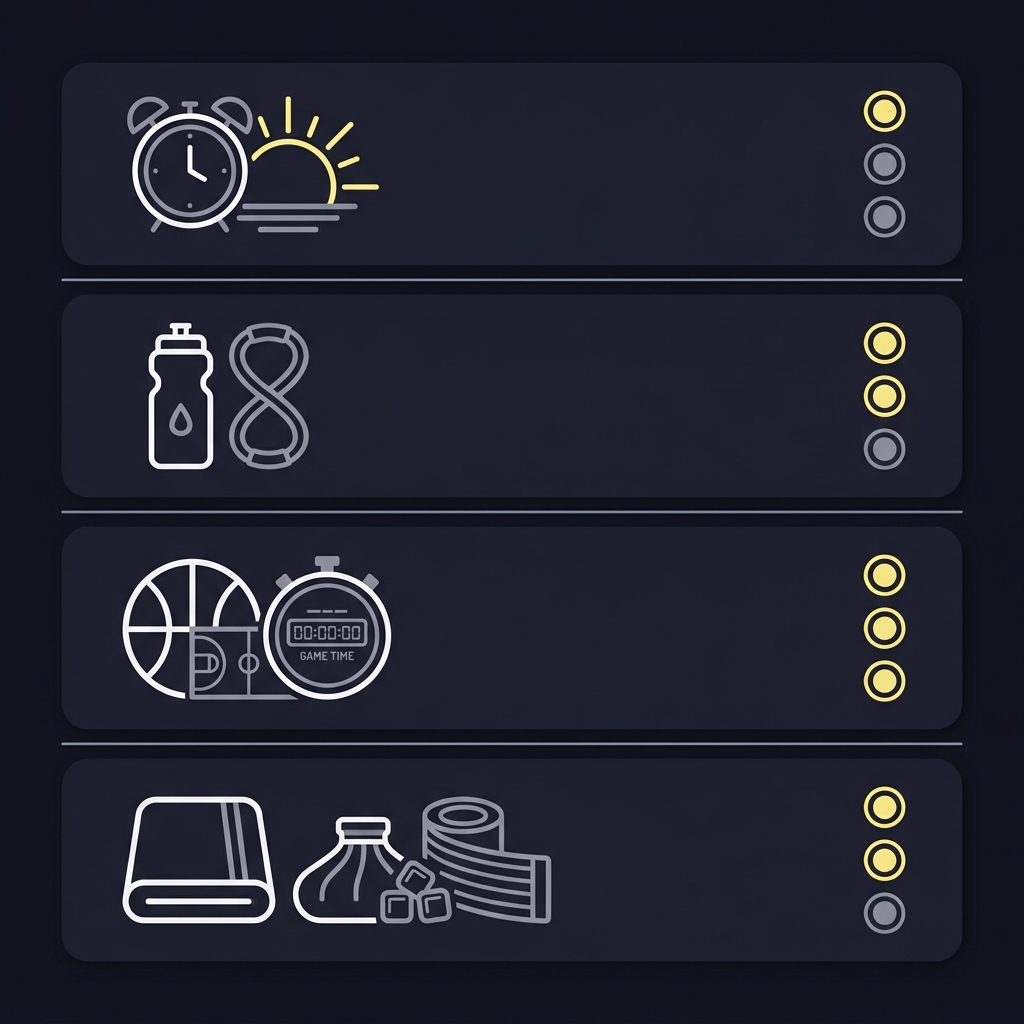
Have a clear rule for when to change an active prediction: for example, only adjust if a confirmed lineup change or an injury to a key player occurs, or if bench rotation shifts make your original edge invalid. Avoid changing positions due to small momentum swings unless they persist and match a concrete rule.
Record the trigger and the adjustment made. This habit helps you trace which in-game actions added or removed predictive value.
Post-game checklist: review, logging, and learning
How to log outcomes objectively
Right after each game log mandatory fields: your original rationale, the final outcome, the key factors that changed the result, and your emotional state at the decision time. Capture these items before hindsight colors your notes.
Use short, consistent fields to make later analysis easier. Objective logs are the foundation for monthly performance metrics and controlled experiments.
What to record for future decisions
Include tags for rotation surprises, injury impact, bench contributions, and whether you followed your stake-sizing rules. These tags let you filter logs later and identify patterns such as recurring errors around back-to-back games or certain conferences.
Translate logs into simple weekly notes that point to process improvements, not outcome regrets.
Decision criteria: when to act and when to stand pat
Objective triggers for changing a prediction
Define objective triggers you will honor. Typical triggers include confirmed lineup changes, injuries to core players, or a verified rotation change that alters minutes distribution. Make these triggers explicit in your checklist so decisions are rule-driven.
When a trigger occurs, apply your exposure rules before altering stake sizes. This keeps changes proportional and protects your overall daily limits.
Risk rules to limit downside
Set a maximum exposure per event and a strict daily loss limit. For example, fix a percent of your allowed bankroll to avoid overexposure on a single day. Repeat these rules on your checklist so they are visible when emotions rise.
Align these rules with any platform-style limits you are working within during evaluation phases to avoid forced rule conflicts later.
Common mistakes and how to avoid them
Checklist slippage and cognitive traps
Common slippage includes skipping checks on busy days and relying on intuition without confirmation. A two-step verification for critical items prevents accidental skips: first scan, then confirm just before tip-off.
Another trap is confirmation bias where you notice only information that supports your lean. Force yourself to record counterarguments in a single line on the checklist before finalizing a prediction.
Overreacting to short-term noise
Short-term noise like an unexpected scoring run or a small-market injury rumor should not automatically overturn your process. Time-box in-game evaluations and insist on objective triggers before making changes.
When you feel an emotional urge to chase, consult your logged exposure limits and the brief rule set on your checklist to neutralize impulse reactions.
Practical examples and daily templates
Template A: quick 10-minute weekday checklist
Template A is a fast routine for busy days: morning scan for overnight injuries and lineup notes, two-hour pre-game confirm, lock provisional lean, and a one-line post-game log. It focuses on confirmations and stake discipline rather than deep matchup work.
Follow a time budget: 3 minutes in the morning, 3 minutes two hours before tip-off, 2 minutes to lock prediction, and 2 minutes post-game to log the outcome. This keeps the routine usable on tight schedules.
A concise, repeatable routine that combines a morning scan, a two-hour pre-game confirmation, in-game monitoring rules, and a short post-game log provides the structure needed for disciplined, measurable predictions.
Template B: full gameday checklist for high-volume days
Template B is a deeper routine for heavy days when you have time: morning scan, mid-afternoon rotation homework, two-hour final verifications, in-game live tracking notes every quarter, and a detailed post-game entry that tags key factors for future review.
This template includes contingency rules such as reducing stake if a late travel-related rest issue appears and explicit steps to reconcile conflicts between sources before final confirmation.
How to measure checklist effectiveness over time
Key metrics to track weekly and monthly
Track adherence rate, decision accuracy relative to your logged rationale, average exposure per decision, and variance in outcomes. These metrics tell you if you are following the process and whether decisions are improving over time.
Calculate a simple decision accuracy rate by dividing the number of decisions that met their stated rationale by total decisions in a period. Use the adherence rate to judge how often you skipped steps and how that correlated with poorer outcomes.
When to revise your checklist
Schedule a monthly review to run controlled experiments: change one checklist item at a time and measure its impact for a set window. Revise only when a change consistently improves process metrics rather than after a brief streak of wins or losses.
If adherence is low, fix the habit first rather than over-optimizing checklist items. Often small fixes to usability increase long-term benefits more than adding complexity.
Integrating the checklist into a funded challenge workflow
Aligning checklist rules with challenge limits
When using a funded-account style evaluation, map your exposure and drawdown rules to the challenge limits. Adopt conservative stake sizing during evaluation to protect against rapid drawdown that can disqualify you from progression.
Document how your daily limits correspond to challenge rules so you do not unintentionally conflict with platform constraints during qualification windows.
Documenting progress for qualification purposes
Keep your logs in a consistent format that shows rationale, adherence, and adjustments. These records demonstrate discipline and a process focus during qualification, which is more informative than a short winning streak.
Use monthly metric summaries from your logs to identify drift in decision rules and to show steady process improvements during evaluation phases.
Sample daily checklist summary (one-page printout)
A compact one-page checklist to print or pin
One-page printouts should include morning checks, two-hour confirmations, quick in-game notes, and post-game log lines. Use checkboxes for: injuries, starting lineups confirmed, rotation red flags, stake set, and post-game logged.
Keep the layout minimal so you can glance and act. A visible printout reduces the mental load during busy game days and helps maintain checklist discipline.
How to customize the printout for your schedule
Adjust the checklist to reflect time zones and conference schedules. For back-to-back games, add an explicit rest and travel check. For conference play, include a conference-specific rotation note if certain teams use deeper benches.
Pin the printout where you make decisions so it becomes part of the physical workflow rather than an afterthought.
Closing: building the habit and next steps
How to make the checklist a daily habit
Build a habit by attaching the checklist to an existing trigger, such as your morning coffee or your first glance at the schedule. Time-box each step so it fits your available attention and use a small reward for adherence, like marking a green check on a calendar.
Start with a one-week commitment to measure adherence and small process metrics. Track only a few key metrics at first to avoid overload.
Where to start if you only have 10 minutes
If you have only 10 minutes, use Template A: quick morning scan, two-hour confirmation, and a single-line post-game log. Focus on confirmed starting lineups and injury checks, and keep stake rules visible so you do not increase exposure under pressure.
Remember that the goal is process improvement and disciplined decision-making, not guaranteed outcomes. Over time the checklist will produce the records needed to refine your approach.
A quick weekday checklist can take about 10 minutes total, while a full gameday routine may take 25 to 40 minutes depending on depth.
Confirming injury reports, starting lineups, rotation notes, and travel or rest issues are the highest priority before tip-off.
Track adherence rate and decision accuracy over weekly and monthly windows and run small controlled changes to test improvements.
References
- https://www.fundedplays.com
- https://www.fundedplays.com/blogs
- https://www.fundedplays.com/blogs/how-fundedplays-evaluations-work
- https://www.fundedplays.com/challenges
- https://www.cbssports.com/college-basketball/news/ncaa-tournament-injury-reports/
- https://sportsdata.io/developers/workflow-guide/ncaa-basketball
- https://evanmiya.com/