
Quick answer: what the market said about Crawford or Canelo in live boxing fight odds tonight
Short verdict: across reputable 2025 coverage the market generally listed Canelo Álvarez as a modest favorite over Terence Crawford, meaning books were more likely to return money on a Canelo win than on Crawford in the posted moneylines, though those prices varied between operators. This directional consensus was visible in aggregator snapshots and mainstream coverage at the time, which is why many previews labeled Canelo the market pick rather than a heavy favorite OddsChecker snapshot.
Putting that verdict into practice: common moneylines reported in coverage sat in a typical range roughly between -150 and -200 on Álvarez, so a representative price such as -175 implies a mid-60s percentage chance before accounting for the bookmaker margin. Translating a posted moneyline into a percentage helps you see whether you think the market offers value relative to your own view Implied probability guide. Reports such as ESPN betting coverage also highlighted how early lines were perceived by bettors and media.
Compare live odds and convert posted prices before acting
Check live aggregator feeds and use the conversion steps below before acting on any posted boxing fight odds tonight; the worked examples will help you convert lines quickly and compare books.
Why this matters now: if you are looking up boxing fight odds tonight you should treat the early consensus as a starting point, not a final verdict. Lines can move on new information or on sharp money, so re-checking live prices and comparing implied probabilities across books is essential.
Short verdict and what 'favored' means in moneyline terms
Being "favored" on a moneyline simply means the listed price implies a higher probability of winning for that fighter according to the market. For an American moneyline that is negative for the favorite, the greater the absolute value the stronger the market's expectation. A modest favorite is often in the -150 to -200 band rather than an extreme price like -500, which signals much stronger market confidence.
Snapshot of 2025 market ranges and why readers should re-check live markets
Aggregators and boxing press offered snapshots showing variation across operators, so while the consensus leaned toward Canelo the exact number you would see depended on which book you checked and when. If you plan to act, compare the implied probability you calculate to your own forecast and account for any bookmaker margin before sizing a stake Sporting News market roundup.

How to read boxing fight odds tonight: converting moneylines to implied probability
Knowing how to convert formats is a basic skill when you check boxing fight odds tonight, because different books present prices in American, decimal, or fractional formats. The implied probability lets you compare those prices on a common scale so you can spot which book offers a better return relative to your view.
Formula for American, decimal, and fractional odds
Standard conversions are straightforward. For American odds: if the number is negative (the favorite), implied probability = -american / (-american + 100). If the number is positive (the underdog), implied probability = 100 / (american + 100). For decimal odds, implied probability = 1 / decimal. For fractional odds a/b, implied probability = b / (a + b). These formulas give the raw market probability before vig adjustments and are the basis for comparing books Implied probability guide.
Step-by-step worked example
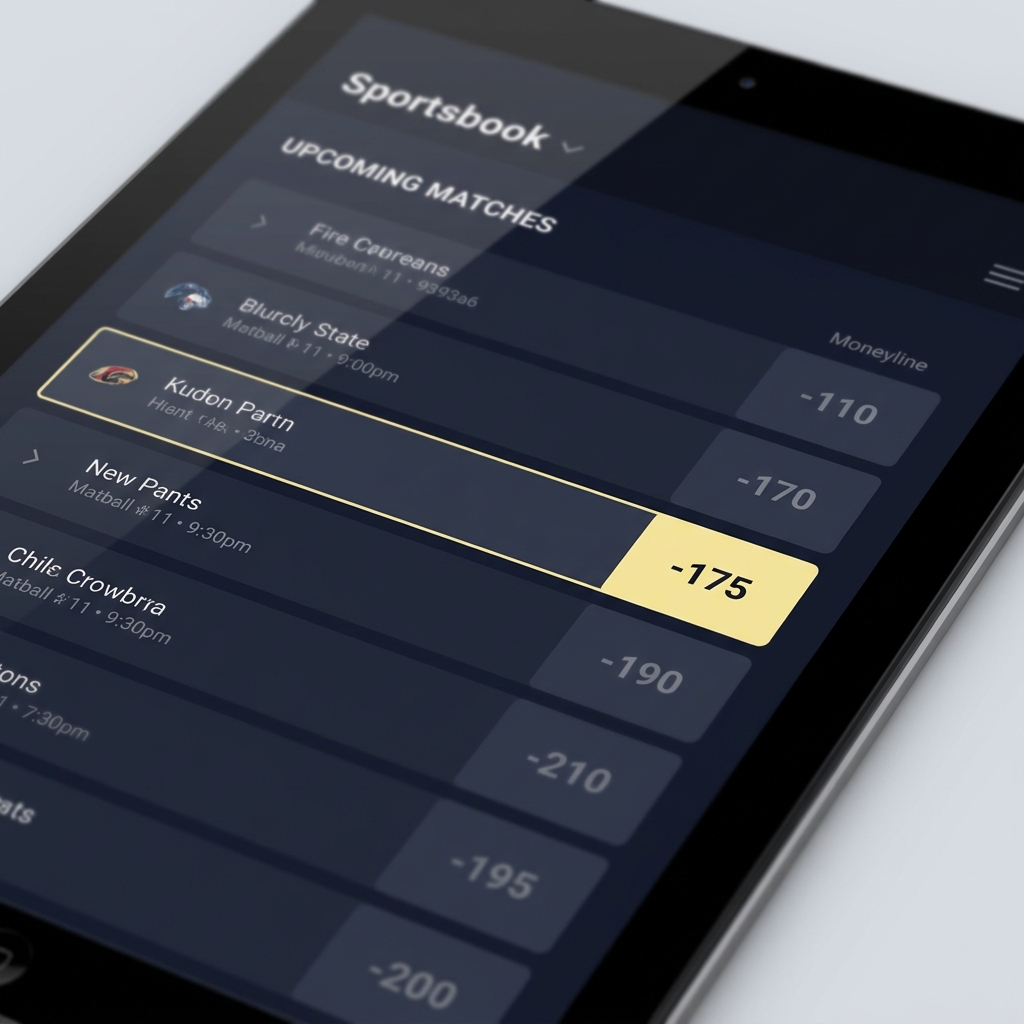
To make the American formula concrete, take a -175 favorite. Plugging into the negative formula gives 175 / (175 + 100) which equals 175 / 275, or about 0.636, so roughly a 63.6 percent implied chance. Many writers round that to about 63 to 64 percent when they describe what a -175 price means in simple terms Pinnacle odds guide.
Remember that implied probability is a conversion of the posted price; it does not remove bookmaker margin. If you want a cleaner comparison between two books you can estimate and remove vig, but that requires an extra step beyond the basic conversion.
Why weight class and size history affect boxing fight odds tonight
Physical factors such as past performance at a specified weight and movement between classes are common reasons markets price fighters differently. Canelo's sustained success at 168 pounds and occasional fights at 175 created more market confidence in his ability around the super middleweight range.
Terence Crawford moved up from lower weight classes in the years prior, which adds unknowns that can be priced as risk by bookmakers. Moving up may preserve skill but can introduce questions about power, durability, and comfort at the new limit; markets typically reflect those considerations when they form early lines ESPN report on Canelo at 168.
Based on reputable 2025 coverage, Canelo Álvarez was the modest market favorite, with typical moneylines around -150 to -200; always check live markets and convert posted odds to implied probability before acting.
Ask yourself: do you trust the implied probability more than your qualitative read of the styles? That choice determines whether you treat the posted price as the primary input or as one input among many when forming a forecast. Crawford's move from 147/154 was noted by analysts as a substantive factor when aggregators first listed prices ESPN on Crawford's move.
In short, size and weight-class history change both the numeric price and the uncertainty around that price. Markets internalize those changes quickly, so understanding the context helps you interpret whether a listed favorite is priced for a likely win or simply for a perceived physical edge.
How markets moved: typical ranges and line movement mechanics for a big boxing matchup
For high-profile fights, initial posted lines are a snapshot. Aggregators reported a typical range for the matchup in 2025 around -150 to -200 on Álvarez, reflecting differing operator views and liquidity available at the time. That range shows consensus without implying a single definitive number Sporting News market roundup. Coverage from outlets such as Boxing Insider documented similar operator snapshots.
Lines move for predictable reasons: sharp bettors placing large limits, public money swamping one side, official announcements about purses or physicals, and limit changes at books that force price adjustments. Late-week movement is common as books balance exposure and as new information arrives, so watching hour-by-hour pricing on fight week is appropriate for serious comparison Pinnacle on market movement.
Reported range examples from aggregators
Seeing a quoted range like -150 to -200 tells you two things: first, the market firmly leaned toward one fighter, and second, that there was meaningful disagreement among books. That disagreement is the opportunity for line shopping: a -150 price is materially different from a -200 price in implied probability terms, so capturing the better number matters if you plan to stake based on value.
What causes early lines to shift as fight week approaches
Expect volatility. Sharp money can force a book to adjust immediately, while heavy public action sometimes moves lines more slowly as books wait to see how exposure evolves. Official details, such as confirmed weight checks or training reports, can also trigger sudden shifts; for major fights, the last 48 hours is when many prices settle.
Worked examples: converting Crawford vs Canelo betting line numbers and what they imply
Concrete conversions help you compare. Use these three representative American odds and their simple step-by-step conversions to implied probability to see how much difference a move in price makes. The examples below assume the standard formulas and show decimal and fractional equivalents alongside the arithmetic, with a note that bookmaker margin is not removed in these bare conversions Implied probability guide.
Example 1, -150: implied probability = 150 / (150 + 100) = 150 / 250 = 0.6, or 60 percent. Decimal equivalent is 1.67 and fractional is 2/3. Example 2, -175: implied probability = 175 / 275 = about 0.636, or 63.6 percent. Decimal ~1.57 and fractional roughly 7/11. Example 3, -200: implied probability = 200 / 300 = 0.666, or 66.7 percent; decimal is 1.50 and fractional is 2/3 in simplest terms.

Interpreting those numbers: the jump from -150 to -200 changes implied probability from 60 percent to about 66.7 percent, which shifts the edge calculation materially if your independent forecast differs. Knowing how to convert is a prerequisite to measuring expected value and to deciding whether to take a line.
Finally, remember the vig: those implied probabilities add to more than 100 percent when both sides are converted, because the book includes a margin. If you want a clearer view of relative value, calculate each side's implied number and then normalize after estimating the book's margin.
How to shop boxing odds today and find the best price
Line shopping is basic value management. Aggregators make quick comparisons across many operators so you can see the best posted number without logging into every account, and they also show popular prop lines and directional consensus that help you decide where to focus your attention OddsChecker snapshot.
When to accept a line: set a target price using the implied probability that matches your model or view, then wait until a book posts that price. If you cannot find the target after checking multiple reputable books, reassess whether your forecast is realistic or whether your stake size should be reduced to reflect uncertainty.
Line shopping basics and aggregator use
Use aggregators to find candidate books, then cross-check the best price directly in the book's interface before placing a bet. Aggregators sometimes lag by seconds, and limits or acceptance rules vary by operator, so confirm the best number where you have an account before committing funds.
When to accept a line and when to wait
Accept a line when it meets or exceeds the edge you require and when the book has sufficient limits for your stake. Wait if the price is tightening quickly and you expect further movement, or if an imminent announcement could move the line in the short term.
Useful calculators and tools to check boxing fight odds tonight
Simple utilities eliminate conversion errors. An odds-to-probability calculator or a one-line spreadsheet formula reduces mistakes and speeds decision making on a busy fight night, making comparisons across books reliable even under time pressure Implied probability guide.
Convert posted odds to implied probability in one step
Use the American field for single-value conversion
Practical tip: save the one-line spreadsheet formula =IF(A1<0, -A1/(-A1+100), 100/(A1+100)) where A1 is the American odds cell. That single formula gives you the implied probability quickly and consistently.
Common mistakes when interpreting boxing fight odds tonight
Ignore the vig. Many people treat implied probability as a literal chance without removing the bookmaker margin, which overstates the market's implied certainty. Corrective action: calculate raw implied numbers for both sides and normalize if you want a fairer two-sided comparison.
Mistake two: misreading the format. Confusing decimal with American odds or plugging the wrong formula produces large errors. Corrective action: always check which format you are viewing and convert with the proper formula; use a saved calculator to avoid transcription mistakes.
Mistake three: overreacting to early line moves. Early movement may reflect a single large limit hit or a temporary liquidity issue rather than a consensus change. Corrective action: watch volume and post-adjustment price behavior before changing a long-held view.
Scenario walkthroughs: sample bets, implied edge calculations, and a bankroll checklist
Scenario A, small speculative stake: assume you believe Crawford has a true 40 percent chance to win while the market posts -175 on Canelo, implying Canelo has about a 63.6 percent chance. Crawford's implied chance is therefore about 36.4 percent by complement. If your 40 percent belief is correct, expected value on a +175 underdog stake can be calculated to show a small positive edge; this is the arithmetic that turns conversion into a staking decision Implied probability guide.
Scenario B, larger discipline-based stake: if you think Canelo is slightly less likely than the market price, you might choose to reduce stake size or avoid the market. A simple edge calculation: edge = (your_prob - market_prob) / market_prob. Use that percentage to scale your stake relative to your bankroll rules rather than treating a perceived edge as a guarantee.
Bankroll checklist: set a fixed percentage of your active prediction bankroll per speculative wager, cap exposure to single-event variance by limiting consecutive stakes, and define a drawdown limit that forces a reassessment rather than emotional chasing.
If no official line is posted: interpreting directional market consensus
When official books have not fully posted lines, aggregator snapshots and media coverage can still show directional consensus. Those snapshots often summarize the range and the likely favorite from early market action, which is useful as a directional input even if you cannot place a bet immediately Sporting News market roundup.
Practical steps when lines are preliminary: monitor multiple reputable aggregators, wait for books with reliable limits to go live, and avoid committing until you can confirm the posted price in a book where you can stake funds. Treat preliminary ranges as tentative guidance rather than firm offers.
What the odds do not tell you: style matchup, variance, and uncertainty
Odds quantify market opinion but they often compress nuance. For example, round-by-round pacing, a fighter's defensive strategy, or subtle reach advantages can be undervalued by quick moneyline conversions. Integrate qualitative matchup reads with the numeric conversion to form a fuller view Pinnacle on odds limits.
Variance is an important reminder: single events are noisy. Even a high implied probability can fail because boxing outcomes are influenced by single moments and by styles that interact unpredictably. Treat market probabilities as one input among many and expect surprises.
Practical pre-action checklist before you act on boxing fight odds tonight
Confirm the current posted line where you plan to act and convert it to implied probability.
Compare the implied probability to your own forecast and decide whether the difference justifies the stake under your bankroll rules.
Check liquidity and limits; ensure the book will accept your planned stake without forcing a price change or a partial fill.
Scan for late news such as weight issues, replacement fighters, or official cancellations, and step away if the situation increases uncertainty beyond your risk tolerance.
Final summary: is Crawford or Canelo favored and how to keep monitoring boxing fight odds tonight
Short answer: 2025 reputable coverage showed Canelo Álvarez as the modest favorite, with common moneyline ranges around -150 to -200 on Álvarez. That direction is consistent with his recent success at weight and with aggregator snapshots that captured early pricing across books OddsChecker snapshot.
Recommended next steps: convert any posted moneyline to implied probability using the formulas above, shop multiple aggregators for the best price, normalize for vig if you want a two-sided comparison, and fold in weight-class and stylistic context before sizing a stake. Remember that odds reflect market opinion, not certainty; keep a disciplined bankroll approach and verify live prices before acting Implied probability guide.
If the moneyline is negative, use implied = -odds/(-odds+100); if positive, use implied = 100/(odds+100). This yields the market probability before vig.
Markets factored Canelo's proven performance at higher weights and perceived size advantages, while Crawford's move up added uncertainty; these factors influence pricing.
Confirm the posted line where you will act, convert it to implied probability, compare it to your model, check limits and liquidity, and verify there is no late news affecting the matchup.
References
- https://www.oddschecker.com/us/insight/boxing/2025-09-10-canelo-alvarez-vs-terence-crawford-odds-date-time-and-where-to-watch
- https://www.investopedia.com/terms/i/implied-probability.asp
- https://www.sportingnews.com/us/boxing/news/canelo-alvarez-vs-terence-crawford-odds-betting-lines-props
- https://www.pinnacle.com/en/betting-resources/educational-guides/what-are-betting-odds
- https://www.espn.com/boxing/story/_/id/40091584/canelo-alvarez-jaime-munguia-fight-result-undisputed-168
- https://www.espn.com/boxing/story/_/id/40384569/terence-crawford-154-debut-result-analysis
- https://www.oddschecker.com/us/insight/boxing/mma/20250913-canelo-alvarez-odds-round-betting-method-of-victory-vs-terence-crawford-in-las-vegas
- https://www.fundedplays.com/challenges
- https://www.fundedplays.com/blogs
- https://www.fundedplays.com/blogs/how-fundedplays-evaluations-work
- https://www.fundedplays.com
- https://www.espn.com/espn/betting/story/_/id/46236065/underdog-crawford-gaining-betting-steam-ahead-canelo-showdown
- https://www.boxinginsider.com/headlines/canelo-vs-crawford-fight-odds-and-prop-bets/