
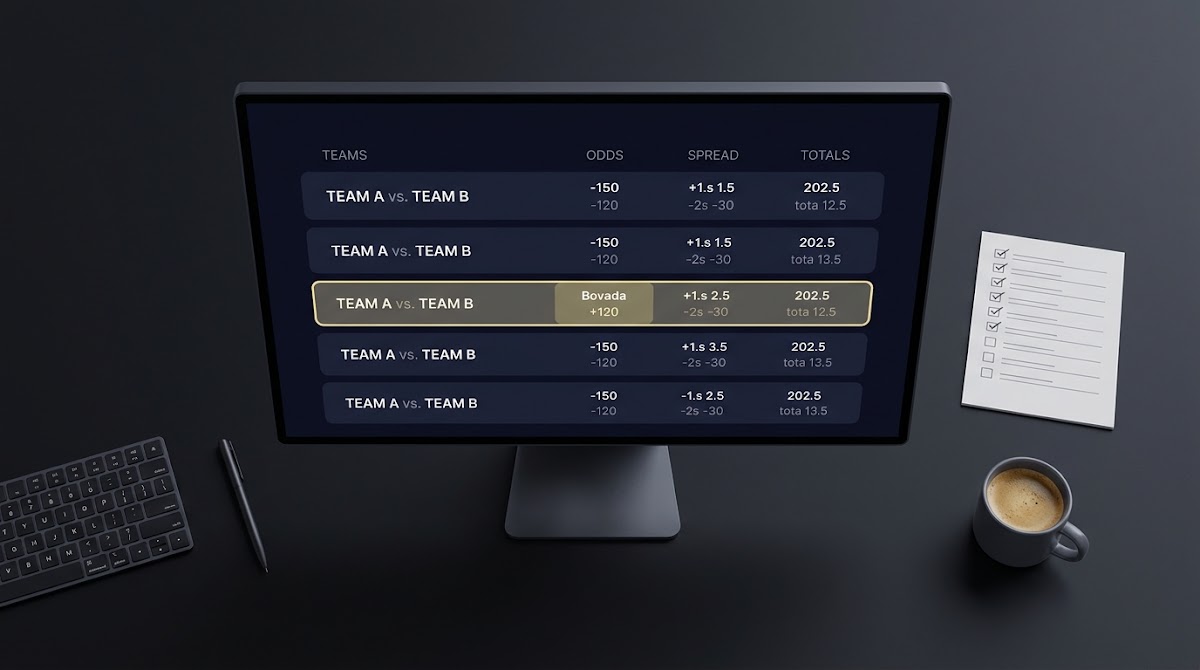
What 'bovada odds' means and why price differences matter
When bettors talk about "bovada odds" they usually mean the actual numeric lines the site posts for markets, and how those prices compare to other operators. Odds express implied probability, and small differences in a posted line change the expected value of a wager. Understanding the basic terms helps keep comparisons practical and outcome-focused.
Odds formats come in three common styles: American (plus and minus numbers), decimal (a single multiplier), and fractional (traditional book format). The implicit fee a book charges is called the vig, or juice, and that vig is what turns fair probabilities into a profitable product for the operator. A clear, non-technical way to think about implied probability is to convert the odds into the percentage chance they imply and compare that to your assessment of the real probability.
Line-shopping is the practice of comparing posted prices across operators to find the most favorable line for the same bet. No single book has the best price on every market, and that variability is measurable because state and operator conditions change over time, which is visible in industry metrics that track sports betting performance and market behavior AGA Commercial Gaming Revenue Tracker.
Explore FundedPlays Challenges for structured, skill-based sports prediction
Download the printable odds-comparison checklist to speed up line-shopping and make consistent, documented decisions.
Small line differences matter because over many bets a persistent edge of even a fraction of a percent compounds. For example, a consistent half-point difference on a spread or a few cents on a moneyline can swing long-term profitability for disciplined, repeat bettors. That is why disciplined line shopping is part of a long-term staking plan rather than a short-term chase for bonuses.
Practical comparison factors include the vig implied by each price, available bet limits, and whether the operator offers a full market ladder or only a subset of prop bets. These operational differences change how much value you can realize from a nominally better price.

State regulators have increased scrutiny of offshore sportsbooks, sometimes issuing formal enforcement actions against operators. One notable example occurred when a state control board issued a cease and desist to the reported operator of the offshore site, demonstrating that regulators are willing to take direct steps to limit unlicensed operations within their borders Michigan Gaming Control Board press release (MGCB PDF).
Industry reporting later documented that the offshore operator ceased operations in some states following those enforcement steps, which illustrates how regulatory action can change account access and availability for customers without much notice Legal Sports Report coverage. Industry outlets also covered the development iGaming Business.
Regulatory attention was not limited to a single state; another state division of gaming also issued a notice related to the offshore operator, showing that pressure extended beyond a single jurisdiction and that the risk of service interruption or account restrictions is a practical concern for users Colorado Division of Gaming press release. SBC Americas also reported on these restrictions SBC Americas.
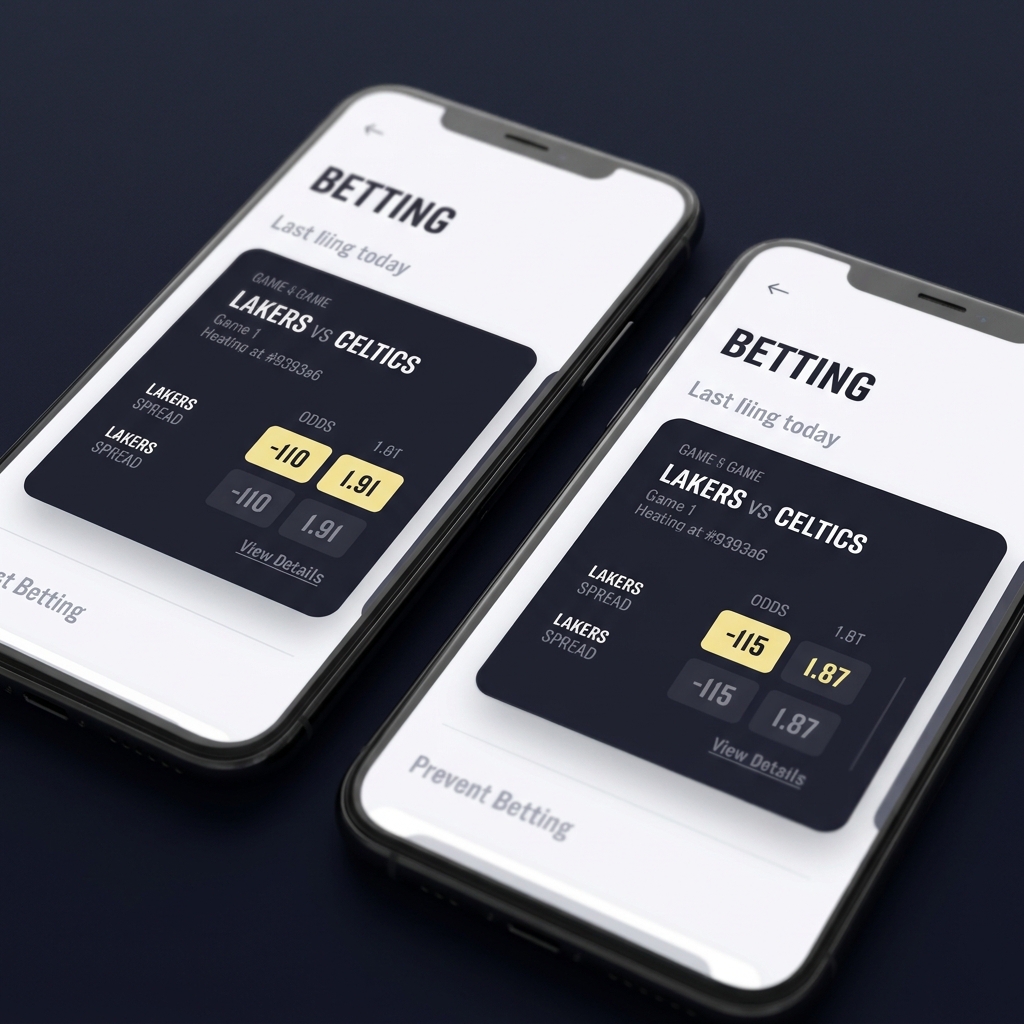
For bettors, those steps can mean sudden changes to deposit and withdrawal processing, limited customer service options, or the eventual loss of access in specific states. Users who rely on offshore sites for liquidity should be aware that state actions can disrupt account access and complicate dispute resolution.
State-licensed operators offer a baseline of consumer protections that offshore sites typically do not, including formal identity verification, regulated dispute processes, and responsible-gaming tools. Those protections create predictable paths for resolving payment or account issues and mean there is a public regulator with which a bettor can register a complaint if needed.
The American Gaming Association states that offshore sportsbooks operate outside U.S. law and generally lack the core protections available from state-licensed operators, which is a central reason to weigh legal status alongside posted prices when choosing where to place money American Gaming Association overview.
Before creating an account, a practical step is to check the regulator's approved-operator lists for your state. Those lists confirm which brands are authorized to accept wagers and usually point to which operators must follow KYC procedures and provide responsible-gaming resources New Jersey approved operators list.
For most bettors, the ability to escalate a payment dispute, use self-exclusion tools, and rely on verified identity and anti-fraud processes is worth accepting small price differences in exchange for consumer safety and clearer withdrawal pathways.
Vig, sometimes called the margin, is how operators embed a profit into prices. While the exact math can be technical, a simple approach is to convert the main market prices into implied probabilities and sum them to see how much they exceed 100 percent, which approximates the book's take. Lower implied margins generally increase expected value for bettors.
Market depth and available bet types matter because an attractive headline price means less if limits are low or specific props are missing. A deeper market with higher limits and more props gives a bettor more ways to exploit small value edges. Commercial gaming metrics show that state and operator conditions affect market behavior, supporting the need to compare across licensed operators rather than assuming one is uniformly best AGA Commercial Gaming Revenue Tracker.
There is no single universally better site; prioritize legality, regulated consumer protections, and clear payment policies, and use methodical odds and vig comparisons to find the best fit for your play style.
As a practical example, two books might post the same spread but one offers more alternate spreads and larger maximum stakes; the latter is meaningfully more valuable to a high-volume bettor even if its headline vig looks similar. Market depth also influences the ability to hedge or scale positions.
Estimating vig from prices is a quick way to prioritize books. For a two-outcome market, convert the odds to implied probabilities, add them, and subtract 100 to get a rough margin. That number helps you see where a few cents or a half-point move matters in the context of your staking plan.
A step-by-step framework to compare sportsbooks (practical checklist)
Step 1, Verify legality: Confirm the operator is licensed to accept wagers in your state by checking the state regulator's approved-operator list and saving contact details in case a dispute arises New Jersey approved operators list.
Step 2, Compare odds and vig: Run a short head-to-head comparison for the markets you play most often and estimate the implied vig. Use at least three sample markets to avoid one-off anomalies in price.
Step 3, Check payment and withdrawal policies: Review deposit methods, withdrawal timing, fees, and identity requirements. Payment rails are a day-to-day operational concern and can erase any theoretical advantage from a slightly better line if withdrawals are slow or blocked.

Step 4, Evaluate market depth and limits: Does the operator offer the prop bets, alternate spreads, and maximum stakes you need? If you are a high-volume bettor, limited markets or low caps will reduce your ability to realize an edge.
Step 5, Check dispute and responsible-gaming policies: Ensure the operator publishes a clear dispute resolution contact and has tools such as self-exclusion or deposit limits. If policies are missing or vague, treat that as a red flag.
Ranked priorities are practical: first, legality and regulator oversight; second, odds and vig; third, payment convenience and withdrawal transparency; fourth, user experience and available markets. This ordering reflects the fact that protections shape long-term access to funds and dispute recourse.

For many users a slightly worse line at a state-licensed operator is acceptable where it comes with KYC, regulated complaint processes, and responsible-gaming safeguards. Consider how often you plan to move large sums, how important quick withdrawals are, and whether you value formal dispute resolution.
Payment options can affect usability. For example, operators that support bank transfers, e-wallets, or fast ACH can make it easier to move money in and out, whereas opaque crypto or delayed withdrawal methods can slow cashflow. Good operators publish expected timing and any hold policies clearly.
Common mistakes and red flags when moving away from Bovada
One frequent error is overvaluing bonus offers without reading terms. A bonus may look generous but include high rollover requirements, restricted bet types, or expiration windows that make it worth less than it appears. Always read the fine print.
quick odds comparison workflow
Use for repeated comparisons
Not checking local legality is another common mistake. If an operator is not authorized for your state, you may have limited options for recourse if payments are delayed or accounts are restricted. Regulatory exit events can lead to sudden service changes.
Ignoring withdrawal rules and fees erases perceived advantage. Promises of fast payouts mean little if an operator applies long holds or extensive identity checks at the time of withdrawal. Document policies and screenshots of terms when you deposit or accept an offer.
Practical scenarios: line-shopping walkthroughs for common bets
Example 1, NFL spread. Suppose Book A posts -3 and Book B posts -3.5 for the same game. If your model places the fair line at -3.25, betting at Book B when you expect to be better than -3.5 gives a distinct edge. If you play many such bets, those half-point advantages compound into measurable differences in expected return.
When assessing whether to move a stake, account for limits. If Book B has a very low maximum stake, the practical value of the better line may be limited. A simple rule is to multiply the edge by your typical stake and frequency to check whether the expected value justifies account complexity.
Example 2, NBA moneyline and totals. Imagine Book A offers a moneyline at -150 and Book B at -145. Converting those into implied probabilities shows the difference in expected value. If alternate props or larger limits exist at one book, the combined set of markets may be more valuable than a slightly superior moneyline alone.
These worked examples show why line shopping should be a tool in a broader process that includes verifying limits, payment options, and how easy it is to move funds. Often the best practical choice is the licensed operator that gives consistent access and predictable policies rather than a marginally better price that comes with operational risk.
How to verify an operator: using state-approved lists and regulator resources
Start by locating your state's gaming regulator website and searching for their approved operator or licensee list. Many regulators publish a current roster of authorized sports wagering operators and provide contact details for consumer inquiries New Jersey approved operators list.
Check the licensee name, license type, and any public enforcement actions. Save a screenshot or PDF of the approved-operator entry and the regulator's contact information so you can reference it if a dispute arises. This simple documentation step greatly improves your ability to escalate a claim.
Bankroll management differences when switching to legal operators
Expect deposit and withdrawal timing to be slower at some licensed operators because of KYC and anti-fraud checks. That means you should plan for longer clearing times when you move your core bankroll and avoid relying on promotional credit as part of your working bank unless you understand restrictions.
Adjust staking plans if maximum bet sizes or account limits differ. If your normal units are large relative to the new operator's limits, scale down unit size or split exposure across approved operators that meet your legal and operational criteria.
When to prioritize odds and when to prioritize protections
High-volume, professional line shoppers who can consistently exploit small edges may place a higher weight on marginally better prices, provided they also manage legal and operational risk. Casual players often benefit more from the peace of mind that comes with regulated operators and predictable withdrawal pathways.
A practical threshold is to treat differences under a few cents on the moneyline or under half a point on key spreads as unlikely to justify exposing yourself to legal or operational uncertainty. If a line difference is larger and persistent across many markets, evaluate whether the operational risks are acceptable for your profile.
Quick checklist and next steps for choosing a Bovada alternative
One-page checklist, quick actions: 1) Confirm operator is licensed in your state. 2) Compare implied vig for your main markets. 3) Check payment rails and withdrawal timing. 4) Review market depth and limits. 5) Save regulator contact details and screenshots. 6) Confirm responsible-gaming options and dispute process.
Three-step 15-minute comparison: pick three markets you bet most often, record prices from two licensed operators and your current book, compute implied vig for each, and note withdrawal terms and limits. If a licensed operator matches or improves your net expected value and gives stronger protections, prioritize it.
Document decisions and keep a short log of comparisons. Over time that log will show whether a certain operator consistently offers better value for your play style, helping you apply disciplined bankroll management and long-term evaluation rather than chasing single-market wins.
Conclusion: balancing odds with safety and how to proceed
Comparing "bovada odds" is a useful exercise, but price alone does not determine which site is better. Legal status, dispute processes, payment rails, and responsible-gaming safeguards often matter more for long-term access to funds and predictable outcomes.
Use the checklist and the step-by-step framework in this guide to compare options methodically. Prioritize regulated operators for everyday play unless you have a clearly documented, repeatable edge that justifies taking additional operational risk. Stay informed about regulatory developments, because enforcement actions can change the availability of offshore options over time.
Offshore sportsbooks like Bovada operate outside U.S. state licensing and are generally considered illegal by industry groups; legality depends on state rules and licensing.
Small differences can compound over many bets; generally, half a point on a spread or a few cents on a moneyline matter for disciplined bettors, but assess them alongside limits and fees.
Verify the operator on your state regulator's approved list, review withdrawal timing and fees, confirm KYC requirements, and save regulator contact details.
References
- https://www.americangaming.org/resources/commercial-gaming-revenue-tracker/
- https://www.michigan.gov/mgcb/news/press-releases/2024/06/04/mgcb-issues-cease-and-desist-letter-to-harp-media-bv-operator-of-bovada
- https://content.govdelivery.com/attachments/MIGCB/2024/05/30/file_attachments/2893093/2024.05.30-PR-CDLetter-Bovada.pdf
- https://www.legalsportsreport.com/126368/bovada-exits-michigan-colorado-after-cease-and-desist/
- https://igamingbusiness.com/legal-compliance/michigan-successfully-blocks-bovada-from-operating-in-state/
- https://sbg.colorado.gov/press-release/division-of-gaming-issues-cease-and-desist-to-bovada
- https://sbcamericas.com/2024/06/21/bovada-restricted-michigan-colorado/
- https://www.americangaming.org/advocacy/illegal-gambling/offshore-illegal-market/
- https://www.nj.gov/oag/ge/docs/LicenseeInformation/SportsWagering_ApprovedOperators.pdf
- https://www.fundedplays.com/challenges
- https://www.fundedplays.com
- https://www.fundedplays.com/blogs
- https://www.fundedplays.com/blogs/how-fundedplays-evaluations-work