
What betting line movement means
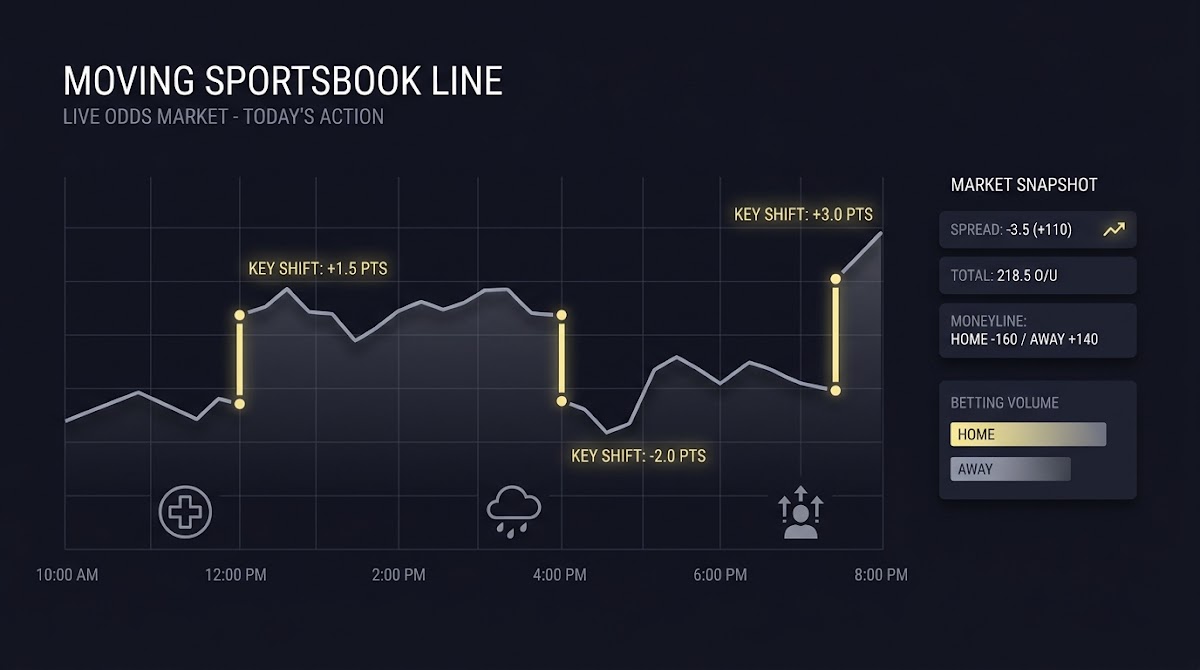
Betting line movement is a simple concept: it describes a change in published odds, a spread, or a total between two points in time. In practice, a line shift may show as a move in a point spread, a change in a moneyline, or a different total for an over/under. Understanding what a movement represents helps you judge risk and decide whether a changed price actually improves your expected outcome.
When you watch odds shift, you are seeing the market update a price that balances sportsbook liability and player demand. That update can reflect new information, shifting consensus, or the action of a few influential bettors. The distinction between a price change and the mechanics behind it matters because an identical movement can come from very different causes and therefore carry a different implication for your prediction.

For someone practicing disciplined forecasting, tracking line movement in a simulated or challenge environment can be a low-friction way to learn how market reaction affects edge. A funded sports prediction challenge platform provides structured scenarios where participants log decisions, observe line history, and refine their process without wagering real money. Learn more on the Funded Plays blog.
Simple definition
Put plainly, betting line movement equals any change in a published sportsbook odds quote over time. That includes point spread adjustments, moneyline shifts, and totals changes. The phrase is often used interchangeably with odds movement or line shift, though some people reserve odds movement for moneyline changes and line shift for spreads.

Why the distinction matters for bettors and analysts
Distinguishing the type of movement helps you interpret its cause and effect. A three-point swing in a point spread can affect expected value differently than a small shift in the moneyline. Similarly, a moved total may change your view of game pace or scoring projections without altering which side you favor. Treat movement as information, not a guarantee.
Common causes of betting line movement
Lines move for many reasons, and recognizing the likely cause is the first step to a useful interpretation. One broad category is public betting, where large volume from casual bettors forces sportsbooks to adjust to limit liability. Another category is professional or sharp activity, where early action from informed bettors prompts sportsbooks to react before the public notices. For more background on how lines move and what that can mean for bettors, see What Line Movement Really Tells Bettors.
Non-betting information can also shift lines. Late injury news, weather updates, lineup changes, travel complications, or even officiating reports can change the perceived probabilities for an event and produce a move. These information-driven shifts often occur close to game time and can be large if the news is material.
Public betting and consensus action
When many customers back one side, a sportsbook may move a line to balance its book and reduce exposure. The move is not necessarily a signal of hidden insight; it can reflect popularity, narratives, or simple recirculation of the same opinion across outlets. Watching betting percentage and market depth helps you decide whether a public-driven move meaningfully changes edge.
Sharp money and professional activity
Sharp bettors, including experienced market makers and professional syndicates, often place early, larger, and more targeted bets. Their activity can produce early movement as sportsbooks respect the information implied by these wagers. A pattern of early movement that later reverses when public money arrives deserves a closer look for potential insights. A bookmaker view explains common causes like sharp money in detail at Why Betting Lines Move: A Bookmaker's Perspective.
New information: injuries, weather, lineups, and market events
Not all moves are caused by bets. Time-sensitive news can force a rapid reprice. For example, a starter listed doubtful, severe weather forecasted for a dome game, or a sudden travel delay can each cause a sportsbook to update odds. Confirming the source of a move reduces the chance of misreading a transient fluctuation as meaningful intelligence.
How to read and interpret betting line movement
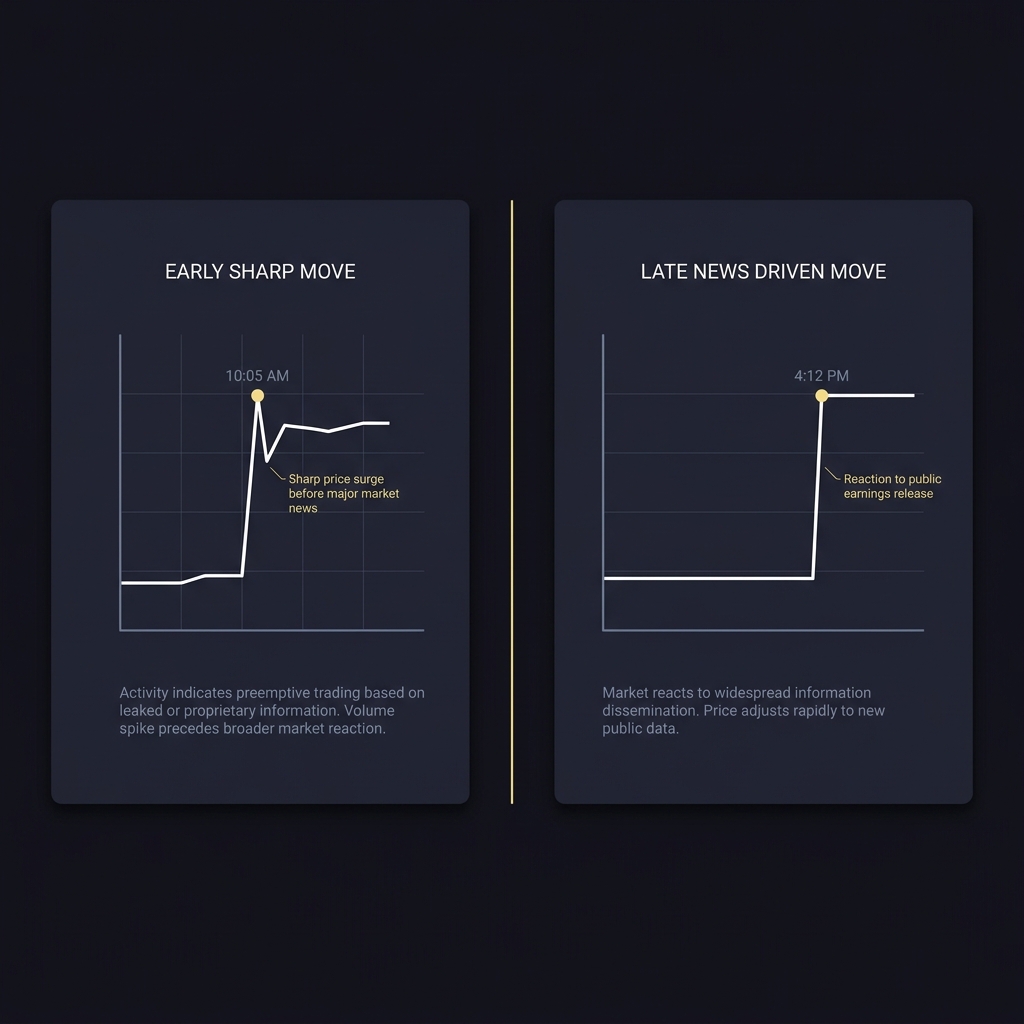
Interpreting line movement requires combining timing, magnitude, and corroborating signals. Start by noting when the move happened. Early shifts tend to reflect professional activity or initial risk management. Moves that happen close to game time often follow new information that legitimately changes expected outcomes.
Next, consider how much the line moved and how fast. A gradual half-point drift over days is different from a sudden three-point jump in an hour. Size and velocity each convey a piece of the puzzle. Use line history to compare current movement with past behavior for the same market.
Track line history and correlate with news
Keep entries brief and include source for verification
Combine movement with context: check official injury reports, lineup confirmations, weather updates, and published betting percentages. If a line moves and you find a matching news item, the move likely reflects changed probabilities. If you find heavy action but no clear news, consider that sharp money or large public volume may be responsible. See the Funded Plays site for ways to practice applying these checks.
Timing matters: early vs late movement
Early movement can be informative if it comes from experienced market participants who identify edges before the public. Late movement is often the market responding to verifiable news. Both have value, but they should be interpreted with different priors about reliability and permanence.
Magnitude and velocity: small shifts versus large jumps
Small, slow shifts may reflect opinion slowly consolidating across bettors, while large, rapid jumps suggest a strong new input. Use magnitude to gauge whether a move materially changes expected value after accounting for vig and price sensitivity.
Contextual clues: combine movement with news and market indicators
Always corroborate movement with external indicators. Line history charts, public betting percentages, and official team communications offer context that reduces false positives. A disciplined read combines these signals rather than treating a single move as decisive. For a practical primer on reading lines, see How Do Betting Lines Work - How to Read Them.
A practical framework for using betting line movement in strategy
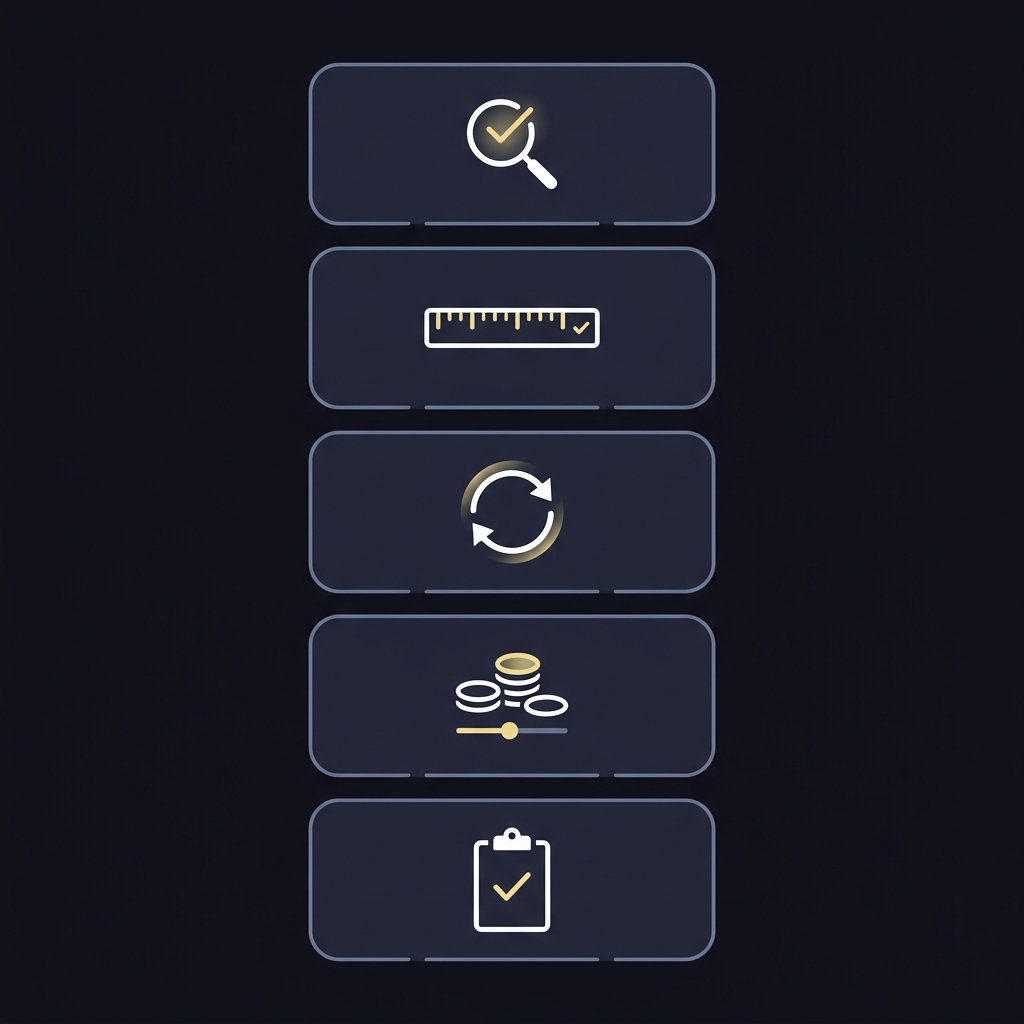
Use a short checklist before changing your pick: verify the source of movement, measure the magnitude and speed of the move, test whether the new price changes your edge calculation, and adjust stake sizing according to your bankroll rules. This stepwise approach keeps decisions rooted in process rather than emotion.
Treat movement as one input among many. Your model or projection should be the baseline. If a line move meaningfully alters expected value, consider a modest stake adjustment. If it does not, standing pat protects consistency and reduces overtrading.
Use a short checklist before changing your pick: verify the source of movement, measure the magnitude and speed of the move, test whether the new price changes your edge calculation, and adjust stake sizing according to your bankroll rules. This stepwise approach keeps decisions rooted in process rather than emotion.
Checklist before adjusting your pick
Verify where the move came from, check for matching news, measure the shift in expected payout, and confirm that the trade fits your stake plan. This short routine prevents common errors like chasing noise or overreacting to anecdotal reports.
Risk and bankroll considerations
Small odds changes rarely justify large stake swings. Bankroll management rules should guide adjustments so that a moved line changes position size only within your existing risk framework. Keep changes proportional to how much the move actually shifts your estimated edge.
When to follow movement and when to stand pat
Follow movement when it is backed by verifiable information or when it consistently aligns with a tested model update. Stand pat when a move lacks corroboration or when the change in expected value is negligible after accounting for the sportsbook margin and practical bet size limits.
One frequent error is chasing movement without context. Reacting to a line simply because it moved often leads to higher variance and worse long-term performance. Always ask whether the move actually improves your probability estimate before altering a position.
Another mistake is overreacting to small or isolated moves that are likely noise. Not every shift represents new information. Comparing the current move to recent line history helps filter out routine drift from meaningful repricing.
Chasing movement without context
Chasing tends to increase action and emotional decision-making. Use your checklist to pause and verify. A quick habit of checking source and magnitude reduces the temptation to follow crowd behavior that often erodes edge.
Overreacting to small or isolated moves
Small changes can be statistical noise. Before changing a stake, estimate how the moved price affects your expected value. If the difference is minimal, maintaining your original plan preserves discipline and reduces unnecessary turnover.
Ignoring transaction costs and vig
Some bettors forget that the sportsbook margin reduces the net benefit of a moved line. Even when a line appears more favorable, account for the vig and any execution friction that could offset theoretical gains.
Concrete examples and scenarios
Example 1: Early sharp movement. Imagine a spread drops two points within hours of initial release, before most public bets appear. A disciplined approach is to check for professional action signals, review line history, and decide if the adjusted line fits your model. If it does, a modest increase in stake aligned with bankroll rules may be reasonable.
Example 2: Sudden shift after injury news. Suppose a key starter is ruled out three hours before kickoff and the spread moves significantly. This is a clear information-driven repricing. Recompute your projection with the updated lineup and adjust your decision if the new expected value crosses a pre-defined threshold.
Betting line movement means a change in published odds, spread, or total; respond by verifying the cause, measuring how the new price alters expected value, and adjusting stake size only within your bankroll rules.
How to run a quick check using line history and news feeds. Start by noting the timestamp and size of the move, then search official team reports and reputable news feeds. Compare the move to recent line history to see if similar moves led to persistent changes or quick reversals. Keep a short log for each decision so you can review outcomes later.
These scenarios show the value of a compact, repeatable routine: verify, measure, recalc, and adjust stake proportionally. Keeping the process short reduces emotional reactivity and builds an archive of decisions you can review to refine judgment.
Key takeaways and responsible next steps
Betting line movement is a market signal that can indicate changing probabilities, shifting liability, or new information. Interpreting movement requires attention to timing, magnitude, and corroborating evidence. Use a checklist and notebook to make decisions systematic rather than impulsive.
Practice tracking line history, keep a decision journal, and apply conservative bankroll management when adjusting stakes. Over time, disciplined application of this framework improves the consistency of your forecasting without increasing reckless risk.
Practice disciplined line reading with structured challenges
Try disciplined tracking and practice applying the checklist in a structured challenge to build consistent decision habits.
For more hands-on practice, consider exploring structured challenge options that let you test decision routines and track outcomes in a performance-oriented environment. A few sessions of disciplined practice will reveal how movement interacts with your models and risk rules. See how Funded Plays evaluations work.
Responsible participation means avoiding promises about earnings and treating movement as a signal, not a guarantee. Keep records, stay objective, and focus on process improvement over chasing short-term swings.
Lines can move over minutes to days depending on the cause. Early professional bets often move lines quickly, while public consensus can create gradual shifts. Timing depends on market activity and new information.
No. Movement can come from public volume, sharp bettors, or verifiable news. Verify the source before assuming insider knowledge.
Not always. Use a checklist to verify the cause, measure how the move changes expected value, and adjust stake sizing only within your bankroll rules.
References
- https://www.fundedplays.com/challenges
- https://www.fundedplays.com/blogs
- https://www.fundedplays.com
- https://www.fundedplays.com/blogs/how-fundedplays-evaluations-work
- https://www.covers.com/guides/what-line-moves-can-tell-us
- https://www.circalasvegas.com/blog/sportsbook/from-the-experts/article/why-betting-lines-move-a-bookmakers-perspective/
- https://oddsjam.com/betting-education/betting-line-movement