

What is betting line movement? Reverse line movement explained
Betting line movement is the process by which prices or point spreads change after a market opens, reflecting new information, order flow, and bookmakers adjusting risk. The term betting line movement covers everything from small odds tweaks to multi-point shifts, and understanding why a line moves is the starting point for any trading or handicapping decision.
Reverse line movement is a specific pattern people watch for: it occurs when a line moves away from the side attracting the majority of public tickets, and some traders treat that pattern as a signal of professional or sharp money rather than public sentiment. This definition, commonly used in industry discussions, sets up the key question about whether that pattern is a reliable edge in practice, or simply a noisy artifact of market mechanics Action Network article on reverse line movement. See also OddsIndex guide.
It is important to note that public ticket percentage alone can be a misleading snapshot without knowing the money behind those tickets, since sportsbooks and exchanges respond to money-weighted order flow as well as ticket counts.
Start measuring CLV with a simple tracking sheet linked to FundedPlays Challenges
If you want a starting worksheet, download a CLV tracking starter sheet to log opening price, bet price, closing price, and outcomes; use that sheet to see whether line moves matter for your process.
Traders use consistent labels for these signals so that later sections can compare RLM to alternatives such as closing line value and cross-book checks. For readers new to the terms, think of line movement as the market communicating new information and of reverse line movement as an apparent mismatch between public tickets and the subsequent price path.
How bookmakers, exchanges, and market makers move lines
Price changes arise from three core drivers: new public information, the distribution of bets across sides, and the need for market-makers and books to manage exposure. When a large market participant places a big order, exchanges and sharp books often adjust prices quickly to reflect that order flow and the underlying information that motivated it Smarkets help centre on how odds move.

Retail books sometimes move lines with the visible goal of balancing action from their retail customers, but that view can be incomplete. Market-making desks set initial prices to attract balanced books, and they will move lines to manage risk, to reflect new news, or to respond to liquidity imbalances rather than simply to counteract ticket counts.
Exchanges and sharp books typically reflect order flow and information more rapidly than some retail sportsbooks. That speed matters because a move in a sharp book or on an exchange often incorporates immediate money-weighted trades rather than a delayed response to retail ticketing.
How traders interpret reverse line movement and what that implies
Experienced traders may read reverse line movement as a potential sign that money from professional bettors is pushing a price opposite the public majority. This interpretation comes from the idea that sharp money seeks value and will move a price away from a heavily ticketed public side Action Network article on reverse line movement. See also New York Times coverage.
Reverse line movement can sometimes indicate sharp-money action, but it should not be used alone. Confirm cross-book moves, check CLV trends, and verify handle or news timing before acting.
That apparent signal is only useful when placed in context. Traders look for corroborating information such as the size of the money behind the move, timing relative to news or injury reports, and whether the same move appears on sharp books or exchanges. Without that context, treating RLM as an automatic cue to bet can be risky, because some shifts are liquidity-driven or the result of market-making adjustments rather than fresh information about the event Unabated analysis on RLM and alternatives.
In short, RLM can coincide with sharp action, but only careful confirmation turns it into a reliable input to sizing and entry decisions.
Why public bet percentages can mislead: the handle problem
Public reporting often shows bet percentage, the share of tickets on each side, but that number does not show how much money those tickets represent. A book that receives many small tickets on one side can still be facing most of the money on the other side if larger wagers or sharps are active.
Money-weighted measurements, commonly called handle, matter because bookmakers respond to money at risk. A small number of large bets can move prices more than a greater number of small bets, and treating ticket percent as equivalent to money percent can produce false signals for bettors Smarkets help centre on odds and order flow.
Because many public dashboards only show percent of tickets, bettors should be cautious about interpreting those snapshots without additional evidence on handle distribution, or without cross-book confirmation that the money side matches the ticket side.
Closing Line Value (CLV): a stronger metric than chasing RLM
Closing Line Value, or CLV, measures how the price you obtained compares to the market closing price before an event starts. If you consistently secure better prices than the closing market, that long-term advantage is widely considered evidence of betting skill and value seeking rather than the occasional benefit of following isolated line moves Pinnacle primer on closing line value and PropsBot explanation.

Practitioners in 2024 to 2026 increasingly recommend prioritizing CLV tracking over reacting to single RLM instances, because CLV aggregates your price performance across many bets and filters out noise from one-off market quirks.
For a bettor looking to measure skill, the practical takeaway is simple: record your bet price and compare it to the closing market; over time, a consistent CLV advantage is a stronger signal than occasionally backing a reverse line move that later reverses.
Cross-book consensus, timing, and news: when RLM can matter
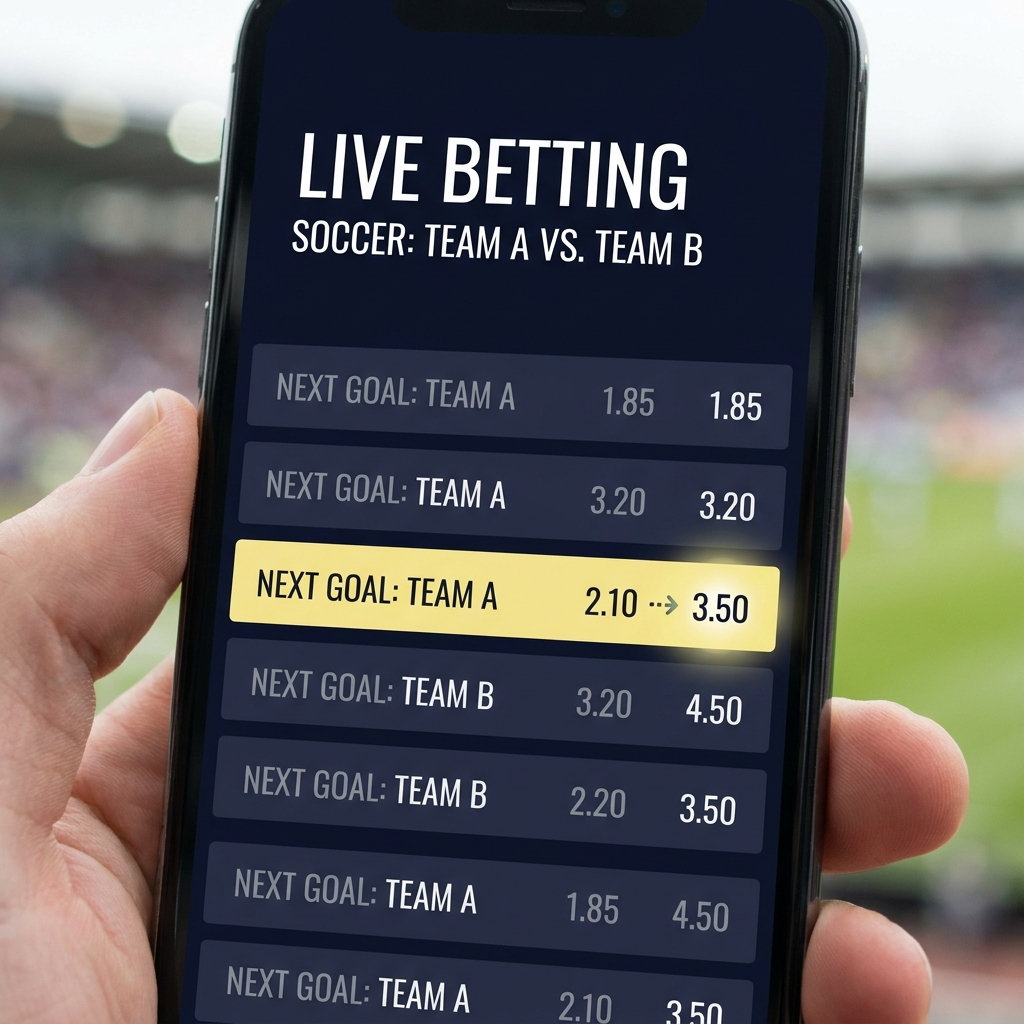
Reverse line movement earns credibility when the same directional move appears across several books and exchanges, particularly when sharp books show similar price shifts. Cross-book consensus reduces the chance that a one-off liquidity tweak or idiosyncratic market-making decision is being mistaken for sharp action Smarkets help centre on odds movement.
Timing is another critical dimension. A move that follows a confirmed injury report, lineup change, or other concrete news item is more actionable than a late-night drift with no clear catalyst. Conversely, a move that happens at an odd hour and only on one retail book may reflect a liquidity imbalance rather than informed money.
Quick cross-book checks you can run include verifying the same directional move on an exchange or a known sharp book, checking timestamps for news, and noting whether available market depth indicates genuine money behind the change.
Practical decision rules for 2026 bettors
Modern markets have become deeper and faster, so a short, prioritized checklist helps you evaluate any RLM signal before risking capital. First, confirm cross-book movement. Second, check CLV history for similar markets. Third, assess handle and news timing. Fourth, size bets conservatively when corroboration is partial Action Network article on RLM interpretation.
quick pre-bet RLM evaluation
Use before increasing stake
Because U.S. betting markets matured through 2025 with deeper liquidity, simple heuristics such as blindly tailing RLM are less likely to produce repeatable edges without the corroborating checks above AGA State of the States 2025 report.
When you follow the checklist, treat any RLM signal as one input among several rather than a sole reason to place a large wager; that disciplined stance helps preserve long-run CLV and keeps variance manageable.
A simple framework to evaluate RLM signals
Step 1, establish a baseline: note the opening price, recent CLV patterns for that market type, and your standard stake size. Having a clear baseline prevents emotional sizing when a line moves.
Step 2, check corroboration: look for the same move on exchanges or sharp books, confirm if there is a credible news catalyst, and estimate whether the move was driven by a handful of large orders or by many small tickets Action Network article on RLM basics.
Step 3, choose sizing and exit rules: if corroboration is strong and CLV history supports the edge, use your normal sizing rules; if confirmation is partial, reduce stake and define clear exit thresholds. Always log the decision and outcome so you can update your CLV tracking over time.
Common mistakes bettors make when following line movement
A frequent error is treating ticket percentage as definitive evidence that the public or sharps are on a given side. That mistake confuses count-based snapshots with money-weighted reality and can encourage misaligned reactions Smarkets help centre on odds and liquidity.
Another mistake is overbetting on a single RLM event without tracking outcomes. Over time this behavior erodes bankroll through variance and prevents you from accumulating reliable CLV data to evaluate whether your process works Unabated insights on RLM pitfalls.
Corrective actions include always recording the trade, using conservative sizing for unconfirmed moves, and prioritizing CLV measurement so that a single unlucky result does not derail long-term learning.
Examples and scenarios: NFL, NBA, and MLB line moves
Scenario: NFL, late-week injury. You see a line move sharply away from the public after a credible injury report. In that case, the timing and the news catalyst make the move worth deeper checks: verify cross-book movement and compare to your CLV history for similar injury-driven situations Smarkets explanation on order flow and news.
Scenario: NBA, morning drift with no news. A small retailer posts a directional drift the next morning but exchanges show no similar move. This pattern suggests a liquidity or pricing adjustment rather than sharp backing, so treating it as a high-confidence signal is risky.
Scenario: MLB, heavy exchange order. On an exchange a large matched bet pushes the price; if that move appears across books and timing fits a news item or roster change, it is a stronger signal and may justify a disciplined, size-controlled response.
How to track CLV and build disciplined betting records
Minimum fields to record for each bet include market, event time, opening price, your bet price, closing price, stake, and result. These entries let you calculate CLV for each wager and aggregate results over weeks or months Pinnacle explanation of CLV.
A simple weekly review process: update your bet log, compute average CLV for the week, note any RLM events you reacted to, and compare outcomes on our blog. Over time, look for consistent CLV gains rather than relying on anecdotal wins from isolated line moves.
Interpreting CLV trends means treating single events as noise and focusing on whether your average difference to the closing line is positive or negative across a meaningful sample of bets.
When to ignore line movement: market maturity and liquidity limits
As U.S. commercial betting markets have matured, depth and speed of information assimilation have increased. These changes reduce the marginal edge available from simple heuristics such as following reverse line movement without corroboration AGA State of the States 2025 report.
When liquidity is deep and prices move quickly to integrate news, the time window for capturing an exploitable RLM signal often closes faster than it used to. That means many bettors will see diminishing returns from treating RLM as a primary strategy.
Practical guidance: if the market you follow shows rapid, cross-book assimilation and you have no handle data, prioritize CLV tracking and conservative sizing instead of chasing small, late adjustments.
Summary: Is reverse line movement real? Practical takeaways
Short answer: reverse line movement is a real observable pattern, and it can sometimes coincide with sharp-money activity, but it is not a reliable, standalone betting strategy without corroboration. Treat RLM as one lens among several rather than a single deciding signal Unabated on RLM and what to track instead.
Priorities for most bettors are clear: track closing line value diligently, run quick cross-book checks when a line moves, and verify timing and handle before increasing stake. These practices create repeatable measurement and reduce the chance of being misled by ticket-based snapshots Pinnacle on CLV.
Next steps: start a simple CLV log, practice cross-book checks on a few markets, and apply the decision checklist on small stakes until your records show a coherent CLV trend. Over time this approach is more likely to separate skill from noise than following reverse line movement alone.
Reverse line movement is when a line moves away from the side attracting most public tickets, often read as a potential sharp-money signal but requiring corroboration.
Closing line value compares your bet price to the market closing price and, tracked over time, gives a stronger indication of betting skill than reacting to single line moves.
Ignore small or isolated line moves unless they appear across books, follow credible news, or are supported by handle information; size bets conservatively otherwise.
References
- https://www.actionnetwork.com/education/reverse-line-movement
- https://help.smarkets.com/hc/en-gb/articles/214061885-How-odds-are-determined-and-move
- https://unabated.com/insights/reverse-line-movement-is-a-myth/
- https://www.pinnacle.com/en/betting-articles/educational/what-is-closing-line-value
- https://www.fundedplays.com/challenges
- https://www.americangaming.org/resources/state-of-the-states-2025/
- https://www.fundedplays.com/blogs
- https://www.fundedplays.com/blogs/how-fundedplays-evaluations-work
- https://www.fundedplays.com/
- https://oddsindex.com/guides/reverse-line-movement-guide
- https://www.nytimes.com/athletic/2581377/2022/01/27/reverse-line-movement-in-sports-betting-how-to-tell-where-the-public-vs-sharp-money-is-going/
- https://propsbot.ai/glossary/closing-line-value/