
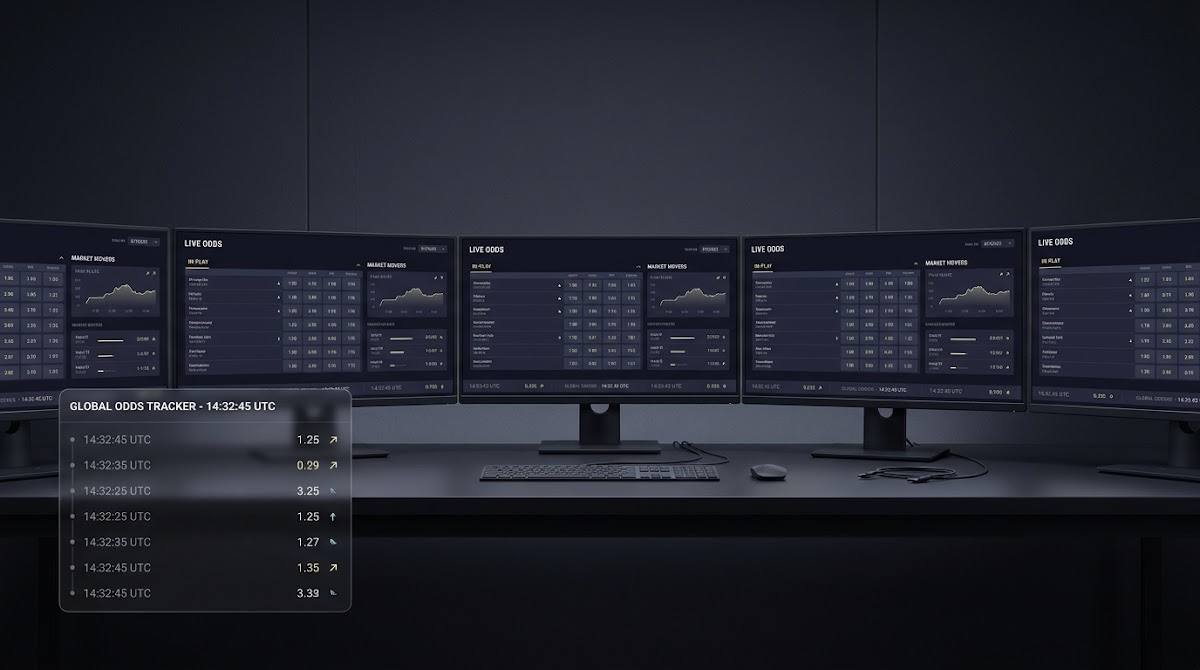
What betting line movement means
Betting line movement describes how sportsbooks update point spreads, totals, and moneyline prices as new information and wagering activity arrive; these posted numbers can change until a wager is accepted, so the figure you see is not always final, and timing matters when you place a ticket Investopedia line movement definition.
Get the line-movement logging checklist
Download the checklist later in this article to help record time-stamped odds and avoid chasing short-term steam.
At a practical level, common line types that move include the point spread, the total or over/under, and moneyline prices or listed prices for same-game markets. Movement is usually shown on sportsbook boards as a shift in the number or a change in the posted price, and learning how those displays update helps you compare entries across books without confusion.
Understanding that numbers are not final until a bet is accepted depends on the sportsbook house rules where you bet; licensed operators publish rules that govern when wagers lock and how posted odds can change up to acceptance Ohio administrative code on house rules.

What commonly causes lines to move
Material new information triggers many of the clearest moves: late injuries, weather forecasts, or confirmed lineup changes will often force a book to reprice to reflect updated expectations for the game, especially when those items materially affect scoring or player availability Kambi on how sportsbooks set odds.
Beyond news, market forces drive adjustments. Books manage liability as individual bets create unbalanced exposure, and they raise or lower limits which in turn changes how quickly prices move when sizable tickets arrive. Those liability and limit mechanics often accelerate movement as kickoff approaches.
Finally, the balance between public ticket volume and sharper action matters: heavy public betting can push a number in one direction while professional or sharp bets can cause reverse movement or different re-pricing. Recognizing these distinct drivers helps you interpret why a number moved rather than assuming every move signals value Investopedia line movement definition.
How to see and track betting line movement in real time
Start by checking multiple sportsbook boards in parallel, because no single operator shows the whole market; comparing boards quickly reduces blind spots and lets you note where a market disagrees about a price. See providers of live odds and APIs such as SportsData Live Odds API for programmatic access.
Use live odds screens or dedicated trackers that capture time-stamped histories and historical odds APIs like The Odds API. These tools store each change with a timestamp so you can match a move to a piece of news or to a cluster of trades later in the day VSiN on tracking and interpreting line movement.
Use multiple sportsbook boards, a time-stamped odds tracker, and a simple logging routine that records timestamps, sportsbook sources, posted lines, and screenshots; compare entries to the closing line over time to evaluate timing as a process metric.
When you use an odds tracker, make a habit of recording your entry odds with a timestamp or a screenshot and noting the sportsbook source; that record is essential for later comparison against the closing number and for evaluating whether you beat the market shift.
For real-time work, keep entries short and procedural: open two or three books, have an odds-tracker window, and use a simple logging method that includes timestamp, sportsbook name, posted line, and a screenshot or tracker export. That simple routine preserves evidence and reduces the chance of misremembering what you saw.
Reading time-stamped line histories and separating signal from noise
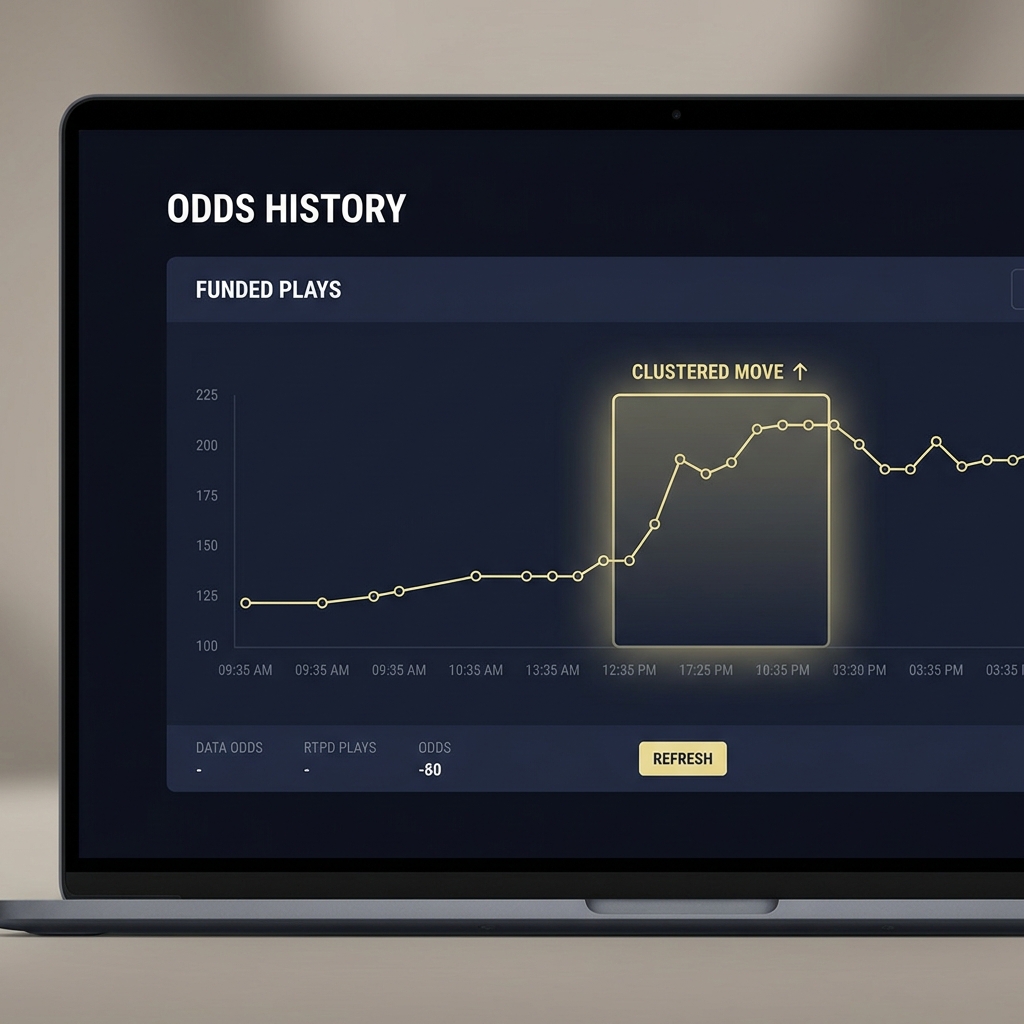
A timestamp tells you when the market re-priced, which you can then cross-check against public sources like injury reports or weather alerts. Knowing the time of a move helps you decide whether the shift preceded the news or followed it, and that ordering matters for interpretation VSiN on tracking and interpreting line movement.
Not all moves are equally meaningful. Rapid micro-moves that reverse quickly are often noise from fragmented liquidity in fast markets, while clustered, sustained moves that hold at a new level tend to reflect genuine market re-pricing, especially when they coincide with confirmed news or limit changes.
Clustered moves commonly occur around limit increases or pregame windows when more capital can enter the market; those clusters deserve scrutiny because they often combine fresh information and changes in trading capacity, and they are more likely to represent a durable price shift rather than ephemeral fluctuation Kambi on how sportsbooks set odds.
Using closing line value to evaluate timing and edge
Closing line value, or CLV, compares your entry price to the market close and is widely used as a benchmark to assess timing and whether you consistently find better-than-market numbers; professionals treat beating the closing line over time as a proxy for expected value, not as a short-term guarantee of profit Pinnacle resource on closing line value.

To use CLV practically, record your entry odds, note the official closing odds from a reputable aggregator or odds tracker, and log the difference. Over a sufficient sample, a positive average difference suggests you are getting better odds than the market close, which many professionals view as evidence of process quality.
Keep in mind that CLV is a statistical and process-oriented metric. Short-term variance is common; winning the close on a handful of bets does not guarantee continued outcomes, which is why CLV is best used as a learning and discipline tool rather than a promise of profit.
Reverse line movement: what it indicates and its limits
Reverse line movement happens when a line moves away from the side receiving the most public attention. In practice, when heavy ticket volume lands on one side but the number shifts in the opposite direction, that can indicate sharper action or liability-driven hedging by books Action Network on reverse line movement.
However, reverse movement is not a magic signal. It can coincide with sharper bets, but it can also occur due to rapid hedging, limit management, or conflicting information that leads books to adjust differently. Treat reverse moves as a data point to combine with timestamped records and volume context rather than as a stand-alone buy signal.
When you see reverse movement, require corroborating evidence: a sustained re-pricing in time-stamped history, matching volume data, or a credible piece of news that would justify the shift. That cautious approach reduces false positives and helps preserve disciplined wagering or prediction behavior.
Practical monitoring workflow: checklist for logging and acting on moves
Adopt a simple, repeatable logging routine. Before you place a prediction or ticket, record the timestamped odds, sportsbook name, posted line, and take a screenshot or export the odds-tracker entry. Consistency in logging builds an audit trail you can review later.
Next, set clear entry rules tied to movement size and timing. For example, you might require a minimum move magnitude or a sustained hold for X minutes before treating a re-price as actionable. Explicit rules help stop emotional chasing and keep your decisions process-driven VSiN on tracking and interpreting line movement.
a compact logging and decision checklist for monitoring line movement
Use this as a daily habit
Include stake-sizing rules and maximum exposure limits in your workflow. Decide beforehand how much of your unit or virtual bankroll you will risk on moves and stick to those limits. Writing these controls down turns them into default behavior during fast-moving markets.
Finally, schedule regular reviews of logged entries versus the closing line to spot patterns. Weekly or monthly reviews let you see whether your entries beat the close, whether certain times of day produce better edges, and where to tighten or relax entry rules.
How sportsbook house rules affect when a number locks
Licensed operators publish house rules that determine when a wager is accepted and when posted odds become locked, and those rules differ by jurisdiction and operator, so understanding the specific terms for the sportsbook you use matters for timing your entries Ohio administrative code on house rules.
Practically, this means that the number you see can change right up until a bet is confirmed under the house rules. If timing matters for your process, check the acceptance conditions and any disclaimers about voided or altered wagers so you know when a price truly became yours.
Common mistakes: chasing steam and over-interpreting single moves
Chasing steam is reacting to a sudden move without objective rules. It often leads to buying a price after it has already re-priced and increasing exposure at a worse expected return, which can erode bankroll or virtual account performance over time Action Network on reverse line movement.
Over-interpreting a single move is another typical error. Markets are noisy, and one shift may be driven by a one-off hedge or a temporary imbalance. Treat single occurrences as low-confidence signals and require confirmation such as time-stamped persistence or supporting volume evidence.
Tactical steps to avoid these mistakes include predefining entry criteria, enforcing stake limits, logging every move you act on, and reviewing those actions against the closing line to detect pattern-level issues rather than reacting to individual events.
Practical examples and scenarios
Scenario 1, late injury: imagine a key player is listed questionable and is ruled out two hours before kickoff. If multiple books adjust a spread by a consistent amount and the time-stamped tracker shows the move aligned with the official report, that pattern supports the view that the move reflected material new information rather than thin-market noise Kambi on how sportsbooks set odds.
In that case, log the entry you saw before the news, capture the post-news price with its timestamp, and note your decision rule. If your rule required a sustained move of a certain magnitude and the re-price remained for the mandated period, you might act; if not, you pass and record why.

Scenario 2, limit increase and clustered movement: as limits rise close to kickoff, more sizable tickets can enter and create clustered moves. If an odds tracker shows several rapid price changes that hold at a new level, the cluster may indicate genuine market re-pricing, especially if closing odds mirror that new level later in the day Pinnacle resource on closing line value.
In this scenario, compare your logged entry to the clustered move timestamps and the close. If your entry was consistently better than the post-cluster close across similar situations, you can treat that as evidence about timing effectiveness rather than as proof of short-term profit.
Measuring your process: tracking results versus the closing line
To track CLV simply, maintain a spreadsheet with entry date, event, sportsbook, entry odds, closing odds, and the difference. Convert odds to a consistent format if needed and compute the average difference across your sample to see whether you beat the market close on average Pinnacle resource on closing line value.
Remember that sample size matters. Small samples produce wide variance, so interpret short-term results cautiously. Use weekly or monthly cadences to smooth noise and focus on process adjustments based on persistent patterns rather than isolated outcomes.
Applying line movement to skill-based prediction workflows
When you run simulations or evaluation challenges, use line histories and CLV as internal metrics to refine timing and discipline; these measures are valuable for process improvement in skill-focused environments and should not be read as guaranteed earnings signals Pinnacle resource on closing line value. See how Funded Plays evaluations work for examples.
Platforms that emphasize skill-based prediction challenges use logged odds data to evaluate decisions and to help participants learn better entry timing and risk controls. Treat those histories as training data for improved forecasting and decision-making, not as proof that a specific strategy will always win. Learn more on our blog.
Quick checklist: what to do right before placing a bet
Pre-bet verification: confirm the time-stamped odds, check for any late news or lineup changes, and verify the sportsbook house rules that govern when a wager locks. Those three quick checks reduce the chance of basing an action on stale information Ohio administrative code on house rules.
Minimum logging: record timestamp, sportsbook name, posted line, and save a screenshot or tracker export. Apply your predefined stake-sizing rules and do not increase exposure because a number has already moved against you.
Conclusion: focus on process, not promises
Line movement is a continuous flow of information and market positioning; observing and recording it with time-stamped tools and comparing entries to the closing line helps you judge timing and refine decision rules without treating any single move as a guarantee. For more on Funded Plays and our resources, see Funded Plays.
Use the checklist and logging workflow described here to build disciplined habits, review performance against the closing line regularly, and keep participation responsible and process-focused rather than outcome-focused.
Compare the move timestamp to credible news sources and the time-stamped odds history; sustained moves that align with confirmed injury or lineup reports are more likely to reflect real information.
Closing line value compares your entry odds to the market close; tracking it over time helps evaluate whether your timing produces better-than-market results as a process metric.
No, reverse movement can signal sharp action but is noisy; require corroborating time-stamped evidence and volume context before acting.
References
- https://www.investopedia.com/terms/l/line-movement.asp
- https://codes.ohio.gov/ohio-administrative-code/rule-3775-16-08
- https://www.kambi.com/insights/how-sportsbooks-set-odds-and-move-lines
- https://www.vsin.com/betting-101/how-to-track-and-interpret-line-movement
- https://www.pinnacle.com/en/betting-resources/betting-strategy/closing-line-value
- https://www.fundedplays.com/challenges
- https://www.actionnetwork.com/education/reverse-line-movement
- https://the-odds-api.com/historical-odds-data/
- https://sportsdata.io/live-odds-api
- https://www.fundedplays.com
- https://www.fundedplays.com/blogs
- https://www.fundedplays.com/blogs/how-fundedplays-evaluations-work
- https://therundown.io/